Have you ever wondered if everything in the world, from the tiniest ant to the farthest star, is somehow connected by an invisible thread?
This is one of the big questions at the heart of Hinduism, a tradition that is more like a vast, ancient river than a single book or set of rules. It is one of the world's oldest religions, beginning thousands of years ago in the Indus Valley and growing into a beautiful tapestry of stories, festivals, and deep thoughts about the soul.
The City of Secrets
To find the beginning of this story, we have to travel back over 4,000 years to a place called the Indus Valley. This region sits in what is now India and Pakistan, where a great civilization once built cities with brick houses and underground pipes for water.
Archaeologists have found tiny stone squares called seals there, carved with pictures of bulls, elephants, and people sitting in quiet, peaceful poses. We do not know exactly what these people called themselves, but many of the things they valued are still part of Hinduism today.
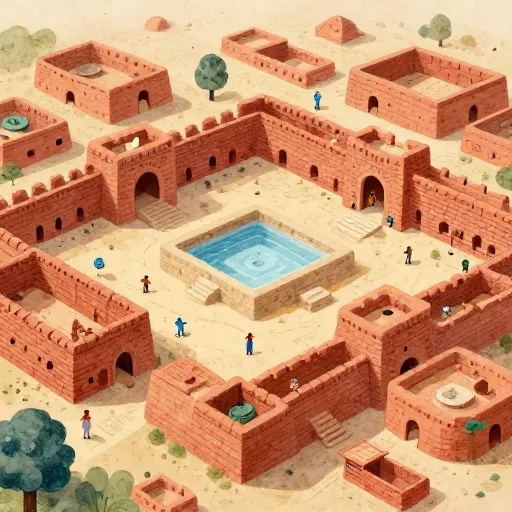
Imagine a city built 4,500 years ago called Mohenjo-daro. It has wide streets, a giant public bath, and children playing with clay monkeys that can slide down strings. People here traded beads and grain, and they seemed to live in a world that valued cleanliness and order. We still find their small stone carvings today, showing the very first hints of the ideas that would become Hinduism.
Hinduism did not have one single founder like a king or a prophet. Instead, it grew as different groups of people shared their ideas, songs, and prayers over thousands of years. It is a tradition that is always moving, changing, and welcoming new ways of thinking about the world.
The One and the Many
If you walked into a Hindu temple, you might see many different statues of gods and goddesses. Some have many arms, some have the heads of animals, and some carry musical instruments or weapons. At first, it looks like there are thousands of different gods to learn about.
However, many Hindus believe that all these different figures are actually different faces of the same thing. This ultimate, invisible reality is called Brahman. Think of Brahman like the ocean, and all the different gods and goddesses like individual waves.

Finn says:
"If the whole universe is just one thing, does that mean I'm actually related to my dog and my goldfish? That's a lot of family to keep track of!"
Because the universe is so big and complex, it is hard for humans to understand it all at once. By focusing on one god, like Ganesha with his elephant head or Lakshmi with her lotus flower, people can connect with one specific part of the universe's mystery.
Truth is one; the wise call it by many names.
The Spark Inside You
If the whole universe is Brahman, where do you fit in? Hinduism teaches that every living being has a tiny, indestructible spark of the divine inside them called the Atman. This is your true self, the part of you that stays the same even as your body grows and changes.
Learning to find this spark is a major goal of life. It is like looking into a mirror that has been covered in dust: once you clean the dust away, you can see the light that was always there. This process of searching and learning is what makes life so interesting.

To understand how the 'Atman' is hidden inside everything, try this ancient experiment from the Upanishads: Take a glass of water and stir in a spoonful of salt until it disappears. You can't see the salt anymore, but if you taste the water, the salt is everywhere. Hindu teachers say the divine spirit is just like that: invisible to our eyes, but present in every single part of the world.
The Law of the Echo
In Hinduism, the way you act matters because of a concept called Karma. You can think of Karma like a cosmic echo: whatever energy you put out into the world eventually finds its way back to you.
If you are kind and helpful, you are planting 'seeds' of goodness that will bloom into happy experiences later. If you are hurtful, those actions create a different kind of result. This is not about a judge sitting in the clouds, but about the natural balance of the universe.

Mira says:
"Karma sounds like a mirror. If you smile at it, the reflection smiles back. But if you're grumpy, the world just looks grumpy too."
Karma is closely linked to Dharma, which means your duty or the right way to live. Every person has their own Dharma, which might change depending on how old they are or what their role is in their family. Living your Dharma means trying to do the right thing, even when it is difficult.
The Circle of Life
Most people think of time as a straight line, with a beginning, a middle, and an end. But in Hindu thought, time is more like a giant, spinning wheel. This idea is called Samsara, the cycle of birth, life, death, and rebirth.
Many people see time as a line with a start and a finish. Once a moment is gone, it is gone forever, and the story eventually ends.
Hindus see time as a circle, like the seasons. Spring always follows winter, and the universe is constantly being created, destroyed, and born again.
Hindus believe that the Atman, that little spark of soul, travels through many different lives. In each life, the soul learns new lessons and experiences different things. The goal is eventually to reach Moksha, which is when the soul finally understands everything and becomes one with Brahman again.
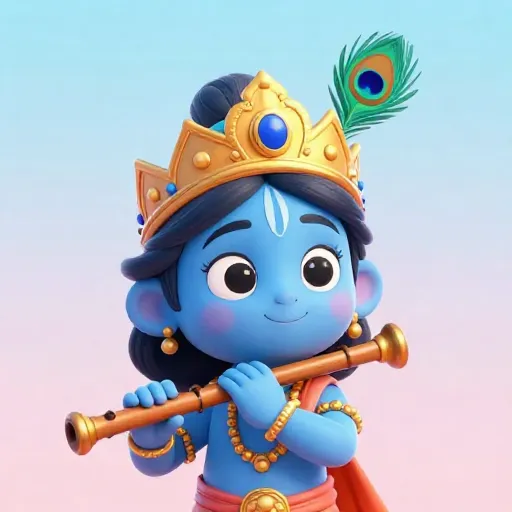
As a person puts on new garments, giving up old ones, the soul similarly accepts new bodies, giving up the old and useless ones.
The Great Library of Stories
Hinduism has some of the longest and most exciting stories ever written. These are found in sacred books like the Vedas, which are thousands of years old, and the great epics called the Mahabharata and the Ramayana.
These stories are not just about the past: they are tools to help people think about how to live. They feature heroes like Rama, who always tries to do his duty, and Hanuman, the monkey god who shows incredible loyalty and courage.
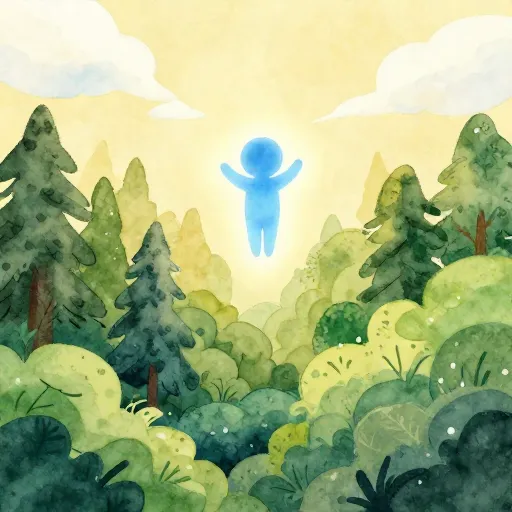
The word 'Avatar' comes from the Sanskrit word 'Avatara,' which means 'to descend.' In Hinduism, an avatar is a god who comes down to Earth in a physical form to help humans. While we use the word for video game characters today, its original meaning is about the divine coming to help the world whenever things get too difficult.
One of the most famous parts of these stories is the Bhagavad Gita. In it, a prince named Arjuna is worried about a big battle, and the god Krishna gives him advice about why it is important to do your duty without worrying too much about the results.
Through the Ages
The Art of Connection
Because Hinduism is so old, it has developed many different ways for people to connect with the divine. These are often called Yoga, which comes from a word meaning 'to join' or 'to yoke.'
While we often think of yoga as just physical stretching, in Hinduism it also means the yoga of knowledge, the yoga of devotion, and the yoga of good work. Everyone can find their own path. Some people find peace through meditation, while others find it by singing songs or helping others in their community.
Finn says:
"Wait, so there isn't just one 'right' way to be a good person? It's more like we're all taking different paths to the same mountain top?"
The Sound of Everything
If you listen very closely to the world, what do you hear? In Hinduism, there is a special sound called Om. It is believed to be the vibration of the entire universe, the sound that was there at the very beginning of time.

That which is the finest essence, this whole world has that as its soul. That is Reality. That is Atman. That Thou Art.
When people chant 'Om,' they are trying to tune their own inner spark to the frequency of the whole world. It is a way of remembering that even though we feel like separate individuals, we are all part of one big, cosmic song.
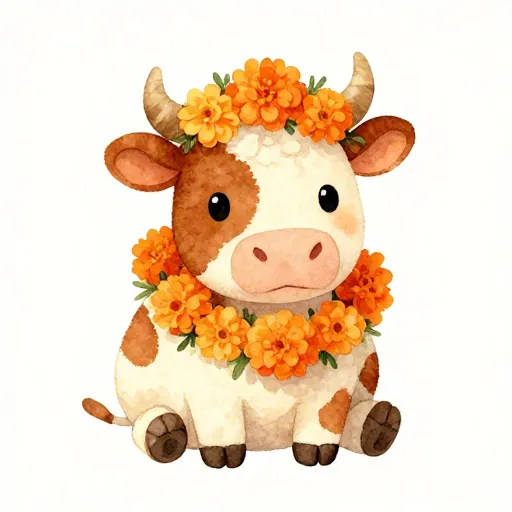
In many Hindu homes, the cow is treated with great respect. This isn't because Hindus 'worship' cows like gods, but because the cow is seen as a symbol of life and generosity. It gives milk and helps on farms without asking for anything in return, reminding people to be kind to all living creatures.
A Tradition of Wonder
Hinduism does not ask you to have all the answers right away. Instead, it invites you to look at the world with wonder. It suggests that every person, every animal, and every tree is sacred because they all carry a piece of the ultimate truth.
Whether it is through the lights of Diwali or the quiet moment of a morning prayer, the tradition encourages us to keep asking questions. After all, if the universe is infinite, there will always be something new and exciting to discover.
Something to Think About
If you are the 'Atman' - a tiny spark of the whole universe - what does that change about how you see yourself?
There is no right or wrong answer. You might feel very small, or you might feel incredibly big and powerful. Just sit with the idea for a moment.
Questions About Religion
Is Hinduism a religion or a way of life?
Do Hindus believe in heaven and hell?
Why do some Hindu gods have animal heads?
The Never-Ending River
Like a river that flows through many different landscapes, Hinduism has room for many different ideas. It teaches us that the world is a place of deep mystery and that our journey to understand it is one of the most important things we can do. As you go through your day, remember the 'spark' inside you and the 'echo' of your actions.
