What if, for one single day, every rule about staying clean and being polite was completely erased?
Across India and the world, millions of people celebrate Holi, a festival that turns cities into clouds of neon powder. While it looks like a giant party, it is actually an ancient ritual of renewal and a celebration of the messy, unpredictable nature of being alive.
Imagine you are standing in a dusty square in Northern India nearly two thousand years ago. The air is starting to warm up after a long, quiet winter. The ground is dry, but the trees are just beginning to show the tiniest hints of green.
This is the time of the Spring Equinox, when the day and night are exactly the same length. For ancient people, this was a moment of high tension. Would the crops grow this year? Would the community survive another season?
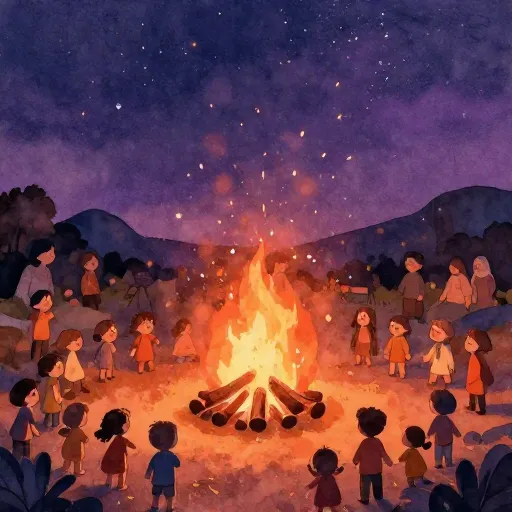
Imagine the sun setting on a cool March evening. A massive pile of dried branches and leaves sits in the center of the village. As the first torch touches the wood, the orange flames roar upward, mirroring the stars. Everyone stands in a circle, feeling the heat on their faces, watching the 'old year' turn into smoke and ash.
To handle this uncertainty, people didn't just sit and wait. They created a festival that acted like a giant 'reset' button for society. They called it Holi, a name that echoes through centuries of poetry, art, and storytelling.
The Boy Who Stood His Ground
Every great festival has a story that acts as its heartbeat. For Holi, that story is about a young boy named Prahalad and his father, a king named Hiranyakashipu. The king was a man who believed he was more powerful than the gods themselves.
He demanded that everyone in his kingdom worship him alone. But Prahalad refused. He had a different kind of certainty, a quiet inner voice that told him there was something much larger and more mysterious than his father's ego.

Finn says:
"If Prahalad wasn't scared of the fire, does that mean he knew something the King didn't? Maybe being 'right' feels warmer than a giant shawl."
This disagreement became a battle of wills. The king tried to scare his son, but Prahalad remained calm. Finally, the king's sister, Holika, offered to help. She had a magical shawl that made her immune to fire.
She sat in a massive bonfire with Prahalad on her lap, expecting the boy to be destroyed. But the legends say the wind shifted. The shawl flew off the aunt and wrapped around the boy, protecting him while she vanished into the flames.
The moon and the sun are the same. The whole world is one. In the middle of the fire, the truth remains unburnt.
This is why, on the night before the colors come out, people all over India light massive bonfires. They call this ritual Holika Dahan. It is a way of burning away the 'old' year, the grudges we hold, and the parts of ourselves that feel cold or stuck.
The Science of Spring
While the stories are magical, Holi is also deeply connected to the earth. In ancient times, the colors people threw weren't made in factories. They were made from the medicine cabinet of the natural world.
Yellow came from turmeric, a root that heals skin. Red came from crushed hibiscus flowers or sandalwood. Green was made from the leaves of the neem tree, which kills germs.
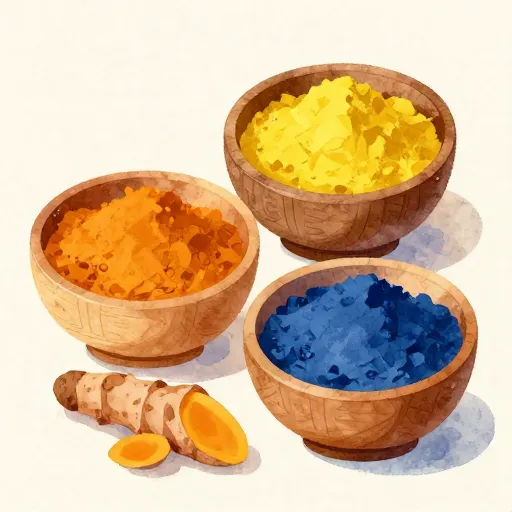
In ancient India, the 'blue' color used in Holi often came from the Indigo plant. Indigo was so valuable that it was called 'Blue Gold' and was traded all over the world. People didn't just throw paint: they were throwing treasure!
When people threw these powders at each other, they were actually 'vaccinating' the community. As the seasons changed from cold to hot, people often got sick. These herbal powders helped protect their skin and bodies from the viruses of spring.
It was a brilliant way to combine healthcare with a giant party. You weren't just getting messy: you were getting healthy. This reminds us that in many ancient cultures, the body and the spirit were seen as one thing.

Mira says:
"It's funny how they used turmeric to stay healthy while partying. It’s like their medicine was hidden inside a game of tag!"
The Great Equalizer
One of the most radical ideas in Holi is the concept of equality. For most of history, societies have been very strict about who can talk to whom. There were kings and servants, parents and children, the wealthy and the poor.
But during Holi, those rules are suspended. When everyone is covered in thick layers of purple, green, and red powder, you can't tell who is rich or who is poor. You can't tell what someone's job is or how much money they have.
Holi is a way to break the rules of society so that everyone can feel equal for a day, making it easier to follow the rules the rest of the year.
Holi is a way to remember that the physical world is just a 'play' (Lila) and that our true selves are beyond our names and jobs.
This is a temporary state of chaos, but it is a healthy chaos. It allows people to see each other as human beings rather than as titles or roles. It is a day where the world becomes a level playing field.
In some parts of India, there is even a tradition where women playfully chase men with sticks. This was a rare moment where the usual power balance of the time was flipped upside down. It served as a safety valve for society, letting off steam so everyone could live together more peacefully afterward.
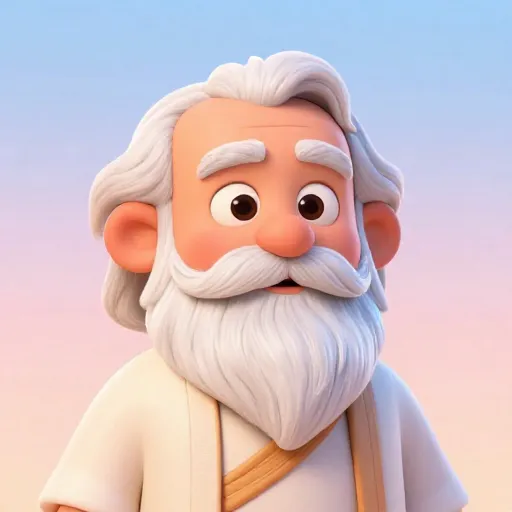
The same stream of life that runs through my veins night and day runs through the world and dances in rhythmic measures.
The Play of the Gods
As the centuries passed, another layer was added to Holi: the story of Krishna. Krishna is often described as the god of play, or Lila. He represents the idea that the universe isn't just a serious machine: it is also a game.
Krishna was famous for being a bit of a prankster. He loved to tease the village girls, especially his friend Radha. Legend says he was worried that his own dark blue skin would make Radha not like him, so his mother suggested he smear color on her face to make them more alike.
Think of someone you've had a small argument with recently. If you were at a Holi festival, you might offer them a sweet or a handful of color as a way of saying, 'The argument is over.' Can you find a small way today to 'reset' a relationship without using words?
This transformed Holi into the 'Festival of Love.' It moved the focus from just burning away the bad (the bonfire) to celebrating the beautiful (the colors). It taught people that spiritual life doesn't always have to be quiet and solemn.
Sometimes, the best way to connect with the divine is to laugh, to dance, and to get absolutely covered in paint. This idea of 'holy play' is a very special part of Indian philosophy. It suggests that if we take ourselves too seriously, we might miss the point of being alive.
Holi Through the Ages
The Art of Forgiveness
There is a phrase often heard during the festival: 'Bura na mano, Holi hai!' This translates to: 'Don't feel offended, it's Holi!' It is a request for everyone to let go of their anger and their ego for a day.
In our modern world, we spend a lot of time trying to be perfect. We want our clothes to be clean, our hair to be neat, and our social media photos to look just right. Holi is the total opposite of that.
Mira says:
"If everyone looks like a rainbow by the end of the day, does that mean our differences were just 'costumes' we were wearing all along?"
It is a day that celebrates the ephemeral, which is a fancy word for things that don't last. The colors will wash off. The party will end. The bonfire will turn to ash. But the feeling of being connected to everyone around you stays.
By the end of the day, when the sun begins to set, the streets are stained with water and powder. People go home to wash, and as the colors circle down the drain, there is a sense of being 'new' again. It is a psychological cleansing as much as a physical one.
Holi is celebrated differently across India! In West Bengal, it's called 'Dol Jatra' and involves placing idols of Krishna on a swing. In the state of Punjab, it's called 'Hola Mohalla,' where people show off their skills in martial arts and poetry.
Why Do We Still Celebrate?
Today, Holi has traveled far beyond the borders of India. You can find Holi festivals in London, New York, and Sydney. But even if you aren't Hindu, the 'Big Idea' of Holi is something we all need.
We all need a moment to forgive people who have annoyed us. We all need a time to celebrate the fact that winter is over. And most importantly, we all need to remember that underneath our different clothes and backgrounds, we are all made of the same human stuff.
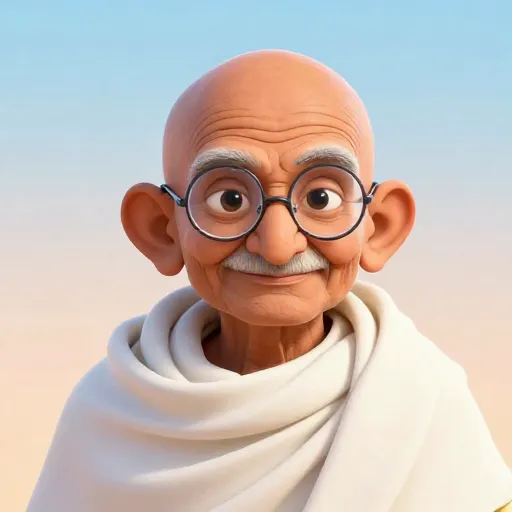
Our ability to reach unity in diversity will be the beauty and the test of our civilization.
As you think about the colors of Holi, remember that they aren't just for decoration. They are a reminder that life is vibrant, messy, and constantly changing. If we try to stay perfectly clean all the time, we might never learn how to truly dance.
Something to Think About
If you could pick one color to represent your 'inner self' today, what would it be?
Think about why you chose it. Is it a color people can see, or one you keep hidden? There are no right or wrong colors in the palette of the mind.
Questions About Religion
Is Holi only for Hindu people?
Why do people eat specific sweets like Gujiya?
Is the powder safe for the environment?
The World is Your Canvas
Whether you are lighting a bonfire or just noticing the first flower of spring, the spirit of Holi is always available. It is the courage to say 'no' to unfairness, the humility to forgive, and the wisdom to know that sometimes, the most important thing you can do is make a mess.
