Have you ever wondered why your neighbor celebrates a holiday you have never heard of, or why some buildings have domes while others have steeples?
The world is filled with different Belief Systems that help people understand why we are here and how we should treat one another. These traditions, known as World Religions, are like different languages people use to talk to the universe and find a sense of Spirituality.
Imagine you are looking at a giant, ancient map. This map does not just show mountains and oceans, it shows how billions of people have tried to answer the biggest questions ever asked. These questions are things like, Where did we come from? What happens when we die? and How can I be a good person?
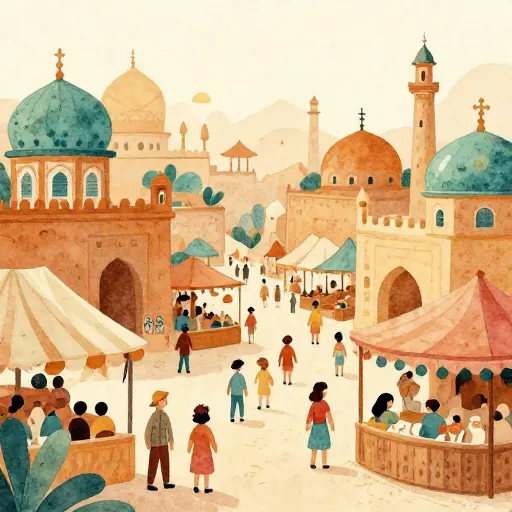
Imagine a bustling marketplace in the center of an ancient city. On one corner, someone is lighting incense in a temple. On another, people are singing together in a square. Down the street, someone is sitting quietly under a tree. Everyone is busy, but everyone is also taking a moment to stop and think about something invisible and important.
For thousands of years, people in different parts of the world developed their own unique answers. Because people were separated by vast deserts, high mountains, and deep seas, they created different stories and customs. These traditions are what we call religions, and they are one of the most important ways humans share their Culture and values.
The Birth of Big Ideas
Long ago, before there were phones or even books, people looked at the stars and felt a sense of wonder. They saw the sun rise every morning and the seasons change, and they felt there must be a deeper meaning behind it all. In ancient places like India, China, and the Middle East, teachers and thinkers began to organize these feelings into shared beliefs.

Finn says:
"If everyone is asking the same big questions, why are the answers so different? It's like we're all looking at the same mountain from different sides."
Some of these traditions, like Hinduism, grew slowly over thousands of years without a single founder. Others, like Buddhism or Islam, began with the teachings of a specific person who had a powerful new idea. Each tradition offered a way for people to feel connected to something much larger than themselves.
My religion is very simple. My religion is kindness.
Around 2,500 years ago, something amazing happened that historians call the Axial Age. In different parts of the world, all at roughly the same time, people started thinking about the soul and how to live a meaningful life. This was when many of the big religions we know today started to take their modern shape.
Why Are There So Many?
You might wonder why everyone doesn't just agree on one way to believe. The answer is often about where people lived and the languages they spoke. Just as there are hundreds of ways to cook a delicious meal, humans have found hundreds of ways to express their Faith.
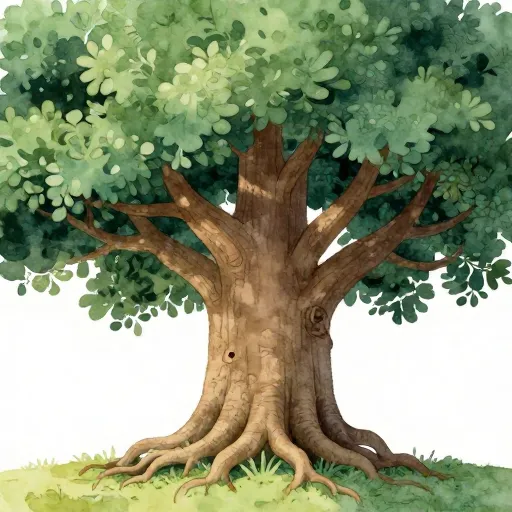
Hinduism is often called the oldest religion in the world still practiced today. It has roots that go back over 4,000 years! Because it is so old, it doesn't have one single founder, it grew like a giant forest made of many different trees and traditions.
In the past, a person born in a small village in Japan would likely follow Shinto or Buddhist traditions because that is what their family and neighbors did. Someone born in a village in Italy would likely be a Christian. For a long time, these groups didn't talk to each other very much, so their traditions stayed very distinct.
Today, the world is much more connected. You might have a friend who is Jewish, a teacher who is Sikh, and a neighbor who is Muslim. We can see all these different paths at the same time, which can feel a little confusing, but it also makes the world a much more interesting place to live.

Mira says:
"I like how religions use colors and food to tell their stories. It makes the ideas feel like something you can actually taste or see, not just a thought in your head."
Stories and Symbols
One of the main ways religions differ is through their stories. Every religion has a Sacred Text, which is a book or a collection of writings that followers believe hold special truth. These books, like the Torah, the Bible, the Quran, or the Vedas, are filled with stories about heroes, teachers, and rules for living.
For a long time, many religions were passed down through songs, poems, and stories told by parents to their children around a fire.
Later, people began to write these ideas down in books, which allowed the same words to be read by people hundreds of years apart.
These stories help people understand their place in the world. They use Symbols to represent deep ideas, like a cross for sacrifice, a star for guidance, or a lotus flower for purity. When you see these symbols on buildings or jewelry, they are like shorthand for a whole system of belief and history.
Rituals: Belief in Action
Religion is not just about what people think: it is about what they do. These actions are called Rituals. A ritual might be a specific way of praying, a special meal eaten on a holiday, or a ceremony when a baby is born. These actions help people feel like they belong to a community.
Compassion is a staple of all the great world religions.
Think about how your family celebrates a birthday or a holiday. You probably have certain things you do every single time. Rituals in religion are similar, but they often link people to ancestors who did those same things hundreds or even thousands of years ago. It is a way of touching history through your own actions.
The next time you are on a walk, keep your eyes open for religious signs. You might see a small statue in someone's garden, a specific type of hat or clothing, or a building with a unique shape. Don't worry about knowing what they all mean yet, just notice how many different 'clues' there are to what people believe.
Common Ground
Even though religions look very different on the outside, many of them share the same core values. Almost every religion teaches some version of the "Golden Rule": treat others the way you want to be treated. They usually encourage people to be honest, kind, and helpful to those who have less.
A Journey Through Faith
Many religions also share a focus on Compassion, which means feeling the pain of others and wanting to help. Whether someone is kneeling in a mosque, sitting in silence in a Zen garden, or singing in a choir, they are often looking for the same thing: a sense of peace and a way to be a better human being.
Dealing with Disagreement
It is true that religions have sometimes caused conflict. When people believe very strongly that their way is the only right way, they can become afraid of people who believe something else. This is a difficult part of history that we have to be honest about.
Finn says:
"Is it okay if I don't know which map I want to use yet? There are so many paths, I think I'd like to just walk around and look at them for a while."
However, many people today work on something called Interfaith dialogue. This is when people from different religions sit down to talk and learn from each other. They find that they can disagree about the details of their faith while still respecting one another as neighbors and friends.
The lamps are different, but the light is the same.
The Space for 'I Don't Know'
Some people choose not to follow any specific religion. They might call themselves Atheist, meaning they don't believe in a god, or Agnostic, meaning they think we can't really know for sure. This is also a way of looking at the map of life, and it is just as much a part of the human story as religion is.
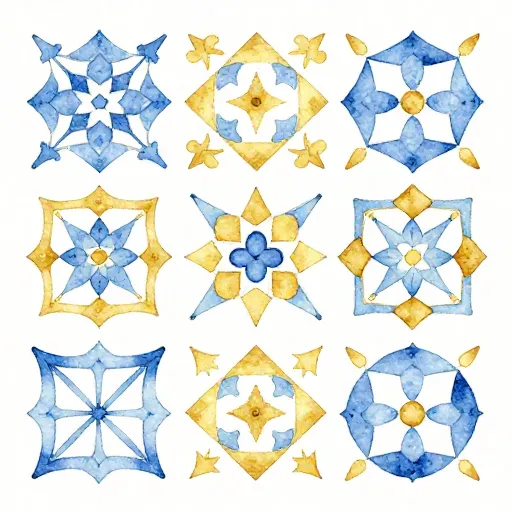
Picture the inside of a great mosque or synagogue. There are no statues of people: instead, the walls are covered in beautiful patterns, flowing writing, or colorful tiles. In these traditions, the beauty is found in the math and the art of the building itself, reminding people that the world is organized and amazing.
In the end, explaining different religions is like explaining different types of art. There isn't a "correct" painting that everyone has to like best. Instead, there are many different ways to capture the beauty and the mystery of being alive. Each one tells us something important about what it means to be human.
Something to Think About
If you were to draw your own map of what is important in life, what would you put on it?
There are no right or wrong answers here. Your map might include kindness, nature, family, or even the mystery of the stars.
Questions About Religion
Why do people wear different clothes for religion?
Is one religion more 'right' than the others?
Do I have to choose a religion?
The Infinite Library
Thinking about religion is like entering an infinite library where every book is written by someone trying to be their best self. You don't have to read every book today, and you don't have to agree with every author. The important thing is to stay curious and to remember that behind every temple, mosque, and church, there is a human being just like you, wondering about the world.
