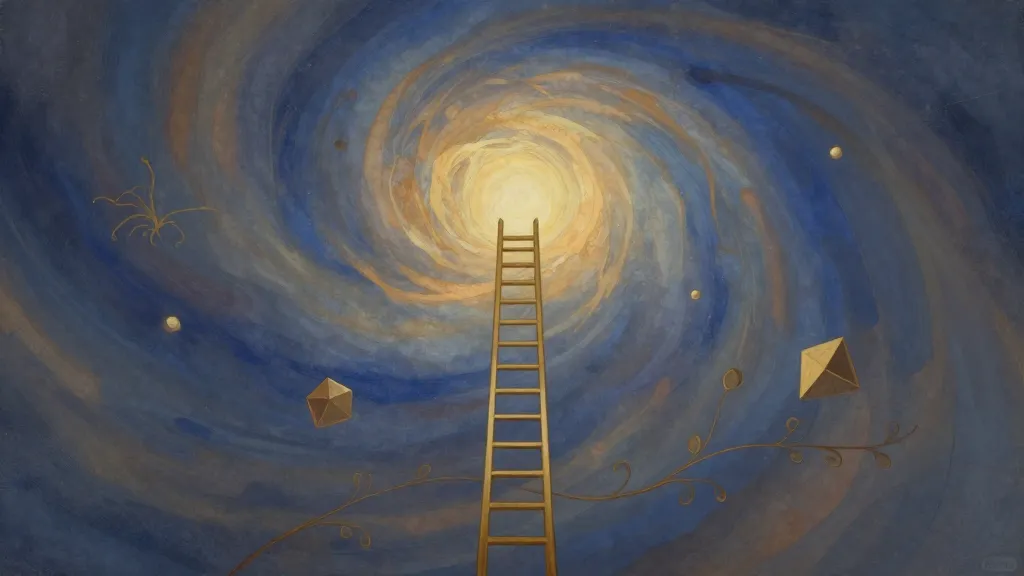
Have you ever looked at the night sky and wondered where everything came from?
Religion is one of the oldest ways humans have tried to answer the biggest questions about existence, morality, and what it means to be alive. It is a mix of stories, rituals, and shared beliefs that help people find their place in a very big universe.
Imagine you are standing on a beach at night. The ocean is vast and dark, and the stars above are so bright they seem to hum. You might feel very small, but also very connected to everything around you. This feeling of wonder is often where religion begins.
For as long as humans have been around, we have been curious. We want to know why the sun rises, why we feel love, and what happens after a person dies. These are called Big Questions because they do not have easy, one word answers.
Next time you are outside at night, look up at the stars and try to think of a question that science can't answer yet. It might be 'Where do our thoughts go?' or 'Why does music make us feel happy?' These are the kinds of questions that religions explore.
Some people find their answers in science, looking at atoms and galaxies. Others find their answers in religion, looking at ancient stories and traditions. Both ways of looking are trying to solve the same mystery of being human.
Religion is like a special kind of language. It is a language of symbols, songs, and actions that people use to talk about things they cannot see or touch. It is a way to make the invisible feel a little more real.
Finn says:
"I wonder if religion is like a giant library where everyone is trying to write the ending to the same story in their own way."
The Earliest Clues
If we want to understand religion, we have to travel back in time. Long before there were cities or books, early humans were already thinking about the sacred. The sacred is a word for things that feel holy, special, or full of a power we do not fully understand.
In deep caves in France, people painted animals on the walls over 30,000 years ago. They did not just paint them for fun. They painted them in hard to reach places, perhaps as a way to connect with the spirit of the hunt.
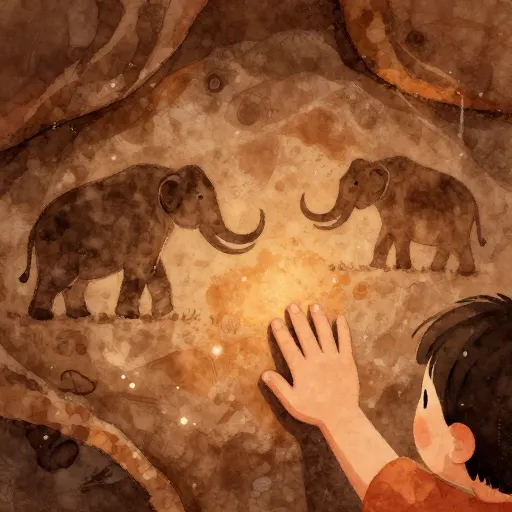
Imagine you are inside a dark cave. You hold a flickering torch made of animal fat. On the walls, you see giant mammoths and running deer. You reach out and touch the stone, feeling like you are part of a story that started long before you were born.
Archeologists have also found very old graves where people were buried with flowers and jewelry. This tells us that even thousands of years ago, humans believed that life was more than just breathing and eating. They felt that even in death, a person deserved care and respect.
These early habits grew into what we call tradition. A tradition is something people do over and over because it has a deep meaning. Eventually, these traditions became the organized religions we see today, like Hinduism, Judaism, Buddhism, Christianity, and Islam.
Religion is the sense that the world is more than what we see.
More Than Just Stories
Many people think religion is just a list of rules or stories from old books. While stories are important, religion is actually something people do. It is a way of living that involves four main parts: beliefs, rituals, community, and ethics.
Beliefs are the ideas people hold in their hearts, like believing in a God or many gods. Rituals are the actions people take, like lighting a candle, praying, or celebrating a holiday. These actions help people feel close to the things they find holy.
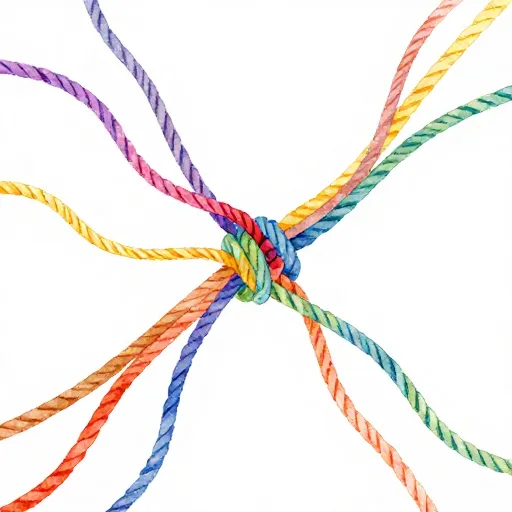
The word 'religion' likely comes from an old Latin word, 'religare,' which means 'to bind' or 'to tie together.' It is meant to show how people are tied to their beliefs and to each other.
Community is the group of people who share these actions and beliefs. It is a feeling of belonging to a family that stretches across the whole world. When people gather in a temple, a mosque, or a church, they are saying: "We are in this together."
Finally, there is ethics, which is a fancy word for how we treat others. Most religions teach that we should be kind, honest, and helpful. They provide a map for how to be a good person even when it is difficult.

Mira says:
"It seems like religion is a way to remember that we are all connected, even if we use different words to describe it."
The Search for Meaning
Think about your favorite story or a song that makes you feel brave. Religion often works in a similar way. It uses mythology and metaphors to help people understand things that are too big for regular words.
Religion is not about believing things. It is about doing things that leave you changed.
A metaphor is when you use one thing to describe another. For example, if someone says "hope is a light," they do not mean hope is a literal lightbulb. They mean hope helps you find your way when things feel dark. Religions use metaphors like this to talk about the soul and the universe.
Believing in the stories and rules is the most important part of religion.
Doing the rituals and being part of the community is more important than what you believe.
Not everyone agrees on which stories are true, and that is okay. In fact, many people have spent their whole lives debating these ideas. Some people are atheists, which means they do not believe in gods. Others are agnostics, which means they are not sure and are comfortable with the mystery.
Learning about religion is not about deciding who is right or wrong. It is about understanding how different people find comfort and purpose. When we learn about another person's faith, we are learning about their heart.
Through the Ages
A Bridge Between People
Sometimes, religion can be confusing because it looks so different depending on where you go. In some places, people sit in silence to meditate. In other places, people dance and sing loudly to show their joy. Some people wear special clothes, and others eat special foods.
Mira says:
"I like how different religions have different festivals. It's like the world has many different ways of saying 'thank you' for being alive."
Even though the outside looks different, the inside is often very similar. Most religions are looking for peace and a way to understand suffering. Suffering is the pain or sadness that everyone feels at some point in their lives.
By following a religion, many people feel they have a toolkit to handle the hard parts of life. It gives them a community to support them when they are sad and a way to celebrate when they are happy. It is a way to turn an ordinary life into something that feels extraordinary.
The beauty that surrounds us is the beauty we carry within.
Staying Curious
Religion is not a puzzle that you have to solve. It is more like a giant, ancient conversation that humans have been having for thousands of years. You are now part of that conversation too.
You might find that you agree with some ideas and disagree with others. You might feel that nature is your church, or you might love the traditions of your family. The most important thing is to keep asking questions and to listen to the answers others give with an open mind.
Almost every religion in the world has a version of 'The Golden Rule.' It usually says something like: 'Treat others the way you want to be treated.' This shows that even if religions disagree on many things, they often agree on how to be kind.
Understanding religion helps us understand history, art, and the people living next door. It reminds us that every person we meet is also trying to make sense of this big, beautiful, and sometimes confusing world. When we see the world this way, the mystery becomes a little less scary and a lot more interesting.
Something to Think About
If you were going to create a ceremony to celebrate something you find special, what would it look like?
There are no right or wrong answers here. You might choose a ceremony for the first snowfall, for the love of a pet, or for the feeling of finishing a hard book. Think about what sounds, smells, or actions would make it feel 'sacred' to you.
Questions About Religion
Is religion the same as history?
Do you have to be religious to be a good person?
Why are there so many different religions?
The Never-Ending Story
Religion is a journey that humans have been on for a very long time. It is a way to find beauty in the unknown and a way to feel less alone in the dark. Whether you follow a tradition or just enjoy the mystery, you are part of the wonderful human habit of wondering why.