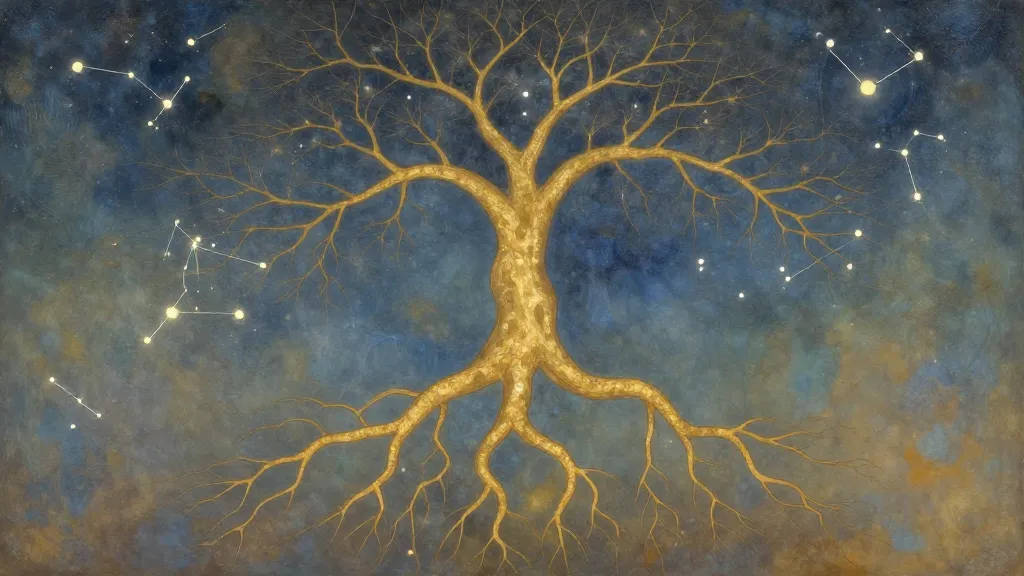
What if the rock you sit on or the river you splash in wasn't just an 'it', but a 'who'?
For thousands of years, people across the globe have practiced Indigenous religions: ways of living that treat the earth as a living relative. These traditions aren't found in a single book, but are woven into the land, the stars, and the Ancestors who came before us.
Imagine you are standing in a forest. To some, this forest is just a collection of wood and leaves. But for many people following an Indigenous tradition: a term for the original people who have lived in a place since the very beginning: the forest is a conversation.
Every tree, bird, and stone is seen as having its own life, its own story, and its own spirit. This isn't just a story for kids. It is a deep, complex way of understanding how the universe works.
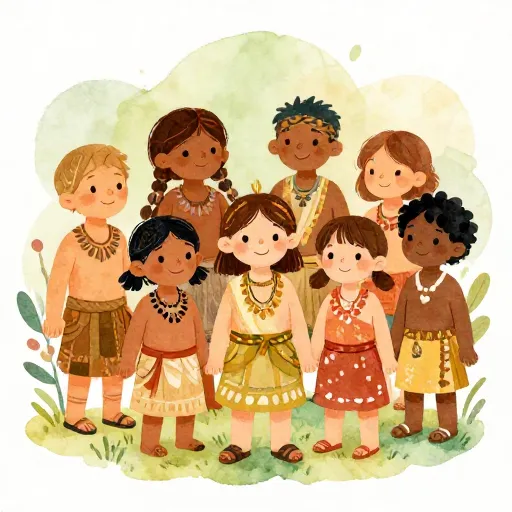
There are over 476 million Indigenous people living in 90 countries around the world. That is more than the entire population of the United States!
Indigenous religions are not one single thing. There are thousands of different groups, from the Māori in New Zealand to the Haudenosaunee in North America and the Sami in the Arctic.
While their stories and rituals are unique, many share a beautiful idea: we are not separate from nature. We are nature.

Mira says:
"I like the idea that I'm not just *on* the earth, but *of* it. It's like my skin and the grass are made of the same stardust."
Rooted in the Land
Most religions you might know, like Christianity or Islam, are 'universal.' This means they can be practiced anywhere, whether you are in a desert or a city.
Indigenous religions are different because they are 'place-based.' They belong to a specific mountain, a specific valley, or a specific stretch of coastline.
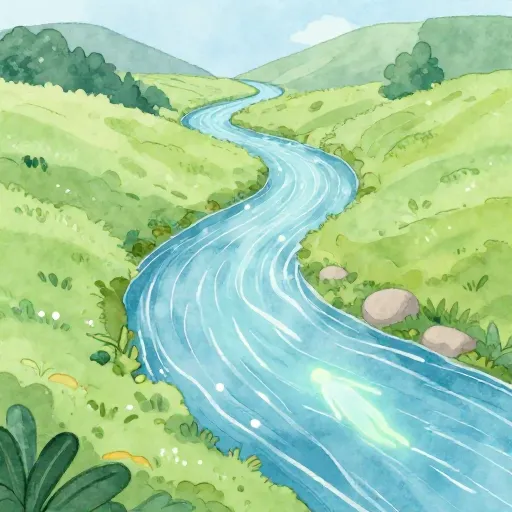
Imagine a river that is legally a person. In 2017, the Whanganui River in New Zealand was granted the same legal rights as a human being. This reflects the Māori belief that the river is an ancestor and must be protected as part of the family.
Because the religion is tied to the land, the land itself is considered Sacred. This means it is holy, special, and worthy of the highest respect.
If a tribe believes a certain mountain is the place where the world began, they don't just visit it. They care for it like a family member.
The power of the world always works in circles, and everything tries to be round.
The Power of Stories
How do you learn about a religion if there is no big book like a Bible or a Torah? You listen. For most of human history, wisdom was shared through Oral Tradition.
This means stories, laws, and history were memorized and spoken aloud. Elders would pass these stories to children around fires, through songs, or while weaving baskets.
Pick a spot outside: a tree, a bush, or even a specific rock. Sit quietly for five minutes and try to 'listen' with your whole body. If that rock could tell you one thing about the history of your neighborhood, what would it say?
These stories are often called myths, but to the people who tell them, they are 'living truths.' They explain why the crow is black, how the tides move, or how humans should behave toward one another.
Stories in Indigenous traditions aren't just about the past. They are tools for living right now, helping people navigate the world with a sense of Wonder and responsibility.

Finn says:
"Wait, so if a story is told out loud for 5,000 years, does it change like a game of telephone? Or does the land help people remember it exactly?"
All My Relations
One of the biggest ideas in Indigenous spirituality is Animism. This is the belief that everything: plants, animals, rocks, and even weather patterns: has a spiritual essence.
When a hunter in the Amazon rainforest tracks a deer, he doesn't see himself as a master over the animal. He sees the deer as a 'person' with a different shape.
Nature is a 'resource.' Trees are for lumber, water is for drinking, and land is for building houses.
Nature is a 'relative.' Trees are elder brothers, water is the life-blood of the earth, and land is a sacred gift.
This leads to an important concept called Reciprocity. This is a fancy word for 'giving and taking fairly.' If you take a fish from the lake, you must give something back: perhaps a prayer, a small gift, or a promise to keep the water clean.
It is a way of keeping the world in balance. If you only take and never give, the circle of life becomes broken.
In some Native languages, the term for plants translates to 'those who take care of us.'
Walking Between Worlds
In many Indigenous cultures, there are special people who act as bridges between the human world and the spirit world. You might have heard them called Shamans or Medicine People.
These individuals spend years training to 'listen' to the earth in a different way. They might use drums, dancing, or fasting to enter a state of mind where they can seek guidance from the spirits.
Mira says:
"Maybe a bridge to the spirit world isn't a physical place. Maybe it's just a way of paying really, really close attention to things we usually ignore."
They aren't just religious leaders: they are often doctors, historians, and advisors. Their job is to help the community stay healthy and connected to the Ancestors.
Ancestors are the family members who lived long ago. In these traditions, people who have died aren't 'gone.' They are still part of the community, watching over their descendants.
Through the Ages
The Circle of Time
Many modern cultures think of time like a ruler: a straight line moving from the past into the future. Indigenous religions often see time as a circle.
This is called Circular Time. Just as the seasons go from winter to spring and back again, life is seen as a series of repeating cycles.
Many Indigenous cultures didn't use maps made of paper. Instead, they used 'Songlines' or 'Dreaming tracks.' By singing specific songs, they could navigate thousands of miles across the land just by describing the landmarks in the lyrics.
Because time is a circle, the 'beginning of the world' isn't just an event that happened millions of years ago. In some ways, it is happening right now.
Every time a ceremony is performed or a sacred story is told, the world is being created all over again. This keeps the connection to the earth fresh and alive.
This earth is our body. We are the land, and the land is us.
Living Wisdom Today
For a long time, people from outside these cultures tried to stop Indigenous religions. They thought these 'old ways' were just superstitions.
But today, these traditions are having a powerful comeback. Indigenous people are using their ancient knowledge to help solve modern problems, like climate change.
By remembering that the earth is a relative, they remind the rest of the world how to be good guests on this planet. The 'old ways' might actually be the smartest way forward.
Something to Think About
If you treated the air you breathe like a guest in your home, how would your day change?
Questions About Religion
Is there one 'Indigenous Religion' that everyone follows?
Do Indigenous people still practice these religions today?
Can I practice these ideas if I am not Indigenous?
A World of Wonder
Indigenous religions remind us that the world is a much noisier, busier, and more magical place than we often realize. When we stop seeing the world as a collection of things and start seeing it as a collection of beings, everything changes. We are never truly alone when the wind, the water, and the earth are our kin.
