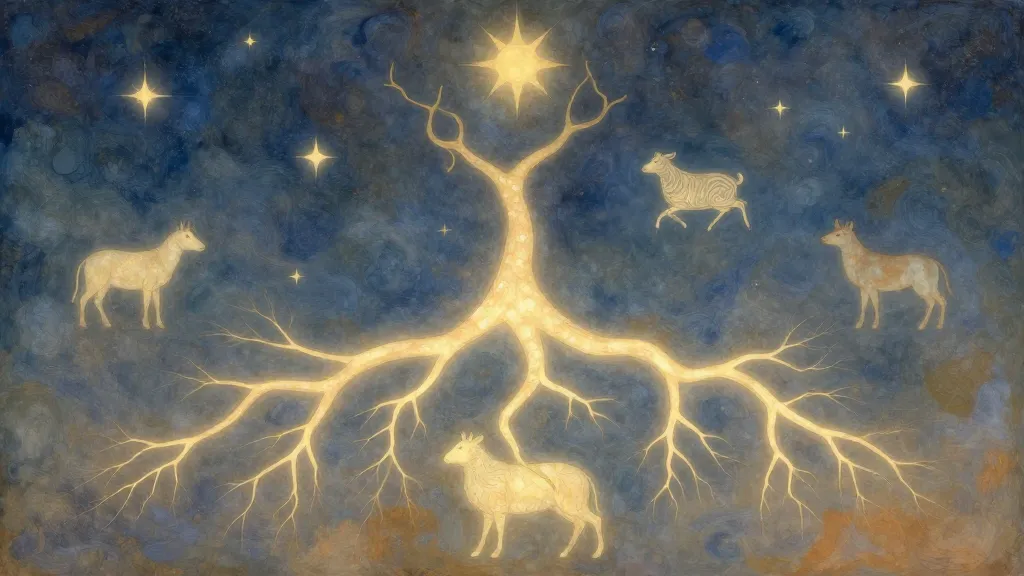
What if the mountain you are looking at isn't just a pile of rocks, but a living ancestor with a memory?
For tens of thousands of years, people across the globe have practiced Indigenous Spirituality, a way of living that sees the entire world as alive and filled with spirit. Unlike some religions that live inside books, these traditions are found in the soil, the stars, and the Oral Tradition passed down through generations.
Imagine standing in a forest where the trees are not just plants, but your oldest relatives. You aren't just visiting the woods: you are part of them. This feeling of belonging to the landscape is the heartbeat of Indigenous spirituality. It is not one single religion with one single leader. Instead, it is thousands of different ways of knowing the world.
From the Aboriginal peoples of Australia to the Haudenosaunee in North America, these traditions share a deep sense of Interconnectedness. They believe that humans are not the bosses of the planet. We are simply one small part of a giant, breathing web. If you pull on one string of that web, the whole thing vibrates.

Finn says:
"If the mountain is a grandfather, do you have to ask it for permission before you climb it? That would take forever!"
The World is Alive
Most modern science books describe rocks, water, and wind as 'inanimate' or not alive. But in many Indigenous traditions, there is no such thing as an inanimate object. This idea is sometimes called Animism. It is the belief that every river has a personality and every stone has a spirit.
If you believe a river is alive, you treat it very differently than if you think it is just a source of plumbing. You might say 'thank you' to the water before you take a drink. You might ask for permission before you cut down a tree to build a house. This creates a relationship based on respect and Reciprocity, which means giving back as much as you take.
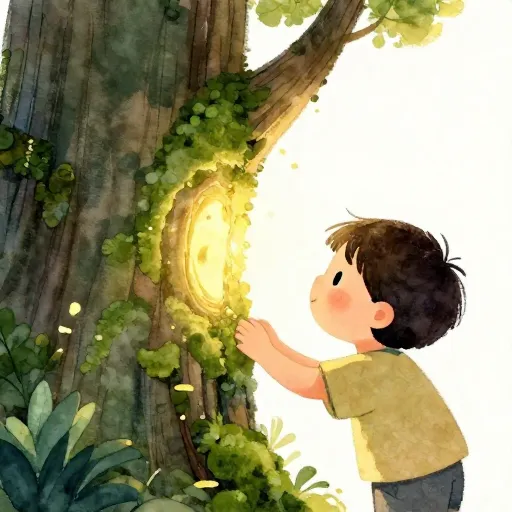
Imagine you are walking through a forest. Instead of seeing 'bushes' and 'dirt,' you see your cousins, your teachers, and your pharmacy. The moss on the north side of the tree is a compass, and the peppermint leaf is a medicine for your stomach. Everything has a name and a job.
When you see the world this way, nature becomes a community of persons. Some of these persons are humans, some are birds, and some are mountains. This is why many Indigenous people refer to animals as 'the four-legged' or 'the winged ones,' treating them like different nations of people. It is a world where everyone has a voice, even if they don't speak in human words.
In the Western tradition there is a hierarchy of beings... In the Indigenous way of knowing, humans are the 'younger brothers' of Creation.
Maps Made of Music
How do you remember the history of a place if you don't use books? You use the land itself. For the Aboriginal and Torres Strait Islander peoples of Australia, the landscape is a library of stories. These are often called Songlines.
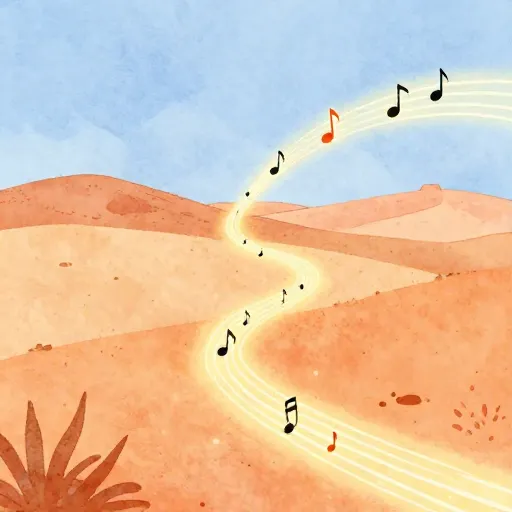
Aboriginal Songlines are so accurate that modern scientists have used them to find ancient coastlines that have been underwater for thousands of years. The songs remembered exactly where the beach used to be before the ice melted!
A Songline is a path across the land that marks the route taken by 'Creator Beings' during the beginning of time. By singing a specific song, a traveler can navigate for hundreds of miles. The song describes landmarks: a red rock here, a water hole there. As long as you know the tune, you are never lost, because the earth itself is the map.

Mira says:
"It's like how our bodies are made of atoms from old stars. We aren't just *on* Earth, we are a piece of Earth that's walking around."
These stories aren't just about finding your way to a snack. They are the 'Law' of the land. They teach people how to behave, which plants are safe to eat, and how to care for the environment. These stories have been passed down for over 60,000 years, making them some of the oldest continuous pieces of human knowledge on Earth.
The Circle of Time
In many cultures today, we think of time like a straight line. The past is behind us, the future is ahead, and we are moving away from our history. Indigenous spirituality often sees time as a circle or a spiral. This is the concept of Deep Time.
In a circle, the Ancestors are not 'gone' just because they lived a long time ago. Their spirits remain in the wind, the soil, and the stories. They are still part of the community. When a person makes a big decision, they don't just think about what is good for them today. They think about how it will affect the people living seven generations from now.
Next time you are outside, try to find one thing that looks 'boring' - like a grey rock or a patch of weeds. Sit with it for three minutes. Ask yourself: If this rock could tell a story about the last hundred years, what would it say? Who has sat on it? What has the weather done to it?
This way of thinking makes people act as a Caretaker for the earth. If you believe your great-great-grandchildren are waiting to inherit the forest, you make sure that forest stays healthy. You become a steward of the world rather than an owner of it.
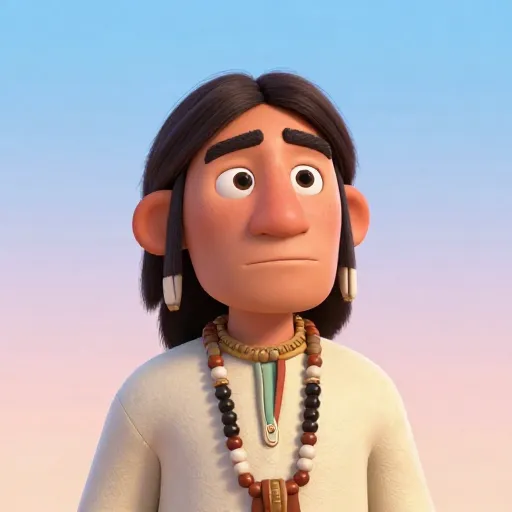
The first fruit of the spirit is silence.
Survival and Strength
For a long time, Indigenous people were told their spirituality was wrong or 'backwards.' During the era of Colonization, many were forced to stop speaking their languages and practicing their ceremonies. Schools were built to make Indigenous children act like Europeans, often separating them from their families and their land.
Despite this, Indigenous spirituality did not disappear. It is currently in a period of great Resurgence. Young people are learning the ancient languages again. They are finding that the wisdom of their ancestors - especially about how to live in balance with nature - is exactly what the modern world needs to solve problems like climate change.
Through the Ages
Today, many people are realizing that Indigenous knowledge is a form of science. While Western science uses microscopes, Indigenous science uses thousands of years of observation. Both are looking for the truth about how the world works.
Many modern cultures see the Earth as a 'resource.' This means it is a collection of things we can use, like coal for power or wood for furniture.
Indigenous spirituality sees the Earth as a 'relative.' This means it is a living being we have a relationship with, like a grandmother or a brother.
Listening to the Silence
To practice this kind of spirituality, you don't necessarily need a temple or a church. You need a quiet heart and a pair of open ears. It is about paying attention. It is the realization that you are never truly alone, because the world around you is constantly communicating.
Finn says:
"If a story has lasted for ten thousand years without being written down, it must be the most important thing ever told."
This isn't just about the past: it is about right now. It is about noticing the way the shadows move across your bedroom floor or how the air smells before a rainstorm. It is a way of being 'awake' to the magic of the ordinary. When we recognize that we belong to the earth, we start to take care of it as if it were our own body.

That is my mother, the Earth... She is part of me.
The Great Balance
One of the most important ideas in Indigenous spirituality is balance. Everything in nature has a place, and every creature has a job to do. Even 'scary' things like fire or storms have a purpose. Fire clears out old growth so new seeds can sprout. Storms bring the water that keeps life moving.
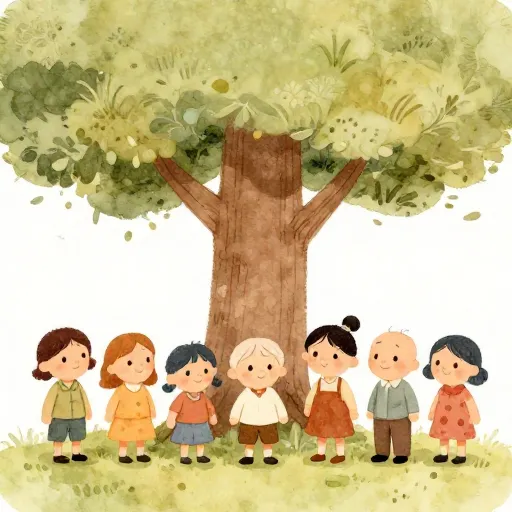
The 'Seven Generations' principle used by many Native American nations means that before making any big decision, leaders must think about how it will affect the children born seven generations from now. That is about 140 years into the future!
When humans get too greedy or forget their place, the balance is broken. Indigenous spirituality acts as a reminder of how to fix it. It tells us that we aren't here to 'fix' nature, but to listen to it. By following the Protocol - the traditional rules of respect - we can find our way back to a healthy relationship with the planet.
Something to Think About
If you had to pick one thing in nature to be your 'teacher,' what would it be?
There isn't a right answer here. You might choose a river because it's always moving, or a mountain because it's always still. What could that teacher show you about how to live?
Learning about these traditions isn't just a history lesson. It is an invitation. It invites us to look at a tree not just as wood for a desk, but as a living neighbor. It invites us to see the stars not just as burning gas, but as our ancestors watching over us. It is a way of making the whole world feel like home.
Questions About Religion
Is Indigenous spirituality the same as a religion?
Do Indigenous people still live this way today?
Can I practice this if I'm not Indigenous?
A World Full of Neighbors
The next time you walk outside, remember that you are walking through a giant conversation. The wind is whispering to the leaves, the birds are calling to the sun, and the earth is holding everything together. You don't need to know all the ancient songs to start listening. You just need to remember that you are a part of the web, and the web is glad you are here.
