Have you ever looked at a tiny ant on the sidewalk and decided to step over it instead of on it?
That small moment of kindness is at the very heart of Jainism, one of the oldest religions in the world. Born in ancient India, this way of life teaches that every living thing has a soul and deserves to be treated with deep respect and care.
Imagine you are standing in a bustling city in India more than 2,500 years ago. The air is thick with the smell of spices and the sound of chariot wheels on stone.
In this world, people were asking big questions about life, death, and how to be good. Among them was a man named Vardhamana, who would later be known as Mahavira.
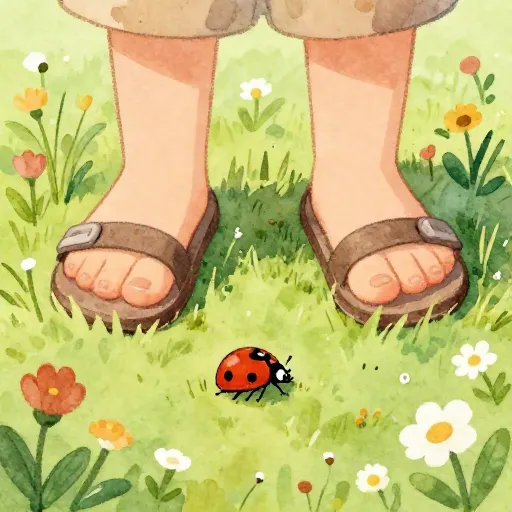
Imagine a world where people don't just avoid hurting others, but actually try to avoid hurting everything. Imagine walking so softly that you don't even crush a blade of grass. That is the world Jains try to build.
Mahavira was born a prince, surrounded by gold and silk. But he felt that true happiness didn't come from things he could own.
He left his palace behind to live a simple life, spending years in quiet thought. He wanted to understand why people suffer and how to find a path to perfect peace.

Finn says:
"So, Mahavira was a prince who decided that being a regular person with a kind heart was more important than having a crown? That sounds like a tough choice to make."
The Teachers of the Ford
Jains believe that Mahavira wasn't the first person to teach these ideas. They speak of 24 great teachers called Tirthankaras.
This word means 'ford-makers.' A ford is a shallow place in a river where you can walk across to the other side safely.

All breathing, existing, living, sentient creatures should not be slain, nor treated with violence, nor abused, nor tormented, nor driven away.
These teachers are like guides who show us how to cross the 'river' of life's many troubles. They didn't want to be worshipped as gods.
Instead, they wanted to show that every human has the potential to become enlightened. By following their example, anyone can find clarity and kindness.
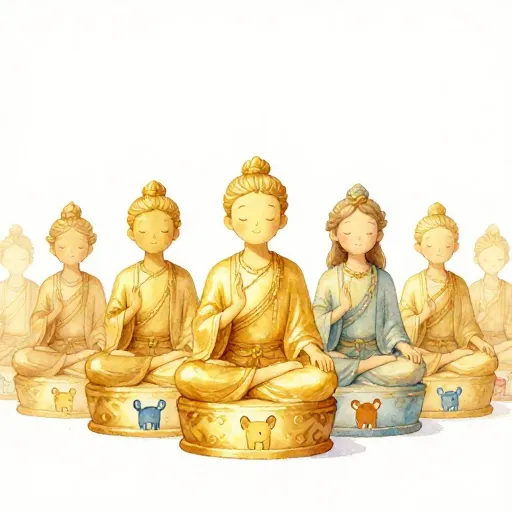
The Tirthankaras are often shown in statues sitting in perfect stillness. They are usually shown with a small symbol on their chest or base, like a lion, an elephant, or a bull, so people know which teacher they are looking at!
Ahimsa: The Power of Not Hurting
If there is one word you should remember about Jainism, it is Ahimsa. It is often translated as 'non-violence,' but it means much more than just not fighting.
Ahimsa is a radical kind of love for all living things. It is the belief that every soul, from a giant whale to a microscopic germ, is equal.
Some Jains wear a white cloth mask called a 'muhpatti' over their mouths. This isn't for germs, it's to make sure they don't accidentally breathe in and kill tiny insects floating in the air!
For a Jain, practicing Ahimsa means being careful with your actions, your words, and even your thoughts. They believe that even thinking an unkind thought can leave a mark on your soul.
This is why some very dedicated Jain monks and nuns carry soft brushes. They gently sweep the ground before they step to make sure they don't accidentally hurt an insect.

Mira says:
"It's like they see the whole world as a giant web. If you pull on one tiny string by being mean to a bug, the whole web feels the shake."
The Sticky World of Karma
Why does it matter if we are gentle? Jains have a very specific view of Karma.
In some traditions, karma is like a score-sheet of good and bad deeds. In Jainism, karma is more like a physical substance: a fine, invisible dust that sticks to your soul.

The next time you feel really angry, imagine a tiny bit of dark dust floating down and sticking to your shoulder. Now, take a deep breath and imagine that as you calm down, you are gently blowing that dust away. How does your 'soul' feel now?
When we feel angry, greedy, or mean, our soul becomes 'sticky.' This attracts the heavy dust of karma, which weighs us down and keeps us from being truly free.
By practicing kindness and staying calm, we stop more dust from sticking. Eventually, we can clean our souls entirely, becoming light enough to reach a state of perfect bliss.

In every object there is a multitude of qualities.
The Elephant and the Blind Men
Jainism also teaches a very cool idea called Anekantavada. That is a big word, but it just means 'many-sidedness.'
It is the idea that no one person has the whole truth. To explain this, Jains tell a famous story about several men who have never seen an elephant before.
One person might say the elephant is like a rope because they only feel the tail. They are telling the truth about their own experience.
A person standing further back can see the tail, the ears, and the trunk. They realize that everyone else has a piece of the puzzle, but nobody has it all.
One man touches the trunk and says, 'An elephant is like a thick snake!' Another touches the leg and says, 'No, an elephant is like a tree trunk!'
A third touches the ear and insists, 'You are both wrong, an elephant is like a giant fan!' Each person is right about what they feel, but they are all wrong about the whole elephant.
Finn says:
"The elephant story makes so much sense. I guess the next time I argue with my sister, I should ask which part of the elephant she's holding onto!"
Jains believe we should listen to others because they might be seeing a part of the 'elephant' that we can't see. This makes Jains very peaceful and open to different ideas.
If you understand that you only have part of the truth, you are much less likely to start a fight with someone who disagrees with you.
How Jains Live Today
There are millions of Jains living today, mostly in India but also all over the world. They don't all live in caves or sweep the ground with brushes.
Most Jains are 'laypeople' who have jobs, go to school, and live in houses. But they still follow the core principles of their faith every day.
Jainism Through the Ages
Most Jains follow a strict vegetarian diet. Many go even further and don't eat root vegetables like potatoes or onions.
This is because pulling a root out of the ground kills the whole plant and disturbs the tiny creatures living in the soil. Instead, they eat fruits and grains that can be harvested without ending the plant's life.

Non-violence is the greatest force at the disposal of mankind.
Jainism also encourages Aparigraha, which means not being greedy. It is the idea that we should only take what we truly need.
In a world where we are often told to buy more and more, Jains remind us that 'stuff' doesn't make us who we are. Being satisfied with less leaves more room in our hearts for others.
Something to Think About
If you believed that every single thing around you had a soul, how would you change the way you walk through your neighborhood today?
There isn't a right or wrong way to answer this. Just imagine how the world might look if you treated every pebble, plant, and person with the same deep respect.
Questions About Religion
Do Jains believe in God?
Why are Jains so focused on insects?
What is the main symbol of Jainism?
A World of Quiet Wonders
Jainism asks us to slow down and notice the life that is happening all around us. It teaches that being powerful doesn't mean having the most toys or winning every fight, it means having the strength to be gentle. As you go about your day, remember the story of the elephant: there is always more to the story than what you can see right now.