
Have you ever wondered why our calendar counts the years starting from one specific person’s birth?
Whether you visit a church, read history books, or just look at a calendar, you will find the name of Jesus. He lived in a small corner of the Roman Empire over two thousand years ago, yet his ideas about love, power, and forgiveness transformed the way humans think.
Imagine a world without cars, electricity, or even paper books. Two thousand years ago, in a dry, dusty land called Judea, people traveled by foot or by donkey. The sun was hot, the water was precious, and life was often very difficult for ordinary families.
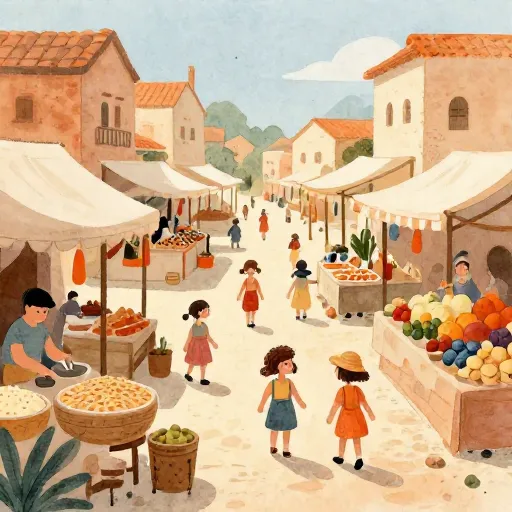
Imagine standing in a marketplace in Judea. You smell roasted grain, sun-baked dust, and the sharp scent of olives. You hear people arguing in Aramaic, a language that sounds rhythmic and musical. Roman soldiers in shiny metal armor walk by, their boots clicking on the stones, reminding everyone who is in charge.
In this world, a boy named Yeshua (which we now call Jesus) grew up in a tiny village called Nazareth. He was the son of a carpenter, and for most of his life, he probably worked with wood and stone just like his father. He was part of the Jewish people, who had a long history of stories, laws, and a deep hope that a great leader would one day save them.

Finn says:
"If he was a carpenter, I wonder if he ever looked at a piece of wood and thought, 'One day, people will build giant cathedrals because of me.' Probably not, right?"
When Jesus was about thirty years old, he left his carpenter’s bench and began to travel across the countryside of Galilee. He didn’t have an army or a palace. Instead, he had a group of friends called Apostles and a way of speaking that made people stop in their tracks. He told stories about everyday things like seeds, sheep, and bread to explain massive ideas about the universe.
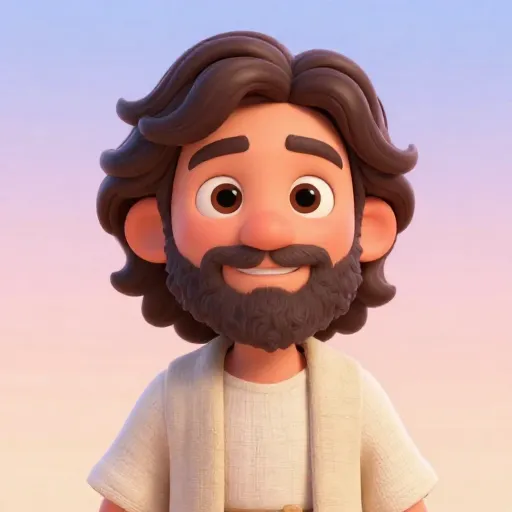
But I tell you, love your enemies and pray for those who persecute you.
The Upside-Down Kingdom
Most leaders in the ancient world wanted to show how strong they were. They wore armor, collected taxes, and made sure everyone knew who was boss. But Jesus talked about a different kind of power, something he called the Kingdom of God. In his world, the people who were usually ignored were the most important.
What did this kingdom look like?
- The poor were considered blessed and lucky.
- The powerful were told to be servants to others.
- Children were held up as the best examples of how to live.
- Enemies were not to be fought, but to be loved and prayed for.

Jesus’s name wasn't actually 'Jesus' when he was alive! In his own language, Aramaic, people called him 'Yeshua'. The name 'Jesus' comes from how the Greeks and Romans translated it much later.
This was a very strange way of thinking. Imagine if a teacher told you that the best way to win a race was to let everyone else go first. Jesus used Parables, which are short stories with a hidden meaning, to explain these big ideas. These stories weren't always easy to understand, and that was the point: he wanted people to think for themselves.

Mira says:
"His parables are like puzzles. He didn't just give people the answers: he gave them a story and let them find the answer inside themselves. That's a very respectful way to teach."
One of his most famous parables is about a mustard seed. He said the kingdom of heaven is like the smallest seed in the garden, but when it grows, it becomes a massive tree where birds can build nests. He was telling his followers that big, world-changing things often start very small and very quiet.
The Teacher on the Hill
Jesus spent a lot of time outdoors. He taught on hillsides, from fishing boats, and in crowded marketplaces. One of his most famous speeches is called the Sermon on the Mount. During this talk, he gave a list of blessings known as the Beatitudes. These weren't blessings for the rich or the famous, but for the peaceful and the kind.
Historians look at Jesus as a real man who lived in a specific time. they study his culture and the Roman Empire to understand his life as a teacher and social reformer.
People of faith believe Jesus was more than just a man. They see him as the Son of God, or a Savior, who came to earth to bring people closer to the divine.
Many people were excited by his message, but some people were very nervous. The Roman leaders who ruled the land didn't like anyone who gathered large crowds. They worried he might start a revolution. Some of the religious leaders, the Sanhedrin, were also upset because Jesus challenged their old rules and spent time with people they considered "unclean" or bad.

He comes to us as One unknown, without a name, as of old, by the lake-side, He came to those men who knew Him not.
Despite the danger, Jesus kept traveling. He became known not just for his words, but for his actions. He was famous for eating dinner with people that nobody else liked. In those days, who you ate with was a big deal. By sitting down with outcasts, he was saying that every single person had worth, no matter what they had done.
A Difficult Ending and a New Start
After three years of traveling, Jesus went to the city of Jerusalem for a big festival. The crowds cheered for him, but the leaders were ready to stop him. He was arrested, put on trial, and sentenced to a terrible form of punishment called Crucifixion. He died on a cross outside the city walls.

Jesus often used things people could see to explain things they couldn't. Find a tiny seed or a small pebble. Hold it in your hand and think: how could something this small grow into something that helps many people? That is how a 'Big Idea' works!
For his followers, this felt like the end of everything. But then, something even more surprising happened. His friends claimed that three days later, his tomb was empty and they saw him alive again. This event, known as the Resurrection, is why his followers became so brave. They started traveling to distant lands to share his message, even when it was dangerous.
Through the Ages
As the centuries passed, the story of Jesus moved far beyond the dusty roads of Galilee. It reached the snowy forests of Europe, the vibrant cities of Africa, and eventually, every corner of the globe. Artists painted him, musicians wrote songs about him, and scientists and philosophers wrestled with his ideas about what it means to be a good human.
The Idea that Lives On
Today, you don't have to be a religious person to find Jesus’s ideas interesting. His focus on the "golden rule" (treating others the way you want to be treated) has become a foundation for how many people think about fairness and justice. He showed that one person, without any money or weapons, could change the course of history just by changing how people think.

I am an extremist for love. Did not Jesus say, 'Love your enemies'?
We don't have any photographs of Jesus, and he never wrote a book himself. We only have the accounts written by his friends and the echoes of his words in history. This leaves us with a lot of questions. Was he a philosopher? A prophet? A rebel? People have been debating these questions for two thousand years, and they probably always will.
Finn says:
"It’s wild that we don’t even know exactly what he looked like. It’s like he left his ideas behind instead of a selfie. Maybe that makes the ideas more important?"

Jesus never wrote anything down. Everything we know about his words comes from his friends and followers who memorized them and wrote them down years after he was gone. In his culture, memory was a super-power!
Learning about Jesus is like looking into a very old, very deep well. You can see your own reflection, but you can also see the reflections of millions of other people who have looked into the same water. It is a story about the power of love to survive even the hardest times.
Something to Think About
If you were to create a 'Kingdom' based on your own values, who would be the most important people in it?
There are no right or wrong answers here. Think about what makes a person 'great' in your eyes. Is it power, or is it something else, like kindness or curiosity?
Questions About Religion
Did Jesus really exist as a real person?
What does the word 'Christ' mean?
What did Jesus look like?
A Story Still Being Written
The story of Jesus isn't just a museum piece from the ancient world. It is an ongoing conversation about how we treat our neighbors and what we do with our lives. Whether you see him as a teacher, a historical figure, or a religious leader, his life invites us to wonder: what does it truly mean to love?
