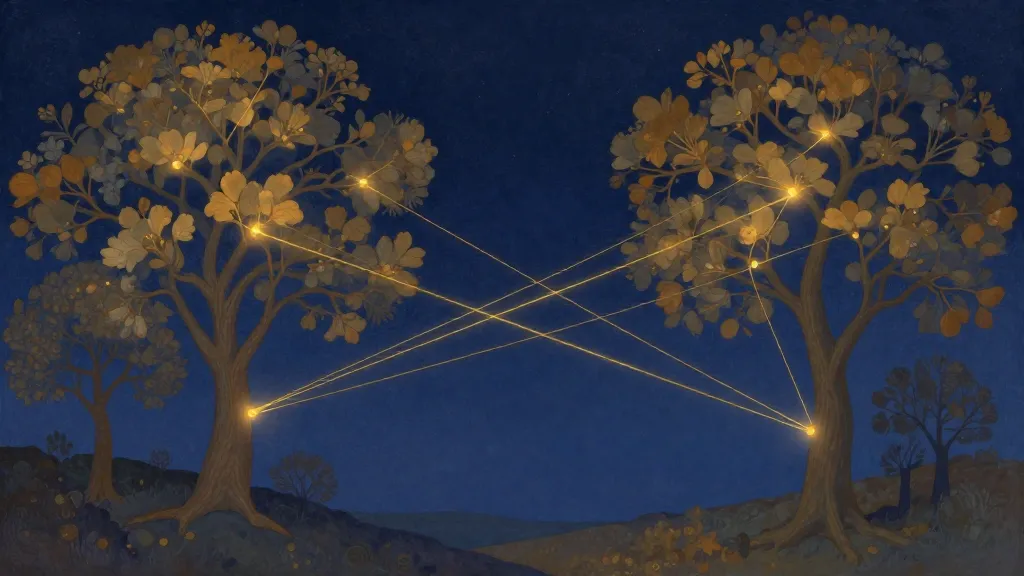
Have you ever tossed a pebble into a perfectly still pond and watched the circles spread out until they touched the very edge of the shore?
This simple movement is a lot like karma, an ancient idea from India that explores how our actions, thoughts, and words create ripples in the world around us. It is a way of looking at the universe as a place where everything is connected, and where what we do today helps shape what happens to us tomorrow.
Imagine you are standing in a vast, sun-drenched field in Ancient India, three thousand years ago. The air smells of dry earth and jasmine, and nearby, a teacher sits under the shade of a wide banyan tree.
This is where the story of karma begins, not as a rule book or a list of punishments, but as a way to understand the deep mystery of why things happen the way they do.
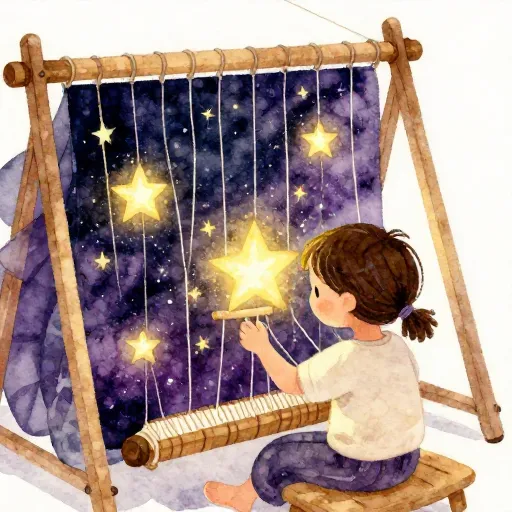
Imagine a giant loom that stretches across the entire sky. Every time you make a choice, you weave a single thread into the fabric. Some threads are dark and rough, while others are bright and silk-smooth. Over a long, long time, these threads create the pattern of the world you live in.
The word karma actually comes from a very old language called Sanskrit, and it literally means action. At its simplest, it is the law of cause and effect: for every action you take, there is a result that follows it.
Think of it like a garden where every choice you make is a seed you plant in the soil of your life.
As you sow, so shall you reap.
In the beginning, people in India believed that karma was mostly about the rituals and ceremonies they performed. They thought that if they said the right prayers and made the right offerings, the universe would stay in balance.
Over time, thinkers began to realize that karma wasn't just about big ceremonies, but about the small things we do every single day.

Finn says:
"What if I do something good by accident? Like, if I drop a coin and someone who really needs it finds it. Does that count as good karma even if I didn't mean to do it?"
They started to see that our lives are a continuous flow, which they called samsara. This is the idea that the soul travels through many different lives, like a traveler moving from one house to another.
In this view, the karma you gather in one life might not show up until your next life, which explains why the world sometimes feels a bit unfair in the short term.
In some ancient Hindu traditions, karma was seen as a very strict law. If you did something bad, the universe would eventually bring a specific 'fruit' or result that matched that action exactly.
Other thinkers, like many Buddhists, argued that karma is more flexible. They believed that by doing many good things now, you could change how your old 'bad' karma affects you, like adding fresh water to a salty cup.
One of the most interesting things about karma is that it isn't just about what you do, but why you do it. This is what philosophers call intention, or the secret reason hiding behind your actions.
If you help a friend because you genuinely want them to feel better, that creates a different kind of ripple than if you help them just because you want a reward.
It is a man’s own mind, not his enemy or foe, that lures him to evil ways.
Imagine you are playing soccer and you accidentally trip another player while trying to get the ball. Even though the result is the same as if you had tripped them on purpose, many traditions believe the karma is different.
Because your heart was focused on the game and not on hurting someone, the "seed" you planted has a different energy.
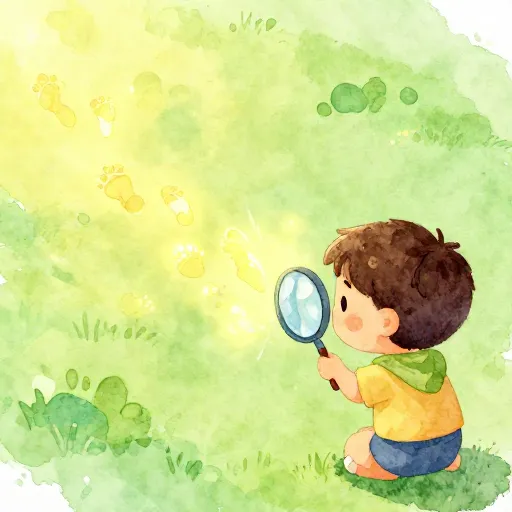
For one day, try to be a 'Karma Detective.' Notice every time you do something for someone else. Did you do it because you wanted to, or because you felt you had to? At the end of the day, think about how your heart felt after each action.
This brings up a big question: is karma a form of cosmic justice, like a giant scorecard in the sky? Not exactly.
Many people who believe in karma see it more like a natural law, similar to gravity. Gravity doesn't "decide" to make you fall if you trip: it just exists as a rule of the physical world.

Mira says:
"It's like the world is an echo chamber. If you yell something mean, you hear mean things back. But if you sing, the world sings back at you. I wonder how long the echo lasts?"
Karma works in a similar way, acting as a teacher rather than a judge. It suggests that the world is a giant mirror, reflecting back to us the quality of our own hearts and minds over a very long time.
If we are kind, we are essentially training ourselves to live in a world that feels kind; if we are angry, we are building a world that feels sharp and prickly.
Through the Ages
As the idea of karma traveled, it changed and grew depending on who was talking about it. For example, in Buddhism, karma is closely tied to the idea of the mind.
They believe that our thoughts are the most powerful form of action, because every physical act begins as a tiny spark of a thought.
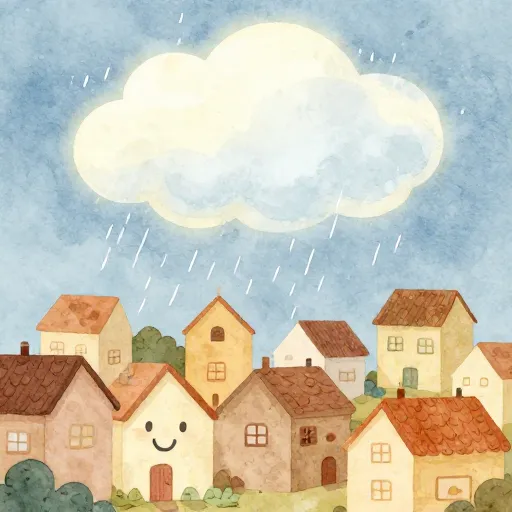
In some parts of the world, people believe that karma can even affect the weather or the health of a whole city! They think that if everyone in a town is kind and honest, the rain will fall at the right time for the crops to grow.
In another tradition called Jainism, thinkers took karma very literally. They imagined karma as a kind of invisible dust that sticks to the soul when we do something harmful.
To them, the goal of life was to keep the soul perfectly clean and shiny by being incredibly gentle to every living creature, even tiny insects.
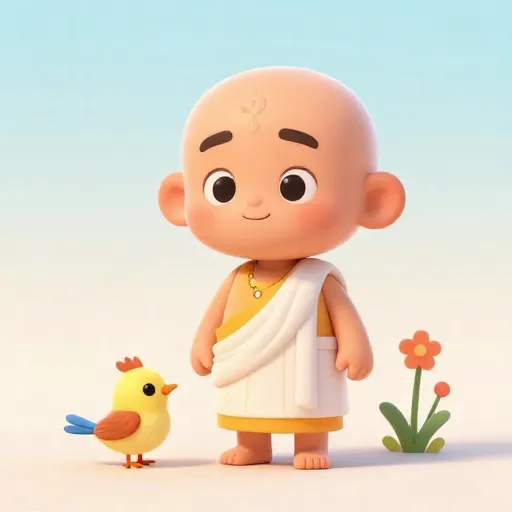
All breathing, existing, living, sentient creatures should not be slain, nor treated with violence.
This leads to a beautiful but challenging idea called ahimsa, which means non-violence. If everything we do comes back to us, then the best way to live is to make sure we don't cause any unnecessary ripples of pain.
It is a way of living that requires us to be very awake and aware of how we move through the world.
Finn says:
"If karma is like gravity, maybe we can't 'break' the rules, we can only learn how to fly within them. Does that mean we are always practicing for the next life?"
You might wonder: if karma is real, why do bad things happen to good people? This is one of the hardest questions in philosophy, and there isn't one simple answer that everyone agrees on.
Some say it's because of karma from a past life that we can't remember, while others say that karma is just one part of a much bigger, more complex machine that we don't fully understand.
The word 'karma' has become so popular that it is now used in English songs, movies, and even video games. However, in pop culture, it's often used to mean 'instant revenge,' which is very different from the slow, deep growth the ancient philosophers described.
Thinking about karma can make us feel a heavy sense of responsibility, but it can also be very empowering. It means that we are not just victims of luck or fate.
Instead, we are the architects of our own future, and every moment provides a fresh opportunity to plant a better seed.
Something to Think About
If you could see the ripples of your actions like visible waves in the air, how would that change the way you walk through your school or your home today?
There is no right or wrong answer to this. Just let your imagination drift and see what kind of patterns you might find.
Questions About Religion
Is karma the same thing as luck?
Does karma mean I'm being punished?
Can I get rid of 'bad' karma?
A World of Connections
Karma invites us to see ourselves as part of a much bigger story. It suggests that no act is too small to matter and that every kind word we speak adds a little bit of light to the world. Whether you believe in it as a cosmic law or just a good way to live, it reminds us that we are always, in every moment, weaving the world together.
