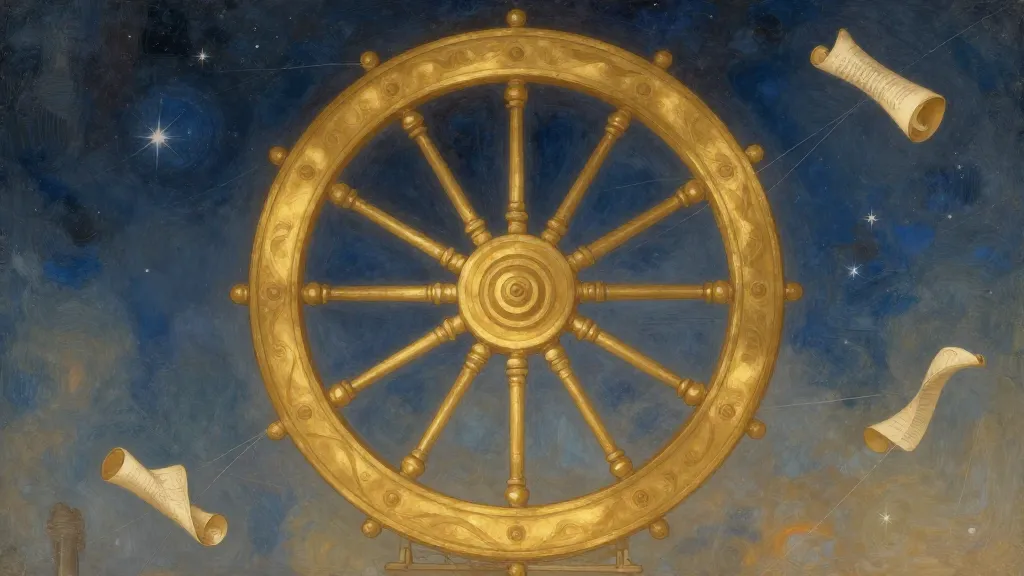
Imagine a story so long that it would take you two whole weeks of non-stop reading just to reach the end.
This is the Mahabharata, an ancient Indian Epic that is ten times longer than the Iliad and the Odyssey combined. It is not just a book of adventures: it is a deep look at the human heart and the difficult choices we make every day.
The Mahabharata began as an oral tradition in ancient India thousands of years ago. Before it was ever written down, poets and singers traveled from village to village, memorizing thousands of verses. They performed these stories under the stars, accompanied by music and the crackle of fires.
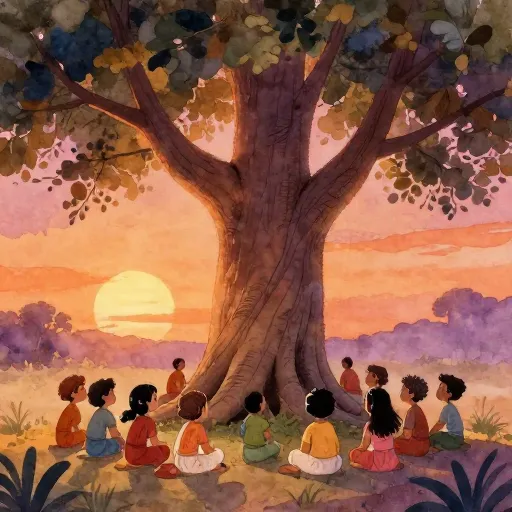
Imagine a marketplace in ancient India. A storyteller sits under a banyan tree, the air smelling of jasmine and spices. Hundreds of people crowd around, leaning in to hear the next part of the story, their eyes wide as they hear about flying chariots and celestial weapons.
Historians believe the events in the story might reflect real conflicts that happened between 1000 and 800 BCE. The poem itself was composed in Sanskrit, the ancient language of India, over several centuries. It grew and changed like a living forest, adding new stories and philosophical debates along the way.
Finn says:
"If the story was told out loud for hundreds of years before being written, did it change every time someone new told it? I wonder if the listeners ever shouted out their own ideas for the ending!"
At the center of this massive story is a family feud. It follows two groups of cousins: the five Pandavas and the one hundred Kauravas. While they grew up in the same palace, they were very different, and their struggle for the throne eventually led to a war that changed the world.
What is found here may be found elsewhere, but what is not found here is found nowhere else.
According to legend, the story was composed by a wise sage named Vyasa. But Vyasa didn't write it alone. He needed someone who could keep up with his fast thoughts and complicated verses, so he asked for help from a very special scribe.

Legend says that Ganesha, the elephant-headed god of wisdom, agreed to write down the poem as Vyasa spoke it. But there was a catch: Vyasa had to speak without stopping, and Ganesha had to understand every word before he wrote it. When Ganesha's pen snapped, he broke off his own tusk to use as a pen so he wouldn't miss a single verse!
To understand the Mahabharata, you have to understand the idea of Dharma. This is a word that is hard to translate into English, but it means something like duty, rightness, or the natural law of the universe. Every character in the story is trying to figure out what their dharma is.
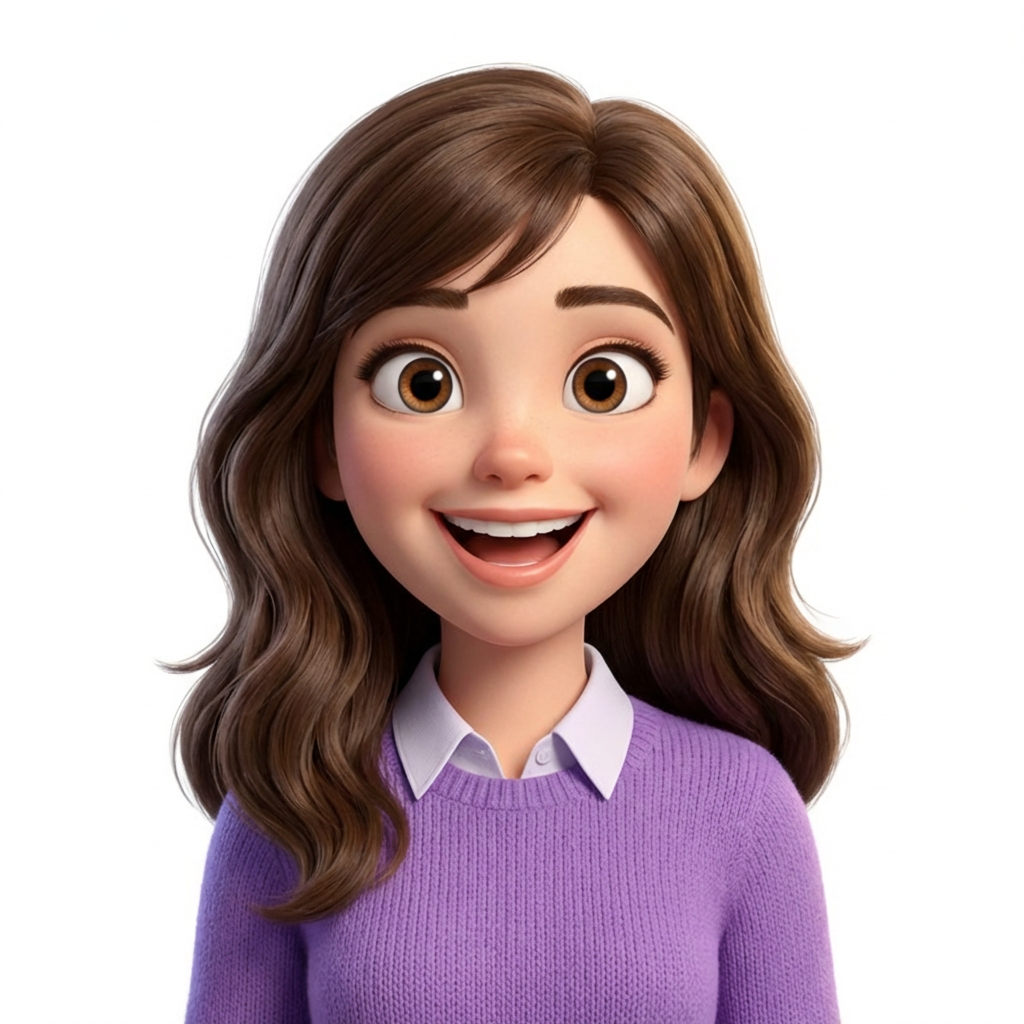
Mira says:
"Dharma reminds me of a compass. It doesn't tell you exactly which path to take, but it tells you which way is 'North' so you can try to find your own way through the woods."
Sometimes, doing what is right feels clear: like telling the truth or helping a friend. But the Mahabharata shows us that life is often more complicated than that. Sometimes, two different duties pull you in opposite directions, and there is no easy way to choose between them.
Think of a time you had to make a choice between two things that both felt right. Maybe you wanted to stay and help a sibling, but you also promised a friend you'd play with them. That feeling of 'stretching' is what the characters in the Mahabharata feel when they talk about Dharma. Draw a picture of your two choices and see if there is a 'middle path' that could help both.
The story reaches its peak on a massive battlefield called Kurukshetra. Before the fighting begins, one of the Pandava brothers, a great archer named Arjuna, stops his chariot in the middle of the field. He looks at the other side and sees his uncles, teachers, and cousins waiting to fight him.
He should fight because he is a warrior and his cause is just. He needs to protect the people from the unfair rule of the Kauravas.
He should not fight because hurting his family is wrong, and no kingdom is worth the lives of the people he loves.
Arjuna is filled with sadness and doubt. He drops his bow and refuses to fight, wondering if any victory is worth the cost of hurting his family. His chariot driver, who is actually a divine Avatar named Krishna, then begins a famous conversation with him.
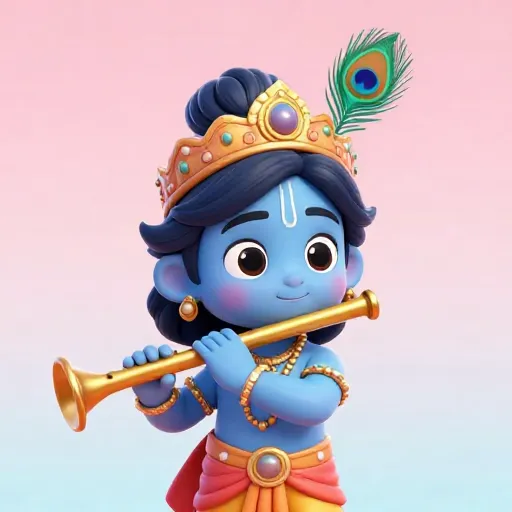
You have a right to perform your prescribed duties, but you are not entitled to the fruits of your actions.
This conversation is known as the Bhagavad Gita, or the Song of God. Krishna explains that while we cannot always control the results of our actions, we must still perform our duty with a clear heart. He teaches Arjuna about Karma, the idea that every action has a consequence that ripples through time.
Finn says:
"It's interesting that the hero Arjuna gets sad and wants to stop. Most stories make the hero look like they are never afraid, but the Mahabharata lets them be confused just like we are."
The war at Kurukshetra lasts for eighteen days and is filled with moments of bravery and moments of great sadness. The Mahabharata does not treat its characters like simple superheroes. Even the "good" characters make mistakes, and even the "villains" sometimes show great honor.
The Mahabharata is so huge that it contains about 1.8 million words. That's roughly fifteen times the size of the entire Harry Potter and the Sorcerer's Stone book!
After the war, the story continues for a long time. It follows the survivors as they try to rule a broken kingdom and eventually seek Moksha, which is the liberation from the cycle of life and death. It asks if a war can ever truly be won if so much is lost in the process.
Anger is the slayer of the spirit of man, it is like the grass that is consumed by fire.
Through the centuries, the Mahabharata has been told in many ways. It has been turned into shadow puppet plays in Indonesia, massive television series in India, and modern graphic novels all over the world. People keep coming back to it because it feels as real today as it did 2,500 years ago.
The Journey of the Great Epic
When you read the Mahabharata, you aren't just reading about ancient kings and magic weapons. You are looking into a mirror. The questions the characters ask are the same ones we ask ourselves today: How do I know what is right? How do I deal with unfairness? What does it mean to be a good person?
Something to Think About
If you were Arjuna, standing on that battlefield, would you listen to your duty or your heart?
There is no right or wrong answer to this question. Even the wisest thinkers have debated it for thousands of years. What feels true to you today might feel different tomorrow, and that's okay.
Questions About Religion
Is the Mahabharata a religious book or a history book?
Who are the good guys and the bad guys?
Why is the Bhagavad Gita so famous on its own?
A Story That Never Ends
The Mahabharata ends with the characters walking into the mountains, but the story doesn't truly stop there. Every time you think about what is fair, or wonder why bad things happen to good people, you are participating in the same conversation the Pandavas had thousands of years ago. The epic lives on in the questions we ask and the choices we make.