
Have you ever noticed that your mind feels like a crowded room where everyone is talking at once?
This internal noise is something humans have felt for thousands of years. To manage it, people developed meditation, a practice of training the mind to find a state of mindfulness and calm.
Imagine you are sitting in a forest in ancient India over 2,500 years ago. The air is thick with the scent of jasmine and the sound of cicadas.
There are no cars, no phones, and no buzzing notifications. Yet, even back then, people found that their inner world was just as noisy as ours is today.
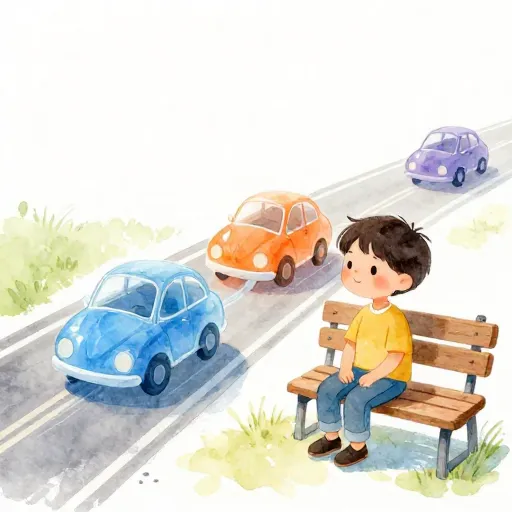
Imagine your mind is a busy street in a big city. The thoughts are like cars driving past. Meditation isn't about stopping the cars: it is about sitting on the sidewalk and watching them go by without jumping in front of them.
They realized that humans have a habit of worrying about the past or jumping ahead to the future. To help with this, they began to experiment with ways to sit still and just notice the present moment.
This was the birth of meditation, a word that comes from the Latin word meditatum, which means to ponder or reflect.
The Prince Who Sat Still
One of the most famous figures in the history of meditation was a young man named Siddhartha Gautama. He lived in a palace and had everything he could ever want, but he felt that something was missing.
He wanted to understand why people suffered and how they could find true peace. He eventually left his home and spent years studying with different teachers in the mountains.

Finn says:
"If Siddhartha had everything he wanted in a palace, why was he still unhappy? That makes me wonder if having more stuff actually makes things harder."
Eventually, he decided to sit under a large fig tree, now known as the Bodhi tree, and refused to get up until he understood the nature of the mind. He sat for days, watching his thoughts come and go like clouds passing through a clear blue sky.
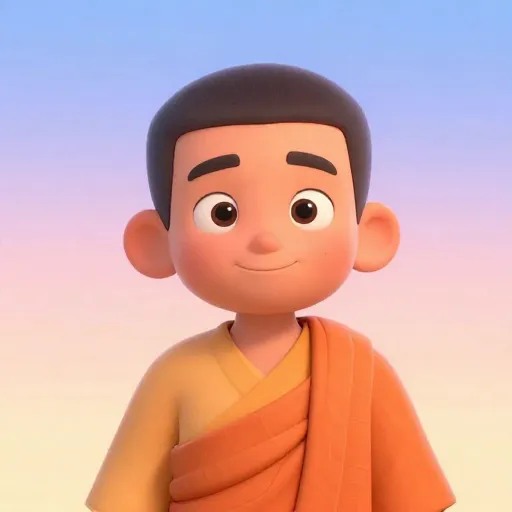
Your worst enemy cannot harm you as much as your own thoughts, unguarded.
When he finally rose, he had become the Buddha, or the Enlightened One. He didn't claim to be a god: he simply said he was awake.
His primary tool for this awakening was a practice called Vipassana, which means seeing things as they really are. This was one of the earliest structured forms of meditation in the world.
More Than Just Sitting
While we often imagine meditation as someone sitting cross-legged with their eyes closed, it has taken many different forms throughout history. In ancient India, the Vedic traditions used sound to focus the mind.
They chanted repetitive phrases called mantras to create a vibration that helped the brain settle into a rhythm. This wasn't just about the words, but about the feeling of the sound in the body.
Try the 'Balloon Breath.' Sit comfortably and imagine there is a balloon in your belly. As you breathe in through your nose, imagine the balloon filling up. As you breathe out through your mouth, imagine it slowly deflating. Do this three times and notice if your shoulders feel any different.
Across the world in Ancient Greece and Rome, philosophers practiced their own versions of meditation. They called it contemplation, which involved deeply thinking about a single idea or virtue until it felt like a part of them.
- They would visualize the vastness of the universe to make their personal problems feel smaller.
- They would practice being grateful for things they often took for granted.
- They would prepare their minds for difficult challenges by imagining them in advance.

Mira says:
"I like the idea that we can practice being brave or kind in our heads before we have to do it in real life. It's like a rehearsal for your feelings."
The Traveling Idea
As centuries passed, meditation didn't stay in one place. It traveled along the Silk Road, moving from India into China, where it mixed with local ideas to become Chan Buddhism.
When it reached Japan, it became known as Zazen, or seated meditation. In this tradition, the focus is often on the posture itself: keeping the back straight and the breath deep.
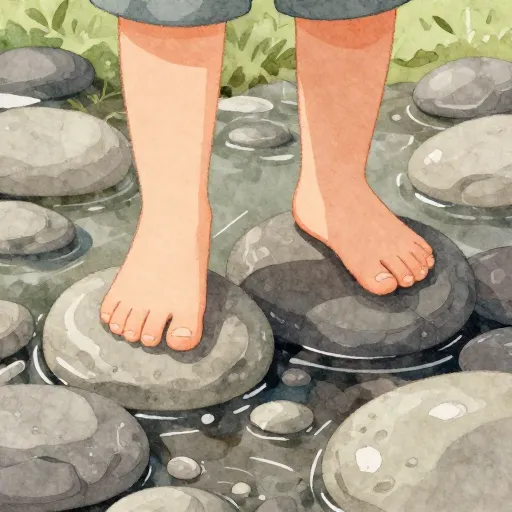
In some Japanese Zen traditions, monks practice 'walking meditation.' Instead of sitting still, they walk extremely slowly, focusing entirely on the feeling of their feet touching the ground. It proves you don't have to be a statue to meditate!
In the Middle Ages, monks in Europe used a practice called Lectio Divina. This involved reading a text very slowly, letting the words sink in, and then sitting in silence to listen for a deeper meaning.
Even though these people lived in different cultures and spoke different languages, they were all trying to solve the same human puzzle: how to be present in their own lives.
Meditation Through the Ages
The Science of the Quiet Mind
For a long time, meditation was mostly seen as a religious or spiritual practice. However, in the 20th century, scientists began to get curious about what happens inside the brain when we sit still.
They used machines to track brain waves and found that meditation changes our consciousness. It moves the brain from a state of high-alert stress to a state of calm focus.
Focusing the mind is a spiritual journey to reach a higher state of being or enlightenment.
Meditation is a biological tool that helps the brain recover from stress and improve physical health.
When you meditate, you are working with your nervous system. By slowing down your breath, you send a signal to your brain that you are safe, which allows your body to relax.
- Your heart rate slows down.
- Your muscles lose their tension.
- The part of your brain that handles big emotions, the amygdala, becomes less reactive.
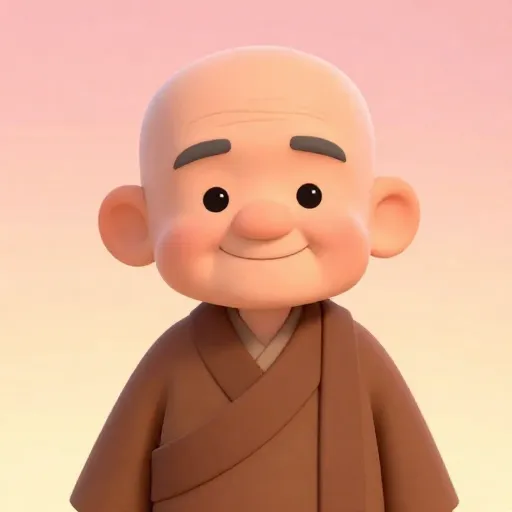
Feelings come and go like clouds in a windy sky. Conscious breathing is my anchor.
A Modern Tool for a Busy World
Today, we often use the word secular to describe meditation that isn't tied to any specific religion. This version is frequently taught in schools and hospitals as a way to manage stress and improve concentration.
It is less about reaching enlightenment under a tree and more about having a "mental gym" where you can exercise your focus. Just as you lift weights to make your muscles stronger, you meditate to make your attention stronger.
Finn says:
"So wait, if my brain keeps thinking about pizza while I'm trying to be still, am I doing it wrong? Or is the thinking just part of the practice?"
It is important to remember that meditation is not about "turning off" your brain. Your brain is designed to think, just like your heart is designed to beat.
Instead, it is about developing equanimity, which is a fancy word for staying steady even when things are difficult. It is like being the bottom of the ocean: even if there is a storm on the surface, the deep water remains still.
Scientists have found that regular meditation can actually grow the 'gray matter' in the parts of your brain responsible for memory and emotional control. It is like a superpower that literally changes your physical brain!
The History You Are Making
When you sit down to take a few deep breaths, you are joining a long line of people stretching back thousands of years. You are doing the same thing as the ancient monks, the Greek philosophers, and the curious scientists.

Look within. Within is the fountain of good, and it will ever bubble up, if thou wilt ever dig.
There is no right or wrong way to feel when you do this. Some days your mind will feel like a calm lake, and other days it will feel like a bag of jumping beans. Both are perfectly okay.
The goal is simply to be there for it, watching it happen with a bit of curiosity. In a world that is always asking you to do more, meditation is a radical act of simply being.
Something to Think About
If your mind was a weather pattern right now, would it be a thunderstorm, a sunny day, or something else entirely?
There is no 'correct' weather for a mind to have. Just notice what is happening right now without trying to change it.
Questions About Religion
What is the best age to start meditating?
Do I have to sit with my legs crossed?
How long should I meditate for?
The Space Between Thoughts
Meditation doesn't fix everything, and it won't stop you from ever feeling sad or angry. What it does is give you a little bit of space between a feeling and what you do next. In that tiny space, you might find a bit of freedom you didn't know you had.