
What does it take to lead a group of people from a place of fear to a place of hope?
Thousands of years ago, a man named Moses became the central figure of the Exodus, the journey of the Hebrew people out of slavery. He is known as a Prophet and a lawgiver who introduced the world to the idea of Monotheism, the belief in one single God.
Imagine a river that looks like a giant, winding snake of blue silk cutting through the yellow sands of Egypt. This is the Nile, and it is where our story begins over 3,000 years ago.
At this time, Egypt was ruled by powerful kings called Pharaohs. The Hebrew people, also called the Israelites, were living there as slaves, forced to build giant monuments and cities under the hot sun.
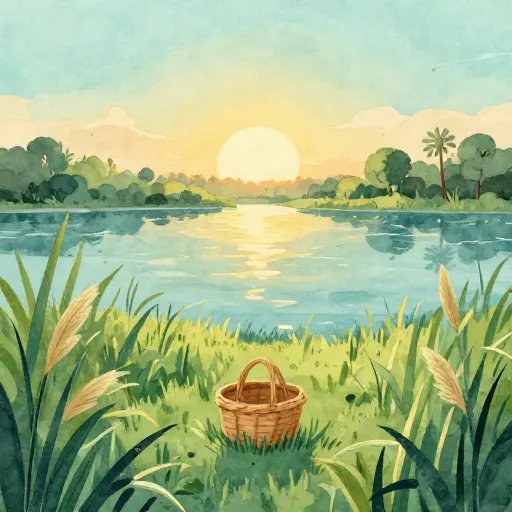
Imagine you are standing on the banks of a river. The air is thick and humid, smelling of damp earth and blooming lilies. Huge stone statues of kings tower over you, and the sun feels like a warm weight on your shoulders. Somewhere in the rustling green plants at your feet, a tiny basket is tucked away, holding a secret that will change history.
Moses was born into this world of hardship, but his mother had a plan to save him. She placed him in a waterproof basket and hid him among the tall papyrus reeds of the riverbank.
He was found by the Pharaoh’s daughter, who decided to raise him as her own son. This meant Moses grew up as a prince in the most luxurious palace on Earth, while his own people were suffering just outside the gates.

Mira says:
"Moses was like a baby in a tiny boat. It makes me think about how everyone starts small, even people who grow up to change the whole world."
The Prince Who Was a Secret
Living as a prince must have felt like a dream, but Moses always felt like something was missing. He had the finest clothes and the best teachers, but he knew his true family was working in the mud and bricks.
This double identity is a big part of who Moses was: a man caught between two worlds. Eventually, he couldn't ignore the unfairness anymore, and after a series of difficult events, he had to flee Egypt and hide in the desert of Midian.
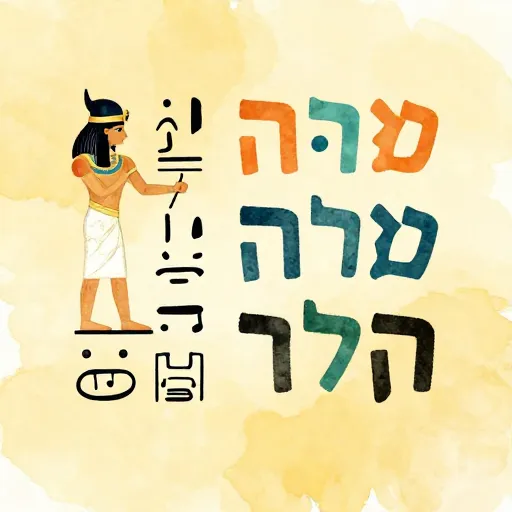
The name 'Moses' is actually a bit of a pun! In ancient Egyptian, it sounds like the word for 'son' or 'born of.' In Hebrew, it sounds like the word for 'to pull out.' This fits perfectly, because he was a son of Egypt who was pulled out of the water.
In the desert, Moses became a shepherd. He traded his royal robes for a simple staff and spent his days watching sheep under the wide, quiet sky.
This was a major change from the noisy, busy life of a palace. It was in this quiet place that Moses experienced something that would change his life: the vision of a Burning Bush.
The greatest leaders are those who are most humble, who do not seek power but find it thrust upon them.
A Strange Fire in the Desert
The story says that Moses saw a bush that was on fire, but it did not burn up. When he went to look closer, he heard a voice calling him to return to Egypt.
The voice told him to lead his people to freedom. Moses was terrified because he didn't think he was a good speaker and he didn't feel like a hero.
Moses felt like he wasn't a good speaker, so he asked for help from his brother. Next time you feel like you aren't good at something, try to find a 'partner' who has the skills you lack. What is one thing you find hard that a friend or sibling is great at? How could you work together?
Moses tried to argue, saying he wasn't the right person for such a big job. This is one of the most interesting things about Moses: he was a reluctant leader.
He shows us that you don't have to be the loudest or most confident person in the room to make a difference. Sometimes, the best leaders are the ones who are humble enough to doubt themselves.

Finn says:
"If I saw a bush that was on fire but not burning, I’d probably run away! It’s cool that Moses stayed to listen even though he was scared."
The Great Exit
Moses returned to Egypt with his brother, Aaron, and asked the Pharaoh to let the Israelites go. When Pharaoh said no, a series of ten Plagues struck the land, ranging from clouds of locusts to the river turning red.
Finally, the Pharaoh agreed, and thousands of people began their journey out of Egypt. This event is called the Exodus, which simply means a mass departure or a way out.

The story of the Exodus is celebrated every year during the Jewish holiday of Passover. Families eat a special meal called a Seder and tell the story of Moses to make sure no one ever forgets what it felt like to become free.
When they reached the edge of the Red Sea, the Egyptian army began to chase them. It seemed like there was no escape: water in front of them and soldiers behind them.
The story tells of a miracle where the waters parted, creating a dry path for the people to cross. Once they were on the other side, they were finally, truly free from their old lives.

All the prophets saw through a hazy glass, but Moses saw through a glass that was clear.
The Mountain and the Law
Freedom is a wonderful thing, but it can also be scary. Without rules or a home, the Israelites didn't know how to live together as a new nation.
Moses led them to a giant, jagged mountain called Mount Sinai. He climbed to the top, disappearing into the clouds to speak with God, while the people waited below.
Rules are the most important thing because they keep everyone safe and tell us exactly how to behave so there is no confusion.
Freedom is the most important thing because it lets people make their own choices and discover who they are without being told what to do.
He came down from the mountain carrying stone tablets engraved with the Ten Commandments. These were not just rules about what not to do: they were a Covenant, an agreement on how to build a kind and fair society.
The laws included things like being honest, respecting parents, and not taking things that belong to others. These ideas became the foundation for laws that many countries still use today.
Mira says:
"I wonder if the 40 years in the desert felt like a really long school trip. Maybe they needed that time to figure out who they wanted to be."
The Long Walk to Freedom
You might think the story ends there, but the journey through the desert lasted for 40 years. This wasn't because they were lost, but because they were changing.
They had to learn how to be a community and how to trust one another. Moses stayed with them the whole time, acting as a judge, a teacher, and a leader, even when people complained about the heat or the food.
Through the Ages
Moses never actually entered the "Promised Land" himself. He climbed a mountain called Nebo and looked out over the beautiful green valley he had spent his life searching for.
He died there in the desert, passing his leadership to a younger man named Joshua. His story reminds us that sometimes we do the hard work so that the people who come after us can have a better life.
I’ve been to the mountaintop... and I’ve seen the Promised Land. I may not get there with you. But I want you to know tonight, that we, as a people, will get to the Promised Land.
Why Moses Still Matters
Today, Moses is a key figure in three of the world’s major religions: Judaism, Christianity, and Islam. He is remembered as a bridge between the human world and the divine.
Beyond religion, he is a symbol of the fight against oppression. Whenever people feel they are being treated unfairly, they often look to the story of Moses for the courage to say: let my people go.
Something to Think About
If you had to lead a group of people through a desert for 40 years, what three rules would you want everyone to follow?
There are no right or wrong answers here. Think about what would make a group of people feel safe, happy, and connected during a long journey.
Questions About Religion
Did Moses really exist?
Why did it take 40 years to cross the desert?
What language did Moses speak?
The Journey Continues
The story of Moses is about more than just a man in a desert. It is about the human desire to be free and the responsibility we have to help others. Whether you see it as a historical account or a powerful metaphor, the image of a reluctant leader standing up to a powerful king continues to inspire people to look for their own 'burning bush' of purpose.
