If you wanted to explain how the world began, would you use a science book or a story?
For thousands of years, the hundreds of Indigenous nations across North America have used mythology to understand their place in the universe. These are not just 'make-believe' tales: they are a way of living in harmony with the land, the animals, and the 'Great Mystery' that connects everything.
The Great Library of the Air
Imagine a library with no books. Instead of paper and ink, the stories are kept in the breath of the elders, the rhythm of the drums, and the patterns of a beaded belt.
Before European settlers arrived, North America was home to millions of people speaking hundreds of different languages. Each group, from the Inuit in the frozen north to the Navajo in the desert, had its own unique way of explaining the world.
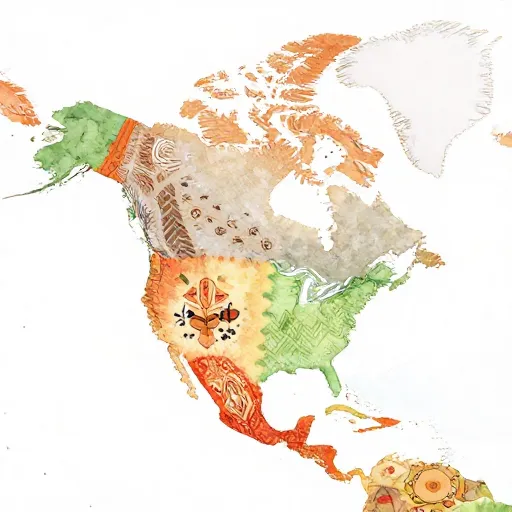
There are over 570 federally recognized tribal nations in the United States today, and hundreds more in Canada. Each has its own distinct culture and stories!
These stories were shared through oral tradition, passed down from person to person for thousands of years. This meant the stories were alive: they could grow, change, and adapt depending on who was listening and what the community needed to hear.
A story told by a fire in the winter was more than entertainment. It was a map for how to behave, a history of the ancestors, and a way to keep the world in balance.

Mira says:
"I noticed how the story about the turtle shell matches the shape of North America on a map! I wonder if that's why they call it Turtle Island?"
The Birth of Turtle Island
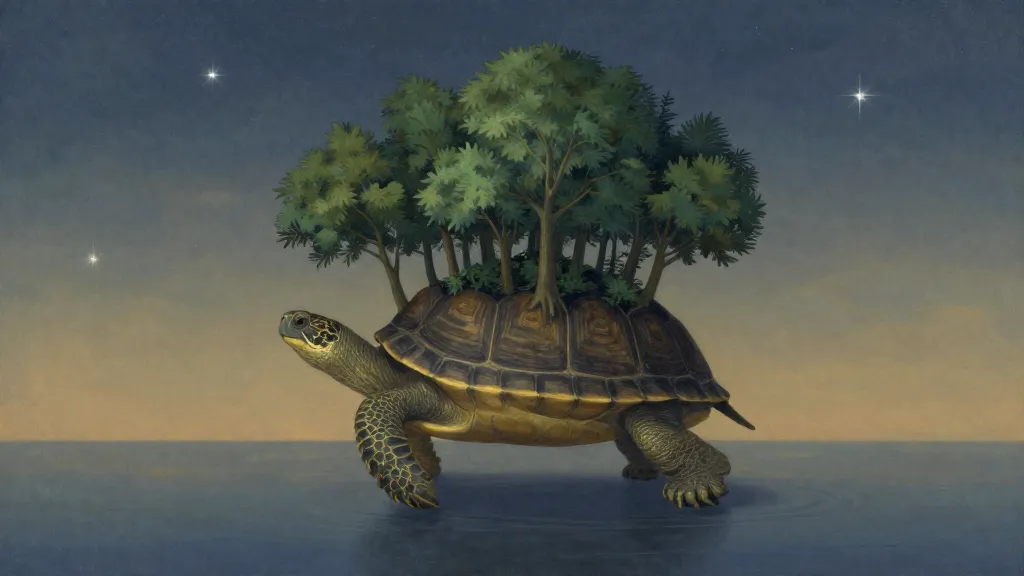
Many nations, including the Haudenosaunee (Iroquois) and the Anishinaabe, share a story about a place called Turtle Island. They believe that long ago, the world was covered in deep water, and the only beings were birds and water animals.
In the story of Sky Woman, a being falls from a hole in the sky. To save her, the Great Turtle offers his back as a place for her to rest, but she needs soil to make things grow.
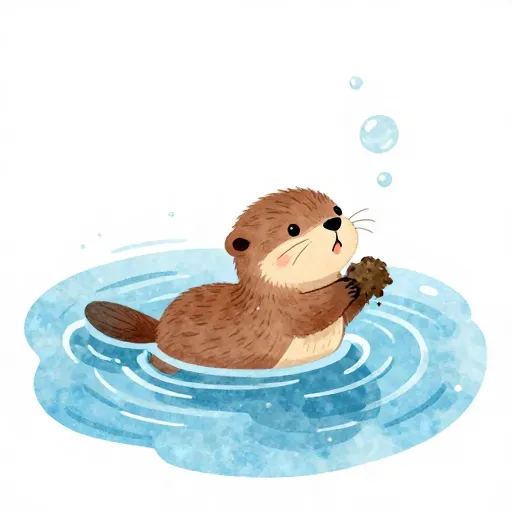
Imagine you are the Muskrat. The water is cold and pitch black. You can't see anything, but you feel a tiny bit of mud between your claws. You hold onto it with all your might as you kick back toward the surface where the light is glowing.
One by one, the animals try to dive to the bottom of the ocean to bring up a piece of mud. The powerful loon fails: the fast beaver fails: even the great fish cannot reach the bottom.
Finally, the tiny muskrat takes a breath and disappears into the dark water. When he finally floats back up, he has a tiny speck of earth in his paw: enough to start a world.
The power of the world always works in circles, and everything tries to be round.
Everything is Alive
If you walk through a forest, you might see a rock as a silent, unmoving object. But in many Native American mythologies, that rock is a person: a 'Stone Person' with its own history and spirit.
This idea is often called animism. It is the belief that everything in nature, from the wind and the rivers to the bears and the cedar trees, possesses a soul and a purpose.
Go outside and find an object from nature: a rock, a leaf, or a stick. Instead of just looking at it, try to imagine it has a 'spirit.' If this object could tell you one thing about its day, what would it say?
Because everything is alive, humans are not the 'bosses' of the world. Instead, we are just one part of a giant family. This means that when a hunter takes a deer, they often offer a prayer of thanks to the deer's spirit for giving its life.
It is a way of looking at the world where nothing is 'garbage' and nothing is 'extra.' Everything has a seat at the table, and everyone has a job to do to keep the circle of life moving.

Finn says:
"If everything has a spirit, does that mean my favorite climbing tree knows my name? Or that the wind is trying to tell me a secret?"
The Trouble with Tricksters
Why is the world so messy? Why do we have mosquitoes, or why is the moon sometimes thin and sometimes fat? To answer these questions, many nations look to the Trickster.
In the Pacific Northwest, the Trickster is often Raven. In the Great Plains, he is Coyote. In the Great Lakes region, he is often a rabbit named Nanabozho.
Tricksters like Raven are often heroes because they steal things like fire or the sun from selfish spirits to give them to humans.
Tricksters are also warnings: they show us what happens when you are too greedy or don't think about the consequences of your actions.
Tricksters are complicated characters. They are not 'villains' or 'bad guys,' but they aren't exactly heroes either. They are greedy, curious, funny, and very, very clever.
Sometimes a Trickster creates something beautiful by accident. Other times, they try to steal the sun just because they are bored. They remind us that life is full of surprises and that even mistakes can lead to something important.
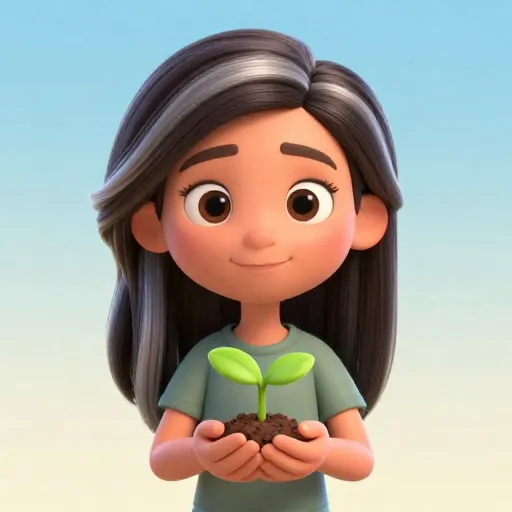
In some Native languages, the term for plants translates to 'those who take care of us'.
The Great Mystery
While there are many different spirits and characters, many nations also believe in a central, creative force. The Lakota call it Wakan Tanka, which is often translated as the 'Great Mystery' or the 'Great Spirit.'
This isn't a person sitting on a cloud. It is more like a power that flows through everything, like the wind or the heat of the sun. It is the reason why seeds grow and why the stars stay in the sky.
Finn says:
"What if the Great Mystery is just the feeling you get when you look at a really big mountain and feel small, but in a good way?"
Understanding the Great Mystery doesn't mean having all the answers. In fact, many Indigenous thinkers believe that some things are meant to stay a mystery. Part of being a human is learning to be comfortable with what we don't know.
Instead of trying to 'solve' the universe like a math problem, these myths invite us to sit in wonder. We learn to listen to the world around us, rather than just talking over it.
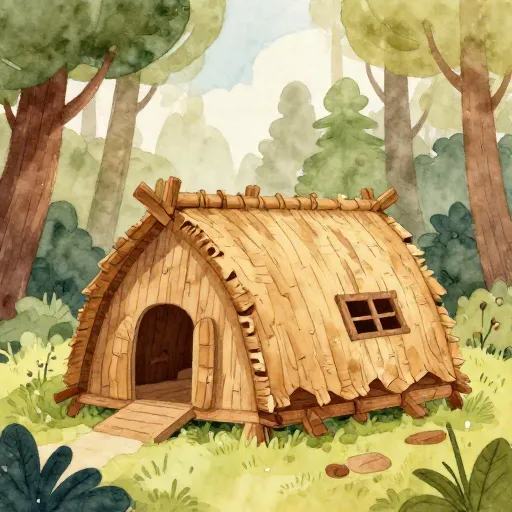
The word 'Haudenosaunee' means 'People of the Longhouse.' Their stories often emphasize how many different families can live together under one roof in peace.
The Circle of Time
In many Western stories, time is like a straight line: it has a beginning, a middle, and an end. But in Native American mythology, time is often seen as a circle or a cycle.
Just as the seasons return every year, many stories suggest that the past, present, and future are all happening at once. The ancestors are still here, and the children not yet born are already part of the story.
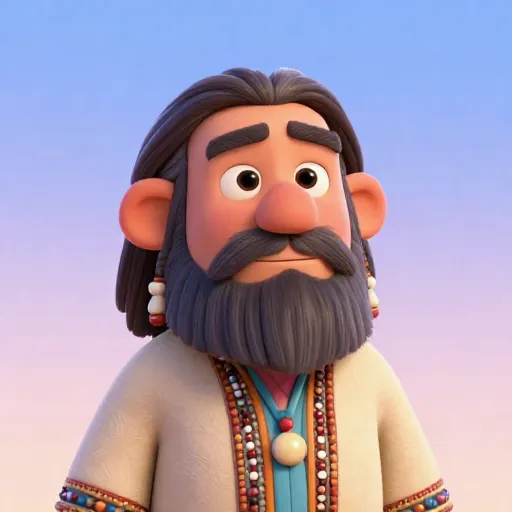
The Lakota was a lover of nature. He did not want to tame it: he wanted to be part of it.
This way of thinking changes how you act. If you believe your great-great-grandchildren are watching you right now, you might be more careful with how you treat the water or the soil. You aren't just living for today: you are living for the whole circle.
The Journey of the Stories
A Living Tradition
For a long time, people from outside Native communities tried to stop these stories from being told. They thought the myths were 'old-fashioned' or 'primitive.' But the stories were stronger than the people who tried to silence them.
Today, Indigenous writers, artists, and filmmakers are using these ancient ideas to create new things. They are proving that a story about a Raven or a Turtle is just as important in a world of smartphones as it was in a world of campfires.
These myths are not 'history' in the sense that they are over. They are part of a living culture that continues to teach us how to be better relatives to the earth and to each other.
Something to Think About
If you had to choose one story from your own life to keep alive for a thousand years, which one would it be?
There are no right or wrong answers. Some stories are important because they are funny, some because they are sad, and some because they help us remember who we are.
Questions About Religion
Are Native American myths just like fairy tales?
Why do different tribes have different versions of the same story?
Is it okay for me to tell these stories if I'm not Native American?
Listening to the Land
Native American mythology teaches us that the world is much bigger and more mysterious than we often realize. By listening to these stories, we learn to look at the trees, the animals, and even the stars as our relatives. The next time you are outside, take a moment to be quiet: you might just find that the world has a story it wants to tell you.
