Imagine a teacher who never gives you a straight answer, but instead tells you a story that feels like a puzzle.
Two thousand years ago, a man named Jesus traveled through the hills of Galilee, teaching people not through lectures, but through parables. These weren't just simple bedtime stories: they were designed to flip the world upside down and make people look at their lives in a brand-new way.
Imagine standing on a dusty hillside nearly 2,000 years ago. The air smells of dry grass and lake water. Around you, people are whispering, curious about the teacher sitting on a large rock.
He doesn't start with a list of rules. He doesn't tell them what to do. Instead, he points to a farmer in a nearby field and starts a story: "A sower went out to sow..."
In the time of Jesus, almost nobody could read or write. Most people learned everything by listening. This is why parables were so important: they were sticky stories that stayed in your brain after the teacher walked away.
At its heart, a parable is a story that places two things side-by-side. The word comes from the Greek word parabolē, which literally means to throw something alongside something else.
By throwing a simple story about seeds or sheep alongside a big idea about God or goodness, Jesus helped people discover truths for themselves. It was a way of teaching that respected the listener's own mind.

At its simplest, a parable is a metaphor or simile drawn from nature or common life, arresting the hearer by its vividness or strangeness.
Life in the Land of Dust and Olives
To understand these stories, we have to imagine the world where they were first told. This wasn't a world of iPads or skyscrapers. It was the Roman province of Judea, a place of farmers, fishermen, and sheep.
Life was often difficult and the people felt like they were under the thumb of the Roman Empire. They were looking for hope, but they were also looking for a way to live with dignity and kindness.

Finn says:
"If I lived back then, would I have understood the stories right away? Or would I be the person in the back of the crowd saying, 'Wait, is he actually talking about farming?'"
Jesus spoke to people who knew exactly what it felt like to lose a single coin or to wait for rain. He used the objects they touched every day: bread, lamps, weeds, and nets.
Because these stories were part of an oral tradition, they were designed to be easy to remember. You didn't need a book to carry a parable with you; you just needed to remember the image of the mustard seed.

Imagine a woman in a dark house with a dirt floor. She has lost one silver coin. She lights a lamp, grabs a broom, and begins to sweep every corner. She doesn't stop until she hears that tiny 'clink' of metal. When she finds it, she calls all her neighbors to celebrate. The story asks: If a woman cares this much about one coin, how much more does the universe care about one person?
The Story of the Good Samaritan
One of the most famous parables is the story of the Good Samaritan. It starts with a question from a lawyer: "Who is my neighbor?"
Jesus tells a story about a man who is attacked by robbers and left on the side of the road. Two very important, very religious people walk past him and do nothing.
The religious leaders in the story were following strict rules about staying 'clean' for the temple. If they touched a bleeding man, they might be breaking their religious laws.
The Samaritan didn't care about the rules or the man's background. He saw someone in pain and believed that helping was the most important rule of all.
Then, a Samaritan comes along. In that time and place, Jews and Samaritans did not get along at all. They were often enemies who avoided each other.
But the Samaritan stops. He cleans the man's wounds, puts him on his own donkey, and pays for his stay at an inn. By the end of the story, the "neighbor" isn't the person who lives next door: it's the person who showed mercy.

Mira says:
"I think the Samaritan story is like when someone you don't usually talk to at school is the only one who helps you when you drop your lunch. It changes how you see everyone."
The Mystery of the Mustard Seed
Jesus often talked about the Kingdom of Heaven. People expected him to describe a golden palace or a powerful army that would defeat the Romans.
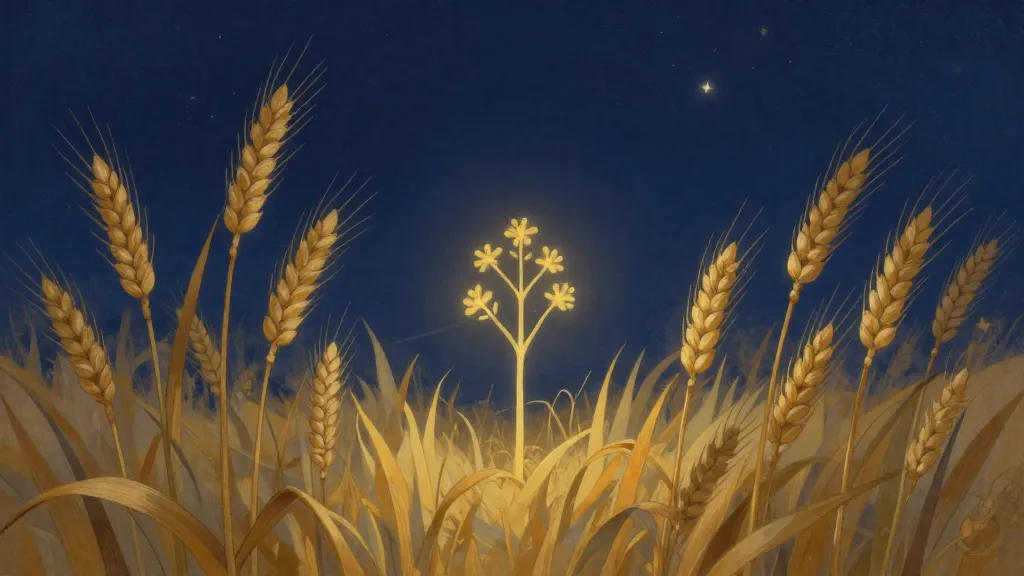
Instead, he told them it was like a tiny mustard seed. A mustard seed is so small you can barely see it between your fingers.

The kingdom of heaven is like a mustard seed, which a man took and planted in his field. Though it is the smallest of all seeds, yet when it grows, it is the largest of garden plants.
This was a shock to his listeners. How could something as big as the Kingdom of God be like a tiny, common seed?
It suggested that the most important things in the world start small, quiet, and almost invisible. It reminded people that they didn't need to be rich or powerful to be part of something world-changing.
Think of a 'big' idea, like Bravery or Friendship. Now, try to describe it using a common object from your house. Is Friendship like a warm blanket? Is Bravery like a flashlight in a dark basement? Congratulations: you just started a parable!
The Father and the Two Sons
Sometimes, parables are about things that feel deeply unfair. In the story of the Prodigal Son, a younger brother takes his father's money, leaves home, and wastes it all.
When he runs out of money and becomes hungry, he decides to go home and ask to be a servant. But when his father sees him coming, he doesn't yell: he runs to him and throws a massive party.

Visualize the scene: a long, dusty road at sunset. An old man is squinting at the horizon. Suddenly, he sees a figure stumbling toward him. He doesn't wait. He hikes up his robes and runs as fast as he can to hug his son, who is covered in dirt and shame. It is a moment of pure, shocking welcome.
The older brother, who had stayed home and worked hard the whole time, is furious. He thinks it is totally unfair that his brother gets a party while he gets nothing.
This parable doesn't have a neat ending where everyone agrees. It leaves us with a question: Is love about being fair, or is it about something else? It forces us to think about forgiveness in a way that feels a bit uncomfortable.
Finn says:
"I still think the older brother has a point! If I did all my chores and my brother didn't, but he got the pizza party, I'd be pretty annoyed."
Why Tell Riddles?
If Jesus wanted people to understand him, why didn't he just say what he meant? Why use a metaphor or a confusing story?
Some thinkers believe he used parables because they are subversive. A direct command like "be kind" can be ignored, but a story about a man bleeding on a road gets stuck in your head.

Tell all the truth but tell it slant - Success in Circuit lies.
Parables are like mirrors. When you look into them, you see yourself. You might see yourself as the helpful Samaritan one day, and the grumpy older brother the next.
They allow for "I don't know," which is a very brave thing to say. They invite us to keep wondering instead of just memorizing an answer.
Through the Ages: The Life of a Story
The Power of the Image
Think about the parables as a gallery of pictures. Each one - the lost sheep, the pearl of great price, the house built on sand - is a vivid image that has lasted for centuries.
These stories traveled from the dusty roads of Galilee to every corner of the world. They have been painted on cathedral ceilings and acted out in modern movies.
They work because they are about the human heart, which hasn't changed much in 2,000 years. We still struggle with being fair, we still feel lost sometimes, and we still hope that small things can grow into something beautiful.
Something to Think About
If you were to tell a parable today using something from your own life, what object would you choose?
There is no wrong answer. A parable can be about anything - a lost LEGO piece, a seedling in a sidewalk crack, or a game that everyone is invited to play.
Questions About Religion
Did Jesus make up these stories or were they real?
Why are some parables so hard to understand?
What is the difference between a parable and a fable?
The Stories That Never End
The parables of Jesus have survived for thousands of years because they don't finish once the story is over. They keep working in our minds, asking us who we want to be and how we want to treat the people around us. Next time you see a tiny seed or a lost item, remember that sometimes the biggest truths are hidden in the smallest things.