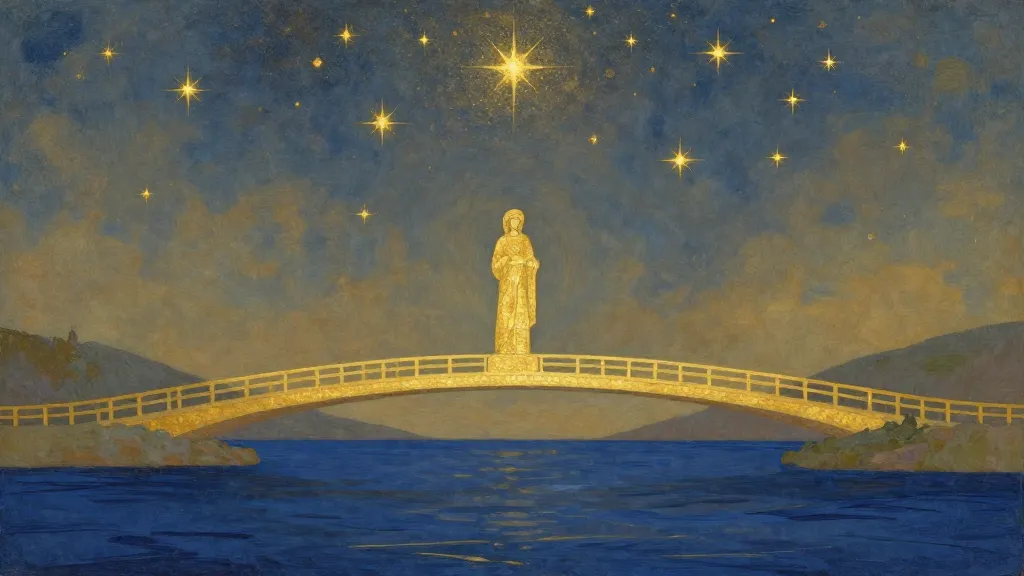
Imagine you woke up tomorrow and everyone in your country believed that you, personally, were responsible for making the sun rise.
For over 3,000 years, the Pharaohs of Ancient Egypt lived this reality as both humans and living gods. They weren't just politicians or generals: they were the sacred center of an entire Civilization.
Imagine a world where the river is your lifeblood and the desert is a wall of fire. This was the landscape of the Nile Valley. Here, the people needed someone to talk to the gods on their behalf.
They chose a leader who was more than a person. They called this person the Pharaoh, a word that actually meant "Great House." It was a job that combined being a president, a high priest, and a superhero all at once.
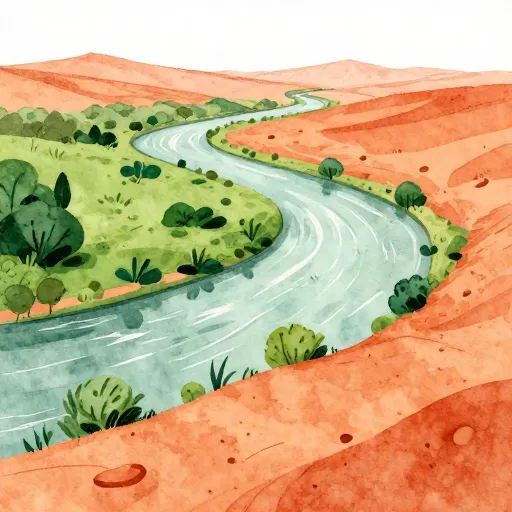
Imagine standing on the bank of a river. To your left and right, the land is bright green and buzzing with life. But just a few steps behind you, the grass stops and the red, hot sand of the Sahara begins. This sharp line is where the Pharaoh's power lived.
To understand a Pharaoh, you have to understand the Nile River. Every year, it flooded the fields, leaving behind rich black soil. If it didn't flood, people went hungry. If it flooded too much, houses washed away.
Ancient Egyptians believed the Pharaoh controlled this balance. They were the bridge between the messy, unpredictable world of humans and the perfect, eternal world of the gods.
Egypt is the gift of the Nile.
The Two Faces of the King
A Pharaoh lived a double life. On one hand, they were a human being who ate breakfast, got tired, and had family arguments. On the other hand, they were the earthly form of the god Horus, the hawk-headed protector of Egypt.
This meant they had to look the part. They wore a Uraeus, which was a golden cobra on their forehead, to show they could strike down enemies. They carried a crook and a flail, symbols that they were both a gentle shepherd and a stern judge.

Mira says:
"It's like the Pharaoh had to wear a costume to do their job. I wonder if they ever took the cobra off and just felt like a regular person for a few minutes?"
When a Pharaoh died, the story got even more interesting. They didn't just stop being king. They believed they became Osiris, the god of the dead, while their son became the new Horus on Earth.
This created a golden chain of power that lasted for centuries. It made the people feel safe because it meant the universe had a plan that never stopped. Even when things were scary, the "Great House" was still standing.
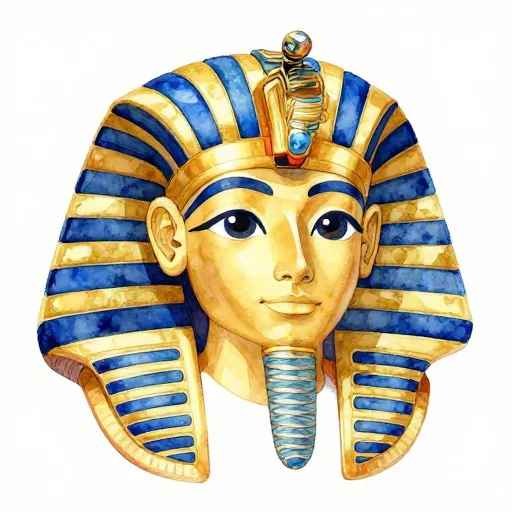
Pharaohs never let their hair be seen! They always wore a crown or a striped headdress called a Nemes. Looking 'ordinary' was simply not allowed for a living god.
The Law of Ma'at
The most important word in a Pharaoh's vocabulary wasn't "gold" or "war." It was Ma'at. This concept represented truth, balance, and the natural order of the universe.
Think of Ma'at like a giant cosmic scale. On one side was the sun rising and the river flowing. On the other side was chaos, darkness, and storms. The Pharaoh's entire existence was dedicated to keeping that scale level.
Ma'at is a gift for the leader... it is the foundation of the world.
If the Pharaoh was greedy or lazy, they believed Ma'at would break. This would mean the sun might stop shining or enemies would invade. Being a leader wasn't about doing whatever you wanted: it was about following a very strict set of rules to keep the world glued together.
This is a heavy thing for a child to imagine. Think about when you are left in charge of a younger sibling or a pet. You feel that tiny weight of responsibility. Now, multiply that by an entire country and the stars in the sky.
Finn says:
"If the Nile didn't flood, did the Pharaoh get in trouble? It seems pretty stressful to be blamed for the weather!"
The Master Builders
Because the Pharaoh was eternal, they wanted their buildings to be eternal too. This is why they built the Pyramids. These weren't just big triangles of stone: they were "resurrection machines" designed to launch the Pharaoh's soul into the afterlife.
Imagine thousands of people working together for decades to move stones as heavy as elephants. They didn't do this because they were slaves: many did it because they believed that if the Pharaoh reached the gods safely, the whole country would be blessed.
The Pharaoh was the 'Lord of the Two Lands' (Upper and Lower Egypt). If you were the 'Lord of Two Rooms' in your house, how would you keep the peace between them? Write down one rule that would make both rooms happy.
Inside these tombs, they placed everything a person might need. They packed board games, honey cakes, golden chariots, and even tiny statues of servants called Ushabti. They believed that in the afterlife, these statues would come to life and do the Pharaoh's chores.
It shows us that even the most powerful people in history were a little bit afraid of being bored or hungry in the dark. They wanted the comforts of home to follow them into the stars.
Breaking the Rules
Not every Pharaoh followed the same path. Some of them changed the rules of history forever. Hatshepsut, for example, was a woman who declared herself King. She wore the traditional fake beard of the Pharaohs to show she had the power of a man.
Then there was Akhenaten, who tried to fire all the old gods. He told the people there was only one god: the Aten, or the sun disk. He was a revolutionary who wanted to change how everyone thought about the spirit.
Akhenaten was a hero because he was brave enough to tell people the truth: that there is one power behind everything in nature.
Akhenaten was a villain because he destroyed centuries of tradition and made people abandon the gods their families had loved for generations.
Akhenaten's son was the most famous Pharaoh of all: Tutankhamun. He was only nine years old when he became king. Imagine being in the third grade and having to decide how to run a kingdom while everyone bowed down to you.
He didn't live long, but his tomb was found thousands of years later, filled with gold. It gave the world a glimpse into the incredible beauty of the Pharaoh's world. It reminded us that behind the golden masks were real people with small feet and favorite toys.
Mira says:
"King Tut was so young. I bet he had advisors whispering in his ear all day long. Who was actually in charge: the boy or the crown?"
The Inner World of a King
Modern thinkers often wonder what it does to a person's mind to be told they are a god. If everyone agrees you are perfect, do you start to believe it? Or do you feel like a performer on a stage, waiting for the curtain to fall?
One famous psychologist, Sigmund Freud, was fascinated by the Pharaohs. He collected ancient Egyptian statues and kept them on his desk. He thought that by studying these ancient rulers, we could learn about the "inner king" inside all of us: the part of us that wants to be powerful and live forever.
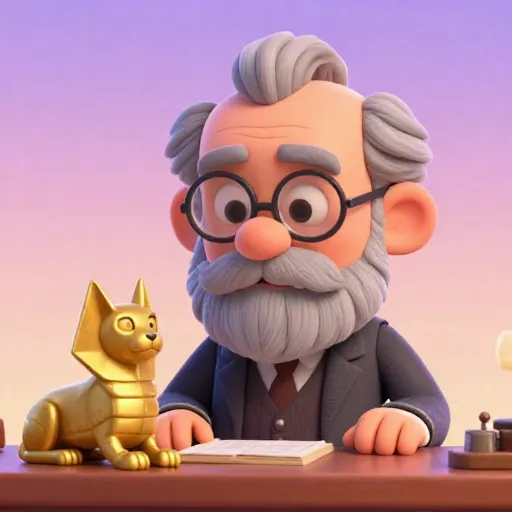
The ego is not master in its own house.
When we look at a statue of a Pharaoh today, we see a calm, unmoving face. But inside, there must have been the same doubts and dreams we all have. They were trying to solve the biggest puzzle of all: how to be a person when the world expects you to be a monument.
The Long Reign of the God-Kings
The End of the God-Kings
The line of Pharaohs eventually ended with Cleopatra. She was smart, spoke many languages, and fought hard to keep Egypt independent. But the world was changing, and the Roman Empire was moving in.
When the era of the Pharaohs stopped, the world lost a specific kind of magic. We stopped believing that one person could hold the balance of the universe in their hands. But the questions they asked: about life, death, and duty: are still with us today.
The famous Pharaoh Ramses II had over 100 children! He lived to be 90 years old, which was incredibly rare in the ancient world. People started to think he really was immortal.
Every time you see a tall building or a leader making a speech, you are seeing a tiny echo of the Pharaohs. They taught us that humans have a deep desire to build things that last longer than a single lifetime.
They remind us that history isn't just a list of dates. It is a story about people trying to make sense of the sun, the river, and each other. The Pharaohs may be gone, but their "Great House" still stands in our imagination.
Something to Think About
If you had to be a 'bridge' between two different worlds, which two worlds would you choose to connect?
There are no right or wrong answers here. Think about things like the world of animals and humans, or the world of dreams and reality.
Questions About Religion
Did the Pharaohs actually think they were gods?
Was King Tut the most important Pharaoh?
Why did Pharaohs marry their own relatives?
The Crown in the Mirror
The Pharaohs taught us that being a leader is about more than just giving orders: it is about holding a vision of the world together for everyone else. While we don't have god-kings anymore, we still look for people who can help us find balance and meaning. Next time you feel like you have a big responsibility, remember the Pharaohs and the weight of the sun they carried every day.
