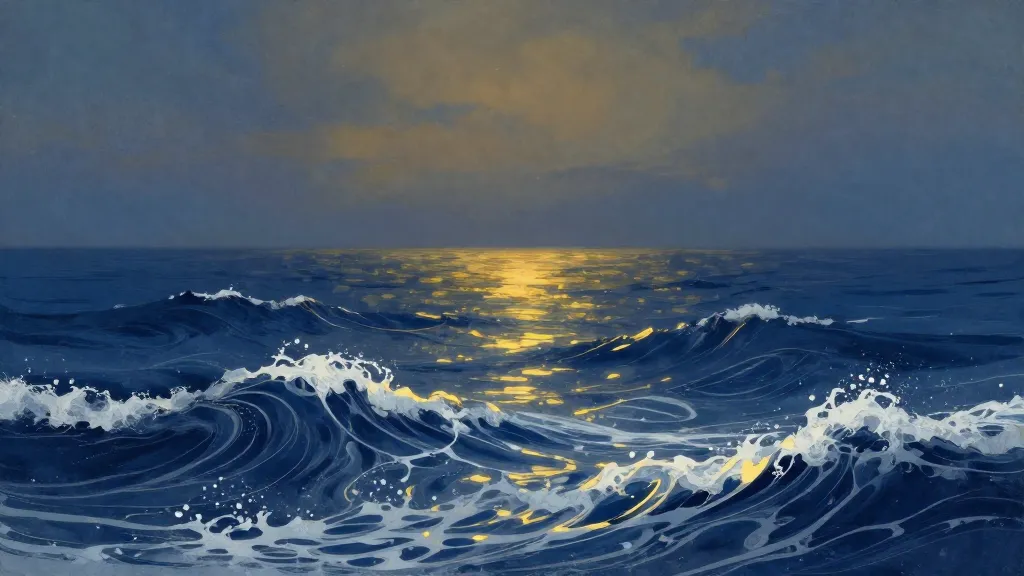
Have you ever stood at the edge of the ocean and felt a sudden chill, not from the water, but from the sheer size of it?
To the people of Ancient Greece, that feeling had a name and a face. They lived in a world of Polytheism, where every mountain and wave was guided by a divine presence within the Pantheon of gods.
Imagine standing on a rocky cliff in Greece three thousand years ago. The sun is hot on your neck, but the wind smells of salt and wet stones. Below you, the Aegean Sea stretches out like a sheet of hammered silver, beautiful but dangerously unpredictable.
For the Ancient Greeks, the ocean was more than a place to swim or fish. It was the highway of their world and the source of their survival. But it was also a place where you could disappear in an instant if the god beneath the waves grew restless.
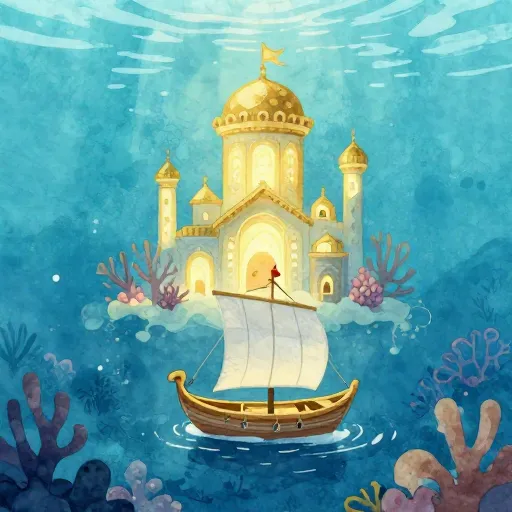
Imagine you are a sailor on a wooden boat. There are no engines, only the wind in your sails. Suddenly, the water begins to boil and churn, but there is no wind. You realize you are sailing over the roof of Poseidon's underwater palace, made of coral and shimmering gems.
That god was Poseidon, one of the most powerful and complicated figures in human history. He was known as the 'Earth-Shaker' because people believed the same hand that stirred the whirlpools also caused the ground to crack and tremble.
To understand Poseidon is to understand how the Greeks viewed the world around them. They didn't see nature as something to be conquered, but as a series of giant, powerful personalities that they had to live alongside.

Finn says:
"What if the sea is actually one giant animal, and Poseidon is just its brain? It feels like the ocean has its own ideas about where boats should go."
The Deep History of the Shaker
Long before the famous temples of Athens were built, the roots of Poseidon were already deep in the soil. Archeologists have found clay tablets in the ruins of ancient cities like Pylos that date back to the Bronze Age.
These tablets are written in a script called Linear B, which is the oldest form of Greek writing we know. Interestingly, on these ancient lists, Poseidon’s name appears more often than even Zeus, the king of the gods.

Poseidon, god of the blue mane, who holds the earth and the barren sea.
In those early days, Poseidon might not have been just a sea god. Some historians believe he began as a god of the earth and the fresh waters that ran beneath it. This would explain why he was so closely linked to earthquakes and the hidden power of the ground.
As the Mycenaeans became a seafaring people, traveling further across the Mediterranean, Poseidon moved from the land to the deep blue. He became the protector of sailors and the master of the storms that could make or break a kingdom.
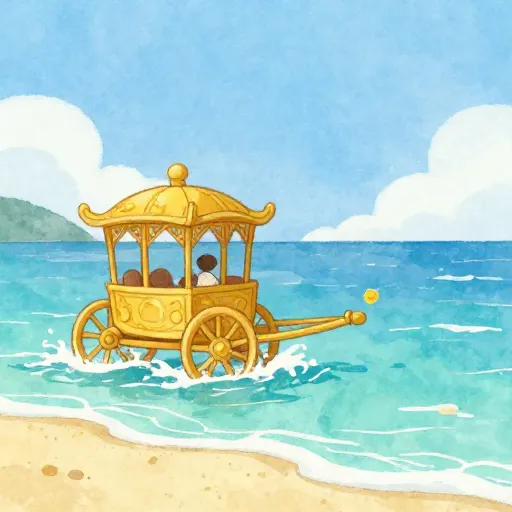
In ancient times, people were so afraid of Poseidon’s earthquakes that they would sometimes drive chariots into the sea as a gift. They hoped the sound of the wheels would please the god who loved horses and stop the ground from shaking.
A Family of Giants
Poseidon was part of a very famous, and very loud, family. He was the brother of Zeus and Hades, and together, they divided the universe into three kingdoms after defeating the older Titans.
Zeus took the wide, open sky to rule over the clouds and lightning. Hades took the shadowy Underworld, the realm of the silent and the deep earth. Poseidon was given the vast, shifting waters that wrap around the world like a cloak.
Poseidon is the core of everything. He moves the earth, provides the water for life, and protects the ships that bring food. Without him, the world would be static and dead.
Zeus is the true king because he brings order and law. Poseidon is too chaotic and temperamental. A world ruled only by the sea would be a world of constant storms and no safety.
This division of power shows us something important about how the Greeks thought. They believed the universe had different 'layers,' and each layer needed a guardian who shared its personality.
The sky is bright and orderly, like Zeus. The Underworld is quiet and hidden, like Hades. But the sea is moody, changing from calm to chaotic in a heartbeat, which perfectly matched the fiery temperament of Poseidon.

Mira says:
"It's interesting how the Greeks gave the scariest places to the brothers. It’s like they were saying that the parts of the world we can't control are all related to each other."
The Symbols of Power
How would you recognize a god if you met one on the beach? For Poseidon, it was all about his tools and his animals. His most famous possession was the Trident, a three-pronged spear that looked like a fisherman's tool but acted like a magic wand.
With one strike of his trident, he could cause a spring of water to bubble up from the dry ground. With another, he could shatter rocks or create waves as tall as mountains. It was a symbol of his ability to reach into the world and change it instantly.
Take a bowl of water and a fork. Gently pull the fork through the surface of the water. Watch the tiny 'wakes' or waves it creates. Now, imagine that fork is a mile long and made of gold. How much power would you need to keep that water calm?
Then there were his animals: the bull and, most surprisingly, the horse. It might seem strange for a sea god to love horses, but have you ever looked at the white foam on top of a crashing wave?
The Greeks thought those white caps looked like the tossing manes of galloping stallions. They even told stories of the Hippocampus, a creature that was half-horse and half-fish, pulling Poseidon’s golden chariot through the surf.
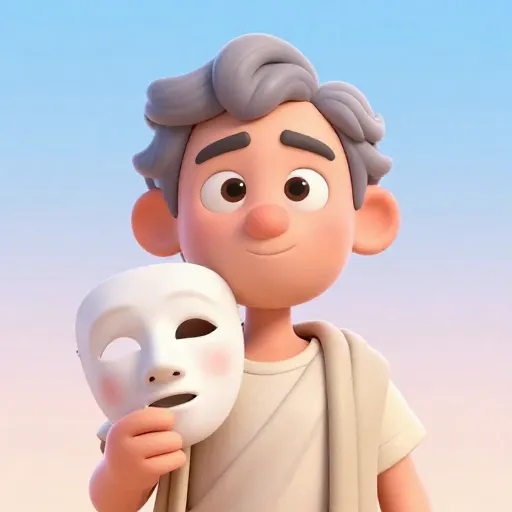
It was you, O Lord Poseidon, who first brought horses to the sea-roads.
The Contest for the City
One of the most famous stories about Poseidon isn't about a sea monster, but about a city. He and his niece, Athena, both wanted to be the patron of a new, beautiful city in Greece.
To decide who would win, they each gave a gift to the people. Poseidon struck the ground with his trident and a spring of water burst forth. The people were amazed, but when they tasted the water, it was salty and undrinkable.
Even though Poseidon lost the contest for Athens, the people still built a special part of the main temple, the Erechtheion, to honor him. They even kept a 'salt sea' well inside the temple that was said to make the sound of waves whenever the south wind blew.
Athena then planted a tiny seed that grew into the first olive tree, providing food, oil, and wood. The people chose Athena, and the city became known as Athens. Poseidon was furious, but this story shows us a deep truth about how the Greeks viewed him.
They respected his raw power, but they also knew that power alone isn't always enough to build a civilization. You need the wisdom of the olive tree as much as the strength of the tide. This tension between wild nature and human wisdom is a huge part of Greek philosophy.
Mira says:
"I wonder if Poseidon was actually happy he lost the contest for Athens. Being a city god seems like a lot of paperwork compared to ruling the whole ocean!"
The Mirror of the Soul
Why did the Greeks give their gods so many human flaws? This is called Anthropomorphism, the act of giving human traits to things that aren't human. Poseidon could be vengeful, jealous, and angry, but he could also be protective and loyal.
By making Poseidon act like a person, the Greeks were able to talk about their own big emotions. Have you ever felt a surge of anger that felt like a storm inside you? Or a sense of calm that felt like a flat, quiet lake?

The sea is the symbol of the collective unconscious, because unfathomed depths rest under its reflecting surface.
When Poseidon chased the hero Odysseus across the sea in the epic poem the Odyssey, it wasn't just about a boat trip. It was a story about what happens when a human shows Hubris, or excessive pride, and offends the natural forces of the world.
It reminds us that even the smartest people have to respect things that are bigger than they are. The sea doesn't care how clever your ship is: it only cares if you know how to navigate its moods.
Poseidon Through the Ages
Living with the Shaker
Even today, Poseidon is still with us. He appears in movies, books, and even on the logos of companies. We no longer sacrifice bulls to him before a voyage, but that feeling of wonder when we look at the horizon hasn't changed.
Perhaps the 'Big Idea' behind Poseidon is that we need to hold space for the wild parts of life. We like things to be predictable and safe, but the ocean reminds us that the world is also vast, mysterious, and occasionally, a little bit dangerous.
Something to Think About
If you had to choose a gift for a new city, would you choose the useful olive tree or the powerful, salt-water spring?
There isn't a right answer here. Think about what your choice says about what you value more: safety and growth, or mystery and power.
Questions About Religion
Was Poseidon always angry?
What is the difference between Poseidon and Neptune?
Why did he have a trident instead of a sword?
The Tide Never Truly Goes Out
Poseidon reminds us that the world is a big, wild place that doesn't always play by our rules. Whether he is shaking the earth or calming the waves, he invites us to look at the horizon with a sense of wonder. The next time you see a wave crash against the shore, remember the 'Earth-Shaker' and the ancient stories that tried to capture the heart of the sea.
