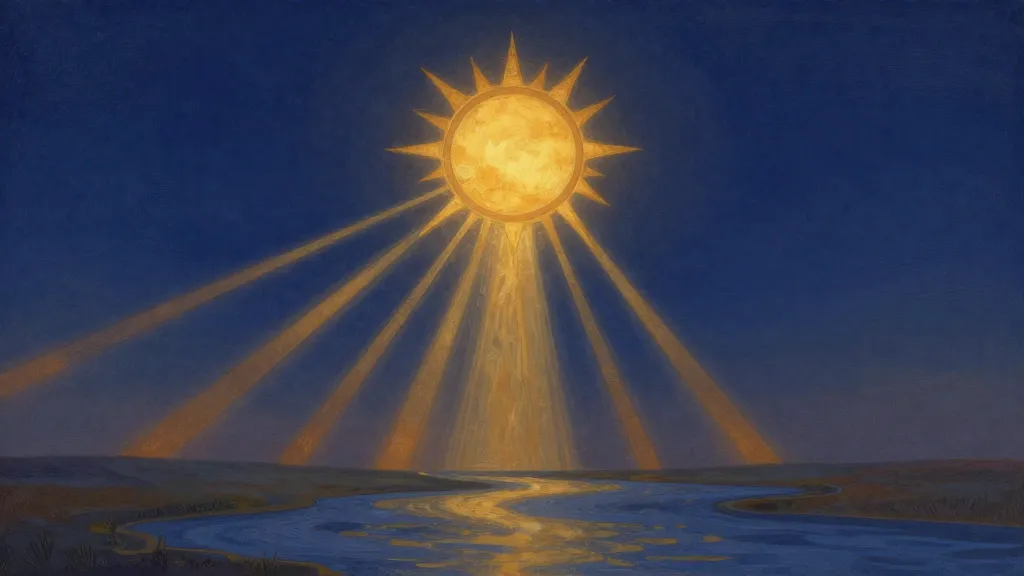
Have you ever wondered what the sun does when it goes behind the horizon at night?
For thousands of years, the people of Ancient Egypt didn't see the sun as a ball of burning gas. They saw it as Ra, the most powerful of all their gods, who sailed a golden boat across the sky to keep the world safe from Chaos.
Imagine waking up in a place where the sun is so bright it feels like a physical weight on your shoulders. In the desert lands of North Africa, along the banks of the Nile River, the sun was the boss of everything. It decided when plants grew, when people worked, and when it was time to sleep.
Because the sun was so important, the Egyptians believed it had to be alive. They named this living sun Ra. He wasn't just a god: he was the first king, the creator of life, and the guardian of time itself.
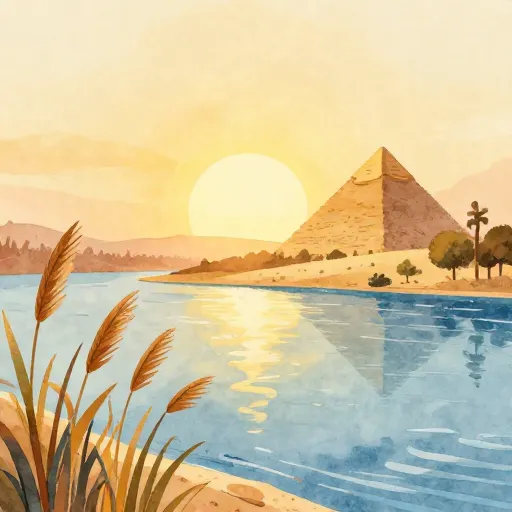
Imagine you are standing on the edge of the Nile River at dawn. The air is chilly, and the world is quiet. Suddenly, a tiny sliver of gold peeks over the horizon. The water turns from black to shimmering blue, and the birds start to chatter. You aren't just watching a sunrise: you are watching a god being born for the day.
The Land of the Living Sun
To understand Ra, you have to imagine the world as it looked four thousand years ago. There were no electric lights, no watches, and no weather apps. People looked at the sky to understand their lives.
In Ancient Egypt, the world was divided into two main parts. There was the "Black Land," which was the rich soil near the river where food grew. Then there was the "Red Land," the scorching desert that stretched out forever.

Finn says:
"If the sun was a king, does that mean the moon was like a sneaky spy who only came out when the king was sleeping?"
Ra was the force that balanced these two worlds. Every morning, his return meant that life could continue for another day. He was the source of heat and light, but he was also a symbol of Ma'at, which is the Egyptian word for balance, truth, and order.
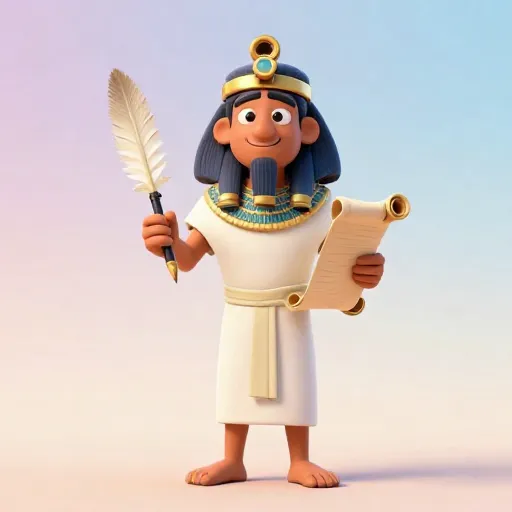
Thou risest, thou risest, thou shinest, thou shinest, thou who art the king of the gods. Thou art the lord of heaven, thou art the lord of earth.
The Three Faces of the Sun
One of the most interesting things about Ra is that he didn't always look the same. The Egyptians noticed that the sun changed as it moved across the sky. To explain this, they believed Ra took on different forms throughout the day.
In the morning, the sun is gentle and cool. The Egyptians called the morning sun Khepri. They represented him as a Scarab beetle, an insect that rolls balls of dirt across the ground, just like the god rolls the sun into the sky.
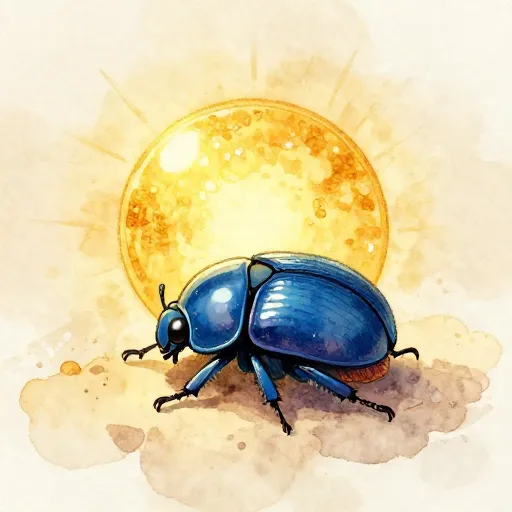
The Egyptians loved the scarab beetle because they thought it was amazing that a tiny bug could roll a ball of dirt so perfectly. They believed Khepri (the morning Ra) was like a giant invisible beetle rolling the sun across the sky every single morning!
By lunchtime, the sun is at its highest and strongest point. This is when he was known simply as Ra. He was often drawn as a man with the head of a hawk, wearing a bright red sun-disk on his head wrapped in a golden cobra.
Finally, as the sun set, he became Atum, the old and wise creator god. Atum was the sun finishing its work, preparing to leave the world of the living and enter the mysterious world of the night.
The Great Solar Barque
Ra didn't just walk across the sky. He traveled in style. The Egyptians were famous for their boats, so it made sense that their greatest god would use one too.
They believed the sky was a massive blue ocean. Ra sailed across it in a ship called the Mandjet, or the Barque of Millions of Years. He wasn't alone on this boat: he was surrounded by other gods who helped him steer and protect the sun.
Ra is like a bodyguard who protects the world from darkness and chaos every night so we can sleep safely.
Ra is a strict king who sets the rules of the universe and expects everyone to follow the laws of Ma'at.
This journey was a symbol of how life is always moving. Just like the river Nile flows from south to north, the sun flows from east to west. For the Egyptians, this movement was the heartbeat of the entire universe.

Mira says:
"It's interesting that they used a boat. A boat doesn't just move: it carries things. Maybe they felt like Ra was carrying all of them through the day."
The Secret Battle in the Dark
What happened when the sun disappeared? This was the scariest part of the story. The Egyptians believed that at night, Ra entered the Duat, a magical and dangerous underworld filled with monsters and ghosts.
During these twelve hours of darkness, Ra changed boats. He moved to a night-ship called the Mesektet. His biggest challenge was a giant serpent named Apep, who represented total Chaos and darkness.

The sun is the clock of the ancient world: its rising and setting determined the rhythm of every human life.
Every single night, Apep tried to swallow the sun and stop the morning from coming. If Apep won, the world would end in darkness. This meant that every sunrise wasn't just a natural event: it was a victory in a great war.
When you see the sky turn red and orange at sunset or sunrise, an Egyptian might tell you that you are seeing the blood from the battle between Ra and the serpent. It makes the morning feel a lot more special, doesn't it?
Living Under Ra's Eye
Because Ra was the king of the gods, the human kings of Egypt, called Pharaohs, wanted to be just like him. They called themselves the "Son of Ra." They believed that their job on earth was to do exactly what Ra did in the sky: keep everything in balance.
To honor Ra, the Egyptians built massive stone pillars called Obelisks. These were tall, four-sided towers that pointed straight at the sun. The very top of an obelisk was often covered in gold or a mix of metals so it would catch the first rays of the morning sun.
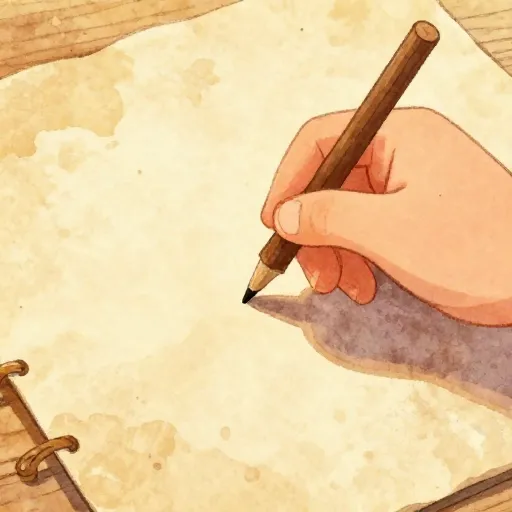
You can track Ra's journey just like an ancient Egyptian. On a sunny day, place a stick in the ground or on a piece of paper. Every hour, mark where the shadow falls. You'll see that as the 'sun boat' moves across the sky, the shadow moves in a circle. You've just made a basic sundial!
They also spoke about the "Eye of Ra." This wasn't just a body part: it was a separate power that Ra could send out into the world. Sometimes the Eye was a protector, and sometimes it was a fierce warrior who punished people who broke the rules of Ma'at.
Ra Through the Ages
The Idea that Never Sets
Even after the civilization of Ancient Egypt faded away, the idea of Ra stayed with us. Many other cultures saw the sun as a chariot-driving god, like Helios in Greece or Sol in Rome. They all shared the same feeling of wonder when they looked at the sky.
Today, we use science to explain the sun. We know it is a star made of hydrogen and helium. We know the Earth spins around it. But even with all our science, we still feel the same thing the Egyptians felt: the sun is the center of our world.
The myths of the sun are the oldest stories we have, because the sun is the one thing that never changes in a changing world.
The very top stone of a pyramid is called a pyramidion, or a 'Benben stone.' It was shaped like a small pyramid and was often dedicated to Ra. It was designed to be the very first thing the sun touched when it rose in the morning.
When we look at Ra, we aren't just looking at an old myth. We are looking at how humans have always tried to make sense of the big, beautiful, and sometimes scary world we live in. We want to know that the light will always come back.
Finn says:
"So, if we use solar panels today to get power from the sun, are we technically catching Ra's magic to play video games?"
Something to Think About
If the sun went on a journey every night, where do you think it would go to rest?
There are no right or wrong answers here. Myths are ways of using our imagination to explain the things we see every day. What story would you tell about the sun?
Questions About Religion
Was Ra the only sun god?
Why does Ra have a bird head?
Is Ra still worshipped today?
The Sun Always Returns
The story of Ra reminds us that even when things seem dark, the light is always working its way back to us. Whether you see the sun as a scientific star or a god in a golden boat, it remains the most important guest at our table every single morning. Keep looking up, and keep asking questions about the light.