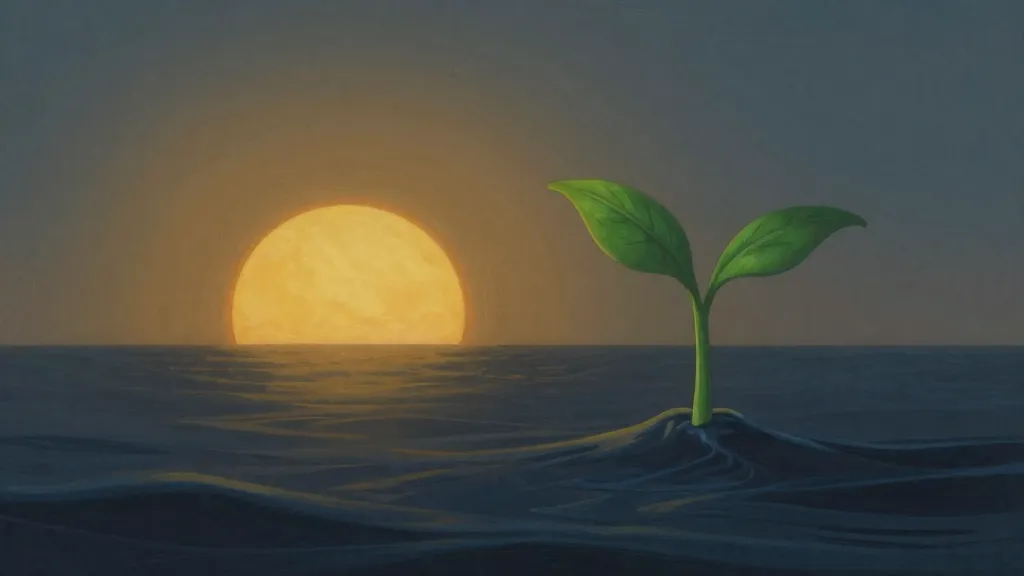
What if you knew exactly how the story would end, but you chose to play your part anyway?
For the people of the Viking Age, the world was not just a place to live, it was a story with a deadline called Ragnarok. This great event, the 'Twilight of the Gods,' represented a unique way of thinking about fate and the cycles of nature.
Imagine standing on a rocky coast in Scandinavia over a thousand years ago. The wind is biting, the winters are long, and the stars feel very close.
To the people living there, the universe was held together by a massive ash tree called Yggdrasil. They believed that one day, this giant structure would tremble, and the world as they knew it would fall apart.
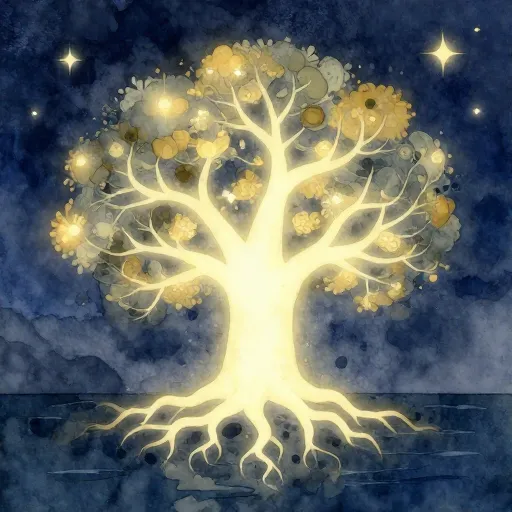
Imagine a tree so big its branches reach into the heavens and its roots drink from the wells of the underworld. It is covered in frost, and a giant eagle sits at the top while a dragon gnaws at the bottom. This is Yggdrasil, the skeleton of the universe, and during Ragnarok, it begins to groan as if it's about to break.
This ending was not a surprise to the gods like Odin or Thor. They lived their lives knowing that a final battle was coming.
In our modern world, we often think of the 'end of the world' as something scary or a mistake. But the Norse people saw it as a necessary part of a very long, very grand circle.

Finn says:
"If the gods knew they were going to lose the battle, why did they bother putting on their armor at all? That seems like a lot of work for a story that's already finished!"
The Long Winter and the Breaking of Chains
Before the final battle begins, the world experiences the Fimbulwinter. This is not just a snowy day, it is three winters that happen in a row without a single summer in between.
Snow drifts from all directions, and the sun provides no warmth. People grow tired and grumpy, and the kindness that usually holds society together begins to snap.
The word 'Ragnarok' doesn't actually mean 'the end.' It translates to 'The Fate of the Gods' or 'The Twilight of the Powers.' It implies a transition, like the moment the sun goes down and the moon comes up.
During this terrible cold, the giant wolf Fenrir finally breaks the magical chains that the gods used to hold him. His brother, the Midgard Serpent, rises from the deep ocean, causing the seas to flood the land.
Even the sun and the moon are swallowed by ancient wolves that have been chasing them across the sky for eons. The world goes dark, lit only by the fire of the giants arriving from the south.
The sun turns black, earth sinks into the sea, the bright stars vanish from the sky.
The Idea of Wyrd
Why did the Norse people tell a story where the 'good guys' lose so much? The answer lies in a concept called Wyrd, which is a very old word for fate.
They believed that the past is like a web that is always being woven. Everything that has happened before creates a path that must be followed, even for the gods themselves.

Mira says:
"Maybe it's like a forest fire. It looks like the end of the forest, but the heat is actually what makes some seeds open up so new trees can grow. The fire is part of the growth."
If you believe in Wyrd, you do not worry about winning or losing as much as you worry about how you behave. The gods knew they were fated to fall at Ragnarok, but they did not hide or give up.
They marched to the battlefield of Vigrid with their heads held high. This tells us a lot about what the Vikings valued: courage, doing your duty, and facing the truth without blinking.
The sun and moon are swallowed by giant wolves, which is why the world goes dark during an eclipse or at the end of time.
An eclipse happens when the moon passes between the Earth and the sun, or the Earth passes between the sun and the moon.
The Final Battle
The gods of Asgard meet their ancient enemies on a vast field that stretches for miles in every direction. Odin faces the wolf Fenrir, while Thor battles the Midgard Serpent one last time.
It is a scene of total chaos where the elements of the earth are fighting against the structures of civilization. Heimdall, the watchman of the gods, blows his horn to signal the beginning of the end.
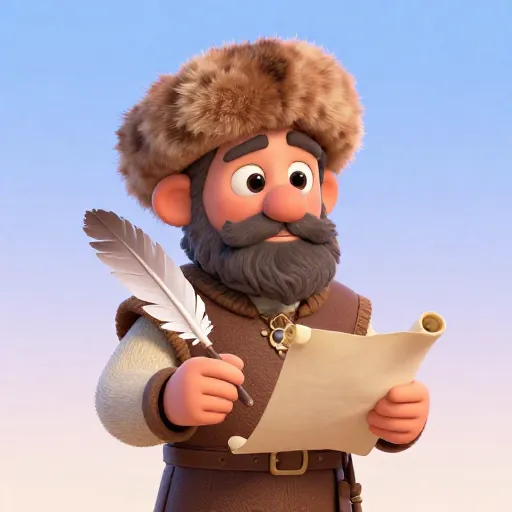
Ragnarok is the destiny of the gods, but it is also the destiny of the world.
In the end, the fire giant Surtr flings fire across the world. The earth sinks into the sea, and the stars vanish from the sky.
If the story stopped here, it would be a tragedy. But the Norse storytellers were interested in what happens after the screen goes black.
Finn says:
"I wonder if the new gods felt lonely without the old ones, or if they felt excited to finally make their own rules for the new world."
Rebirth and the Green World
After the fire and the flood, a new earth rises from the waters. It is green and beautiful, with crops that grow without anyone having to plant them.
A few gods survive the battle, including Thor's sons and Odin's sons. They find ancient gold game pieces in the grass, relics from the world that came before.
Think about a time you had to say goodbye to something, like a favorite toy that broke or a house you moved out of. How did it feel when you realized that after that ending, a new 'chapter' started with something different? Write down one thing you lost and one new thing you gained because of it.
Most importantly, two humans named Lif and Lifthrasir survived by hiding within the trunk of the world tree, Yggdrasil. They emerge into the morning dew to start the human race over again.
The sun has a daughter who is even more beautiful than her mother, and she begins to light the new sky. The cycle starts again, fresh and clean.
The Long Life of a Story
Why This Story Matters Today
We might not believe in giant wolves or magical trees anymore, but the idea of Ragnarok still whispers to us. It reminds us that things change, and sometimes things have to go away to make room for something new.
Psychologists often talk about 'letting go' of old versions of ourselves so we can grow. In a way, we all have little Ragnaroks in our lives when we move to a new city or leave a school.
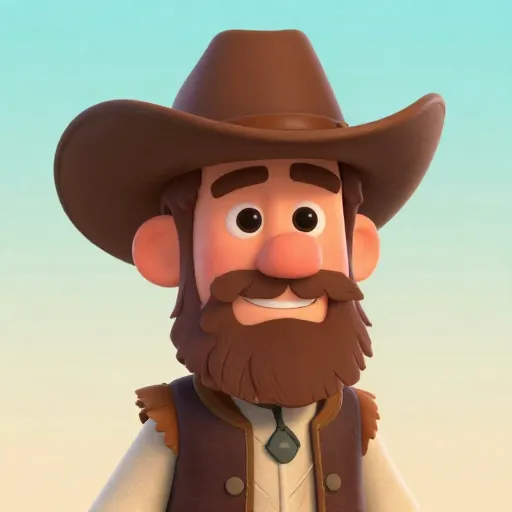
The Norse gods are the only gods who know they are going to die. That makes them very human.
Many of our favorite modern stories are inspired by Ragnarok. J.R.R. Tolkien used it as inspiration for the ending of Middle-earth, and Marvel movies even used the name for Thor's third big adventure!
The Norse myths do not offer a happy ending where everything stays the same forever. Instead, they offer a realistic ending where life continues in a different form.
It is an invitation to look at the world with wonder, knowing that even when things seem to be falling apart, the seeds of the next story are already waiting under the snow.
Something to Think About
If you knew that everything in the world would eventually change or end, would that make today more important or less important to you?
There isn't a right answer to this. Some people feel that endings make every moment precious, while others feel that the cycle itself is what matters most.
Questions About Religion
Did the Vikings really believe Ragnarok was going to happen?
Does anyone actually win the battle of Ragnarok?
Why is Loki the one who starts Ragnarok?
The Story Continues
Ragnarok teaches us that an ending isn't just a stop sign, it is also a doorway. Whether it is the Norse gods facing their fate or us facing a new school year, the courage to move forward into the unknown is what makes the story worth telling. Keep looking for the new green grass after the snow melts.
