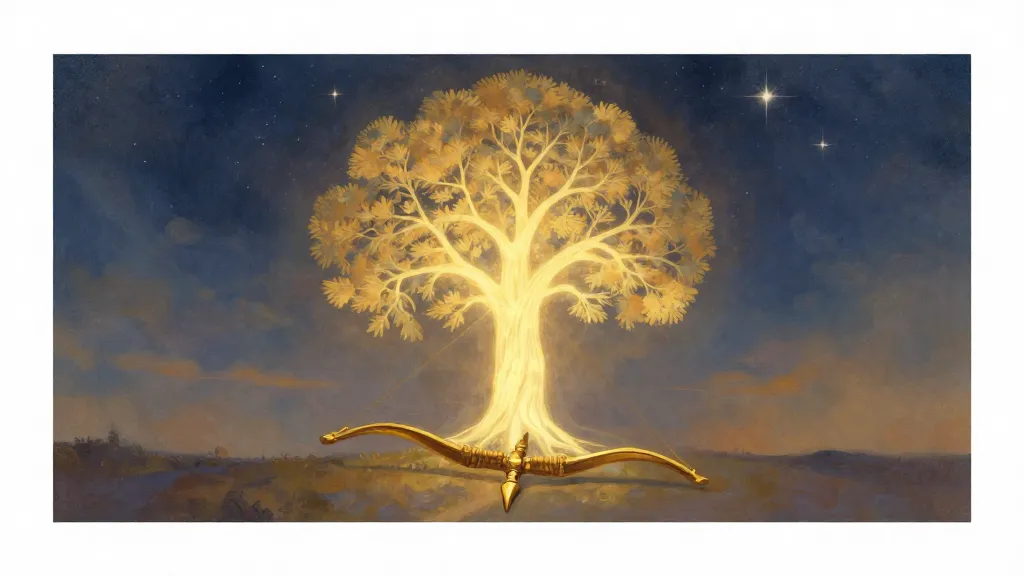
Would you give up everything you owned just to keep a promise made by someone else?
This is the question at the heart of the life of Rama, one of the most beloved figures in history. As an Avatar of the god Vishnu, Rama's life is recorded in the Ramayana, an epic poem that explores the difficult balance of Dharma, or doing the right thing.
Imagine a city made of gold and white stone, sitting on the banks of the Sarayu River in ancient India. This is Ayodhya, the birthplace of Prince Rama. Thousands of years ago, people in this region were writing down some of the oldest religious texts in the world, called the Vedas, and the air was thick with the smell of incense and the sound of ancient Sanskrit chants.
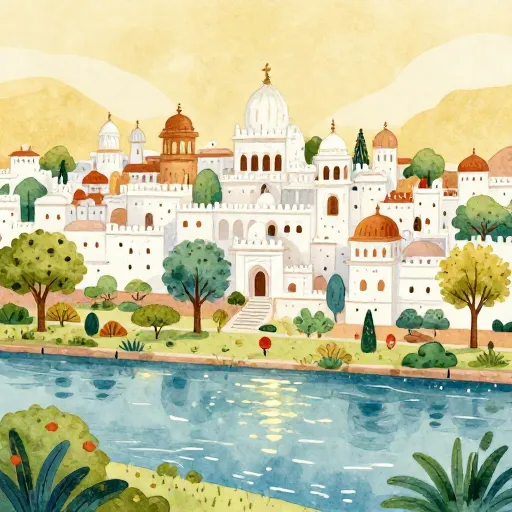
Imagine you are standing on the banks of a wide, sparkling river. In front of you is a city with high walls and gardens filled with mango trees. You hear the sound of bells ringing from temples and see people wearing bright silk dhotis and saris. This is Ayodhya, a place so peaceful that people say even the animals lived in harmony.
Rama was the eldest son of King Dasharatha. He was famous for being calm, kind, and incredibly skilled with a bow. But in these stories, being a hero isn't just about winning battles: it is about how you treat your family and your people.

Finn says:
"If Rama was so strong he could break a god's bow, why didn't he just use that strength to stay in the palace and be the King? What if he was too nice for his own good?"
Rama’s life changed forever because of a contest. To win the hand of Princess Sita in marriage, he had to string a massive, heavy bow that belonged to the god Shiva. While other princes couldn't even lift it, Rama was so strong that he snapped the bow in two.
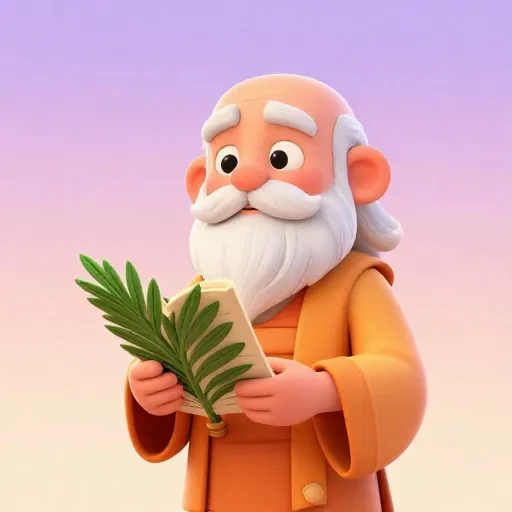
A person who is steady, who has self-control, who is radiant, who is without jealousy, and who is the protector of all living beings.
But life in a palace isn't always easy. Even though Rama was the rightful heir to the throne, a complicated family promise meant he had to leave his home. Instead of becoming King, he was sent to live in the wild, dangerous forest for fourteen years.
Rama should have stayed in the palace. He was the best person for the job, and the people wanted him to be King. By leaving, he let a mistake win.
Rama had to leave. If he stayed, his father would have broken a sacred promise. A kingdom built on a broken promise can never be truly just.
Most people would have been angry or tried to fight for their rights. Rama did something different. He accepted the exile with a smile because he believed that his father's honor was more important than his own comfort. This is why he is often called Maryada Purushottama, which means the perfect man who stays within the limits of virtue.

Mira says:
"I don't think he was just being nice. I think he was trying to show that words have weight. If a king doesn't keep his word, how can he expect anyone else to be honest?"
Rama didn't go into the forest alone. His wife Sita and his brother Lakshmana insisted on going with him. They traded their silk clothes for simple robes made of bark and lived among the trees, mountains, and rivers of ancient India.
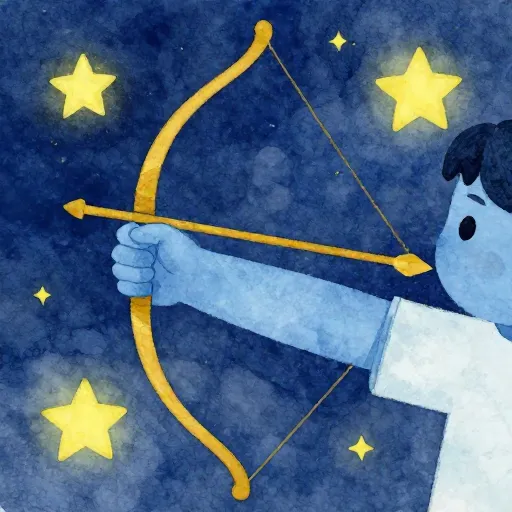
In many paintings, Rama is shown with blue skin. This isn't because he was actually blue! In ancient Indian art, blue was used to represent the infinite: like the deep ocean or the endless sky. It was a way of showing that Rama's spirit was as big as the universe.
In the forest, Rama met many different people and creatures. Some were wise sages who lived in quiet caves, while others were powerful beings with magical abilities. The most famous of these was Hanuman, the monkey-hero who became Rama's most loyal friend.
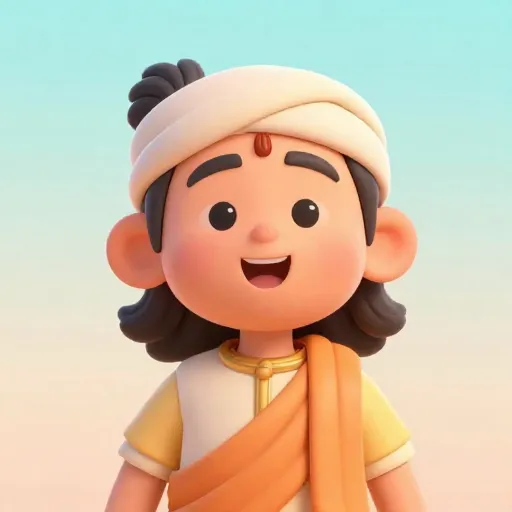
There is no virtue like helping others, and no meanness like hurting them.
One day, a powerful and clever king named Ravana kidnapped Sita and took her to his island kingdom of Lanka. Ravana had ten heads, representing his massive knowledge and his massive ego. He thought he was so powerful that no man could ever defeat him.
Finn says:
"Ravana having ten heads is wild. Imagine trying to decide what to have for breakfast with ten different brains! Maybe that's why he was so confused about right and wrong."
Rama had to build an army to get Sita back. He didn't have a traditional army of soldiers, so he teamed up with the animals of the forest. Together, they built a massive bridge across the ocean made of stones that miraculously floated on the water.

The bridge Rama built to Lanka is called the Rama Setu. If you look at satellite photos of the ocean between India and Sri Lanka today, you can see a chain of limestone shoals that look like a sunken bridge. For centuries, people have wondered if this is the actual bridge from the story!
The battle between Rama and Ravana is one of the most famous stories in the world. It wasn't just a fight between two kings: it was a battle between two ways of living. Ravana lived for himself, while Rama lived for others and for the truth.
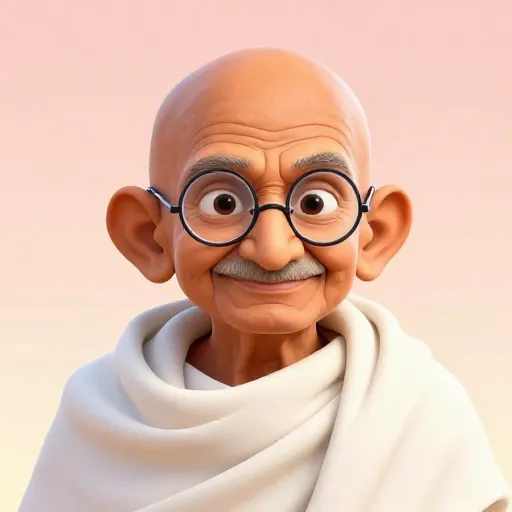
By Rama Rajya I do not mean Hindu Raj. I mean by Rama Rajya Divine Raj, the Kingdom of God.
When Rama finally defeated Ravana and rescued Sita, his fourteen years of exile were finally over. He returned to Ayodhya, and the people were so happy to see him that they lit thousands of clay lamps to light his way home in the dark.
Rama's kingdom, Rama Rajya, was famous because everyone felt safe and happy. If you were building a 'Perfect Kingdom' today, what would be your top three rules? Would they be about being fair, protecting the environment, or making sure everyone has enough to eat? Write them down and share them with someone!
This celebration became the festival of Diwali, which is still celebrated by millions of people today. It marks the victory of light over darkness and knowledge over ignorance. For many, Rama's return represents the beginning of a perfect time called Rama Rajya, where everyone is treated fairly and there is no suffering.
Through the Ages
Rama’s story isn't just a legend from the past: it is a way that many people think about their own lives today. When someone talks about their Dharma, they are often thinking about Rama’s example of doing what is right, even when it is the hardest thing to do.
Something to Think About
Is it better to do what is best for yourself, or what is best for your community?
Rama's life was full of moments where he had to choose between his own happiness and his duty to others. There isn't a single right answer that works for every situation, but thinking about it helps us understand who we want to be.
Questions About Religion
Is Rama a real historical person?
Why does Rama have a bow and arrow?
What does the word 'Rama' actually mean?
A Path of Your Own
The story of Rama has lasted for thousands of years because it touches on something we all feel: the desire to do the right thing even when it is difficult. Whether you see him as a god, a king, or a character in a great book, Rama invites us to look at our own lives and ask what kind of 'light' we can bring to the world.