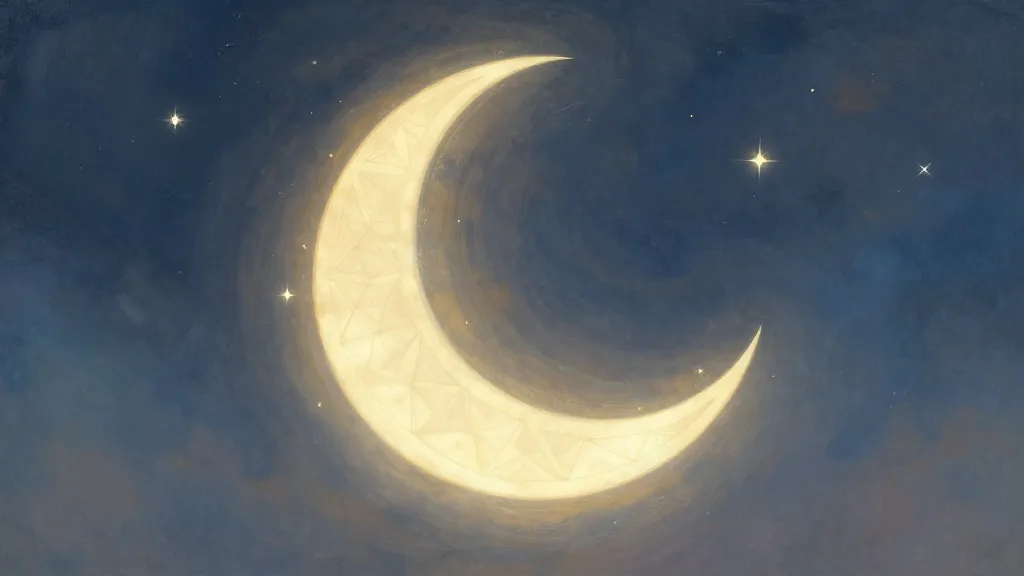
Have you ever wondered what happens when an entire community decides to slow down, wait, and look inward all at the same time?
For over a billion people, this happens every year during Ramadan, the holiest month in Islam. It is a time defined by the Lunar Calendar, where the rhythm of life shifts from the buzz of the outside world to the quiet strength of the heart.
Imagine a night in the year 610 CE. A man named Muhammad sat alone in a quiet, dark cave on a mountain called Hira, near the city of Mecca. He was searching for answers about the world, wondering why there was so much inequality and how people could live better lives.
Suddenly, the silence was broken. Muslims believe that on this night, the Angel Gabriel appeared to Muhammad and revealed the first verses of the Quran, the holy book of Islam. This moment was so powerful that it changed the course of history forever.
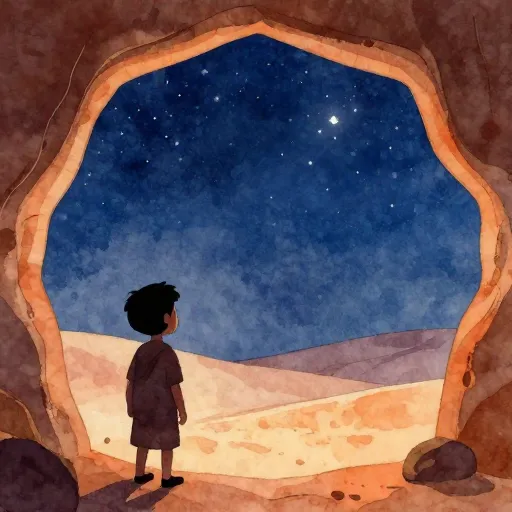
Imagine standing on a high mountain at night. The air is cool, and the city of Mecca glows with dim oil lamps below. You hear a sound like the humming of bees: the first words of a book that will be read by billions of people for the next 1,400 years.
This specific month, the ninth month of the Islamic year, became the time when Muslims commemorate that revelation. But they don't do it with a typical party. Instead, they do it through a profound and challenging practice: they stop eating and drinking from dawn until sunset.
At first, this might seem like a strange way to celebrate. Most of us think of celebrations as times for feasting, not fasting. But in the philosophy of Islam, the act of Sawm, or fasting, is a way to clear out the noise of our daily lives so we can hear something more important.

Finn says:
"If I didn't eat lunch, I think I'd just be grumpy. How do people stay so calm and kind when their stomachs are growling? It’s like they have a secret superpower."
When you are hungry, your body tells you one thing: 'I want food.' By choosing to wait, you are telling your body that you are the boss of your impulses. This creates a sense of Taqwa, which is a special kind of mindfulness or God-consciousness.
Thinkers throughout history have explored why this 'not-doing' is so powerful. One of the most famous was Al-Ghazali, a philosopher who lived about a thousand years ago. He believed that fasting wasn't just about what you put in your mouth, but what you allowed into your heart.
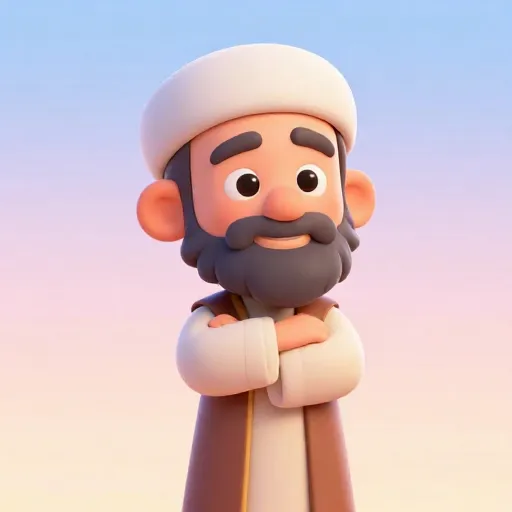
There are three grades of fasting: ordinary, extraordinary, and the superlative. The superlative fast is the fast of the heart from unworthy thoughts.
Al-Ghazali argued that anyone can stop eating food, but the 'real' fast is when you also fast from being mean, from lying, or from being greedy. He saw the month as a training ground for the soul. If you can control your hunger, you can probably control your temper, too.
Because the Islamic calendar is a Lunar Calendar, Ramadan doesn't stay in one season. It moves through the year, traveling backward by about eleven days every time the earth goes around the sun.
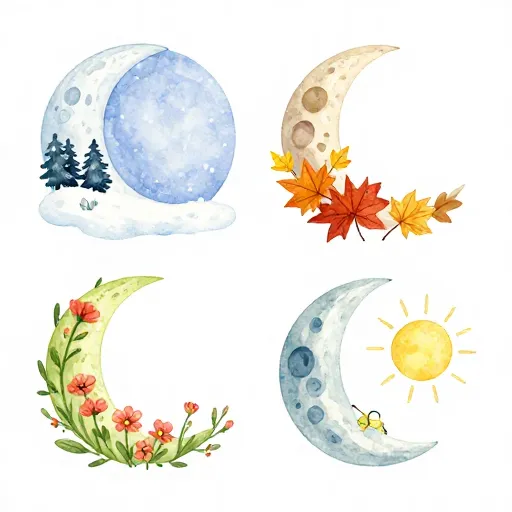
Because the lunar year is shorter than the solar year, Ramadan 'travels' through all four seasons over a 33-year cycle. This means someone might fast during a snowy winter one year and a blistering summer 15 years later!
This means that over a lifetime, a person will experience Ramadan in the heat of summer, when the days are long and thirsty, and in the crisp cold of winter, when the sun sets early. It reminds people that life is always changing, and that we must find our center no matter what the world looks like outside.
What does a typical day look like during this month? It begins in the dark, before the sun even hints at rising. Families gather for a meal called Suhoor. There is a certain magic in the house at 4:00 AM: the quiet clinking of spoons, the smell of fresh bread, and the shared knowledge that a big day is ahead.

Mira says:
"I noticed that when things are 'forbidden' for a little while, you appreciate them so much more later. It’s like the world gets more colorful once you stop rushing through it."
Once the sun rises, the fast begins. For many, this is a time for work, school, and normal life, but with a different 'flavor.' People try to be extra kind and extra patient. They focus on Zakat, which means giving to those who have less.
The physical challenge is what matters most. By overcoming hunger and thirst, you prove your devotion and build an iron-clad will that can face any hardship.
The physical part is just the 'shell.' The real work is psychological: it's about checking your ego, being kinder to neighbors, and reflecting on your mistakes.
When the sun finally dips below the horizon, the silence is broken by the Adhan, the call to prayer. This is the moment of Iftar, the meal to break the fast. Traditionally, it starts with a single date and a sip of water, just as Muhammad did centuries ago.
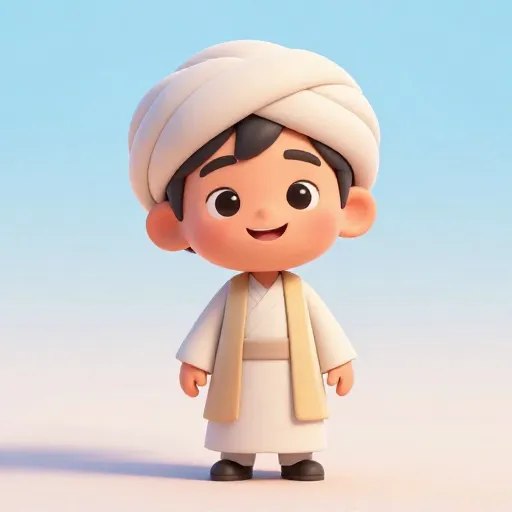
There's a hidden sweetness in the stomach's emptiness. We are lutes, no more, no less. If the soundbox is stuffed full of anything, no music.
Rumi, the famous poet, thought that when we are empty of food, we become like a flute. A flute has to be hollow for the music to pass through it. He believed that Ramadan was a way of making ourselves 'hollow' so that spiritual music could play through our lives.
This sense of being 'hollow' or empty also creates a bridge of empathy. When your stomach growls, you are suddenly reminded of every person in the world who is hungry not by choice, but because they don't have enough to eat.

You don't have to fast to practice the spirit of Ramadan. Try a 'Kindness Jar' for one week. Every time you do something helpful without being asked, or every time you hold back a mean comment, put a bean in the jar. See how much 'spiritual food' you can collect!
This shared experience builds a powerful sense of Ummah, or community. Whether you are in London, Jakarta, or New York, you know that millions of other people are feeling exactly what you are feeling at that exact moment. You are alone in your fast, but you are never lonely.
Through the Ages
As the month comes to a close, the excitement builds for the sighting of the next new moon. When that tiny silver curve appears, Ramadan ends and a massive three-day celebration called Eid al-Fitr begins.
Eid is the 'Festival of Breaking the Fast.' It is a time of new clothes, gifts, and incredible food. But the joy of Eid feels different because of the work done during Ramadan. It is the joy of having finished a long, beautiful, and difficult journey.
Mira says:
"I love how the moon is the clock for everyone. No matter where you live, you’re looking at the same sky to figure out when the celebration starts. It makes the world feel small and connected."
Philosophers often say that we don't know what we have until it is gone. Ramadan proves this every single day. The first glass of water at sunset doesn't just taste like water: it tastes like a miracle. It reminds us that the simple things we take for granted are actually huge gifts.

Fasting is not just a physical act: it is a way to fortify the human ego and prepare it for the challenges of life.
Iqbal was a philosopher who believed that the human spirit needs 'pressure' to grow, just like a piece of coal needs pressure to become a diamond. For him, the self-discipline of the fast was that pressure. It was a way to make the spirit strong and bright.
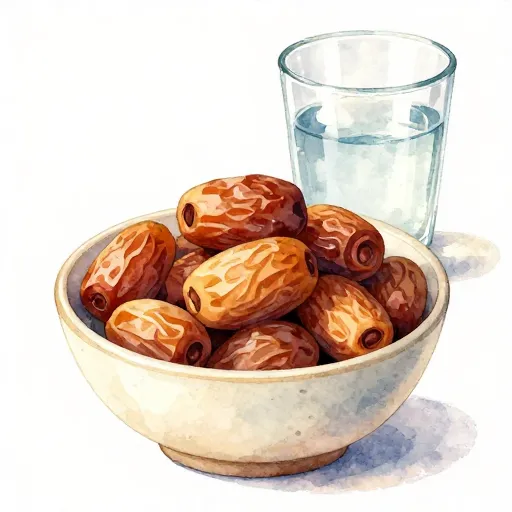
In many Muslim cultures, people break their fast with dates. This isn't just tradition: dates are packed with natural sugar and fiber, which gives the body a gentle, healthy 'wake-up' call after a long day of rest.
So, is Ramadan about hunger? Or is it about something else entirely? It seems to be a month where we trade the food for our bodies for the food for our minds. It is a time to ask: Who am I when I am not busy consuming things?
In our modern world, where everything is available instantly, the idea of waiting on purpose is almost radical. It is a way of saying that some things are worth the wait, and that the best parts of us are the parts that can't be seen or eaten.
Something to Think About
If you had to 'fast' from something other than food, what would it be?
Think about something you use every day: maybe a tablet, video games, or even talking. Imagine giving it up for a set time. Would it make you feel more free, or just bored? There is no right answer, only the observation of how your mind reacts to the wait.
Questions About Religion
Do children have to fast during Ramadan?
Can people drink water during the fast?
Why does the date of Ramadan change every year?
The Moon Still Rises
Ramadan reminds us that we are more than just our physical bodies. It is an invitation to see the world with fresh eyes and a cleaner heart. Whether you are fasting or just watching the moon change shape, there is a certain wonder in the idea that by doing less, we might actually become more.