Have you ever looked at a seed and wondered how it knows how to become a giant oak tree?
For thousands of years, people have asked if humans are like those seeds. They explore the idea of reincarnation, a belief that our soul travels through many different lives to learn, grow, and experience the world in new ways.
Imagine life is like a very long book. In most stories, there is a beginning, a middle, and an end. But what if the end of one chapter was actually just the start of a brand-new book with the same main character?
This is the core idea of reincarnation. It is the belief that when a person's body stops working, the 'you' part of them, often called the soul or spirit, moves into a new body to start a new life.
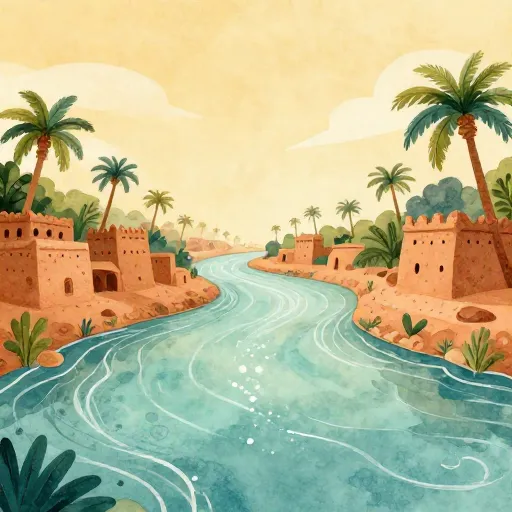
Imagine you are standing on the banks of the Indus River 3,000 years ago. You see the water flowing past you. It looks like the same river, but the water is always new. The thinkers of this time used the river to explain how life is a constant flow of changing forms.
This idea did not just pop up yesterday. It is one of the oldest thoughts in human history. To find its roots, we have to travel back over 3,000 years to the ancient river valleys of India.
The River of Life
In Ancient India, people lived in a world of cycles. They watched the monsoon rains come and go. They saw the moon grow full and then disappear, only to return again.
Mira says:
"It's like how energy never really disappears, it just changes. Like how a puddle disappears in the sun but then turns into a cloud!"
These early thinkers looked at the world and saw that nothing ever truly disappears: it just changes form. A log burns and becomes smoke and ash. Water boils and becomes steam.
They began to call the cycle of birth, life, death, and rebirth Samsara. They pictured it as a giant, turning wheel that every living thing is riding.
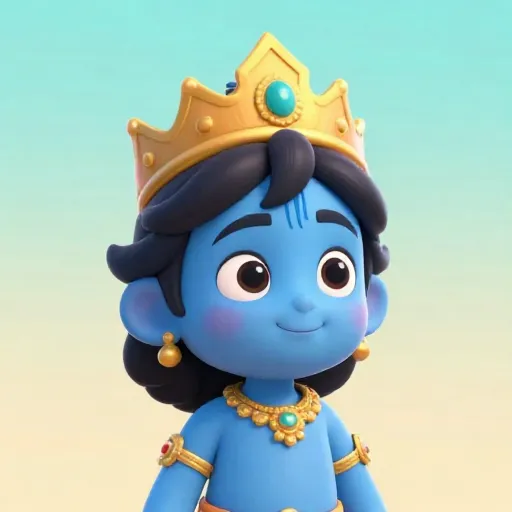
As a person puts on new garments, giving up old ones, the soul similarly accepts new material bodies, giving up the old and useless ones.
In this view, the world is a massive school. Each life you live is like a grade in that school. You learn lessons in one life, and then you move on to the next one to learn something new.
Time is like a ruler. It has a clear beginning (when you are born) and a clear end (when you die). You only walk the path once, so every moment is a brand new adventure.
Time is like a clock face. The hands go around and around. When they reach twelve, they don't stop: they just start a new hour. Life is a series of returns and second chances.
The Player and the Avatar
If we live many lives, what is the part of us that stays the same? Ancient Indian philosophers called this the Atman. You can think of it as your inner spark or your true self.
Think about your favorite video game. You might choose a different character or 'skin' every time you play. One day you are a brave knight: the next day you are a space explorer.
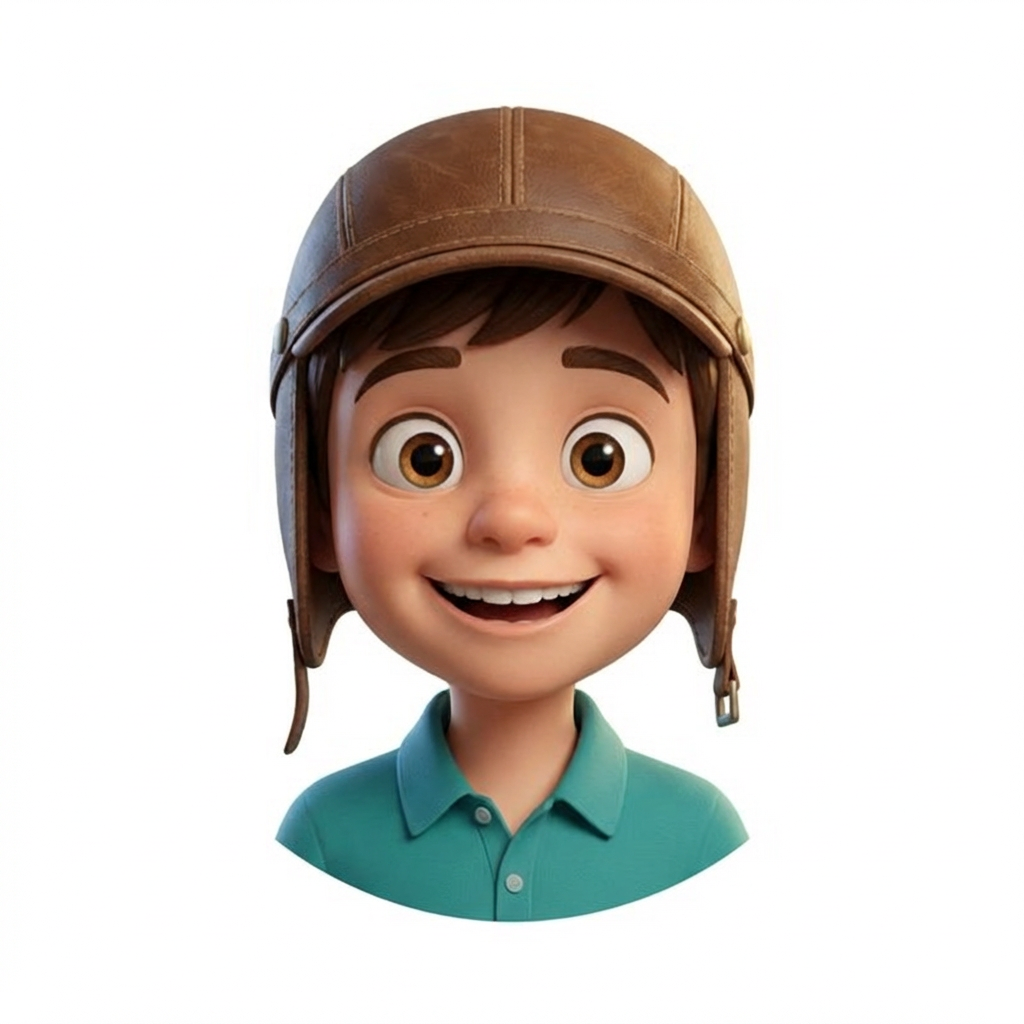
Finn says:
"So if the Atman is the player, does that mean I chose this 'level' of life? And what happens if I get a Game Over?"
Even though the character on the screen looks different, the person holding the controller is the same. The Atman is the player, and the body is just the character being played for a little while.
This idea helped people feel connected to everything. If we all have a 'forever' part inside us, then maybe we have all been many different things before: teachers, farmers, or even animals.
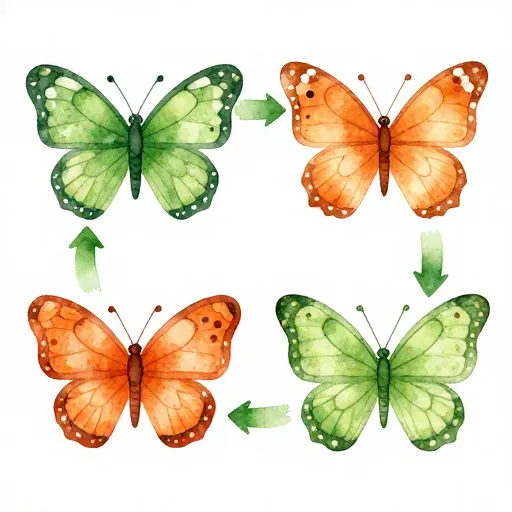
Think about a butterfly. It starts as an egg, becomes a caterpillar, hides in a chrysalis, and finally emerges as a butterfly. It is the same creature, but it looks totally different each time. Can you think of other things in nature that change their 'outfit' but stay the same?
The Law of the Harvest
If the soul keeps coming back, how does it know where to go next? This is where Karma comes in. In many traditions, Karma is the 'law of cause and effect.'
It is not a judge sitting in the clouds. Instead, it is more like the way a garden works. If you plant watermelon seeds, you will eventually get watermelons, not pumpkins.
All things are interrelated, and all things are part of a whole.
Every action you take is like planting a seed. Kind actions plant 'good' seeds, and unkind actions plant 'difficult' seeds. These seeds determine what your next life might look like.
Finn says:
"Wait, if I'm nice to my cat now, could I come back as a cat and have someone be nice to me? That's a lot to think about."
For many people, this makes the world feel fair. It means that the way we treat others today matters deeply for our future, even beyond this current life.
Traveling to Ancient Greece
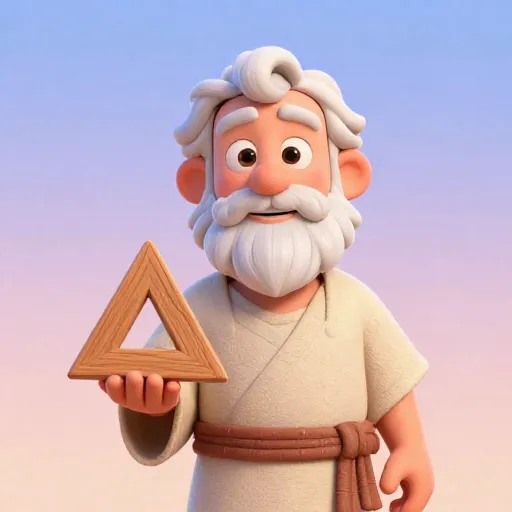
While thinkers in India were developing these ideas, people in Ancient Greece were asking the same questions. A famous mathematician named Pythagoras was one of them.
You might know him for his triangles, but he spent a lot of time thinking about souls. He believed in something called metempsychosis, which is just a very fancy word for reincarnation.
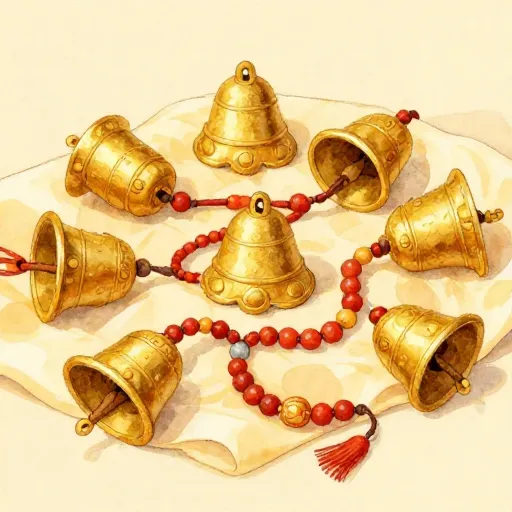
In Tibet, when a very important teacher called a Lama dies, monks look for a young child who might be that teacher reborn. They sometimes show the child objects from the teacher's life to see if the child recognizes them!
Pythagoras once stopped a man from hitting a dog because he claimed he recognized the voice of a deceased friend in the dog's yelp. He believed that souls could travel between humans and animals.
Later, the philosopher Plato wrote about a place called the 'Plain of Forgetfulness.' He imagined that before we are born, we drink from a magical river that makes us forget our past lives so we can start fresh.
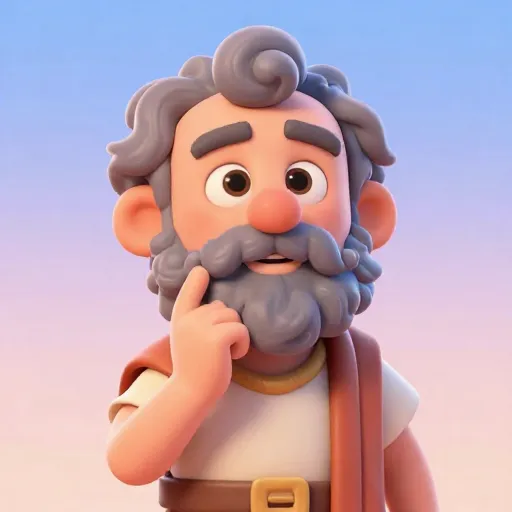
The soul of man is immortal and at one time has an end, which is termed dying, and at another time is born again, but is never destroyed.
The Different Paths of Rebirth
Not everyone sees reincarnation the same way. In Hinduism, the goal is eventually to stop the wheel. This is called Moksha, which is when the soul finally understands everything and becomes one with the universe.
In Buddhism, the idea is slightly different. The Buddha taught that there isn't a solid 'soul' that moves, but rather a stream of energy or consciousness, like one candle lighting another.
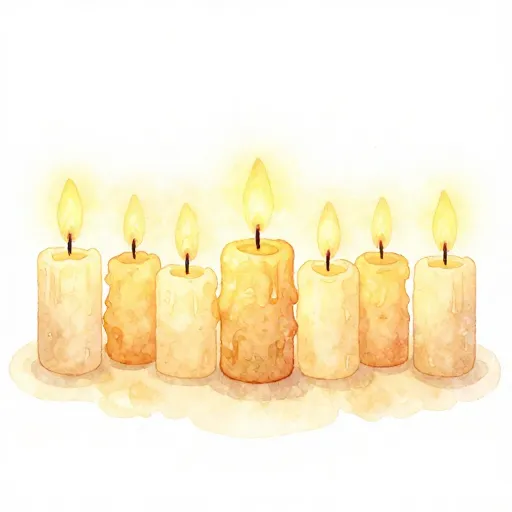
Imagine a long line of candles. You use the flame from the first candle to light the second, then use the second to light the third. Is the flame on the third candle the 'same' as the first? It is made of the same heat and light, but it is burning on a new wick.
In some cultures, like the Inuit in the Arctic or the Druze in the Middle East, reincarnation is seen as a way for families to stay together. They believe grandfathers might return as their own grandsons to keep the family wisdom alive.
Through the Ages
Why Does This Idea Matter?
Whether someone believes in reincarnation or not, the idea teaches us something important about wonder. It asks us to look at every person we meet and wonder about their story.
If we have lived a thousand lives, then every person we see might have been our brother, our mother, or our best friend at some point. It makes the world feel like one big, ancient family.
It also reminds us that we are always growing. Just like you are taller than you were last year, the idea of reincarnation suggests that our spirits are also on a long, slow journey toward becoming wiser.
Something to Think About
If you could choose your next life to learn just one specific thing, what would you want to be?
There is no right or wrong answer here. Some people might want to be a bird to learn about the wind, while others might want to be a scientist to learn about the stars.
Questions About Religion
Does everyone believe in reincarnation?
Do you remember your past lives?
Can people become animals in their next life?
A World of Possibility
The idea of reincarnation invites us to see life as a great, ongoing adventure. Whether we live once or a thousand times, it reminds us that our actions have ripples, our souls are full of potential, and the world is a place where we are always, constantly becoming something new.
