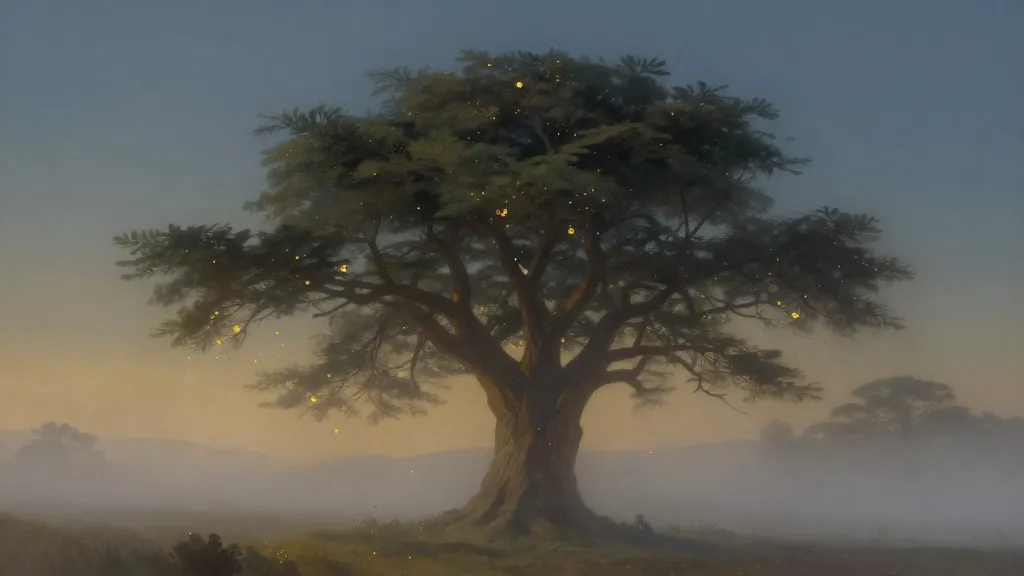
Have you ever walked through a forest and felt like the trees were watching you, or stood by the ocean and felt a sudden, deep sense of respect for the water?
This feeling of wonder is at the heart of Shinto, an ancient tradition from Japan that teaches us to see the world as a place filled with sacred spirits called kami.
Imagine standing on a rugged coastline thousands of years ago. The waves crash against the rocks, and the wind whistles through the pine trees.
To the early people of Japan, these were not just physical events. They were signs of life.
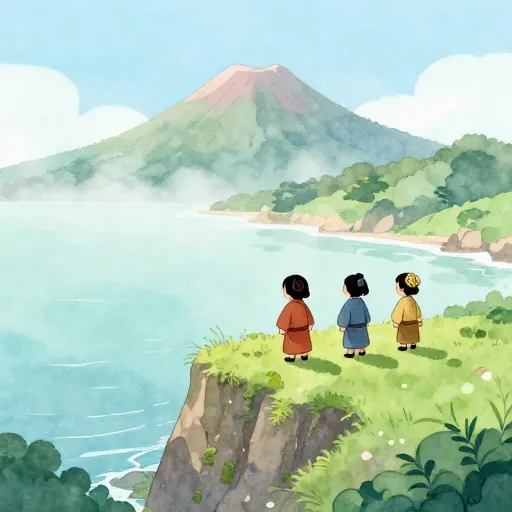
Imagine the very first people arriving in Japan. They see giant volcanoes, deep forests, and islands that seem to rise out of the mist. They didn't think, 'I own this land.' They thought, 'This land is alive.'
The Way of the Kami
The word Shinto means the way of the gods. But it is not quite like the religions you might be used to.
It has no single founder, no holy book like a Bible, and no strict list of rules to follow. Instead, it is a way of noticing the world.

Finn says:
"If a kami is the 'essence' of something, what if my favorite old sweatshirt has a kami? It definitely has a certain feeling to it!"
At the center of Shinto is the idea of kami. A kami is often translated as a god or a spirit, but those words do not quite capture it.
A kami is the essence or the energy of something that makes us feel a sense of awe. It could be a mountain, a storm, a waterfall, or even a particularly beautiful stone.
Whatever may be the thing, whether it be birds, beasts, plants and trees, seas and mountains... which are out of the ordinary, which possess superior power, or which are awesome, they are called kami.
Where the Spirits Live
Because the kami are everywhere, the whole world is a sacred place. However, people built special buildings called jinja, or shrines, to give the kami a place to rest.
When you visit a shrine, you usually walk through a torii gate. This is a simple, beautiful structure that marks the boundary between the ordinary world and the sacred world.
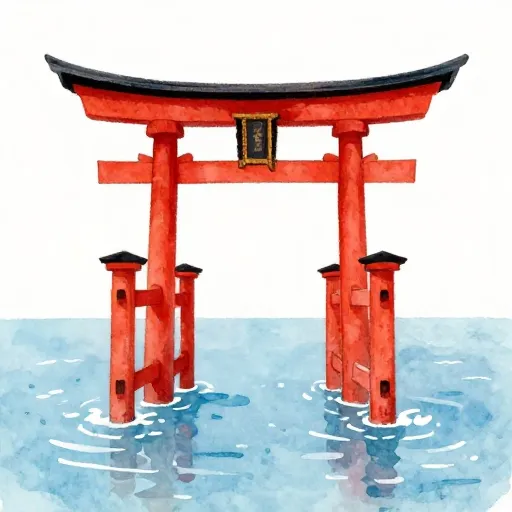
The famous red torii gates are often painted that color because the color cinnabar (a bright orange-red) was believed to protect against evil spirits and bad luck.
Walking under the gate is a signal to your mind. It tells you to slow down, leave your worries behind, and prepare to meet something special.
Inside the shrine grounds, you might see a thick rope made of rice straw called a shimenawa. This rope is often wrapped around ancient trees or large rocks.

Mira says:
"The ropes around the trees remind me that we aren't just looking at nature, we are standing inside it. We aren't separate from the forest."
These ropes tell us that a kami lives there. It is a way of saying: this tree is more than just wood: it is a living presence that deserves our respect.
The Importance of Purity
In Shinto, people do not believe that humans are born with sin. Instead, they believe everyone is born with a heart that is naturally good and bright.
Over time, we might pick up kegare, which means impurity or a kind of dust that covers our inner brightness. This happens when we are selfish, when we experience sadness, or when we are around things that are decaying.
Next time you feel frustrated or 'muddy' in your mind, try washing your face with cool water. As you do, imagine the water carrying away the grumpiness and leaving your 'bright heart' underneath.
To get rid of this dust, Shinto uses harae, or purification rituals. The most common form is simple: you wash your hands and mouth with clean water before entering a shrine.
It is not about being dirty in a physical way. It is about clearing your mind and making yourself feel fresh and new again.
Shinto has no dogma, no theology, no scripture. It is a religion of the heart and a religion of the home.
Living with the Seasons
Shinto is deeply tied to the changing seasons of the year. Life is seen as a cycle of birth, growth, and renewal.
When the seasons change, communities hold a Matsuri, or festival. These are loud, colorful, and joyful events where the local kami is carried through the streets in a portable shrine.
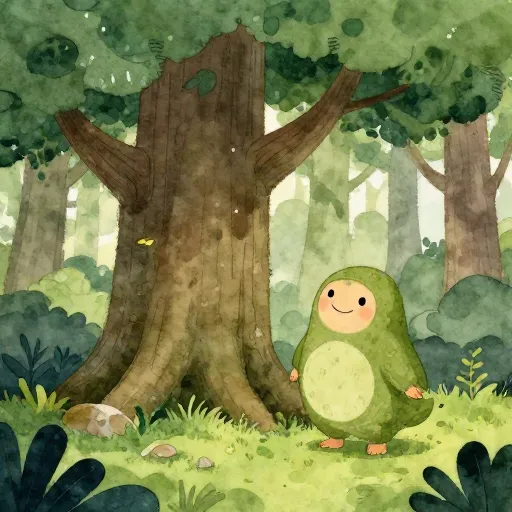
Have you seen movies like 'My Neighbor Totoro' or 'Spirited Away'? The director, Hayao Miyazaki, uses many Shinto ideas. The giant forest spirits and the way characters respect nature are all inspired by Shinto.
There is music, dancing, and plenty of food. The idea is that the kami enjoys the celebration just as much as the people do.
It is a way of saying thank you for the harvest or asking for protection in the coming months. Shinto does not ask you to hide from the world, it asks you to celebrate being part of it.
Finn says:
"I like the idea that we can just 'wash off' our bad days with water. It makes the world feel like it's always giving us a second chance."
Merging with Other Ideas
About 1,500 years ago, another major idea arrived in Japan: Buddhism. In many places, different religions might fight, but in Japan, they grew together.
Shinto focused on the world we live in right now and the beauty of nature. Buddhism focused on the mind, the soul, and what happens after we die.
Shinto is a religion because it involves shrines, spirits, and rituals that people have practiced for thousands of years.
Shinto is just 'the Japanese way of life.' It is a set of cultural habits and a way of feeling about nature that anyone can share.
Most people in Japan found they could do both. They might go to a Shinto shrine to celebrate a birth and a Buddhist temple to remember an ancestor.
This mixture shows how Shinto is flexible. It is not about being right or wrong, but about finding what helps you live a good, harmonious life.
The Journey of Shinto
The Thread of Connection
One of the most beautiful ideas in Shinto is musubi. This is the power of creation and connection that ties everything together.
It is the energy that makes a seed grow into a tree. It is also the connection between you and your parents, or you and a friend you haven't met yet.
The art of life lies in a constant readjustment to our surroundings.
Even today, in the middle of busy cities like Tokyo, you will find tiny shrines tucked between skyscrapers. You might see a businessman stop for ten seconds to bow to a kami before going to his office.
Shinto reminds us that no matter how modern the world gets, we are still connected to the earth. We are part of a very old, very big story that is still being written.
Something to Think About
If you had to find a 'kami' in your own neighborhood - something that makes you feel a sense of wonder or quiet respect - what would it be?
There is no right or wrong answer. It could be a specific tree, a park, or even the way the light hits a certain building.
Questions About Religion
Do Shintoists believe in a God like in Christianity?
Why do people clap their hands at a Shinto shrine?
Is Shinto only for people in Japan?
The World is Wide Awake
Shinto invites us to look at the world as if it were alive and breathing. It suggests that we aren't just visitors on this planet, but part of a huge, interconnected family of spirits. Whether you are at a shrine in Kyoto or a park in your hometown, there is always a chance to stop, bow, and notice the shimmer of the world around you.
