
Imagine a world where the king and the servant sit on the same floor to eat from the same pot.
This was the radical vision of Sikhism, a faith that began 500 years ago in the vibrant, river-crossed land of the Punjab. It is a path built on equality, service, and the idea that the divine is a vibration found within every single living thing.
More than five centuries ago, in a part of the world that is now split between India and Pakistan, a man named Nanak had a realization. He lived in a time when people were strictly divided by their jobs, their wealth, and their religions. Some were seen as high, and others were seen as low, but Nanak saw something different. He saw a world where everyone was part of the same light.
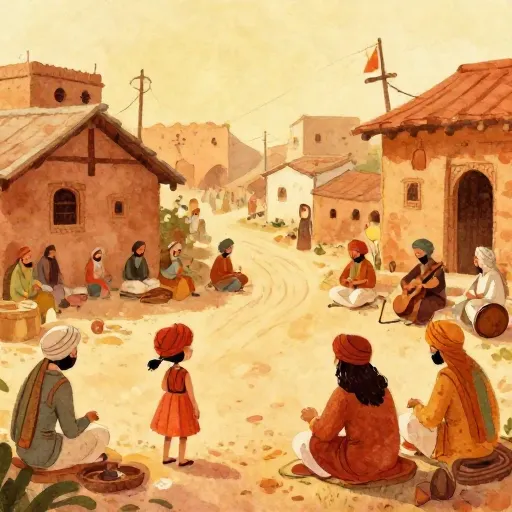
Imagine a dusty road in 1499. The air smells of spice and rain. A man walks by, not carrying a sword or a chest of gold, but a small stringed instrument. He is singing a song that says the person you think is your enemy is actually your brother. People stop their work just to hear the melody.
Nanak became the first Guru, a word that means teacher or someone who brings light to the darkness. He did not want to build a religion of rituals or complicated rules. Instead, he wanted to show people how to be Sikhs, which simply means learners. For Nanak, life was a school where the most important lesson was how to love and serve others.

Truth is the highest virtue, but higher still is truthful living.
The Teacher Who Traveled on Foot
Guru Nanak did not stay in one place to teach. He spent years walking thousands of miles across mountains and deserts. He visited great cities and tiny villages, often dressed in a mix of clothes from different traditions. He wanted to show that he belonged to everyone, not just one group.
Everywhere he went, he used music to share his ideas. His friend Mardana, who was a talented musician, would play a stringed instrument called a rabab. Together, they would sing poems about the one universal force that connects the stars to the blades of grass. This force is called Ik Onkar.

Mira says:
"Nanak walked everywhere with a musician friend. I wonder if the music helped people listen to his ideas with their hearts instead of just their ears."
Nanak's message was simple but very brave for the time. He told people that they did not need to go to a mountaintop to find what is holy. It was already inside them, like the scent is inside a flower. He also told them that no one was better than anyone else because of their family name or how much money they had.
The Kitchen of Equality
One of the most famous things Guru Nanak started was something called Langar. In those days, people from different social groups, called castes, were never allowed to eat together. Nanak decided to change that by opening a community kitchen where everyone was welcome.
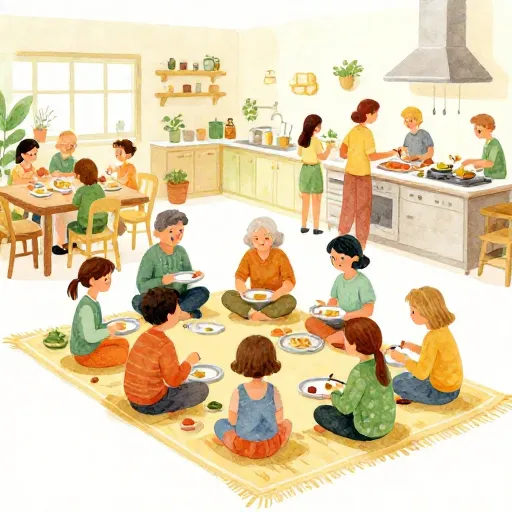
In a Sikh Langar, the food is always vegetarian. This is not just about being kind to animals: it is so that anyone, no matter their dietary rules, can sit down and eat safely with everyone else. It is the world's most inclusive dinner party!
In a Langar, everyone sits on the floor in straight rows. It does not matter if you are a billionaire or someone who has no home. You eat the same simple, vegetarian meal, served by volunteers. This practice showed the world that in the eyes of the Guru, humanity is one single family.

Finn says:
"So if everyone sits on the floor, no one can look down on anyone else. It's like the floor is the ultimate leveler."
Today, the Golden Temple in Amritsar, India, serves free meals to over 100,000 people every single day. This is the ultimate example of Seva, which is the Sikh practice of selfless service. Seva means helping others without expecting anything in return, not even a thank you.
The next time you are at a park or a school, try to do a 'Secret Seva.' Find a small way to help someone: like picking up a piece of litter or holding a door: without anyone seeing you do it. How does it feel to serve without needing a 'good job' from anyone else?
A Relay Race of Wisdom
Guru Nanak was the first of ten human Gurus. You can think of it like a long relay race. Each Guru carried the torch of these ideas for a while before passing it to the next. They each added something special to the Sikh community, helping it grow and stay strong even during difficult times.
The Journey of the Sikhs
The Gurus taught that being spiritual does not mean hiding away from the world. They believed in being Warrior-Saints. This means having a heart full of peace and kindness, but also having the courage of a lion to stand up against unfairness and protect those who are weak.

Recognize the whole human race as one.
The Living Guru
After the tenth human Guru, Guru Gobind Singh, something very interesting happened. He decided that the community did not need a human leader anymore. Instead, he named the Guru Granth Sahib as the eternal Guru. This is a large, beautiful book that contains the poems and songs of the Gurus.
Mira says:
"I love the idea that a book can be a leader. It means the ideas are what matter most, and those can never grow old or go away."
The Guru Granth Sahib is treated with the same respect as a living king. It is kept on a raised platform under a silk canopy. During the day, people fan it with a whisk made of soft hair to keep it cool. It is not just a book of history: it is considered a living voice that offers guidance to anyone who listens.
A leader should be a person who can make decisions, change with the times, and talk to people directly.
A leader can be a set of timeless ideas and songs that never change, providing a steady anchor for generations.
What makes this book truly unique is that it includes the writings of people from many different faiths. The Gurus included poems by Muslims and Hindus because they believed that truth can come from many different voices. It is a library of wisdom that belongs to all of humanity.
The Uniform of the Spirit
Many Sikhs choose to wear certain items that show their commitment to their faith. These are known as the Five Ks. Each one is a symbol of a value they want to live by. For example, many Sikh men and some women wear a Turban. In history, turbans were only for royalty, but the Gurus asked all Sikhs to wear them to show that every person is a king or queen of their own spirit.
- Kesh: Uncut hair, which represents accepting the body as it is.
- Kara: A steel bracelet that has no beginning and no end, symbolizing the eternity of the divine.
- Kanga: A wooden comb used to keep the hair clean and tidy, symbolizing an orderly life.
- Kachera: Special cotton undergarments that represent readiness and self-control.
- Kirpan: A small ceremonial sword, which is a reminder to always stand up for justice and protect the innocent.

The light is within everyone, and it is the same light.
Meditation and Action
For a Sikh, life is a balance. It is about Simran, which is remembering the universal vibration through meditation, and Kirat Karo, which means earning an honest living. A Sikh is encouraged to be a part of the world: to have a job, a family, and hobbies: while keeping their mind connected to the big picture.
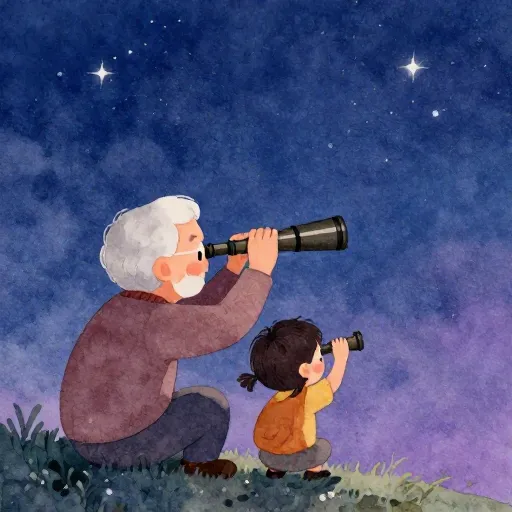
The word 'Sikh' comes from the Sanskrit word 'shishya,' which means student or disciple. A Sikh never stops learning. Even the oldest, wisest teacher considers themselves a student of the universe.
This balance creates a feeling of Chardi Kala, or eternal optimism. Even when things are very hard, a Sikh tries to stay positive and helpful. They believe that because the divine is in everything, there is always a reason to be hopeful. They are taught to see the world not as a place of competition, but as a place of cooperation.
Something to Think About
If you were to treat every person you met today as if they were a king or a queen, how would your day change?
There is no right answer here. Just think about how your actions and your words might shift if you saw a spark of the divine in everyone around you.
Questions About Religion
Why do Sikhs wear turbans?
Do Sikhs believe in the same God as other religions?
Is Sikhism a type of Hinduism or Islam?
The Song that Never Ends
The story of Sikhism is not just a history of the past, it is a living way of moving through the world. It is a reminder that we are all learners, all servants, and all warriors for what is right. Whether you are eating in a Langar or standing up for a friend, the spirit of the 'learner' is something we can all carry with us.
