If you look in a mirror, you see your eyes, your hair, and your smile, but is there something else hiding behind those things that makes you 'you'?
Throughout history, humans have used the word soul to describe the invisible part of a person that thinks, feels, and remains the same even as our bodies change. This idea of an inner essence has traveled through every culture on Earth, from the tombs of Egypt to the laboratories of modern science.
Imagine you are standing on the banks of the Nile River three thousand years ago. The sun is hot on your neck, and the air smells like mud and incense. In this world, the people of Ancient Egypt did not think of themselves as just one person.
They believed a human was made of many different parts. Some parts were physical, like your heart, but others were invisible and magical. These invisible parts were some of the earliest versions of what we now call the soul.
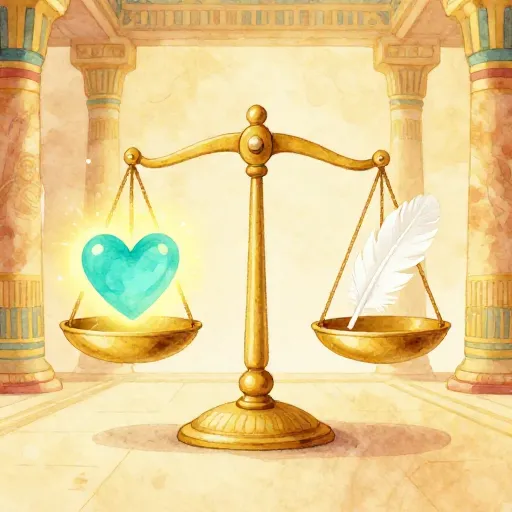
Imagine a scale in a grand, golden hall. On one side sits a heavy human heart. On the other, a tiny, fluffy white ostrich feather. This was the 'Weighing of the Heart' ceremony in Ancient Egypt. They believed your soul’s future depended on your heart being as light as that feather.
One part was called the Ka, which was like a double of yourself that needed food and water even after you died. Another part was the Ba, a bird-headed spirit that could fly out of a tomb to visit the living world. The Egyptians were obsessed with keeping these parts together so a person could live forever.
They believed that after you died, your heart was weighed on a scale against a feather. If your heart was light because you were a good person, your soul could continue its journey. If not, things got much more complicated.

Finn says:
"If the Egyptians thought the soul had a bird head, I wonder if it ever gets lost or needs a map to find its way back home?"
As time moved forward, the conversation about the soul moved from the golden sands of Egypt to the marble porches of Ancient Greece. Here, thinkers began to use the word psyche to describe the breath of life. To the Greeks, the soul was not just a ghost: it was the driver of the body.
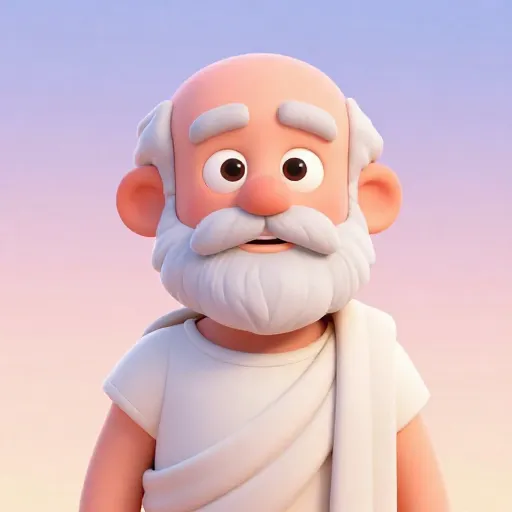
The soul is a chariot pulled by two horses, and the mind is the driver holding the reins.
One famous philosopher named Plato thought the soul had three different jobs. He imagined it like a chariot pulled by two horses. One horse was wild and wanted to run toward basic desires, like eating too much cake or getting angry.
The other horse was noble and wanted to do the right thing. The driver of the chariot was the mind, trying to keep both horses working together. For Plato, the soul was the thing that kept us in balance.
Think about a toy you have had for a long time. Maybe you replaced the wheels, then the doors, then the paint. Is it still the same toy? Now think about yourself. Every seven years, almost every cell in your body is replaced. Are you still the same 'you'? What part of you stayed the same while your body changed?
But not everyone in Greece agreed with Plato. His student, Aristotle, had a very different idea. He thought the soul was not a separate thing trapped inside a body like a bird in a cage.
Instead, Aristotle believed the soul was the "form" of the body. He said that if an axe had a soul, its soul would be "chopping." The soul was what a living thing did, not just what it was. This was an early way of thinking about how our minds and bodies are joined together.

Mira says:
"Plato says the soul is like a driver, but Aristotle says it is more like the way a dancer and the dance are actually the same thing. I think they might both be right."
While the Greeks were debating in their robes, people in ancient India were exploring the soul through a concept called Atman. In the Hindu tradition, the Atman is the deepest, truest part of yourself that never changes.
They used a beautiful metaphor: imagine the ocean. Every wave on the surface looks different. Some are big, some are small, some are crashy, and some are calm. But every wave is still made of the same ocean water.
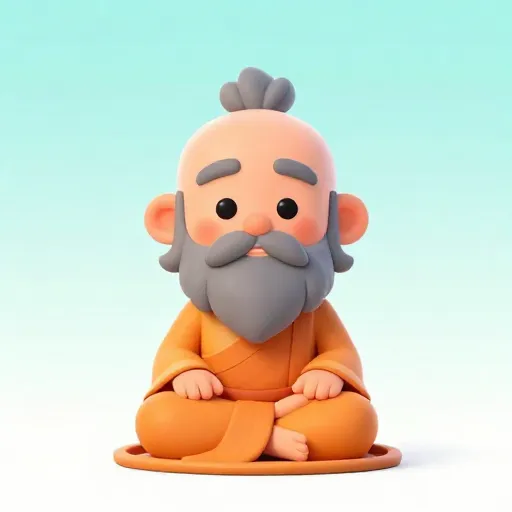
The Self is not born, nor does it die. It is ancient and everlasting.
In this way of thinking, your body and your personality are like the wave, but your soul is the ocean. This suggests that while we all feel like separate people, our souls might all be part of one giant, universal energy. This idea is called transcendence, which means going beyond the limits of our everyday lives.
The soul is like a prisoner in the body. It belongs to a higher world and is only visiting this one.
The soul is the way the body is organized. You can't have a soul without a body, just like you can't have 'walking' without legs.
Around the same time, others in India were coming to a very different conclusion. The Buddha taught a concept called Anatman, which basically means "no-soul." He suggested that we are like a Lego castle: if you take all the bricks apart, there is no "castle" left over.
He thought that because we are always changing: our cells, our thoughts, our feelings: there is no permanent "soul" that stays the same. This is a big mystery. How can we feel like the same person today as we were when we were babies if every part of us has changed?
The Soul Through the Ages
In the 1600s, a French thinker named René Descartes came along with a very famous idea. He wanted to know what he could be absolutely sure of. He realized he could doubt almost everything, even the world around him, but he could not doubt that he was thinking.
He came up with the idea of dualism. This is the belief that the mind (or soul) is made of a completely different "stuff" than the body. He thought the body was like a complicated machine made of gears and pumps, while the soul was the pilot controlling the machine.

I think, therefore I am.
This led to a problem that philosophers still argue about today. If the soul is invisible and the body is solid, how do they touch? How does a ghostly thought make a physical arm move? Descartes thought they met in a tiny part of the brain called the pineal gland, but scientists today know it is not that simple.
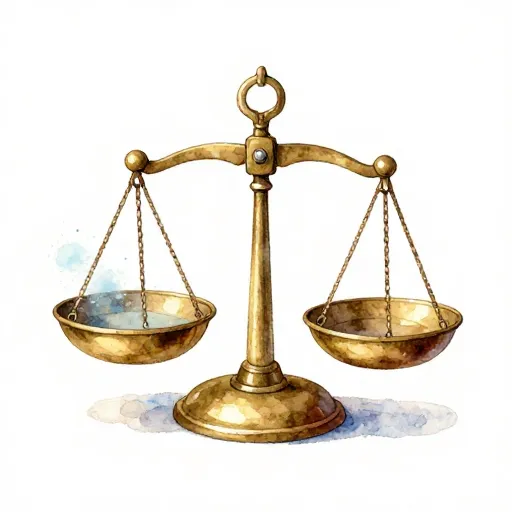
In 1901, a doctor named Duncan MacDougall tried to weigh the soul. He weighed people exactly at the moment they died and claimed they lost 21 grams. Most scientists today think his experiment was wrong, but the idea of the '21 gram soul' became a famous legend in movies and books.
As we moved into modern times, many people started to look to science to explain the soul. Some scientists prefer the word consciousness. They want to know how three pounds of wet, grey brain tissue can create the feeling of a sunset or the sting of a secret.
Some thinkers are materialists. They believe that everything, including your thoughts and your "soul," comes entirely from the physical brain. To them, when the brain stops working, the soul stops too. It is like the light from a bulb: when you cut the power, the light does not go anywhere: it just ceases to be.
Finn says:
"I don't know if my soul is a 'thing' or just a feeling of being me, but it's pretty cool that scientists and monks are both trying to figure it out."
However, even with all our microscopes and scanners, we still have not found a "soul" spot in the brain. This is what some call the "Hard Problem." We can see the neurons firing, but we cannot see the feeling of being alive. This leaves a lot of room for philosophy and religion to keep asking questions.
The word 'spirit' comes from the Latin word 'spiritus,' which means 'breath.' Close your eyes and take a slow, deep breath. Feel the air moving in and out. Many ancient cultures believed that our breath was the actual soul moving through us. Does focusing on your breath make you feel more like 'yourself'?
Some people find the idea of a soul in nature. This is called animism. It is the belief that not just humans, but animals, trees, and even rivers have their own spirits. When you feel a deep connection to a pet or a forest, you might be experiencing what it feels like when two different souls recognize each other.
In many religions, the soul is considered the most precious thing a person has. It is the part that connects us to something bigger than ourselves, whether we call that God, the Universe, or simply Love. It is the part of us that searches for meaning and wonders why we are here.
Something to Think About
If your soul had a color, a sound, and a texture, what would they be?
There are no wrong answers here. Some people might feel like their soul is a bright yellow bell ringing, while others might feel like it's a soft green piece of moss. How do you feel on the inside?
Ultimately, no one has a perfect answer for what the soul is. It might be a physical part of our biology we do not understand yet. It might be a beautiful story we tell to help us feel connected. Or it might be a literal spark that survives long after our bodies are gone.
The interesting thing is not having the answer, but the fact that we have been asking the question for thousands of years. As long as there are humans, we will likely keep looking into the mirror and wondering about the mystery looking back at us.
Questions About Religion
Where is the soul located in the body?
Do animals have souls?
What is the difference between the soul and the mind?
Keep Exploring the Mystery
The concept of the soul is one of the biggest ideas in human history. Whether you see it through the lens of religion, philosophy, or science, it is a way to talk about the part of you that feels special and unique. Keep asking questions about what makes you 'you,' because that curiosity is part of the mystery itself.
