What does it mean to be brave when you know the world might end?
In the cold, jagged landscapes of the North, the Vikings created a story about a place called Valhalla. It was more than just a destination for the dead: it was a way of thinking about courage, memory, and the importance of standing tall together.
Imagine a landscape where the winter lasts for months and the sea is a churning wall of gray. Over a thousand years ago, in the lands we now call Scandinavia, people lived in a world that felt both beautiful and dangerous. To make sense of this, they told stories that were as sharp as iron and as bright as fire.
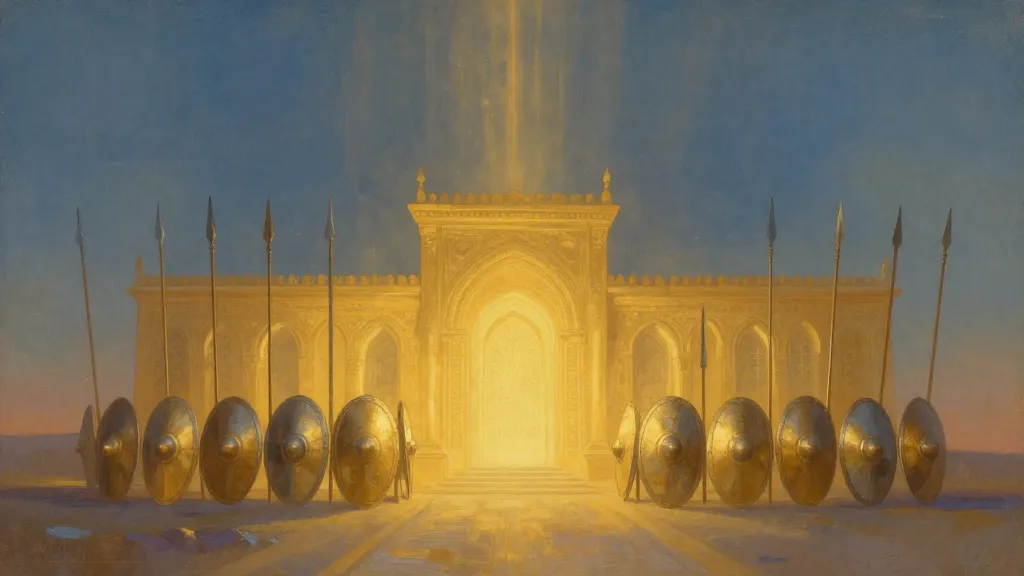
These people, the Norse or Vikings, believed the universe was held together by a giant tree. They imagined many different realms, but the most famous was Asgard, the home of the gods. Inside Asgard sat a hall that gleamed like a second sun.
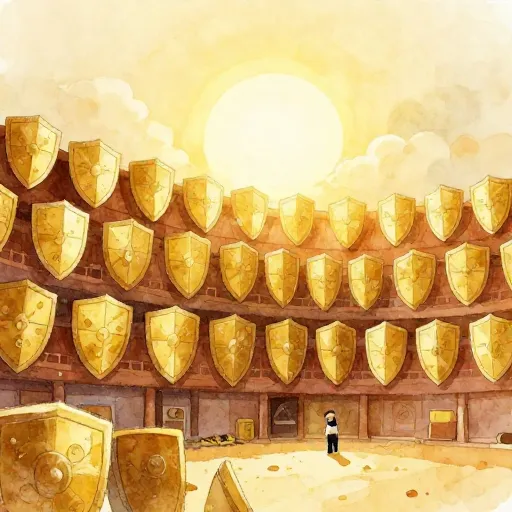
Imagine standing in front of a building where the roof is not made of wood or tiles, but of thousands of golden shields overlapping like dragon scales. As the sun hits the hall, it glows so brightly that it can be seen from the other side of the universe. The air smells of woodsmoke, roasting meat, and the sharp scent of the sea.
This was Valhalla, the 'Hall of the Slain.' It was not a place for everyone who died, but specifically for those who fell in battle. For the Vikings, dying with a sword in your hand was not a tragedy, it was an invitation.
The Architecture of a Warrior's Dream
If you walked up to the doors of Valhalla, you would not see a normal building. The Norse poets described it as a place built from the very things the warriors used in life. The rafters were made of spears, and the roof was shingled with golden shields.
It was a hall of immense proportions, designed to hold thousands of people at once. According to the old poems, it had five hundred and forty doors. Each door was so wide that eight hundred warriors could walk through it side-by-side.
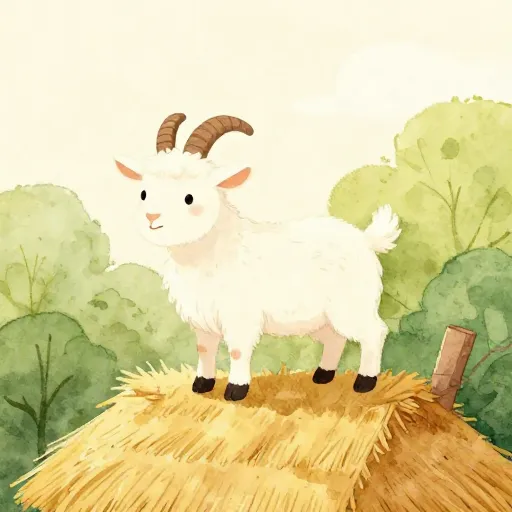
Valhalla had a very special resident on its roof: a goat named Heiðrún. Instead of milk, this magical goat produced an endless supply of mead, a sweet honey-drink, for the warriors to enjoy during their nightly feasts.
Inside, the floor was strewn with coats of mail, the metal shirts warriors wore for protection. This imagery tells us something important about how the Vikings viewed the afterlife. They did not imagine a place of quiet clouds and harps, but a place of strength and readiness.
Everything in Valhalla served a purpose for the journey ahead. The gods and the fallen were not just resting: they were waiting for a specific moment in time. This sense of waiting gave the hall a feeling of electric energy, like a stadium before a big game.

Finn says:
"What if someone was really brave but they were also really quiet? Does Odin have a special corner for people who like to read by the spear-fire?"
The Choosers of the Slain
One might wonder how a person actually got into such a prestigious place. It was not enough to simply be a soldier: you had to be chosen by the Valkyries. These were powerful, winged figures who flew over battlefields to decide who lived and who died.
In many stories, the Valkyries are depicted as fierce women on horseback. Their armor was said to flicker and glow, creating the shimmering lights we now call the Aurora Borealis. When they found a hero who showed true heart, they would carry them across the sky to Asgard.

The hall is roofed with shields, and its rafters are spears: the benches are strewn with coats of mail.
Once inside the hall, the warriors were given a new name: the Einherjar. This word means 'those who fight alone' or 'the army of one.' Even though they were part of a massive group, each person was recognized for their individual spirit.
Valhalla is a place of glory where you never have to worry about being old or weak. You get to do what you love most with your best friends forever.
Fighting every single day for eternity might actually be quite tiring. Is it a reward, or is it a job that never allows you to truly rest?
A Day in the Life of a Hero
Life in Valhalla followed a very specific, and perhaps surprising, routine. Every morning, the Einherjar would put on their armor and go out into the great courtyard of Asgard. There, they would fight each other in massive, legendary battles.
They would strike each other down, testing their skills and their strength to the absolute limit. But here is the magical part: when the sun began to set, all their wounds would heal. Every warrior who had 'fallen' that day would stand back up, wipe off the dust, and head back into the hall.

Mira says:
"It is interesting that they heal every night. It is like the Norse people realized that to be brave, you have to be allowed to fail and get hurt, as long as you can get back up again."
After the fighting came the feast, which was just as legendary as the combat. They sat at long tables with Odin, the All-Father and king of the gods. Odin himself did not eat food: he only drank wine, giving his meat to two wolves that sat at his feet.
To feed the thousands of hungry warriors, there was a magical boar named Sæhrímnir. Every single night, the cook would prepare the boar for the feast. And every single morning, the boar would be whole again, ready to be prepared for the next meal.
Think about your 'Perfect Day.' If you had to repeat that exact same day for a thousand years, what activities would you choose to include so that you never got bored? Would you choose something easy, or something that challenged you?
The Purpose Behind the Party
It might seem like Valhalla was just an endless loop of fighting and eating, like a video game that never ends. However, for the Vikings, there was a very serious reason for all this practice. They believed that the world would eventually face a final battle called Ragnarok.
In the story of Ragnarok, the forces of chaos would rise up to destroy the world of the gods. Odin knew this day was coming, and he wanted the bravest humans by his side. Valhalla was essentially a massive training camp for the end of time.
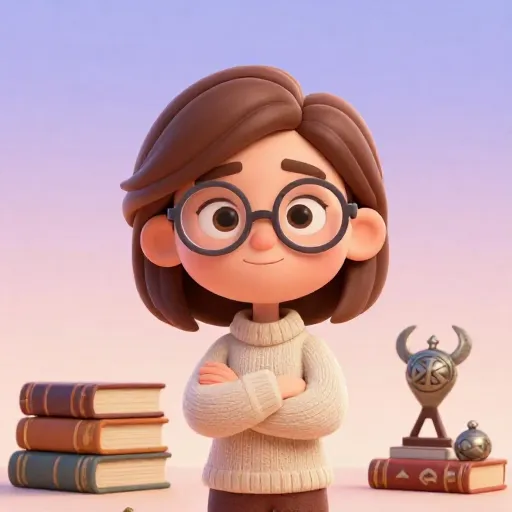
Valhalla is the reward for the warrior who knows that the battle is never truly over.
This idea changes how we look at Valhalla. It was not a 'happily ever after' where all the problems were gone. It was a place where people chose to keep working and keep practicing, even after they had already given everything.
It suggests that the Vikings valued the effort more than the result. If you knew the world might end, would you still want to be the best version of yourself? For the Einherjar, the answer was a loud and resounding yes.
The word 'Wednesday' actually comes from 'Woden's Day.' Woden is an old name for Odin, the king of Valhalla. So, every time it is Wednesday, you are technically celebrating the master of the Golden Hall!
More Than One Way Home
While Valhalla gets most of the attention today, it was not the only place a Norse hero might go. There was another hall called Folkvangr, which was ruled by the goddess Freyja. Half of the people who died in battle went with Odin, but the other half went with her.
We do not know as much about Folkvangr, but it is often described as a place of great beauty and meadow-lands. It reminds us that Norse mythology was not just about the noise of battle. It also had space for peace, nature, and the wisdom of goddesses.
Mira says:
"I wonder if Folkvangr was for the people who were brave in a different way, like people who were brave enough to be kind when things were difficult."
This variety shows that the Norse people held many different ideas in their heads at once. They understood that courage looks like many things. Sometimes it is the person charging into a fight, and sometimes it is the person who protects the home or tells the stories.
As the centuries passed, the way people thought about Valhalla began to change. When Christianity arrived in the North, the old gods were mostly forgotten. But the stories themselves were too strong to disappear entirely, and they were eventually written down in books called Sagas.
The Journey of Valhalla
Why Valhalla Still Matters
Today, you can find Valhalla everywhere, from superhero movies to heavy metal music. It has become a symbol of a 'warrior spirit' that never quits. But if we look deeper, we can see it is also a story about how we remember the people we have lost.
In the ancient world, if you were remembered in a song or a story, you were never truly dead. Valhalla was a literal version of that memory. As long as the gods remembered your name and your deeds, you had a seat at the table.
To be a Viking was to live in the memory of the future.
We might not believe in magical boars or shield-roofed houses anymore, but we still have 'halls' of memory. We have museums, history books, and family stories told around dinner tables. These are our ways of keeping the best parts of people alive.
Valhalla asks us to think about what we would want to do if we had forever. Would we want to keep learning? Would we want to keep testing our limits? Or would the repetition eventually make us want something else entirely?
Something to Think About
If you were building a 'Hall of the Brave' today, what would it be made of, and what kind of bravery would get someone an invitation?
There are no right or wrong answers here. Some people think bravery is about physical strength, while others think it is about being honest or helping others when it is hard. Your hall can look like whatever you imagine.
In the end, the story of Valhalla is a story about hope in the face of the dark. It is about the idea that even if the world is cold and the winter is long, there is a golden hall waiting for those who refuse to give up.
Questions About Religion
Can girls go to Valhalla?
What happens if you didn't die in battle?
Is Valhalla real?
The Echo of the Shields
The stories of the North remind us that our ideas about the end of life often reflect what we value most in the middle of life. Whether Valhalla is a literal hall of gold or a metaphor for being remembered, it invites us to live in a way that is worth talking about. What stories will people tell about your bravery one day?
