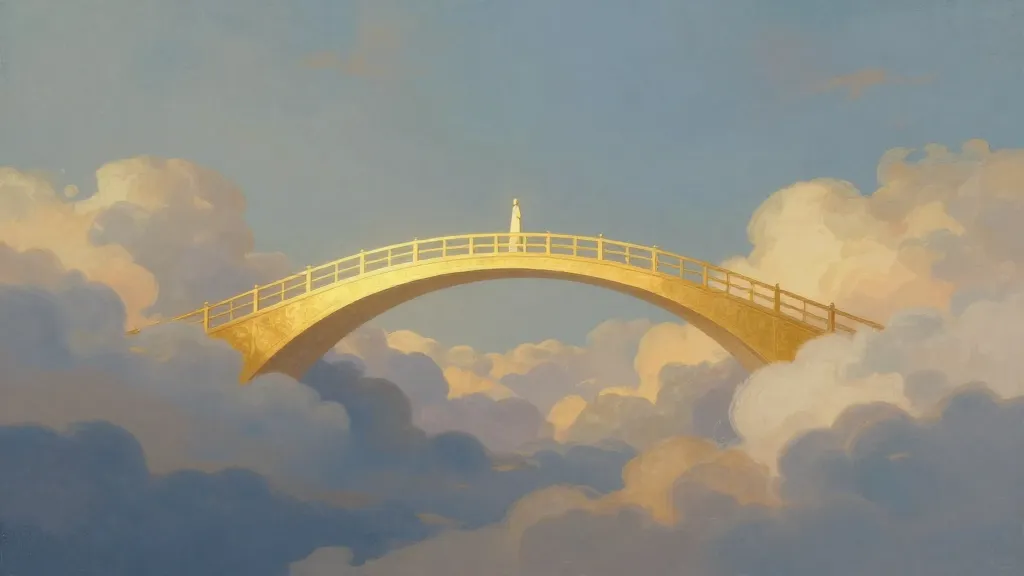
Have you ever wondered how we can be so sure about things we cannot see, touch, or measure with a ruler?
This quiet sense of certainty is what we call faith, a powerful human tool that acts like a bridge between what we know and what we hope for. It is more than just a religious idea: it is a way of trusting the world and our place within the unknown parts of the future.
Imagine you are standing at the edge of a deep, foggy canyon. You cannot see the bottom, and you certainly cannot see the other side.
Yet, you have been told there is a path forward. To take that first step into the mist requires something more than just eyesight: it requires a specific kind of internal conviction.
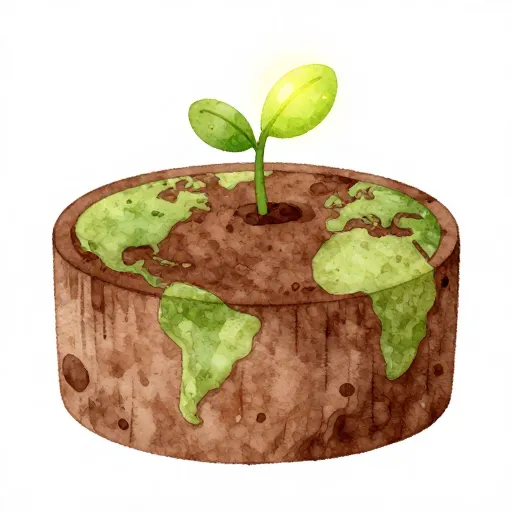
Imagine you are a tiny seed buried deep under the cold, dark soil in January. You cannot see the sun. You cannot feel the warmth of spring. Yet, deep inside your shell, you have the blueprint to become a giant oak tree. Planting a garden is an act of faith: you trust the dirt and the rain to do their work while the life inside the seed waits for its moment.
For thousands of years, humans have used the word faith to describe this feeling. It is the engine that drives people to plant seeds in the winter, hoping for a harvest they cannot see yet.
It is also the reason explorers once sailed across oceans without maps, trusting that the horizon would eventually reveal land.
The Roots of Trust: Pistis and Fides
To understand faith, we have to travel back to Ancient Greece. The Greeks had a word called pistis, which meant more than just believing a story.
It meant being so convinced of something that you were willing to act on it. It was about persuasion and the relationship between two people who trust each other deeply.
Finn says:
"What if faith is like a superpower that lets you see through walls? Not literal walls, but the walls of 'right now' and 'right here'?"
When the Romans took these ideas, they used the word fides. This is where we get the modern word 'fidelity,' which means being loyal or true to a promise.
In Rome, faith was like a legal contract you made with your heart. It was not just a fuzzy feeling: it was a solid commitment to stay true to a person, a god, or an idea, even when things got difficult.
Faith is the assurance of things hoped for, the conviction of things not seen.
This early version of faith was about social glue. It was the invisible thread that held families, armies, and cities together because everyone agreed to trust in the same invisible values.
More Than Just Knowing
There is a big difference between knowledge and faith. Knowledge is what you have when you count five apples in a basket: you can see them, and anyone else can count them too.
Faith begins where your counting stops. It is the part of your mind that handles the 'maybe' and the 'not yet' of life.
Knowledge is like a map. It shows you exactly where the roads are and how far it is to the next town. It is based on what we can prove and measure.
Faith is like the compass. It doesn't show you the road, but it tells you which direction to walk in. It is based on a feeling of where you are meant to go.
Think about a friendship. You might have knowledge that your friend has been nice to you for three years.
But you have faith that they will still be your friend next year. You cannot prove the future, but you act as if that friendship is a solid fact.

Mira says:
"It's like when I'm learning a hard song on the piano. I have faith that my fingers will eventually learn the notes, even when I'm still making mistakes today."
Philosophers often describe this as a way of 'seeing' with the mind instead of the eyes. It is an intuition that the universe makes sense, even when it looks messy or confusing.
The Great Leap
In the 1800s, a thinker named Søren Kierkegaard thought a lot about how scary faith can feel. He lived in Denmark and was famous for being very thoughtful and a little bit lonely.
He argued that faith is not a comfortable armchair you sit in. Instead, he called it a leap.
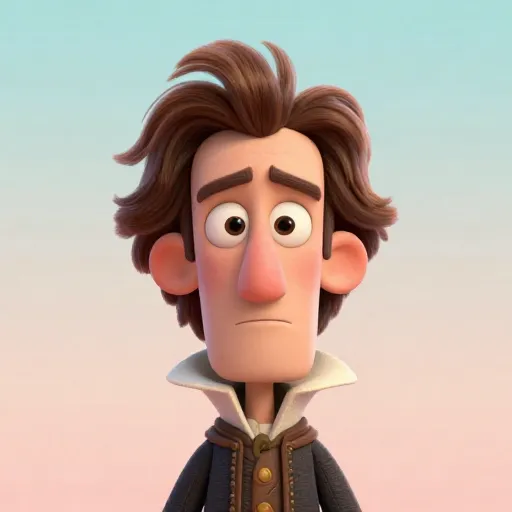
If I am capable of grasping God objectively, I do not believe, but precisely because I cannot do this I must believe.
Kierkegaard believed that if you had 100 percent proof for something, you didn't need faith anymore. Faith only exists when there is a risk.
It is the bravery to say: "I don't have all the answers, but I am going to move forward anyway." This leap is what makes faith feel so alive and, sometimes, a little bit electric.
The next time you go to the park, look at the people around you. Notice how everyone assumes the ground will stay solid under their feet. We have faith in the laws of physics every second! Try standing on one leg and closing your eyes. You are trusting your inner sense of balance to keep you upright. That 'unseen' sense is a lot like how faith works in our minds.
This idea changed how people thought about their inner lives. It meant that doubting or being unsure wasn't the opposite of faith: actually, doubt was a necessary part of it.
If you aren't a little bit nervous about the leap, is it really a leap? Kierkegaard suggested that the struggle itself is what makes a person’s spirit grow stronger.
Faith Through the Ages
How we talk about faith has shifted as the world has changed. In different eras, humans have leaned on faith for different reasons.
Faith Through the Ages
In the Middle Ages, faith was often seen as a partner to reason. People like Thomas Aquinas believed that your brain could take you halfway to the truth, and faith would carry you the rest of the way.
Later, during the Enlightenment, some people began to think faith and science were enemies. But many scientists argued that even science requires a kind of faith: the trust that the laws of gravity will work the same way tomorrow as they do today.
Living With the Invisible
Many of the most important things in life are intangible, which means we cannot touch them. Think about justice, love, or courage.
We cannot put a piece of 'courage' under a microscope. We only see it when someone acts bravely. Faith works in a similar way.
Finn says:
"I wonder if explorers were scared when they lost sight of the shore. Did they have to choose to have faith, or did the feeling just show up?"
It is a way of acknowledging that the world is much bigger than what we can see. It allows us to hold onto a vision of a better world, even when the world around us looks dark.
Faith is taking the first step even when you don't see the whole staircase.
This is why faith is so often connected to hope. While hope is the wish for something good to happen, faith is the underlying trust that there is a purpose or a path, even if we are currently walking through the dark.
The Mystery of Not Knowing
One of the most interesting things about faith is that it doesn't offer neat, tidy answers. Instead, it invites us to be comfortable with mystery.
Psychologists like Donald Winnicott suggested that humans need 'transitional spaces' - places in our minds where we can play with ideas without needing them to be proven true right away.
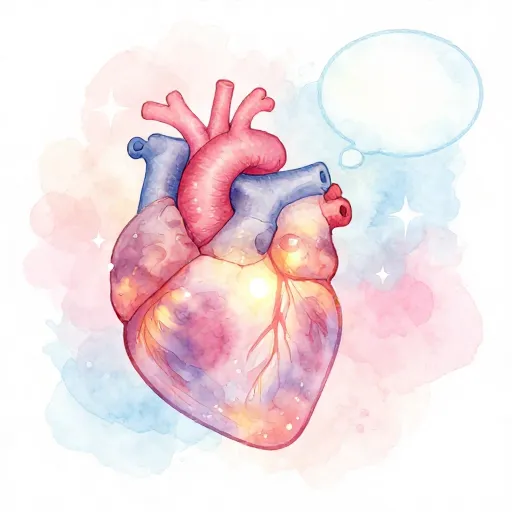
In the world of science, there is something called the 'Placebo Effect.' Sometimes, if a person has deep faith that a medicine will work, their body actually starts to heal itself, even if the medicine was just a sugar pill! This shows that our thoughts and our trust have a physical power over our bodies that scientists are still trying to fully understand.
Faith can be one of those spaces. It is a place where you can wonder about the start of the universe or what happens after we die without feeling like you have to pass a test.
It allows us to be curious. It gives us permission to say "I don't know, but I feel like there is something more."
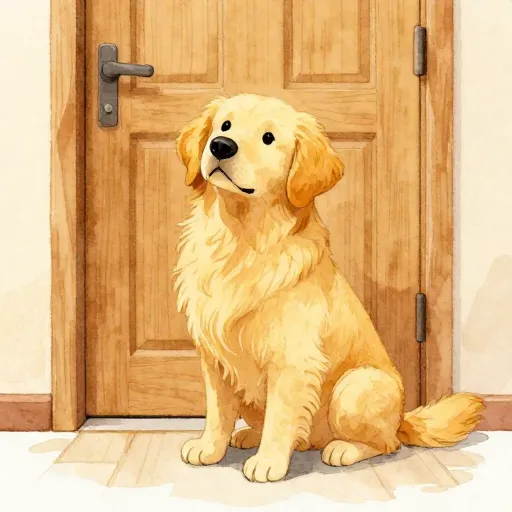
The Latin word for faith, 'fides,' is the reason we call dogs 'Fido.' It was a popular name because dogs are famous for their loyalty and trust in their human companions. When a dog waits by the door for you to come home, they are practicing a form of faith!
Whether it is faith in a higher power, faith in humanity, or faith in yourself, this feeling helps us keep going. It is the light we carry when the sun goes down.
Something to Think About
What is one thing in your life that you cannot see, but you are certain exists?
There are no right or wrong answers here. Some people might say 'love,' others might say 'the wind,' and some might say 'tomorrow.' Just notice what it feels like to be sure about something that is invisible.
Questions About Religion
Is faith the same thing as being religious?
Can faith ever be a bad thing?
What is the difference between faith and a wish?
The Light in the Mist
Faith isn't about having all the answers. It is about the courage to keep asking questions while you walk forward. Whether you are looking at the stars or looking inside your own heart, having faith is a way of saying that the mystery of life is something to be explored, not feared. It is the steady hand on the banister when you are walking in the dark.
