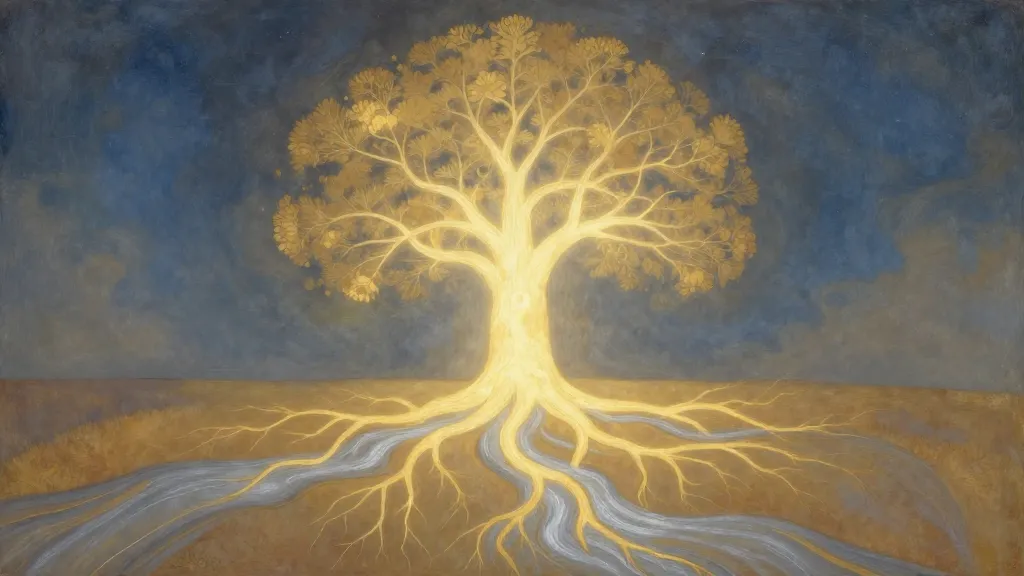
If you could zoom out and look at the whole world at once, you would see billions of people doing very different things.
Some are lighting candles, some are chanting, and others are sitting in silence. Even though these actions look different, they are often parts of a religion, a way of understanding the universe and our place in it. When we look closely, we find that beneath the different names and clothes, humans have been asking the same questions for thousands of years.
Imagine you are standing on a grassy plain 30,000 years ago. The sun is setting, and the stars are beginning to blink into existence. You have no phone, no books, and no scientists to tell you what those lights are.
You feel a sense of wonder, but maybe a little bit of fear too. You wonder: Where did I come from? Why does the rain fall? What happens when we die? These are the questions that started every religion in history.
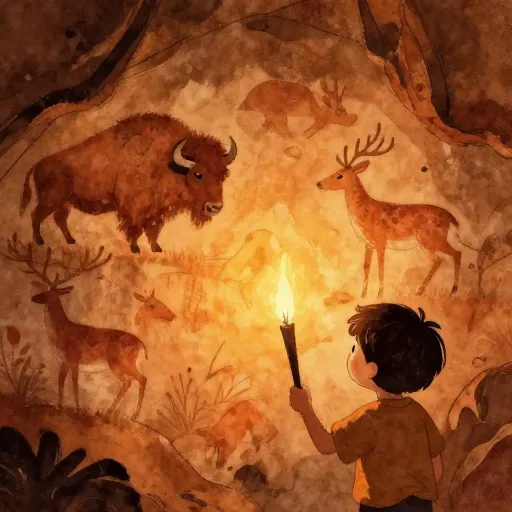
Imagine you are inside a deep, dark cave in France. By the light of a flickering torch, you see paintings of horses and bison from 17,000 years ago. These early humans were already creating art to show their connection to the world around them. It was the very first hint of what would one day become religion.
The Golden Rule: A Shared Compass
One of the biggest things religions have in common is a set of rules for how to be a good person. Almost every major faith has a version of the Golden Rule. This is the idea that you should treat other people the way you want to be treated.
It sounds simple, but it is actually a very powerful tool. It means that no matter what language you speak or what God you pray to, kindness is a universal language. Whether it is a scroll from ancient China or a book from the Middle East, the message is often the same: Be kind.

Compassion is the test of true spirituality. It is the thing that all the world's great religions have in common.
Finn says:
"What if religions are like different languages? They use different words, but maybe they are all trying to say the same thing about being a good person."
This shared focus on kindness is what many thinkers call Compassion. It is the ability to feel what someone else is feeling and wanting to help them. Religions often act like a training gym for the heart, helping people practice being better neighbors.
Once Upon a Time: The Power of Stories
Every religion is built on stories. These are not just any stories: they are Creation Stories that explain how the world began. Some say the world was hatched from a giant egg, while others say it was spoken into existence or carved out of ice.
Even though the details change, the "shape" of the stories is often very similar. They usually involve a hero who has to leave home, face a great challenge, and return with a gift for their people. A famous thinker named Joseph Campbell studied these stories for years.
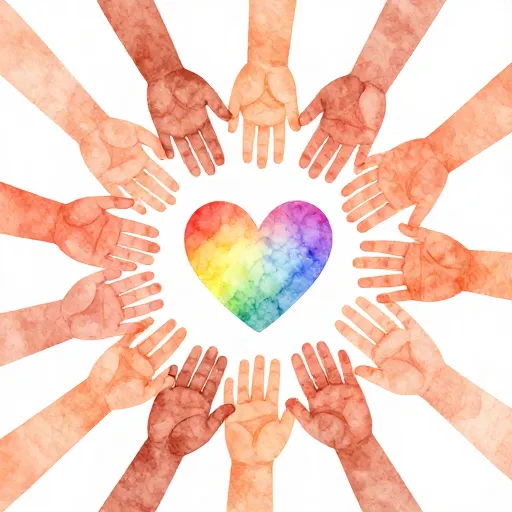
The 'Golden Rule' appears in almost every tradition. In Buddhism, it is: 'Hurt not others in ways that you yourself would find hurtful.' In Islam: 'None of you truly believes until he wishes for his brother what he wishes for himself.' Even if the words are different, the heart of the message is identical!
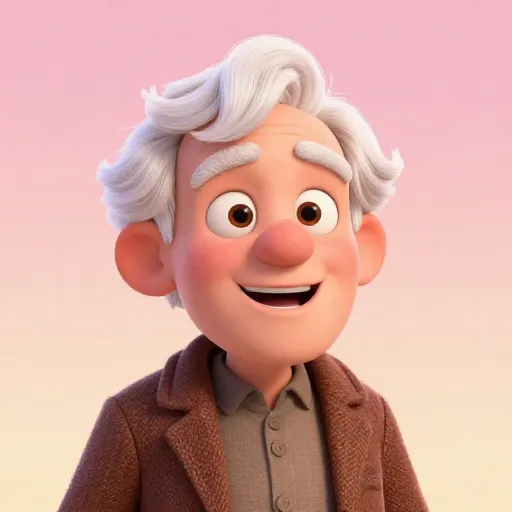
All the different mythologies give us the same message: we are all one.
He called this the Monomyth. He realized that humans, no matter where they live, seem to dream the same kinds of dreams. These stories help us understand that everyone faces struggles and that we all have the potential to be brave.
- Stories about how the world began
- Tales of heroes who overcome fear
- Lessons about right and wrong
- Explanations for why the seasons change
Rituals: The Rhythm of Life
Have you ever had a special way your family celebrates a birthday or a holiday? Maybe you always eat a certain food or sing a specific song. In religion, these are called Rituals. Rituals are actions that have a deep, symbolic meaning.
Religions use rituals to mark the most important moments in a human life. They have special ceremonies for when a baby is born, when someone becomes an adult, when people get married, and when someone passes away. These rituals help people feel like they aren't alone during big changes.
Some people think that for a religion to be 'real,' it needs to have big buildings, old books, and strict rules that everyone follows exactly the same way.
Other people think that religion is more about how you feel inside and that you can find the 'sacred' just by walking in the woods or being kind to a dog.

Mira says:
"I noticed that almost everyone uses candles or lamps when they celebrate. It's like we all agree that light is the best way to show something is special."
Many religions also use the same symbols in their rituals. For example, water is often used to represent cleaning the spirit or starting fresh. Fire and light are used to represent hope, wisdom, or the presence of something Sacred.
Did you know? Many religions have a festival of light during the darkest time of the year. Examples include Diwali in Hinduism, Hanukkah in Judaism, and Advent in Christianity. They all use light to show that hope can exist even in the dark.
Sacred Spaces and Traveling Hearts
Most religions have a special place where people gather. It might be a tall cathedral with stained glass, a quiet mosque with beautiful patterns, or a simple circle of stones in a forest. These places are designed to make people feel a sense of Transcendence, which is the feeling that there is something much bigger than ourselves.
Create a 'Family Ritual.' It doesn't have to be religious. Maybe every Friday night you eat pizza and say one thing you are grateful for. This is how humans have used rituals for centuries: to take a normal moment and make it feel special and connected.
Sometimes, people go on a long journey to visit a special place. This is called a Pilgrimage. Whether someone is walking across Spain or traveling to a mountain in India, the goal is the same: to find peace and to feel closer to the mystery of life.
- Mosques, churches, synagogues, and temples
- Natural sites like rivers, mountains, and groves
- Home altars or quiet corners for reflection
- Grand buildings designed to make us look up at the sky
The Journey of Human Belief
The Great Mystery: The I-Don't-Know
At the very center of every religion is a big "I don't know." This is the area of Mysticism, where people admit that the universe is too big and too strange for our brains to fully understand. Some people call this mystery God, while others call it the Universe, the Tao, or the Great Spirit.
Instead of being scared of what we don't know, religions often encourage people to be curious about it. They teach us that it is okay to sit in silence and just wonder. This shared sense of mystery is what connects a scientist looking through a telescope to a monk meditating in a cave.
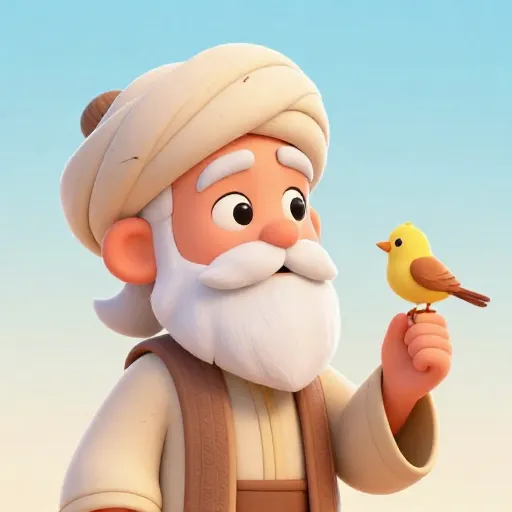
The lamps are different, but the light is the same.
Finn says:
"It's kind of cool that even the smartest people in history didn't have all the answers. Maybe the 'not knowing' is the most interesting part!"
Why Do These Commonalities Matter?
When we only look at the differences between religions, the world can feel like a very divided place. People have even fought wars because they disagreed about which stories were "right." But when we look at what they have in common, the world starts to look more like a big family.
Learning about these shared ideas helps us build bridges. It allows us to see that the person living on the other side of the planet might be asking the same questions you are. We are all part of the same human story, trying to make sense of a beautiful and mysterious world.
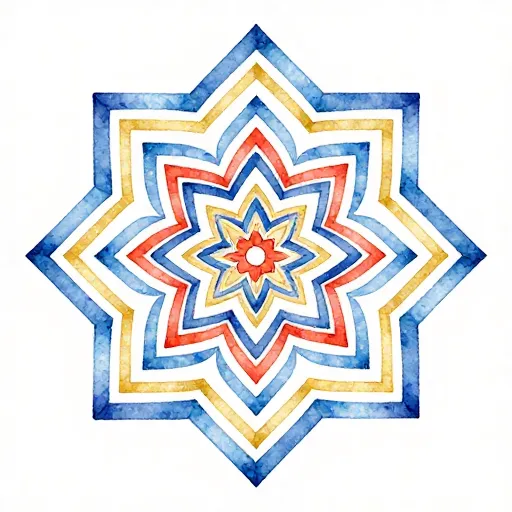
Many religions use circular shapes to represent the universe. You can see this in the Round Churches of Europe, the Mandalas of India, and the Medicine Wheels of North America. The circle reminds us that everything is connected and has no end.
Something to Think About
If you were to create a new tradition that every single person in the world would follow, what one rule or action would you include?
There are no right or wrong answers here. Think about what makes you feel connected to others and what helps you feel like the world is a good place.
Questions About Religion
Do you have to follow a religion to be a good person?
Why are there so many different religions if they are so similar?
What is the oldest religion in the world?
The Never-Ending Story
As you go through your day, keep an eye out for these common threads. You might see a candle in a window, a person helping a stranger, or a beautiful sunset that makes everyone stop and look. These are the moments where the big ideas of religion meet real life. You don't need to have all the answers to be part of the conversation: you just need to keep asking questions.