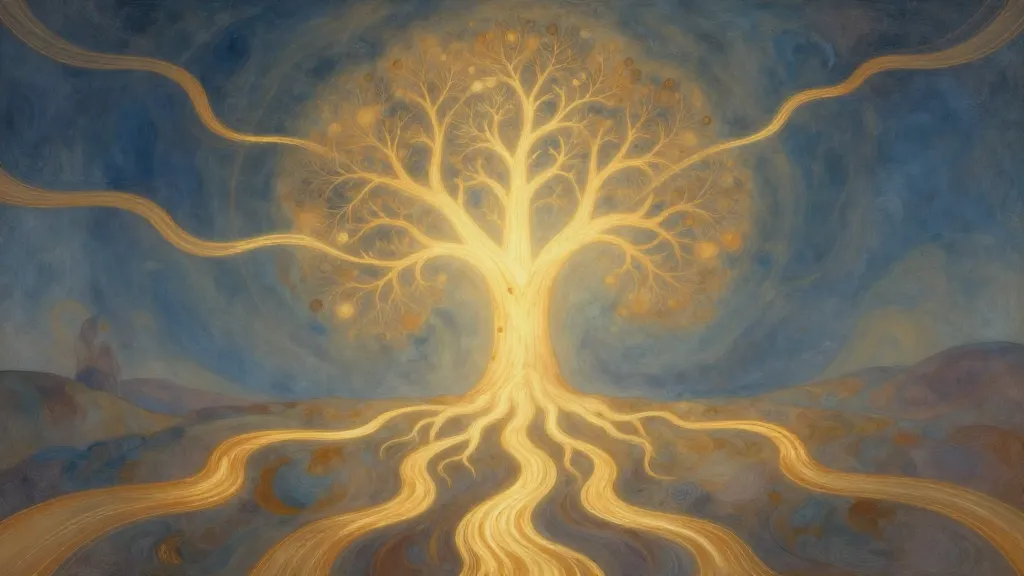
If you looked at the night sky from a mountain in Peru, a desert in Egypt, or a skyscraper in Tokyo, you would see the same stars.
Yet, for thousands of years, the people in those places have told very different stories about those stars. This is the beginning of understanding faith, as we look at how different groups of people developed their own unique ways of connecting with the sacred and the mysterious.
Imagine you are standing in a vast, open field at night. The air is cool, and the only sound is the wind. You look up and see a silver streak across the sky.
You might call it a meteor. Someone else might call it a message from a god. Another person might see it as a sign of a soul traveling home.
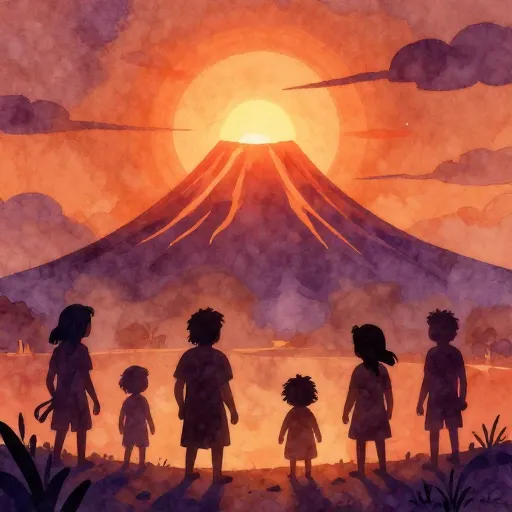
Imagine you are an early human living 10,000 years ago. You don't have a book to tell you how the world works. You see a volcano erupting for the first time. How would you explain that power? Would you think the mountain was angry, or that a giant was waking up underground?
This is how religions began. For as long as humans have been around, we have looked at the world and asked big questions. We wonder where we came from, why we are here, and what happens when we die.
Because humans lived in different places and spoke different languages, they came up with different answers. These answers grew into the beautiful, complex systems of belief we call religions.
The Land and the Spirit
Long ago, people lived in small groups. They didn't have the internet or airplanes to talk to people on the other side of the world. Their whole world was the land right beneath their feet.
If you lived in a place with a massive, life-giving river, like the Nile in Egypt, your religion would likely focus on water and the seasons of the flood. You would see the divine in the silt and the reeds.
Finn says:
"I wonder if people would have invented different gods if they lived on a different planet? Like, if there was no sun, would they have a god of the dark?"
If you lived in a high, cold mountain range, your stories might be about powerful sky gods and the strength of the wind. The geography of a place shaped the culture of the people who lived there.
Early people often practiced polytheism, which is the belief in many different gods. They had a god for the sun, a god for the grain, and a god for the hearth.
The truth was a mirror in the hands of God. It fell, and broke into pieces. Everybody took a piece of it, and they looked at it and thought they had the whole truth.
The Power of Language
Language is more than just words: it is a way of seeing. Different languages have different words for things like love, spirit, or peace.
When people started writing down their beliefs, the language they used changed how those beliefs felt. A word in ancient Sanskrit might describe a feeling that doesn't quite exist in English.
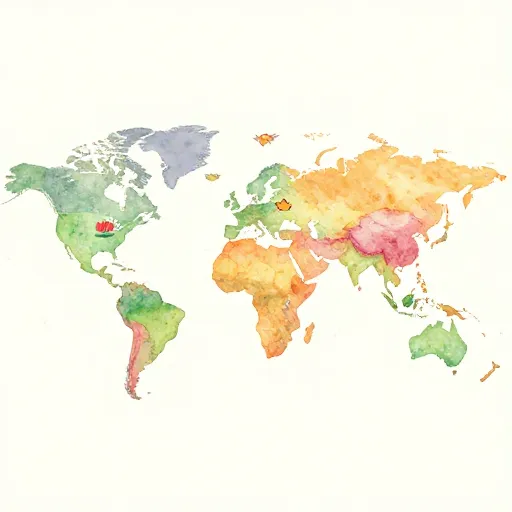
There are over 4,000 different religions practiced in the world today. While some have billions of followers, others are practiced by only a few hundred people in a single village.
As these stories were passed down, they became rituals. A ritual is a special action done in a specific way to show respect or to remember a story.
Some people light candles. Others chant. Some bow toward a specific city, while others dance in circles. These actions help people feel like they belong to their community.
The Axial Age: A Turning Point
About 2,500 years ago, something very strange and interesting happened. In many different parts of the world, all at roughly the same time, new kinds of thinkers appeared.
In Greece, India, China, and the Middle East, people started asking deeper questions about how to be a good person. This time in history is often called the Axial Age.
A History of Wonder
During this time, we saw the rise of major systems like Buddhism, Confucianism, and the early roots of Greek philosophy. It was as if the human race was having a global conversation without even knowing it.
These thinkers moved away from just trying to please the gods of nature. They started focusing on how humans should treat one another.

Mira says:
"It's like how we have different recipes for bread all over the world. The ingredients change based on what grows nearby, but everyone is still making bread because everyone is hungry."
The Movement of Ideas
Religions don't stay in one place. They travel. Throughout history, people have moved across the globe for trade, for adventure, or to escape danger.
When people move, they carry their stories in their pockets. They meet new neighbors, and sometimes their ideas mix together to create something new.
Some people believe that the religion you are born into is the only truth, and you should follow the traditions of your ancestors exactly.
Other people believe that you should explore many different religions and pick the ideas that feel the most 'true' to you personally.
This mixing is why you might find similar stories in religions that seem very different. For example, many cultures have a story about a great flood or a hero who must travel to a hidden world.
Sometimes, a person might follow a path of monotheism, believing in one single God. Others might follow dharma, a way of living that focuses on cosmic order and duty.
The Golden Rule is the best way to determine if a religion is healthy: Do not do to others what you would not have them do to you.
Why Do They Look So Different?
If religions are all asking the same big questions, why don't they all have the same answers? One reason is that humans value their history.
We like the way our grandparents prayed, or the songs our ancestors sang. These traditions become part of who we are, like the food we love or the way we celebrate birthdays.
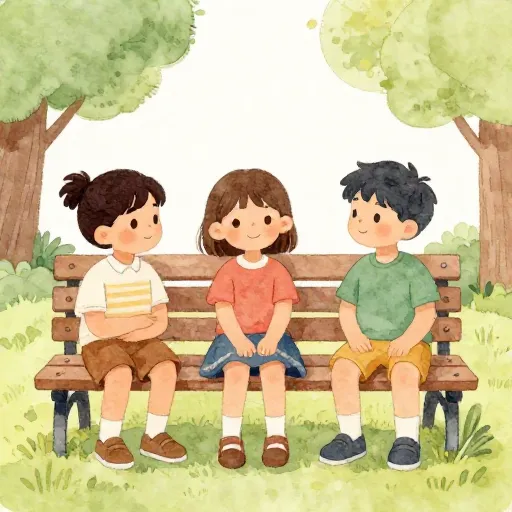
Ask three different people what 'being a good person' means to them. You might find that they use different words or stories, but notice if they all want the same outcome. How much of their answer comes from their family or their religion?
Different religions also focus on different goals. One might focus on finding inner peace, while another focuses on making the world a more just place.
Neither is wrong: they are just different tools for navigating the mystery of life. This variety is what makes the human experience so rich and colorful.
Is Everyone Religious?
Not everyone follows a specific religion. Some people describe themselves as secular, meaning they look for answers in science, logic, and human kindness without a church or temple.
Others might say they are into spirituality but not organized religion. They might feel a connection to the universe while hiking in the woods rather than sitting in a building.
Finn says:
"I don't think I have a 'religion' yet, but I definitely have big questions. Is 'I don't know' a type of answer?"
This is also a part of the big human conversation. Every person is like a scientist of their own life, testing out ideas to see what makes the most sense.
No matter what we believe, we are all part of a species that loves to wonder. We are the only animals that build cathedrals, write scriptures, and spend hours thinking about things we cannot see.
The different religions are beautiful flowers from the same garden, or they are branches of the same majestic tree.
The Mystery Remains
Sometimes, people get into arguments about which religion is "right." But many philosophers think that is like arguing about which color is the best.
If the universe is a giant, infinite mystery, perhaps one single human perspective isn't enough to see the whole thing. Perhaps we need all the different religions to get a fuller picture.
The word 'religion' actually comes from a Latin word, 'religare', which means 'to bind or tie together.' It's meant to describe how these beliefs tie people to each other and to the divine.
Maybe the point isn't to find one single answer that everyone agrees on. Maybe the point is the journey of asking the questions together.
When we learn about someone else's belief, we aren't just learning about a theology. We are learning about a different way of being human.
Something to Think About
If you were starting a group to think about the universe, what would your first big question be?
Remember, there is no single right answer to this. Your question might be about how the world started, how to be kind, or something totally different.
Questions About Religion
Why do people sometimes fight about religion?
Can I learn about different religions if I already have one?
What is the oldest religion still around?
The Many Paths Up the Mountain
Think of the great mystery of life like a high mountain peak hidden in the clouds. There isn't just one path to the top. Some people take the winding forest trail, some climb the rocky face, and others follow the stream. Each person sees a different view on their way up, and each view is part of the same mountain. As you grow up, you get to decide which paths you want to explore and which stories help you feel at home in the world.
