Have you ever looked up at the stars and felt a tiny shiver of wonder?
This feeling of being part of something huge and mysterious is at the heart of why people believe in a higher power. Throughout history, humans have used faith and spirituality to make sense of a world that can often feel confusing or overwhelming.
Imagine standing on a grassy hill thirty thousand years ago. The sun is setting, and the air is turning cold.
You do not have a phone to check the weather or a book to explain why the stars appear. To you, the wind feels alive. The thunder sounds like a voice.
The Need for a Story
Early humans lived very close to nature. They noticed that everything seemed to have a rhythm. The seasons changed, the tides moved, and the sun always rose.
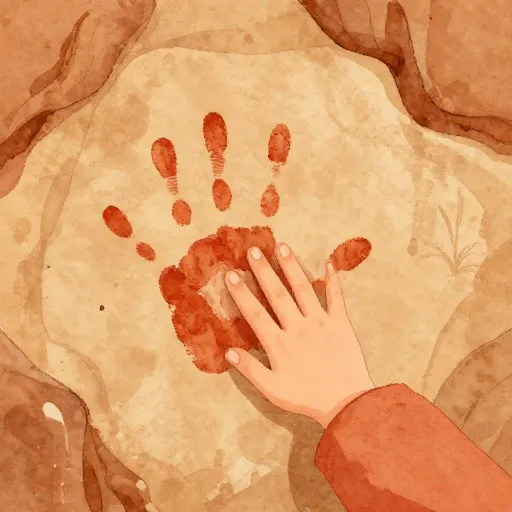
Imagine you are an early human living in a deep, cool cave. You paint a bison on the wall with red clay. You aren't just making art: you are performing a ritual to ask the Spirit of the Bison for a safe hunt. To you, the wall is a doorway to another world.
They began to wonder if there was a mind behind the rhythm. This early way of seeing the world is often called animism. It is the belief that every tree, rock, and river has a spirit.

Finn says:
"If the wind doesn't have a spirit, why does it feel so much like someone is whistling at me? I like the idea that nature has its own personality."
If the river has a spirit, you can talk to it. You can ask the rain to fall or thank the forest for the food it provides. This made the world feel less like a scary, random place.
Finding Patterns in the Dark
Human brains are experts at finding patterns. We see faces in the clouds and shapes in the stars. Psychologists call this pattern-seeking.
The Cloud Game: Go outside and find a fluffy white cloud. What do you see? A dragon? A teapot? A face? Your brain is doing exactly what humans have done for millennia: finding a story in something that is just water and air.
Our ancestors used this skill to survive. If you hear a rustle in the grass, it is safer to assume it is a predator than to assume it is just the wind. We are hard-wired to look for an "agent," or a living being, behind every action.
When we apply this to the whole universe, we start to ask a very big question. Is there an agent behind everything? Is there a Creator?
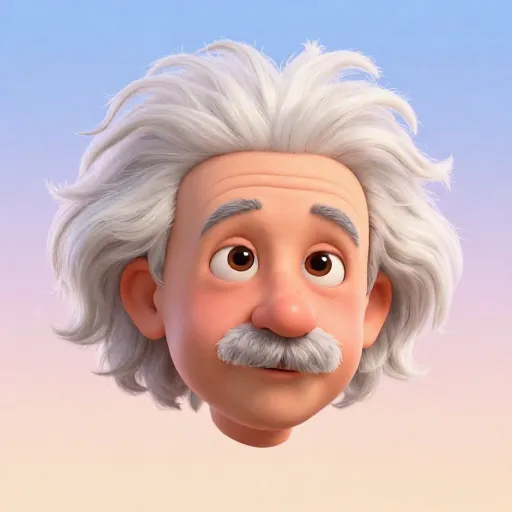
The most beautiful thing we can experience is the mysterious. It is the source of all true art and science.
Einstein was one of the smartest scientists in history. He did not see science and mystery as enemies. He thought that the more we learn about how the world works, the more amazing the mystery becomes.
A World of Many Gods
As humans moved into big cities, their ideas about the divine grew with them. In places like Ancient Egypt and Greece, people believed in many different gods and goddesses.
This is known as polytheism. Each god had a specific job. There was a god for the sea, a goddess for wisdom, and a god for the harvest.

The word 'religion' comes from the Latin word 'religare,' which means 'to bind together.' It is the same root as the word 'ligament' in your body! Religion was designed to bind people to each other and to the divine.
These gods were often like humans, but with superpowers. They had families, they got angry, and they made mistakes. Believing in them helped people explain the different parts of life.
The Shift to One
Later, some cultures began to think that perhaps all these different powers came from a single source. This is called monotheism.

Mira says:
"It is interesting how one person sees a miracle and another person sees a coincidence. Maybe they are both right in their own way."
Religions like Judaism, Christianity, and Islam focus on one God who created everything. This changed how people thought about their lives. If there is only one God, then perhaps there is one set of rules for everyone.
This idea helped large groups of people live together. It gave them a shared story and a shared sense of what was right and wrong.
Finding Comfort and Safety
Sometimes, life is hard. People get sick, things break, and we lose people we love. In those moments, the world can feel very lonely.
Some people believe in God because they look at the complexity of DNA or the stars and decide there must be a designer.
Others believe in God because of a feeling they get when they are helping someone, listening to music, or standing in nature.
Believing in God can act as a "holding space." It is a way to feel that someone is watching over you, even when you are alone. It provides a sense of safety and meaning.
This is a deeply personal part of why people believe. It is not just about explaining the stars. It is about feeling a sense of transcendence, or being connected to something that lasts forever.
The Community Connection
Belief is also about belonging. Most people do not believe in God all by themselves. They do it as part of a community.
They go to temples, churches, or mosques. They perform rituals, which are special actions done in a specific way, like lighting candles or singing songs.
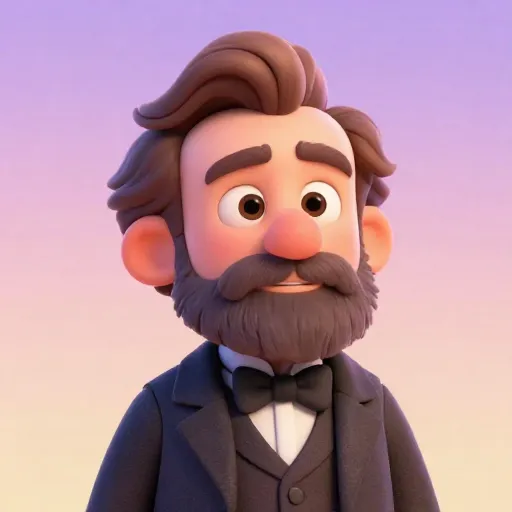
The life of religion consists of the belief that there is an unseen order, and that our supreme good lies in harmoniously adjusting ourselves thereto.
William James was a psychologist who studied why people have religious feelings. He realized that for many, belief is not about a book of facts. It is an inner feeling that makes life feel more real and more important.
The Science of the Soul
Can we prove that God exists? Or can we prove that God does not exist? Scientists and philosophers have been arguing about this for centuries.
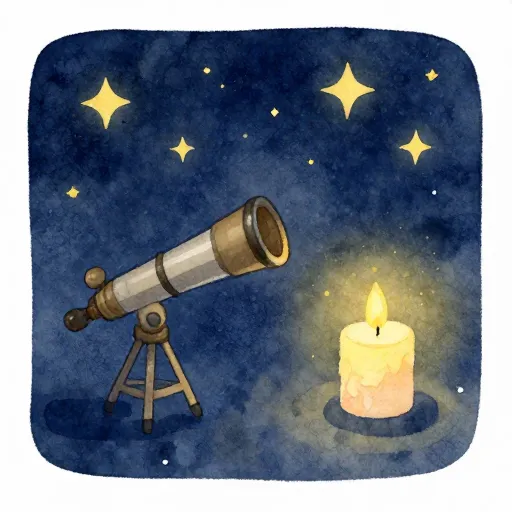
Picture a scientist looking through a giant telescope and a person kneeling in prayer in a quiet temple. They are both looking for the same thing: the truth about why we are here. They are just using different tools to find it.
Some people believe that everything can be explained by physics and biology. These people might call themselves atheists or agnostics. Others believe that science shows us how things happen, but faith shows us why.
Through the Ages: The Story of Belief
Today, we live in a world where people have many different answers to these questions. Some people follow the traditions of their great-grandparents. Others find their own way of being spiritual without a specific religion.
The Unknowable
At the end of the day, there is a lot we simply do not know. We do not know what happened before the Big Bang. We do not know exactly what happens after we die.
Finn says:
"I think I am okay with not having all the answers. If we knew everything, would there be anything left to wonder about?"
For many people, the word "God" is a way to name that big, beautiful blank space. It is a way of saying that even if we cannot see the answer, we trust that there is a point to the journey.
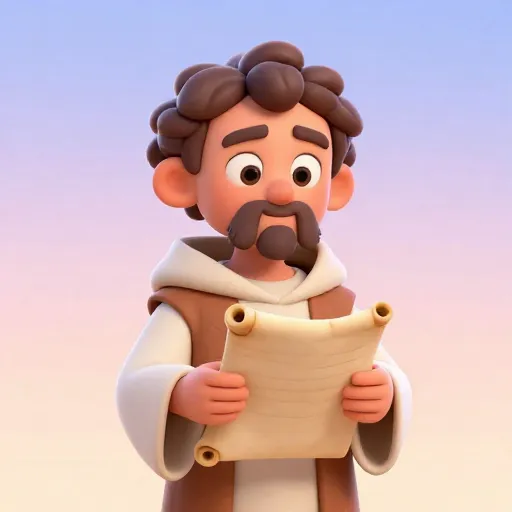
If you understand it, it is not God.
Augustine was a philosopher who lived a long time ago. He wanted people to understand that if we could perfectly explain God with words, then it wouldn't really be God. The mystery is part of the definition.
Something to Think About
If you could ask the universe one question that has no easy answer, what would it be?
There is no right or wrong answer to this question. Some people find the answer in a holy book, some find it in science, and some find it in the quiet of their own thoughts.
Questions About Religion
Does everyone believe in the same God?
Can you believe in science and God at the same time?
What if I don't know what I believe?
The Infinite Conversation
Whether people believe in God to find comfort, to explain the stars, or to feel connected to a community, the search for meaning is part of what makes us human. You don't have to have all the answers today. The most important thing is to keep looking at the world with wonder and asking your own big questions.