
Have you ever looked at a flower so closely that you forgot your own name for a second?
That moment of pure connection is at the heart of Zen Buddhism. It is a tradition that values silence over long speeches and experience over thick books, tracing its roots from the life of Siddhartha Gautama to the quiet mountains of Japan.
Imagine a classroom where the teacher doesn't give you any homework. Instead of a textbook, they hand you a cup of tea. Instead of a test, they ask you a riddle that has no logical answer.
This is a little bit like the world of Zen. It is a branch of Buddhism that focuses on one thing above all else: being fully awake to right now.

Imagine a clear blue lake. When the wind blows, the water ripples and the reflection of the moon gets all wiggly and broken. But when the wind stops and the water is still, the moon looks perfect and clear. Zen is the practice of letting the wind of your thoughts stop so you can see the 'moon' of reality clearly.
Zen began as a way to find the peace that the original Buddha found. Thousands of years ago, a teacher named Bodhidharma traveled from India to China to share a new way of practicing.
He didn't want to talk about complicated rules or giant lists of gods. He wanted people to look directly into their own hearts to see who they really were.

Finn says:
"If Bodhidharma spent nine years staring at a wall, did he get bored? Or maybe the wall eventually started to look like a movie screen?"
Legend says that Bodhidharma was a bit of a rebel. He once spent nine years staring at a cave wall just to practice being still.
He believed that the truth wasn't hidden in a library: it was right in front of us. To see it, he taught a special kind of Meditation called Zazen, which literally means sitting.

A special transmission outside the scriptures; No dependence upon words and letters.
The Great Journey North
When Zen arrived in China, it was called Chan. It mixed the ideas of India with the natural, flowing wisdom of Chinese thinkers who loved the mountains and the wind.
Monks in China didn't just sit in caves all day. They worked in gardens, cooked soup, and cleaned floors, turning every tiny chore into a way to practice being present.
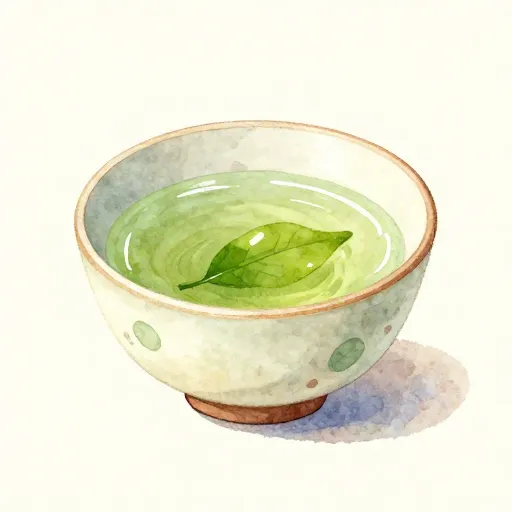
Legend says that tea was discovered by Zen monks! They needed a way to stay awake during their long hours of meditation. They found that drinking tea made them feel 'calmly alert,' which is exactly the feeling they were looking for in their practice.
By the time these ideas reached Japan, the name changed from Chan to Zen. The Japanese people fell in love with the way Zen made everything feel simple, clean, and meaningful.
They applied Zen to almost everything they did. You can see its influence in how they arranged flowers, how they practiced archery, and how they designed gardens with only sand and rocks.

Mira says:
"I like how Zen says you can find wisdom while just washing the dishes. It means the 'big ideas' aren't hiding: they're in the soap bubbles."
The Sound of Silence
One of the most famous parts of Zen is the Koan. A Koan is a short story or a question that sounds like a joke or a mistake, but it is actually a tool to help your mind stop overthinking.
Have you ever heard the question, "What is the sound of one hand clapping?" If you try to answer it with logic, you will get a headache: but if you just listen, you might find a different kind of answer.
Reading and studying the words of wise teachers is the best way to understand the truth of the world.
Words are just fingers pointing at the moon. If you spend all your time looking at the finger, you'll never see the moon itself.
Zen teachers used these riddles to push their students toward Satori. This is a Japanese word for a sudden flash of understanding, like a lightbulb turning on in a dark room.
It isn't a magical power. It is just the feeling of seeing the world without any of your usual worries or labels getting in the way.

In the beginner's mind there are many possibilities, but in the expert's there are few.
Life in a Zen Monastery
If you visited a Zen Monastery today, you would notice how quiet it is. Monks move with a sense of Mindfulness, which means they are paying 100% attention to what they are doing.
When they eat, they just eat. When they walk, they just walk. This sounds easy, but have you ever tried to eat a strawberry without thinking about what you're going to do after lunch?
Pick one small thing to do today with total focus. It could be brushing your teeth, tieing your shoes, or eating a slice of apple. Try to notice every sensation: the sound, the feeling, the smell. If your mind starts to wander to your homework or a movie, just gently bring it back to the apple.
In Zen, the goal isn't to become a super-human or a saint. The goal is to be a "natural" human, someone who doesn't get tangled up in their own thoughts.
This tradition has been passed down for centuries through a Lineage. This means that every Zen teacher was once a student of another teacher, going all the way back to the very beginning.
Zen Through the Ages
The Beauty of the Incomplete
Zen has a very specific style of art. Often, a Zen painter will draw a circle with one brushstroke, leaving it slightly open or messy. This is called an Enso.
It reminds us that life is imperfect and changing, and that is exactly why it is beautiful. There is no need to be perfect because perfection isn't real.
Finn says:
"Is the sound of one hand clapping just... the sound of the wind? Or is it the sound of me finally being quiet enough to hear my own heart?"
Zen also teaches us about the "Beginner's Mind." This is the idea that even if you have done something a thousand times, you should try to do it as if it were your very first time.
Imagine playing your favorite game or eating your favorite food with that kind of fresh wonder. Everything would feel brand new and exciting again.

If you look into this sheet of paper, you will see that there is a cloud flying in it.
Bringing Zen Home
Zen isn't just for people who live in temples or wear robes. It is for anyone who wants to feel a bit more connected to the world around them.
It teaches us that we don't have to go anywhere special to find peace. We don't need to buy anything or change who we are: we just need to stop, breathe, and look.
Zen gardens often use rocks to represent mountains and sand to represent water. The monks rake the sand into patterns of ripples. This isn't just for decoration: the act of raking the sand is a form of meditation itself, requiring a steady hand and a quiet mind.
This simple idea has traveled around the globe. Today, doctors, athletes, and even astronauts use Zen techniques to help them stay calm and focused during difficult times.
It reminds us that even when the world feels loud and busy, there is a quiet space inside us that is always still, like the bottom of a deep ocean.
Something to Think About
If you stopped using words to describe yourself for one minute, what would be left?
Zen suggests that we are much more than just our names or the things we think. There is no right or wrong answer to this: just sit for a moment and see what you find.
Questions About Religion
Is Zen a religion?
Is Zen meditation hard?
Why do Zen teachers use riddles?
The Gate With No Gate
Zen tells us that the 'big secret' to life is that there is no secret at all. Everything you need to be happy and wise is already inside you, waiting to be noticed. As you go about your day, remember that every moment: even the boring ones: is a chance to be fully, wonderfully awake.