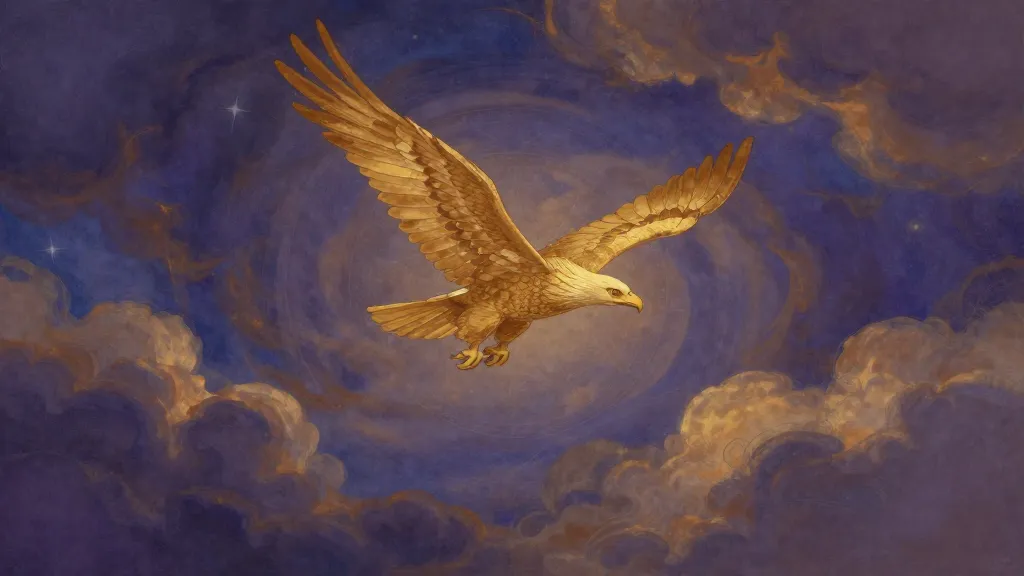
Imagine looking up at a summer storm and wondering if the thunder is actually a voice.
For the people of Ancient Greece, the sky was not just air and light: it was the home of Zeus. As the king of the Mount Olympus, he was the figure who brought order to the messy, wild world of gods and humans.
Long ago, in the rocky lands of the Mediterranean, people looked at the world and saw a giant puzzle. They saw the seasons change, the sea rise in anger, and the sun move across the sky. They didn't have science books to explain these things yet. Instead, they had stories, and at the center of the greatest stories stood Zeus.
To understand Zeus, you have to imagine a world without electric lights or weather apps. When the sky turned black and a crack of lightning split the air, it felt like a message. The Greeks believed this message came from a powerful, complicated father-figure who sat on a golden throne.
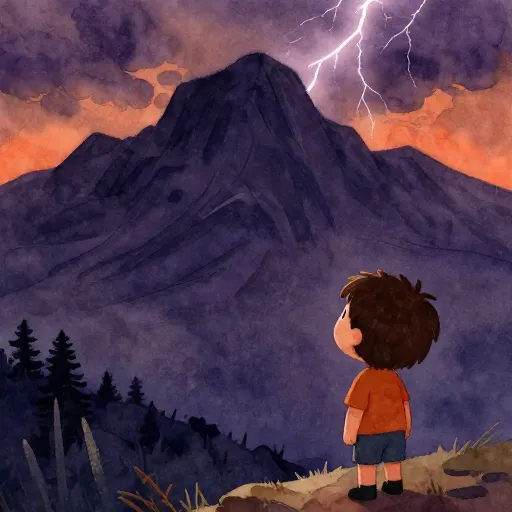
Imagine you are standing on a dusty road in Greece 2,500 years ago. There are no cars, no planes, and no sirens. Suddenly, the air grows heavy and the cicadas stop buzzing. A deep rumble rolls across the mountains. Without a scientist to explain atmospheric pressure, you feel certain that someone huge is speaking from the peak of Olympus.
Zeus was not the first god, but he was the one who made the world make sense to the Greeks. He was the god of the sky, the protector of strangers, and the keeper of oaths. He was also a character who made mistakes, got angry, and fell in love, which made him feel very real to the people who worshipped him.
His story begins in a time of darkness and giants. Before Zeus ruled, the world was controlled by the Titans, ancient and wild beings who were led by Zeus's father, Cronus. Cronus was afraid that his children would become more powerful than him, so he tried to stop them from growing up.

Finn says:
"If Cronus was so powerful, how did Zeus ever think he could win? It's like a tiny ant deciding to challenge a giant boot!"
But Zeus’s mother, Rhea, was clever. She hid the baby Zeus in a deep cave on the island of Crete, where he was raised by a magical goat and guarded by warriors who clashed their shields to drown out his cries. When Zeus grew up, he returned to face his father and free his brothers and sisters.
This great battle was called the Titanomachy. It was a war that shook the foundations of the earth, pitting the old, chaotic forces against a new kind of leadership. Zeus didn't just win because he was strong: he won because he made alliances with other powerful creatures, like the hundred-handed giants and the Cyclopes.
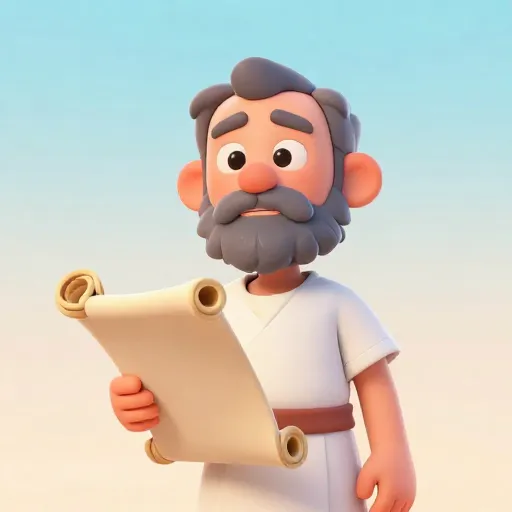
He distributes to the deathless gods their portions, and declares their privileges.
After the war, the world was divided. Zeus took the sky, his brother Poseidon took the sea, and his brother Hades took the underworld. Zeus became the King of the Cosmos, the one who had to keep everyone else from fighting too much. This was a heavy job for someone who could be quite moody himself.
As the king, Zeus lived on the highest peak in Greece, a place called Mount Olympus. It is a real mountain, often wrapped in thick white clouds, making it easy for ancient people to imagine a hidden palace at the top. From here, Zeus watched over everything, holding his most famous weapon: the Thunderbolt.
The word 'Zeus' actually comes from an ancient root word meaning 'to shine' or 'sky.' It’s related to the Latin word 'Dies' (day) and 'Deus' (god). So, when people said his name, they were literally talking about the brightness of the day.
In the Greek mind, Zeus represented the idea of Sovereignty, or the right to rule. But ruling isn't just about giving orders. For Zeus, it was about maintaining a balance between the many different forces of nature and the even more complicated feelings of the other gods.
He wasn't always a perfect king. In fact, many myths show Zeus getting into trouble. He would often change his shape: becoming a swan, a bull, or even a shower of gold: to visit the human world. These stories showed the Greeks that power can be unpredictable and sometimes even a bit overwhelming.

Mira says:
"I think Zeus being a shape-shifter is a way of saying that the sky is never just one thing. It's blue one minute, grey the next, then orange at sunset. He's as changeable as the weather."
One of the most important things Zeus protected was a rule called Hospitality, or xenia. In the ancient world, traveling was dangerous. There were no hotels, and you had to rely on the kindness of people you didn't know. Zeus was the protector of these travelers.
If you were mean to a stranger at your door, you weren't just being rude: you were offending Zeus himself. The Greeks believed Zeus might even be that stranger in disguise, testing your heart. This idea turned Zeus from just a "weather god" into a god of how humans should treat one another.
Zeus created laws, protected travelers, and kept the other gods from destroying the world with their petty fights.
Zeus was often selfish, had a terrible temper, and used his power to get whatever he wanted, regardless of who it hurt.
Because Zeus was the father of so many other gods and heroes, he was like the trunk of a massive family tree. His children included Athena, the goddess of wisdom, Apollo, the god of music, and even the legendary hero Hercules. His wife, Hera, was the Queen of the Gods, and their relationship was full of famous arguments.
These arguments weren't just for drama. They represented the tensions in real human families and the struggle for power. When Zeus and Hera fought, the Greeks might say it caused a storm or a change in the political world. It made the vast, scary universe feel like a home, even if it was a messy one.

For thee this whole cosmos, as it wheels around the earth, obeys whithersoever thou dost guide it.
As time passed, the way people saw Zeus began to change. Philosophers in Greece started to think that maybe Zeus wasn't just a man on a throne. They began to see him as a symbol for the "Mind" of the universe, the logic that keeps the planets moving and the grass growing. This was the start of Stoicism, a way of thinking that valued calm and reason.
When the Romans eventually took over the Greek world, they didn't get rid of Zeus. Instead, they merged him with their own sky god and called him Jupiter. Jupiter was even more focused on law and the power of the state. He became the symbol of the Roman Empire, watching over their massive armies and marble temples.
The ancient Olympic Games were actually a religious festival for Zeus! Athletes didn't just compete for medals: they competed to show off the physical excellence that they believed honored the King of the Gods.
Even after people stopped building temples to him, Zeus didn't disappear. During the Renaissance, artists became obsessed with the old myths. They painted Zeus on the ceilings of palaces and carved him into fountains. He became a symbol of human potential and the majesty of nature.
The Journey of the King
In the modern world, we still see Zeus everywhere. He is a character in comic books, a hero (or a villain) in movies, and a name for space missions. Why do we keep talking about him? Perhaps it is because we still feel that same wonder when we see a lightning bolt, or perhaps it's because we are still trying to figure out what it means to be a good leader.
Finn says:
"So if Zeus is the god of 'Xenia,' does that mean every time someone comes over for dinner, it's like a little religious ceremony?"
Zeus reminds us that power is never simple. He could be fair and wise, but he could also be terrifying and selfish. By looking at him, the ancient Greeks were really looking at themselves: seeing their own brilliance and their own flaws reflected in the giant, stormy mirror of the sky.

The father of gods and men.
Today, we know that lightning is static electricity and that the clouds are made of water vapor. But even with all our science, there is still something mysterious about the sky. Zeus remains a shadow in our stories, a reminder of a time when the whole world felt like it was alive and watching us.
Next time there is a thunderstorm, sit by the window and listen. Instead of thinking about the science, try to imagine what that sound would have meant if you believed it was a person. Does the thunder sound angry, or is it just clearing its throat? Does the lightning look like a weapon or a spark of inspiration?
Something to Think About
If you had the power of the sky, would you use it to keep order or to change things?
There isn't a right answer here. Zeus did both, and that’s why his stories are still so complicated today. Think about what kind of ruler you would be.
Questions About Religion
Was Zeus the strongest god?
Did the Greeks actually believe Zeus lived on a mountain?
Why does Zeus have so many children?
Beyond the Clouds
Zeus is a window into how the ancients saw the world: big, scary, beautiful, and deeply human. Whether he is a king on a throne or a bolt of lightning in the dark, he reminds us that we are always living under a sky full of questions.