Imagine a world where every single thought you have, every word you speak, and every action you take is like a tiny weight placed on a giant, cosmic scale.
This is the world of Zoroastrianism, one of the oldest living religions on Earth. Born in the rugged mountains and high plateaus of ancient Persia, it taught that humans are not just spectators in the story of the universe, but active partners with the Wise Lord.
The Man on the Mountain
Around 3,500 years ago, in a land we now call Iran, the wind swept across vast, dry plains and whistled through deep mountain passes. People lived in tribes, moving their cattle from one grazing spot to another. They believed in many different spirits, some kind and some frightening.
Among them lived a man named Zarathustra, or Zoroaster. He was a priest and a thinker who spent a long time wondering about the nature of the world. Why was there suffering? Why did people choose to be cruel? He felt that the old ways of thinking did not quite explain the beauty and the difficulty of being alive.
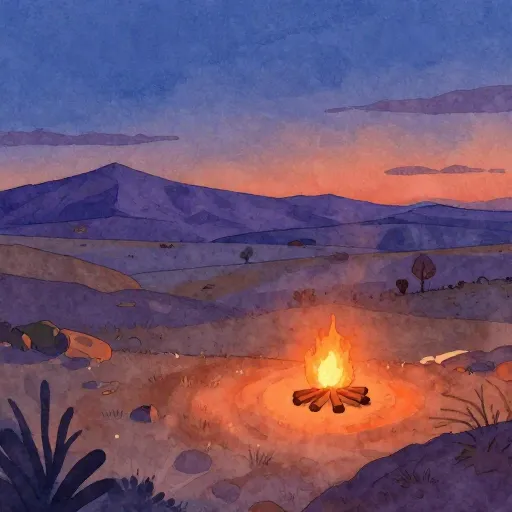
Imagine standing on a high, windy plateau in ancient Iran. The sky is a deep, impossible blue, and the mountains around you are jagged and purple. In the distance, you see the orange glow of a campfire where a family is sharing stories. This is a land of extremes, where the sun is blistering hot during the day and the stars are freezing and bright at night. It is a place where you can feel how small humans are, but also how much we need each other to survive.
According to the stories, Zarathustra had a life-changing experience while drawing water from a mountain river for a sacred ceremony. As he stepped out of the cold, rushing water, he saw a shining being made of pure light. This being led him to a meeting with Ahura Mazda, which means the Wise Lord.
Zarathustra realized that the universe was not a chaotic mess of many competing spirits. Instead, he believed it was a purposeful creation built on a single, beautiful foundation: Asha, the cosmic order of truth and harmony.

Choose for yourselves, O men and women, between the two paths.
This message was revolutionary. At a time when many people felt like pawns of the gods, Zarathustra suggested something different. He believed that every human being has a spark of the divine within them. Most importantly, he believed we have the power to choose.
The Choice: Asha versus Druj
Zoroastrianism describes the universe as a grand struggle between two forces. On one side is Asha, which represents truth, light, and everything that makes the world grow. On the other side is Druj, which represents lies, chaos, and the things that cause decay.

Mira says:
"It’s like when you have a messy room and you finally clean it up. Everything feels 'right' and in its place. I think that's what Asha feels like, a world where things fit together the way they're supposed to."
This is not just a battle between 'good guys' and 'bad guys' in a movie. It is a struggle that happens inside every person. When you tell the truth, you are siding with Asha. When you act out of greed or cruelty, you are letting Druj into the world.
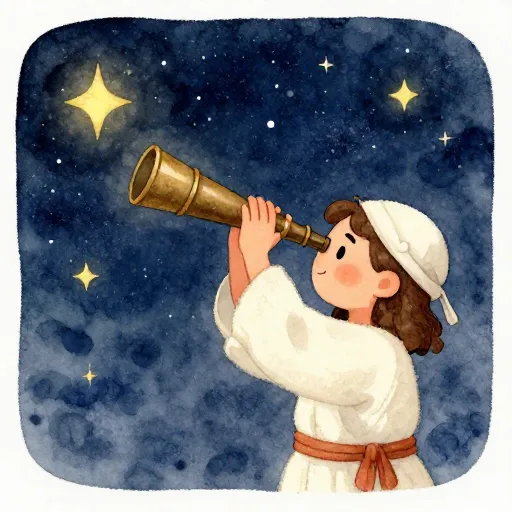
Did you know that the word 'Magic' comes from the Zoroastrians? The priests of the religion were called 'Magi.' They were famous for studying the stars and understanding the secrets of nature. In the famous Christmas story, the 'Three Wise Men' who follow a star were actually Zoroastrian Magi from the East!
Zoroastrians believe that Ahura Mazda created the world to be a perfect place, but a spirit of darkness called Angra Mainyu tried to spoil it. He brought winter to the mountains, thorns to the roses, and doubt to the human heart. Because of this, the world is now a mixture of both light and shadow.
The Three Pillars of Living
How do you help the Wise Lord win the battle? For Zoroastrians, the answer is remarkably simple to remember, even if it is a lifelong challenge to practice. They follow three main pillars of life:
- Humata (Good Thoughts)
- Hukhta (Good Words)
- Huvarshta (Good Deeds)
It starts with the mind. If you think kind thoughts, your words will likely be honest and helpful. If your words are honest, your actions will likely be fair and brave. Together, these three things help 'repair' the world.
At the end of the day, before you go to sleep, try a 'Three Pillar' check-in. Ask yourself: What was one Good Thought I had today? What was one Good Word I spoke? What was one Good Deed I did? If you can't think of any, don't worry. The Wise Lord says that every new sunrise is a chance to try again and add more light to the scale.
This idea makes the world feel very interconnected. If you plant a tree, you are performing a good deed that helps the Earth. If you comfort a friend, you are adding to the light. Every small moment matters because it contributes to the final victory of truth over lies.
The Sacred Flame
If you were to visit a Zoroastrian place of worship today, you would see a beautiful, flickering fire that never goes out. Because of this, some people mistakenly call Zoroastrians 'fire-worshippers,' but that is not quite right.

Finn says:
"If the fire is just a symbol, does it matter if it goes out? Or is the fire like a lighthouse that reminds people where they are supposed to be heading even when it's dark?"
For a Zoroastrian, fire is a symbol of the divine presence. It represents the light of the mind and the warmth of a good heart. Just as fire purifies things and provides light in the dark, Ahura Mazda provides the light of wisdom to the soul.
In ancient times, these fires were kept burning in great stone towers. Today, they are kept in Fire Temples. Priests wear white veils over their mouths when they tend the flame so that their breath does not make the sacred fire 'unclean.' This shows how much they respect the purity of the elements.
The world is fundamentally good, and evil is just a temporary shadow or a mistake that we need to fix with our actions.
The world is a difficult place where light and dark are equally real, and we must constantly fight to make sure the light wins.
The Wise Kings and the Traveling Ideas
Zoroastrianism became the official religion of the massive Persian Empire, which once stretched from Greece all the way to India. The kings of this empire, like Cyrus the Great, were famous for their fairness. Cyrus believed that people should be free to follow their own traditions.

I will not let my army pollute the land, nor will I force any person to change their faith.
Because the Persian Empire was so large and sat right in the middle of the Silk Road, Zoroastrian ideas began to travel. Many historians believe that Zoroastrianism influenced other religions like Judaism, Christianity, and Islam. Concepts that seem familiar to many today actually have deep roots in ancient Persia.
- The idea of a final battle between good and evil
- The concept of an afterlife or a 'paradise' (a word that comes from an old Persian word for a walled garden)
- The existence of angels and a savior figure
- The belief that the world will one day be perfectly restored
Zoroastrianism Through the Ages
The Long Journey to India
History is full of surprises. About 1,300 years ago, Persia was conquered by Arab armies, and many people began to follow Islam. While many Zoroastrians stayed in Iran, a group of them decided to find a new home where they could keep their traditions alive.
They sailed across the sea and landed on the shores of western India. These people became known as the Parsis, which simply means 'Persians.' According to legend, the local Indian king was worried about so many new people arriving. He sent the Zoroastrians a glass of milk filled to the very brim, signifying that his land was full.
Mira says:
"I love the idea of the sugar in the milk. It makes me wonder if our own ideas are like sugar: we don't have to take up a lot of space to change the flavor of the world around us."
The Zoroastrian leader took the glass and carefully stirred in a spoonful of sugar. The sugar dissolved, making the milk sweet without causing it to overflow. He sent it back to the king, showing that his people would enrich the land without pushing anyone else out. The king was impressed, and the Parsis have lived in India ever since.
Being a Zoroastrian Today
Today, there are fewer than 200,000 Zoroastrians in the world, but their influence remains huge. When a child is around seven or twelve years old, they have a special ceremony called a Navjote. This is the moment they officially choose to follow the path of Asha.
During the ceremony, they are given a Sudreh, which is a thin white undershirt with a tiny pocket near the heart. This pocket is a reminder to fill their life with good deeds. They also receive a Kusti, a sacred cord made of 72 threads of lamb's wool, which they tie around their waist while saying prayers.

The Zoroastrians are the oldest of the 'people of the book,' and their faith has survived against all odds through the sheer power of their commitment to truth.
Zoroastrians are known for their deep love of nature. They believe that water, earth, and air are sacred and should never be polluted. Long before modern environmentalism, they were taught that taking care of the planet was a religious duty. After all, how can you serve the Wise Lord if you are hurting his creation?

One of the most famous Zoroastrians in modern history was Freddie Mercury, the lead singer of the rock band Queen! His family were Parsis from India, and his funeral was performed by Zoroastrian priests. He often spoke about how the values of his heritage stayed with him throughout his life.
Something to Think About
If you were the person stirring the sugar into the milk, what is one 'sweet' quality you would want to bring to the world around you?
There are no wrong answers here. Some people bring kindness, some bring humor, and some bring a sense of justice. What is your unique flavor?
Questions About Religion
Do Zoroastrians believe in a heaven?
Why is the Faravahar symbol so important?
Is it a hard religion to follow?
The Weight of Your Spark
Zoroastrianism reminds us that we are not small or insignificant. In a universe of stars and shadows, your choice to be kind or to tell the truth is a cosmic event. Whether you are tending a sacred flame in a temple or simply helping a neighbor, you are part of an ancient story that began on a windy mountain thousands of years ago: the story of the light that refuses to go out.
