Genre Last updated: January 26, 2026

The Essential 25: Best Animal Books for Kids

Where empathy and storytelling become inseparable.

At Kidopoly, we curate for posterity, not popularity. This list is the bedrock of any library belonging to an animal-loving child. We've rejected the merely trendy for the truly timeless—stories so brilliantly crafted and deeply felt that they cross generational lines. These 25 selections are the ones parents secretly relish rereading and that children will demand on repeat.

The List

1
Charlotte's Web cover

Charlotte's Web

by E. B. White
1952 184 pages Ages 8-12

The absolute pinnacle of animal literature, teaching profound truths about friendship, sacrifice, and the cycle of life through the sincere voice of a spider. It’s literary alchemy, turning barnyard animals into philosophical beings. Every adult remembers the gut-punch of its ending, and every child needs to experience that kind of profound, gentle heartbreak and beauty.

Read if: Your child is ready for chapter books and needs a lesson in selfless love.
2
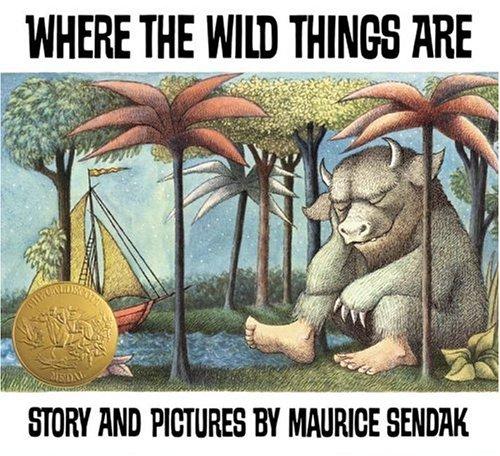
Where the Wild Things Are cover

Where the Wild Things Are

by Maurice Sendak
1963 48 pages Ages 3-7

It’s the definitive visual ode to the untamed inner world of a child. It validates big, messy emotions, then offers the ultimate comfort: unconditional love waiting after the adventure. The escalating visual intensity is matched only by the quiet, warm return home. It's a masterpiece of emotional pacing.

Read if: Your child has big feelings that need an epic, yet safe, journey.
3
The Tale of Peter Rabbit cover

The Tale of Peter Rabbit

by Beatrix Potter
1902 56 pages Ages 2-6

Potter established the standard for animal picture books. The mix of exquisite, near-photographic natural detail and light peril—disobeying Mother and getting caught—makes it irresistible. It perfectly captures childhood's delicious rebellion and the sweet relief of being cared for afterwards.

Read if: Your child enjoys detailed, story-driven picture books with clear rules and consequences.
4
The Wind in the Willows cover

The Wind in the Willows

by Kenneth Grahame
1908 288 pages Ages 8-14

It is the ultimate celebration of domestic comfort and the restorative magic of nature, contrasting it with the folly of modern life (Toad's obsession with cars). The lyrical prose makes it a mandatory read-aloud; adults savor the language while children are swept up in the camaraderie of Badger, Mole, and Rat.

Read if: Your family values deep friendship and quiet moments by the riverbank.
5
The One and Only Ivan cover

The One and Only Ivan

by Katherine Applegate
2012 336 pages Ages 8-12

A modern classic that instantly earned its stripes. Told from Ivan's perspective, it’s a subtle, powerful commentary on captivity, art, and the definition of 'home.' Inspired by a true story, it builds immense empathy without ever feeling preachy. A guaranteed tear-jerker and conversation starter.

Read if: Your child loves gorillas, stories about unfairness, or appreciates art as expression.
6
The Call of the Wild cover

The Call of the Wild

by Jack London
1903 216 pages Ages 12+

This is survival stripped down to its essence. It doesn't sentimentalize the wild; it portrays the magnetic, inescapable pull of instinct over domestication. It's the perfect book to introduce older readers to literary realism and the complexity of nature's indifference.

Read if: Your older child craves adventure, tension, and exploring the wilder side of life.
7
Make Way for Ducklings cover

Make Way for Ducklings

by Robert McCloskey
1941 64 pages Ages 3-7

It is the ultimate story of a parent navigating the dangerous modern world to protect their vulnerable young. The repetition is hypnotic for kids, and the simple, matter-of-fact depiction of city life juxtaposed with duck behavior is pure genius. A Caldecott winner that defines 'classic.'

Read if: Your child loves rhythm, nature invading the city, and excellent parenting.
8

The Lion and the Mouse

by Aesop (Various Illustrators)
Ancient 32 pages Ages 2-6

While technically a fable, the clear moral—that even the smallest creature can repay a kindness—is foundational. We list it because every family *needs* an edition that highlights this powerful, counter-intuitive lesson on respect for all life, regardless of size.

Read if: You are teaching the core concept that kindness is never wasted.
9
Black Beauty cover

Black Beauty

by Anna Sewell
1877 255 pages Ages 10+

It's one of the best-selling books of all time, written from the animal's perspective to deliberately foster empathy for its subject. It perfectly details the dignity and suffering of working animals, teaching compassion through a sweeping, grand narrative.

Read if: Your child is fascinated by horses and ready for a longer, character-driven epic.
10

The Little Prince

by Antoine de Saint-Exupéry
1943 96 pages Ages 10+

Though ostensibly about a boy, the Fox and the Rose are the core lessons on taming, responsibility, and seeing with the heart. Adults see the philosophy; children see the longing for connection. It's a mandatory book that proves animals teach us how to be human.

Read if: You read with your child to discuss deep philosophical concepts about relationships.
11
The Trumpet of the Swan cover

The Trumpet of the Swan

by E. B. White
1970 210 pages Ages 8-12

It’s a story about overcoming physical limitations and earning your place through immense effort and love. Louis’s struggle to communicate and belong, using an absurdly human tool (a trumpet), is hilarious, heartwarming, and deeply moving.

Read if: Your child admires perseverance and loves birds, especially swans.
12
Curious George cover

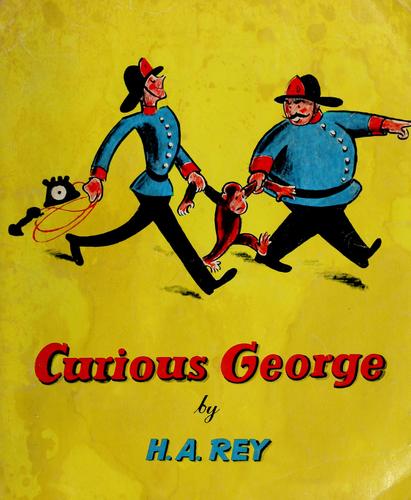
Curious George

by H. A. Rey & Margret Rey
1941 64 pages Ages 2-6

George embodies pure, unadulterated curiosity—the engine of all discovery, even when it leads to chaos. Parents remember this book as the definition of energetic childhood, and it’s an essential primer for understanding the motivation behind 'What's this?'

Read if: Your child is driven by an insatiable, often messy, desire to explore everything.
13
Frog and Toad Are Friends cover

Frog and Toad Are Friends

by Arnold Lobel
1970 64 pages Ages 5-9

It is the gold standard for illustrating platonic, supportive, perfectly balanced friendship. Each short story reveals a different facet of their personalities, normalizing differences and highlighting the quiet reliability of a true companion. It’s comforting and endlessly re-readable.

Read if: Your child is mastering reading or needs gentle, profound lessons on companionship.
14
The Story of Ferdinand cover

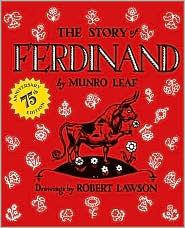
The Story of Ferdinand

by Munro Leaf
1936 48 pages Ages 3-7

A gentle, subversive classic that champions pacifism and being true to your gentle nature, even when societal pressure demands you be fierce. It’s short, memorable, and teaches that strength comes from self-knowledge, not aggression.

Read if: Your child is sensitive, or you want to discuss non-conformity and inner peace.
15
Watership Down cover

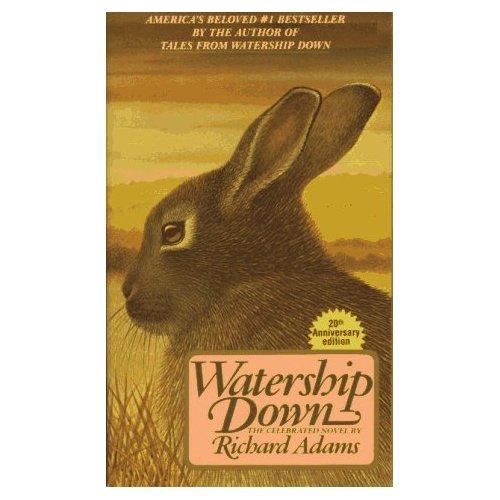
Watership Down

by Richard Adams
1972 413 pages Ages 11+

It’s an epic quest novel disguised as a story about rabbits, featuring complex mythology, language (Lapine), and intense survival politics. It builds deep respect for animal societies and the true meaning of leadership and finding a safe haven.

Read if: Your reader is ready for an 'adult' novel with animals as protagonists.
16
The Velveteen Rabbit cover

The Velveteen Rabbit

by Margery Williams
1922 64 pages Ages 5-9

It is *the* essential book on what it means to be 'Real'—achieved through love, not perfection. Every child who loves a stuffed animal will understand this yearning. It's a heartbreaking exploration of transformation via devotion.

Read if: Your child needs to understand the depth of love for a cherished toy.
17
Stuart Little cover

Stuart Little

by E. B. White
1945 136 pages Ages 6-10

It asks: what does it mean to belong when you are fundamentally different from everyone in your world? Stuart’s quest for identity, love, and adventure, despite his miniature stature, is an enduring metaphor for feeling 'other.'

Read if: Your child enjoys cozy adventures and tales of underdogs finding their place.
18
The Jungle Book cover

The Jungle Book

by Rudyard Kipling
1894 368 pages Ages 9+

This collection is vital for its intricate world-building and its exploration of 'The Law of the Jungle'—a framework for social order, belonging, and natural hierarchy. It’s crucial for understanding the literary basis for many modern animal narratives.

Read if: Your older child appreciates mythology, adventure, and complex social structures.
19
Mrs. Frisby and the Rats of NIMH cover

Mrs. Frisby and the Rats of NIMH

by Robert C. O'Brien
1971 233 pages Ages 9-13

It’s brilliant science-fantasy masquerading as a simple mouse story. It tackles ethics, intellectual evolution, and the responsibility that comes with superior knowledge. It’s intelligent, morally complex, and demands re-reading to grasp its nuances.

Read if: Your child loves science, problem-solving, and morally layered stories.
20
Animalia cover

Animalia

by Graeme Base
1986 48 pages Ages 3-8

It’s visual maximalism that rewards endless scrutiny. Every page is a densely packed ecosystem of alliteration and hidden details. It’s a book you buy once and discover new things in years later—the ultimate 're-read magnet' for visual learners.

Read if: Your child loves visual puzzles, details, and the sheer joy of an alphabet gone wild.
21
Stellaluna cover

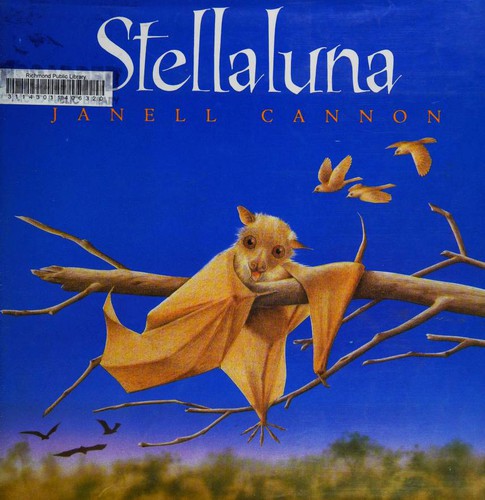
Stellaluna

by Janell Cannon
1993 48 pages Ages 3-7

A stunningly effective story about cultural differences, adapting to a new environment, and the necessity of knowing your own nature. Stellaluna's journey of confusion, acceptance, and finding her place within and outside her family is pitch-perfect.

Read if: Your child is navigating a new situation or learning about nocturnal/diurnal differences.
22
The Cat in the Hat cover

The Cat in the Hat

by Dr. Seuss
1957 72 pages Ages 3-7

This book single-handedly proves that learning to read doesn't have to be a chore. The controlled vocabulary, coupled with the sheer, anarchic fun of the Cat and his antics, makes it a book kids *want* to master. It redefined the beginner book.

Read if: Your child is learning to read and needs maximum fun for minimum word count.
23
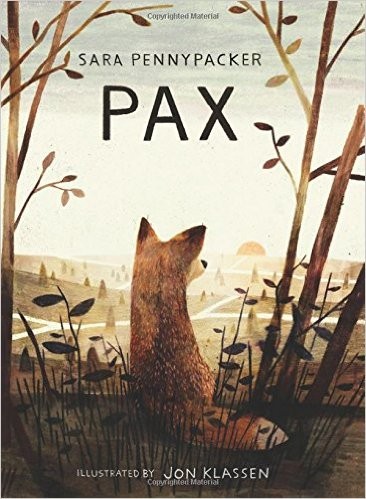
Pax cover

Pax

by Sara Pennypacker
2016 320 pages Ages 9-12

A modern classic exploring the agonizing bond between a boy and his pet fox separated by war, showing the animal's instinctual drive for the wild versus his learned loyalty. It’s beautifully written, devastatingly sad, and a powerful look at duty and nature.

Read if: Your reader enjoys emotionally rich, slightly more mature animal survival stories.
24
The Wild Robot cover

The Wild Robot

by Peter Brown
2016 288 pages Ages 7-11

Though the protagonist is a robot, it is fundamentally about an alien learning to understand and adopt the rules of the animal kingdom—survival, parenting, community. It’s a massive hit because the robot's gentle learning curve makes complex empathy accessible.

Read if: Your child loves robots, nature, and stories about creating a family.
25
The Runaway Bunny cover

The Runaway Bunny

by Margaret Wise Brown
1942 32 pages Ages 1-5

This book is the ultimate affirmation of unconditional parental love. The bunny can transform into anything to escape, but the mother will always transform into something to find him. It’s the sonic blueprint for secure attachment.

Read if: Your youngest child needs a rhythmic, comforting assurance of constant love.

Honorable Mentions

Pigeon: Don't Let the Pigeon Drive the Bus!
Pigeon: Don't Let the Pigeon Drive the Bus! 2003
by Mo Willems

The ultimate interactive book that makes kids delight in saying 'NO!'—a masterclass in character voice and reader engagement.

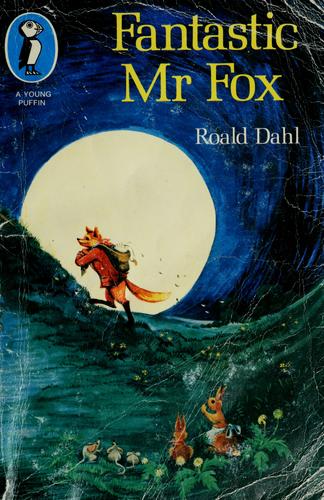
Fantastic Mr. Fox
Fantastic Mr. Fox 1970
by Roald Dahl

Hilarious, high-stakes heist story with a gloriously arrogant, charming fox hero who champions outsmarting grumpy farmers.

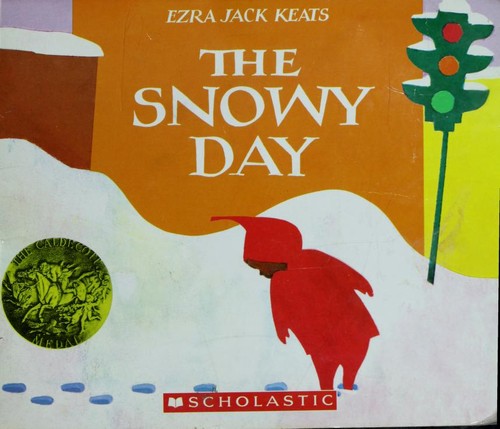
The Snowy Day
The Snowy Day 1962
by Ezra Jack Keats

A quiet, contemplative masterpiece about a boy's simple wonder at the snow—featuring one of literature's first Black protagonists.

The Cricket in Times Square 1960
by George Selden

A charming, transportive story about a country cricket, Chester Cricket, finding an unlikely, bustling family in the New York subway.

Rikki-Tikki-Tavi
Rikki-Tikki-Tavi 1894
by Rudyard Kipling

A thrilling, action-packed tale of a mongoose protecting a human family from deadly cobras—pure adventure with excellent animal portrayal.

Madeline
Madeline 1939
by Ludwig Bemelmans

The definitive 'oops' book for a small, spirited girl in a convent, featuring unforgettable rhyme and visual rhythm.

Dog Man (Series)
Dog Man (Series) 2016
by Dav Pilkey

While less 'classic,' this series has undeniable, re-read magnetism for the emerging reader generation; a modern phenomenon.

Blueberries for Sal
Blueberries for Sal 1948
by Robert McCloskey

A gentle, funny book about a little girl and a little bear accidentally swapping mothers while blueberry picking.

Frequently Asked Questions

Why are some famous animal books, like those by Beatrix Potter, not ranked higher than a modern winner like 'The One and Only Ivan'?

Kidopoly prioritizes the impact on the current child reader while honoring legacy. 'The One and Only Ivan' offers a modern, profound emotional resonance that hooks today's tweens immediately, whereas Potter, though foundational, sometimes requires more adult guidance to maintain re-read appeal for older kids. We rank based on undeniable, immediate, and sustained reader connection.

Where are the books focused purely on animal facts (non-fiction)?

Our philosophy demands BRILLIANT STORYTELLING above all else. True classics in this category must weave facts into a narrative so compelling that the learning is secondary to the experience. We selected books where the animal behavior (like the wild dog's instinct in 'Call of the Wild') is the core of the story, rather than a separate informational sidebar.

I grew up with a different book. Why is it missing from this 'Essential 25'?

This list is fiercely curated to meet all five core criteria. If a book is only 'popular' or only loved by one generation, it fails the 'Re-Read Magnetism' or 'Cross-Generational Magic' test. Many excellent books are 'nice to have'; these 25 are 'must-have' cultural cornerstones.

Are the age ranges strict for these classics?

No, but they are advisory. A classic like 'Watership Down' (ranked #15) is listed for 11+ because of its thematic weight, but parents often read it aloud to capable 9-year-olds. Conversely, picture books like 'Goodnight Moon' are loved by adults, proving they succeed across the spectrum.

Audience Debug
Link copied!