Genre Last updated: January 26, 2026

The Essential 25 Biographies for Kids

Real Heroes. Brilliant Stories. Undeniable Classics.

At Kidopoly, we refuse the noise. This list is not a suggestion; it is a decree. These 25 biographies capture the true essence of lives lived boldly—figures who overcame monumental challenges, changed the world, and whose stories possess that indefinable magic that makes a child (and their parents) turn the page again and again. These are the essential stories of human spirit that must live on your shelf.

The List

1
Who Was Jackie Robinson? cover

Who Was Jackie Robinson?

by Gail Herman (or Lisbeth Kaiser version)
2016 80 pages Ages 6-10

This book, in its many classic formats, is the definitive introduction to Robinson's quiet courage. It balances the excitement of his athletic genius with the immense pressure of breaking the color barrier, presenting a complex hero in an accessible narrative. It sparks essential conversations about fairness and perseverance without ever feeling like a lecture. A true bookshelf staple that demands re-reading as a child matures.

Read if: Your child loves sports and needs to learn about systemic courage in American history.
2
A Picture Book of Harriet Tubman cover

A Picture Book of Harriet Tubman

by David A. Adler
1992 32 pages Ages 4-8

Adler’s factual yet poetic tribute captures the sheer bravery of Tubman—the 'Moses of her people'—who never lost a passenger. It’s simple enough for the youngest listeners but contains the gravity of her mission. This book isn't just about an escape; it's about relentless commitment to family and freedom, a story that resonates deeply across all ages and demands to be revisited.

Read if: Your child responds to tales of ultimate bravery and the power of selflessness.
3

The Story of Helen Keller

by John Alba Alba (or similar established version)
1989 128 pages Ages 7-11

The relationship between Keller and her teacher, Anne Sullivan, is one of the most compelling mentor-student stories in history. This biography focuses not on pity, but on the triumph of communication against seemingly impossible odds. It’s a powerful reminder that obstacles are just puzzles waiting for the right key, a narrative that adults find as moving as children find inspirational.

Read if: Your child struggles with patience or needs a story about the magic of connection.
4
I Am Martin Luther King, Jr. cover

I Am Martin Luther King, Jr.

by Brad Meltzer
2017 32 pages Ages 3-7

Meltzer’s 'I Am' series is modern canon, and this entry is phenomenal. It strips away complexity to focus on the core message: King believed in peaceful change and equality. The prose is direct, empowering, and immediately graspable by young minds, making it a required bedtime story that plants seeds of non-violent conviction early on. It's already beloved by a generation.

Read if: Your youngest reader needs a simple, powerful introduction to peace and justice.
5

The Boy Who Grew Flowers: A Story About Edmund Hillary

by Ashley Wolff
2004 32 pages Ages 5-9

This beautifully illustrated, non-traditional biography of the first man to summit Everest focuses on his childhood dream and quiet determination. It’s about the long, unglamorous road to greatness, a necessary lesson often skipped in faster-paced accounts. Adults cherish its gentle pacing and focus on internal drive.

Read if: Your child needs to understand that big achievements start with small, patient steps.
6

Little People, Big Dreams: Leonardo da Vinci

by Maria Isabel Sánchez Vegara
2017 32 pages Ages 4-8

This series has successfully forged new classics. Da Vinci’s life is perfectly distilled here into curiosity, invention, and the embrace of multiple passions. It validates the child who can’t pick just one thing to love and shows that the world’s greatest minds were once just as wildly curious as they are.

Read if: Your child is a curious polymath who loves to tinker and dream big.
7
Who Was Amelia Earhart? cover

Who Was Amelia Earhart?

by True Kelley
2004 80 pages Ages 7-10

Earhart’s story is pure adventure laced with grit. This accessible format focuses on her breaking barriers in a male-dominated field, emphasizing daring and self-reliance. It’s a thrilling read that every parent remembers loving, making it a perfect shared book for dreaming about exploration.

Read if: Your child dreams of adventure, flying, or defying expectations.
8
The Revolutionary: Samuel Adams cover

The Revolutionary: Samuel Adams

by Tracy Nelson Maurer
2016 32 pages Ages 5-9

Often overshadowed by Washington, Adams’s story of being a brilliant, stubborn agitator is essential. This book translates complex political maneuvering into a story of principle and public speaking, showing kids that ideas—not just swords—can win wars. It’s a foundational text for understanding early American idealism.

Read if: Your child is interested in politics, history, or loves a good underdog story.
9
I Am Marie Curie cover

I Am Marie Curie

by Brad Meltzer
2018 32 pages Ages 3-7

This book nails the 'brilliant story' criterion by focusing on Marie's relentless pursuit of knowledge despite systemic obstacles and dangerous conditions. It’s a straightforward narrative of pure intellectual passion. It’s a modern classic that immediately makes science and breaking boundaries feel deeply personal.

Read if: Your child is obsessed with science or an outsider determined to prove their worth.
10
Who Was Abraham Lincoln? cover

Who Was Abraham Lincoln?

by Dennis Brindell Fradin
1991 80 pages Ages 7-11

The quintessential 'log cabin to White House' narrative. Lincoln’s story is one of intellectual hunger, moral struggle, and immense national burden. Its consistent presence in libraries and homes proves its timeless quality. It teaches that leadership is forged through adversity and deep contemplation.

Read if: Your child is ready for a story about the weight of history and moral clarity.
11

Little People, Big Dreams: Frida Kahlo

by Maria Isabel Sánchez Vegara
2018 32 pages Ages 4-8

This book excels at presenting Kahlo’s physical challenges and passionate spirit without dwelling on adult themes, focusing instead on her incredible capacity to turn pain into powerful, world-changing art. It’s a masterpiece in validating a child's unique, often difficult, perspective.

Read if: Your child has a vibrant inner world or loves art that feels deeply personal.
12

The Story of Sacagawea: A Trailblazer for Lewis and Clark

by Tova Teitelbaum
2004 48 pages Ages 5-9

Sacagawea’s story is about being indispensable through sheer knowledge and survival skill. This narrative focuses on her quiet competence—she wasn't a soldier, but the expedition could not have succeeded without her. It’s a powerful, often-overlooked model of necessary, non-violent leadership.

Read if: Your child is interested in exploration, nature, and indispensable teamwork.
13

Who Was Martin Luther King, Jr.?

by Who HQ (Lisbeth Kaiser)
2017 80 pages Ages 6-10

The 'Who Was?' series ensures that the key facts and emotional weight of the Civil Rights Movement are delivered in a structured, engaging format. It’s the perfect stepping stone from picture books to deeper historical texts, providing the solid foundation of character necessary for this essential figure.

Read if: Your child is ready to move from the 'I Am' series to the next level of historical context.
14

Dizzy: The Life and Times of John Birks Gillespie

by Christopher Myers
2011 48 pages Ages 5-10

Myers’s text is pure poetry, matching Gillespie’s innovative, boundary-breaking spirit. It doesn't just tell his story; it *feels* like bebop. This is cross-generational magic—adults appreciate the artistic brilliance, and kids are transported by the rhythm and high-energy narrative of a true musical revolutionary.

Read if: Your child loves music that feels vibrant, energetic, and slightly off-kilter.
15
Who Was Eleanor Roosevelt? cover

Who Was Eleanor Roosevelt?

by Who HQ (Dennis Brindell Fradin)
2009 80 pages Ages 7-11

Eleanor is the ultimate example of finding your voice and purpose *after* convention. This biography highlights her transformation from a shy First Lady to a global champion for human rights. It's a re-readable lesson in evolving one's role and refusing to be sidelined by expectation.

Read if: Your child is interested in social justice and finding a voice within established structures.
16

Seed to Plant: The Life of George Washington Carver

by Margaret McNamara
2007 32 pages Ages 4-8

This book captures Carver's holistic genius—his love for the earth, his scientific innovation, and his deep generosity. It shows perseverance through the lens of helpfulness, not just personal ambition. It's a gentle, evergreen story that connects science directly to community service.

Read if: Your child loves gardening, nature, and practical problem-solving.
17

Little People, Big Dreams: Muhammad Ali

by Maria Isabel Sánchez Vegara
2018 32 pages Ages 4-8

Ali's story is one of unshakeable self-belief and standing up for what's right, even at great personal cost (losing his title). The 'Big Dreams' format is perfect for distilling this massive personality into a narrative about conviction and charisma that kids immediately connect with.

Read if: Your child needs a hero who talks a big game but backs it up with integrity.
18
Who Was George Washington? cover

Who Was George Washington?

by Who HQ (Dennis Brindell Fradin)
1999 80 pages Ages 7-11

This is the foundational American biography, a book every family bookshelf must contain for historical context. It covers his early surveyor days to his crucial decision to step down from power—a lesson in democratic duty that remains vital and resonant today.

Read if: Your child is beginning to study American history and needs the 'Father of His Country' context.
19

The Unstoppable Mary MacCracken: The True Story of Mary McLeod Bethune

by Carole Boston Weatherford
2020 40 pages Ages 5-9

Weatherford is a master storyteller, and this biography of Bethune—who rose from being the 15th of 17 children born to former slaves—is pure inspiration. It vividly details her fight for education and access, making her legacy of institutional building relatable and profoundly moving.

Read if: Your child needs a powerful example of an advocate who built systems of support.
20

Little People, Big Dreams: Wolfgang Amadeus Mozart

by Maria Isabel Sánchez Vegara
2016 32 pages Ages 4-8

This is the ultimate 'child prodigy' story, yet it frames Mozart’s intense talent as a gift to be shared, not a burden. It’s musical, joyful, and shows that genius often shows itself very, very early. Adults remember the music; kids love the effortless magic of his creation.

Read if: Your child shows early musical talent or loves stories about genius.
21
Who Was Galileo? cover

Who Was Galileo?

by Who HQ (Michael J. Rosen)
2011 80 pages Ages 7-10

Galileo’s story is a profound lesson in intellectual bravery—choosing truth over comfort. It’s the rare biography that directly addresses the conflict between scientific discovery and established belief, making it highly re-readable as kids grapple with questioning authority.

Read if: Your child is wrestling with the difference between what is believed and what is known.
22
I Am Walt Disney cover

I Am Walt Disney

by Brad Meltzer
2021 32 pages Ages 3-7

While Disney has complexity, this book is a pure distillation of imagination, failure, and reinvention—essential lessons for any creative child. It’s a masterclass in how to turn a 'no' into a groundbreaking 'yes,' making it an immediate classic in the creative motivation category.

Read if: Your child is a budding creative who needs permission to fail forward.
23
Who Was George Washington Carver? cover

Who Was George Washington Carver?

by Who HQ (Monica Kulling)
2007 80 pages Ages 7-10

This offers a deeper dive than a picture book into Carver's scientific breakthroughs in botany. It focuses on his belief that science should serve the poor and forgotten, a theme of social responsibility that makes the subject eternally relevant and worthy of re-reading at different maturity levels.

Read if: Your child is fascinated by plants, soil, and the practical application of science.
24

Little People, Big Dreams: Jane Austen

by Maria Isabel Sánchez Vegara
2021 32 pages Ages 5-9

Jane Austen is a classic for adults passed down through generations. This book translates her subtle genius—observing human behavior and social comedy—into a visual narrative that kids can appreciate as a story about being a sharp, quiet observer in a loud world. It’s an introduction to literary appreciation.

Read if: Your child loves to watch people and understands subtle humor and social dynamics.
25
Who Was Leonardo da Vinci? cover

Who Was Leonardo da Vinci?

by Who HQ (Roberta Edwards)
2001 80 pages Ages 7-11

This volume is the deep-dive counterpart to the picture book, allowing kids to see the sheer *breadth* of Da Vinci’s interests and work ethic. It’s a book that proves a mind can be both artistic and rigorously scientific, which is an eternally satisfying concept for curious kids.

Read if: Your child is ready for the complexity of a true Renaissance man.

Honorable Mentions

Little People, Big Dreams: Ruth Bader Ginsburg
Little People, Big Dreams: Ruth Bader Ginsburg 2018
by Maria Isabel Sánchez Vegara

Essential modern classic showing quiet persistence against overwhelming structural odds in law.

Who Was Frederick Douglass? 2007
by Who HQ (Roberta Edwards)

A powerful narrative of self-education and the moral force of a commanding voice for freedom.

The Story of Anne Frank 1988
by Carol Greene

A foundational, yet heartbreaking, portrait of resilience and hope documented in a hidden space.

I Am Steve Jobs 2019
by Brad Meltzer

A necessary look at relentless vision, high expectations, and the cost of innovation.

Who Was Albert Einstein? 2002
by Who HQ (Jess Brallier)

The classic story of the delightfully quirky thinker who redefined the universe.

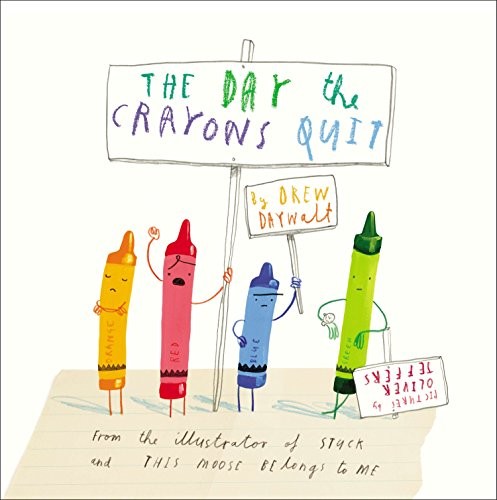
The Day the Crayons Quit
The Day the Crayons Quit 2013
by Drew Daywalt

Though technically fiction, the *spirit* of this book is the most relatable biography of creative burnout and finding your value.

Who Was Thomas Jefferson? 2004
by Who HQ (Denise Lewis Patrick)

A crucial, albeit complex, look at the founder of ideals versus the man of contradiction.

Little People, Big Dreams: Vincent van Gogh 2017
by Maria Isabel Sánchez Vegara

Captures the beauty and tragedy of an artist whose passion outpaced his ability to connect.

Frequently Asked Questions

Why are so many 'Who Was?' books on this list?

The 'Who Was?' series (and similar formats like 'Little People, Big Dreams') has achieved what few modern non-fiction books have: genuine re-read magnetism and cross-generational recognition. They deliver complex lives with just enough narrative structure and factual density to satisfy a curious 7-year-old while remaining enjoyable for an adult to read aloud. They are the new foundational classics.

What age is best for starting biographies?

We firmly believe in starting early with the picture-book format (ages 3-7). The key is the storytelling, not the date of death. Books like Meltzer's 'I Am' series focus on character traits—courage, curiosity—which resonate instantly. Kids can revisit the same figure as they age, moving from the picture book to the chapter book for deeper context.

How do you handle historical figures with major flaws?

Our mandate is 'honest about challenges and flaws.' For older readers (8+), the chapter books are best positioned to introduce nuance—the paradox of Jefferson, the privilege of a Rockefeller. For younger readers, the focus remains on the specific, undisputed achievement and virtue that made them an agent of change, honoring their impact while keeping the narrative age-appropriate.

Are any of these books published in the last 10 years truly 'classics'?

Yes, by our mandate, they must show undeniable signs. The Brad Meltzer 'I Am' series (many recent titles) and the 'Little People, Big Dreams' series have saturated schools and best-seller lists so completely, their cultural adoption already secures their classic status. They are the required reading of the next generation.

Audience Debug
Link copied!