Topic Last updated: January 26, 2026

Best Books About Emotions for Kids

The Essential Library for Understanding Big Feelings

At Kidopoly, we believe in bedrock classics, not fleeting trends. This list of 20 is ruthlessly selected to be the undeniable emotional toolkit for your family. These aren't just 'nice' books; they are cross-generationally beloved stories that don't preach, but perfectly capture, name, and validate the vast landscape of a child's inner life. Buy these. Read them often. They are essential.

The List

1
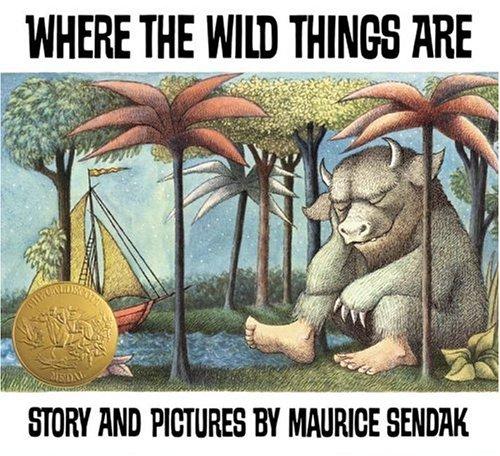
Where the Wild Things Are cover

Where the Wild Things Are

by Maurice Sendak
1963 40 pages Ages 3-7

The ultimate classic for processing anger and returning to love. Max's journey into his own wildness—and his ultimate decision to return home for supper—is a perfect, non-judgmental narrative arc for understanding the intensity of big emotions and the safety of parental acceptance. It’s a Caldecott winner that every adult remembers and every child needs to experience.

Read if: your child needs a safe way to channel and explore their inner 'wildness' after a moment of frustration.
2
The Rabbit Listened cover

The Rabbit Listened

by Cori Doerrfeld
2018 32 pages Ages 3-7

This book is a profound lesson in empathy and presence. When Taylor's tower crashes, every animal offers a 'fix'—talking, yelling, remembering—until the quiet rabbit simply *listens*. It beautifully models for both parent and child that sometimes, the greatest comfort isn't advice, but simply being present and allowing space for the feeling.

Read if: your family struggles with the instinct to 'fix' sadness or disappointment instead of just sitting with it.
3
Alexander and the Terrible, Horrible, No Good, Very Bad Day cover

Alexander and the Terrible, Horrible, No Good, Very Bad Day

by Judith Viorst
1972 32 pages Ages 4-8

This is the quintessential validation of a 'bad day.' It teaches that even when things go wrong from morning to night—from sticky spots to traffic jams—it's okay to acknowledge the cumulative effect of negativity. It’s a cathartic, funny classic that reminds parents that sometimes, the best strategy is to commiserate until the day is over.

Read if: your child (or you!) is having a day where everything seems to be going wrong, requiring total, shared validation.
4

The Color Monster: A Pop-Up Book of Feelings

by Anna Llenas
2012 12 pages Ages 2-6

By assigning concrete colors to abstract feelings, Llenas gives children an invaluable sorting tool. The pop-up element makes it a tactile experience, encouraging repeated interaction. Seeing the 'Color Monster' become organized, one emotion at a time, offers a tangible, non-scary blueprint for emotional regulation that both kids and therapists adore.

Read if: your youngest child needs a visual, interactive way to start naming and separating their swirling emotions.
5
When Sophie Gets Angry—Really, Really Angry... cover

When Sophie Gets Angry—Really, Really Angry...

by Molly Bang
1999 24 pages Ages 3-7

This book is celebrated for its honest portrayal of explosive anger. It doesn't try to soften the feeling; instead, it validates the *need* to react physically—running, climbing—before the eventual return to calm. It’s a powerful, visual metaphor for taking space to process rage safely, making it a cross-generational touchstone.

Read if: your child experiences intense, physical surges of anger that need an acknowledged, safe outlet.
6
The Invisible String cover

The Invisible String

by Patrice Karst
2000 40 pages Ages 4-8

Though contemporary, this book has achieved undisputed classic status for tackling separation anxiety, grief, and connection. The concept of an 'invisible string made of love' is a brilliant, easily grasped metaphor that offers immediate, deep comfort. It is continually recommended by therapists for its universally reassuring message.

Read if: you need a tool for navigating separation, loss, or simply missing a loved one.
7
Llama Llama Red Pajama cover

Llama Llama Red Pajama

by Anna Dewdney
2005 40 pages Ages 2-5

This is the definitive book on separation anxiety at bedtime. The short, staccato rhymes perfectly capture the rising panic of a small child left alone, transforming quiet waiting into 'all-out llama drama.' It is a highly re-readable classic that provides structure and resolution to a very common, intense childhood feeling.

Read if: bedtime routines are frequently derailed by worry about parental absence.
8
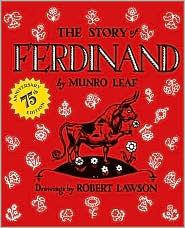
The Story of Ferdinand cover

The Story of Ferdinand

by Munro Leaf
1936 72 pages Ages 4-9

A true, time-tested classic championing non-conformity and gentleness over aggression. Ferdinand models the profound strength in choosing peace and remaining true to one's own nature, even when pressured by societal expectations (the bullfight). It’s a subtle but powerful message about self-acceptance.

Read if: you want to discuss courage not as fighting, but as maintaining one's quiet, true self.
9
The Pout-Pout Fish cover

The Pout-Pout Fish

by Deborah Diesen
2008 32 pages Ages 2-6

The rhythm and rhyme are irresistible, ensuring re-reads, but the core magic is its simple, cyclical approach to persistent gloom. It demonstrates that one's 'curse' (being a Pout-Pout Fish) is just a perspective, and a simple shift—a new friend, a new view—can change the entire mood. It’s joyfully musical SEL.

Read if: your child has a tendency to get 'stuck' in a single negative mood or label.
10

In My Heart: A Book of Feelings

by Jo Witek
2014 28 pages Ages 2-6

The die-cut heart is a genius tactile device connecting the physical body to abstract emotion. It validates the *physicality* of feelings—sadness is heavy, anger is bursting—helping toddlers and preschoolers create that crucial mind-body link for emotional identification. It's poetic without being pretentious.

Read if: your young child often expresses big feelings physically without the vocabulary to name them.
11
The Way I Feel cover

The Way I Feel

by Janan Cain
2000 32 pages Ages 2-7

This book covers the emotional spectrum beautifully using simple rhymes and images of diverse children in everyday situations. It normalizes the *variety* of feelings—from bored to brave—showing kids that fluctuating emotions are a normal part of life, not a personal failing. It’s highly relatable and easy to reference later.

Read if: you need a go-to, rhyming vocabulary builder for a wide range of basic emotions.
12
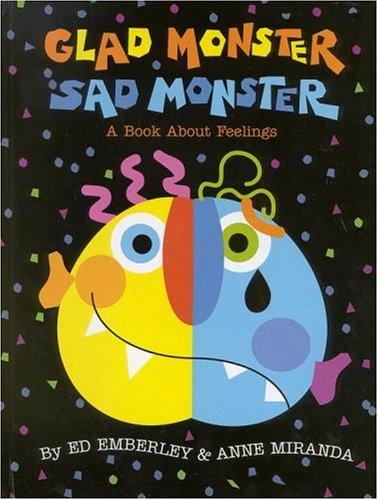
Glad Monster, Sad Monster cover

Glad Monster, Sad Monster

by Annaka Harris & Ed Emberley
1997 24 pages Ages 2-6

The interactive masks turn a reading session into safe emotional dress-up. By physically trying on the 'face' of a feeling, children engage with emotions playfully, externalizing them. This tactile element is what locks it into the 're-read magnet' category, making intense feelings manageable and fun.

Read if: your child responds well to hands-on activities and needs a playful way to explore emotional roles.
13
The Little Engine That Could cover

The Little Engine That Could

by Watty Piper
1930 32 pages Ages 3-8

This is the classic text on perseverance, which is intrinsically linked to managing frustration and self-doubt. The mantra, 'I think I can,' is a timeless tool for self-talk when faced with a daunting task or a feeling of being overwhelmed. It’s a foundational story of grit passed down through generations.

Read if: your child is facing a new challenge that requires building internal motivation and overcoming doubt.
14
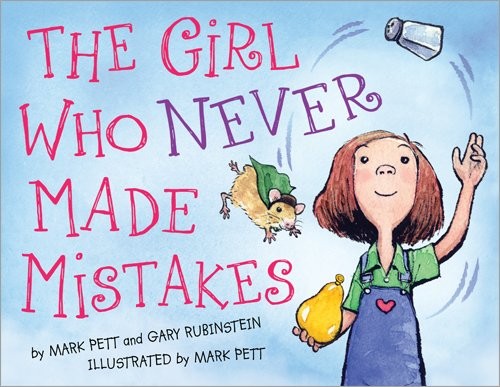
The Girl Who Never Made Mistakes cover

The Girl Who Never Made Mistakes

by Mark Pett
2015 40 pages Ages 4-8

This book tackles the intense anxiety around perfectionism and the fear of failure. Bess, who never makes mistakes, is paralyzed when she finally does. The resolution shows the relief that comes from owning an error and moving on, providing a vital counter-narrative to the pressure to be flawless.

Read if: your child is highly self-critical, fears trying new things, or gets upset by small errors.
15
Lilly's Purple Plastic Purse cover

Lilly's Purple Plastic Purse

by Kevin Henkes
1996 40 pages Ages 4-8

Henkes masterfully captures the acute sting of public embarrassment and how quickly a moment of pride can turn into humiliation. Lilly’s journey through her massive feeling, and her eventual, quiet reconciliation with her teacher, offers a beautiful model for recovering from mortification and realizing that tomorrow is a fresh start.

Read if: your child has experienced a moment of deep embarrassment or shame in front of peers.
16
The Feelings Book cover

The Feelings Book

by Todd Parr
2000 32 pages Ages 2-5

Parr’s simple, non-judgmental text and vibrant art normalize *every* feeling. By presenting 'silly,' 'cranky,' 'sad,' and 'proud' with equal weight, it instantly communicates that all emotions are okay to have. This foundational acceptance is why it remains on millions of shelves, building essential early emotional vocabulary.

Read if: you are introducing foundational emotional literacy to a very young child (or toddler).
17

Don't Feed the Worry Stone

by Tracey Corderoy
2013 32 pages Ages 3-7

This book offers a brilliant, concrete coping mechanism for anxiety: externalizing the worry onto a physical object (the stone) that you can then safely contain and manage. It empowers children by giving them a physical task to perform when anxiety strikes, making it a practical, re-readable strategy guide.

Read if: your child experiences low-level, persistent anxiety or worry that needs a tangible management technique.
18

My Mouth Is a Volcano!

by Julia Cook
2012 32 pages Ages 5-8

Julia Cook excels at creating memorable, slightly exaggerated metaphors for behavioral challenges. The 'volcano' instantly visualizes the feeling of needing to interrupt or speak before one is ready, connecting the internal urge to the external action. It’s a highly popular and necessary tool for social-emotional learning in early elementary years.

Read if: your child is an enthusiastic interrupter or struggles with impulse control in conversation.
19

Today I Feel Silly & Other Moods That Make My Day

by Jamie Lee Curtis
1998 48 pages Ages 2-6

It captures the fleeting, often nonsensical nature of childhood moods better than many more 'serious' books. The light, playful tone, combined with the expressive illustrations, assures children that their day-to-day emotional shifts are perfectly normal—they are not fixed personalities, but temporary 'feelings.' It's supremely re-readable.

Read if: your child experiences rapid, unexplained shifts in mood that need normalizing.
20
A Sick Day for Amos McGee cover

A Sick Day for Amos McGee

by Philip C. Stead
2010 32 pages Ages 3-7

This Caldecott winner is a masterpiece of quiet empathy. When Amos is sick, his friends visit him and do *exactly* what he needs without him asking, modeling selfless care for both the sick person and the worried friend. It’s about anticipating needs, which is a deep form of emotional intelligence.

Read if: you want to teach deep, active empathy, particularly around illness or needing care.

Honorable Mentions

The Pout-Pout Fish
The Pout-Pout Fish 2008
by Deborah Diesen

A musical classic for naming and shifting persistent gloom through simple, catchy rhyme.

The Day Leo Said I Hate You! 2011
by Robie H. Harris

A relatable story demonstrating how parents and children can navigate boundary testing and anger through a 'time-out' and reconnection.

Grumpy Monkey
Grumpy Monkey 2017
by Suzanne Lang

Massive cultural impact in recent years, this book refuses to let the protagonist 'fix' his grumpiness, validating the feeling perfectly.

The Girl Who Never Made Mistakes
The Girl Who Never Made Mistakes 2015
by Mark Pett

The definitive contemporary tale for conquering perfectionism and the fear of public failure.

The Giving Tree
The Giving Tree 1964
by Shel Silverstein

A complex, time-tested classic that explores sacrificial love, need, and emotional depletion—a deeper read for older readers.

Sometimes I'm a Bombaloo 2001
by Rachel Vail

A funny, honest look at tantrums and the explosive release of overwhelming feelings, often remembered fondly by parents.

The Scariest Thing of All
The Scariest Thing of All 2011
by Debi Gliori

A charming, brave story about a rabbit confronting his long list of fears to find his own inner fierceness.

Ferdinand the Bull
Ferdinand the Bull 1936
by Munro Leaf

A gentle, iconic story demonstrating the quiet strength in choosing peace over fighting.

Frequently Asked Questions

Why are there so few books on sadness or grief on this list?

Our mandate is QUALITY OVER QUANTITY. While many excellent books address sadness, the chosen few—like The Rabbit Listened and The Invisible String—do so with such unique, timeless narrative structure or metaphorical power that they become the essential tools. They teach a deeper lesson beyond just naming the emotion, focusing instead on empathy, connection, or coping with loss.

Why are there so many picture books when my child is older (8+)?

True classics transcend age. A book that perfectly visualizes an internal state—like When Sophie Gets Angry or Where the Wild Things Are—remains powerfully relevant long after a child can read independently. They become shared reference points. For older kids, we recommend moving to classic chapter books that focus on complex social/emotional narratives.

What about books that explicitly teach emotional vocabulary?

While vital, books that function only as vocabulary lists often lack the 'Brilliant Storytelling' and 'Re-Read Magnetism' we demand. Books like The Way I Feel or The Feelings Book make the cut because they successfully weave that vocabulary into a simple, engaging, and highly re-readable narrative structure, making the learning secondary to the story.

I see some books here are relatively new (post-2010). How do they meet the 'Time-Tested' criteria?

For contemporary books, we apply the 'Classic-in-the-Making' test. These selections—like The Rabbit Listened and The Color Monster—have demonstrated massive, almost instant cultural saturation, universal critical praise, and have been immediately adopted by educators and therapists as necessary tools. They show every sign of being the next generation of bookshelf staples.

Audience Debug
Link copied!