Genre Last updated: January 26, 2026

The Canon of Courage: Best History Books for Kids

History That Lives, Breathes, and Never Leaves

We reject the bland textbooks. Kidopoly presents history as it should be: epic, personal, and utterly gripping. This fiercely curated list of 30 titles bypasses the merely popular. These are the undeniable, time-tested classics and modern marvels that your family will pass down, the stories so brilliantly told that the dates and names become secondary to the human drama unfolding. This is history that sticks.

The List

1
Make Way for Ducklings cover

Make Way for Ducklings

by Robert McCloskey
1941 72 pages Ages 3-7

This book is the gold standard for illustrating local history and civic kindness. Mrs. Mallard’s determined quest to safely guide her brood across the treacherous streets of Boston to the Public Garden is an enduring metaphor for parental perseverance. Its charcoal illustrations are masterpieces of pacing and character, making a mundane moment in 1940s Boston feel like the most important event in the world. A true intergenerational touchstone.

Read if: your child needs a masterclass in visual storytelling and civic engagement
2
Johnny Tremain cover

Johnny Tremain

by Esther Forbes
1943 320 pages Ages 10+

Winner of the 1944 Newbery Medal, this novel plunges the reader directly into the fiery tensions of pre-Revolutionary Boston. Johnny’s journey from prideful craftsman to committed revolutionary is one of the most emotionally resonant character arcs in children's literature. It makes the political debates of the Sons of Liberty tangible and deeply personal. Adults remember the grit; kids feel the stakes.

Read if: your older reader is ready for complex character growth amidst grand historical movements
3

Number the Stars

by Lois Lowry
1989 137 pages Ages 8-12

This 1990 Newbery Medal winner is a masterclass in showing the immense weight of WWII through the eyes of children. It doesn't sensationalize the horror but focuses on the quiet, profound courage required to help a friend. Its brevity and suspense ensure it is read and re-read, offering different levels of understanding at each pass. It is the essential introduction to the Holocaust's human resistance.

Read if: your child needs a sensitive, suspenseful entry point into WWII and the power of quiet bravery
4

Bomb: The Race to Build—and Steal—the World's Most Dangerous Weapon

by Steve Sheinkin
2012 272 pages Ages 10-14

A Newbery Honor book that reads like a geopolitical spy thriller. Sheinkin takes the incredibly dense history of the Manhattan Project and the espionage surrounding it, weaving multiple international storylines into a narrative so taut you forget it’s nonfiction. It’s the ultimate proof that real history is more incredible than fiction, demanding re-reads to catch every detail of the intellectual race.

Read if: your reader loves spy stories, cutting-edge science, and high-stakes geopolitical tension
5
Roll of Thunder, Hear My Cry cover

Roll of Thunder, Hear My Cry

by Mildred D. Taylor
1976 276 pages Ages 10-14

The 1977 Newbery Medal winner remains an essential, unvarnished look at the injustices of the Jim Crow South through the eyes of the unforgettable Cassie Logan. It’s not just about the racism they face; it’s about the fierce, dignified love and pride the Logan family instills in their children. The story is rooted in family strength, ensuring it resonates across generations as a testament to resilience.

Read if: your child is ready for complex themes of injustice, pride, and unbreakable family bonds
6
The Witch of Blackbird Pond cover

The Witch of Blackbird Pond

by Elizabeth George Speare
1958 256 pages Ages 10-14

A Newbery Medal winner that vividly transports readers to 17th-century Puritan New England, exploring themes of religious intolerance, independent thought, and personal freedom. Kit Tyler’s arrival from the Caribbean shakes the rigid community to its core. The narrative tension between societal expectation and personal truth is timeless, making it a book parents recall with fondness and kids devour for the drama.

Read if: your reader enjoys strong female protagonists challenging societal norms in a historical setting
7
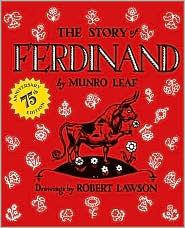
The Story of Ferdinand cover

The Story of Ferdinand

by Munro Leaf
1936 72 pages Ages 3-7

It has stood the test of time because it champions radical peace over programmed aggression. Ferdinand's simple choice to sit and smell flowers rather than fight in the ring is a powerful, quiet statement on nonconformity. It is a book adults cherish for its gentle philosophy, and it’s immediately relatable to any child who has ever felt 'too different' from the rough-and-tumble crowd.

Read if: your child needs a gentle, profound lesson on the power of pacifism and being true to self
8
The Sign of the Beaver cover

The Sign of the Beaver

by Elizabeth George Speare
1958 175 pages Ages 9-13

Another Speare gem (a Newbery Medal winner) that perfectly balances historical survival with cross-cultural understanding. Matt's desperate attempt to survive alone in the 18th-century wilderness, and the subsequent unlikely partnership he forms, teaches competence and respect for indigenous knowledge better than any textbook. It's a raw, gripping story of human ingenuity.

Read if: your child is fascinated by survival stories and the beginning of American frontier life
9
The Little House cover

The Little House

by Virginia Lee Burton
1942 32 pages Ages 4-8

This Caldecott winner is a subtle, moving allegory for uncontrolled historical change and the loss of rural life. The house witnesses the relentless march of urbanization over a century. It’s a gentle, melancholic narrative that beautifully captures the *feeling* of history passing by, which makes it a book adults love to share and kids sense deeply, even if they don't grasp the full theme immediately.

Read if: your family appreciates visual poetry and subtle commentary on progress and preservation
10
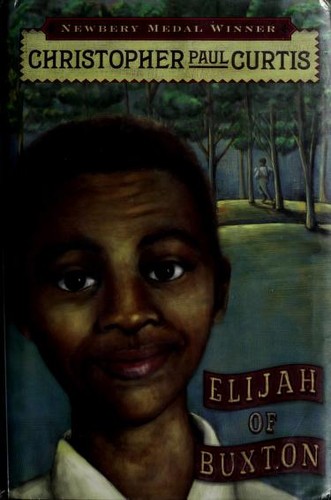
Elijah of Buxton cover

Elijah of Buxton

by Christopher Paul Curtis
2007 341 pages Ages 9-12

A Newbery Honor and Coretta Scott King Award winner that uses Curtis's signature, hilarious voice to tell a serious story about the community of Buxton, Canada, a haven for escaped slaves. Elijah's journey from feeling 'fragile' to finding courage is deeply relatable. It’s funny, historically specific, and provides a crucial, positive perspective on African American history rarely found in this age group.

Read if: your child loves humor mixed with serious history about the Underground Railroad era
11
The Bronze Bow cover

The Bronze Bow

by Elizabeth George Speare
1958 319 pages Ages 12+

This 1962 Newbery Medal winner tackles massive themes—faith, tyranny, and revolution—in Roman-occupied Judea. The narrative power lies in the protagonist’s transformation from a hardened revolutionary seeking revenge to someone embracing a philosophy of love and peace. It has the sweeping epic feel of history but hinges on an intensely personal moral awakening, ensuring its enduring power.

Read if: your reader appreciates sweeping historical epics with deep philosophical underpinnings
12
Fever 1793 cover

Fever 1793

by Laurie Halse Anderson
2000 272 pages Ages 10-14

Anderson plunges the reader into the terror of the Philadelphia Yellow Fever epidemic with unparalleled narrative drive. Mattie’s coming-of-age story, forced by the crisis, grounds the historical details in immediate, human fear and bravery. It makes a distant epidemic feel terrifyingly present and is often the book that hooks reluctant history readers into the genre.

Read if: your reader wants a fast-paced, personal story about surviving a major historical disaster
13

The Notorious Benedict Arnold: First American Traitor and Genius

by Steve Sheinkin
2010 384 pages Ages 10+

Sheinkin transforms a complex, morally gray figure into a riveting, page-turning biography. It excels at showing that history is made by deeply flawed, complicated people, not just heroes and villains. The research is impeccable, yet the execution is pure thriller, demanding multiple readings to fully grasp the nuances of his rise and catastrophic fall.

Read if: your reader enjoys character studies and narratives where the line between hero and villain is razor-thin
14
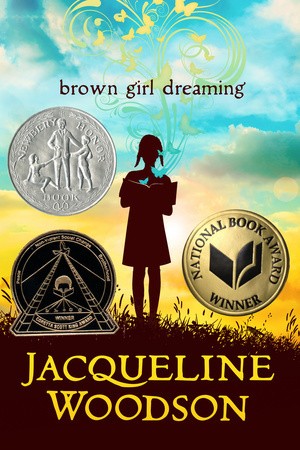
Brown Girl Dreaming cover

Brown Girl Dreaming

by Jacqueline Woodson
2014 320 pages Ages 9-13

A National Book Award winner told in luminous verse, this memoir captures the atmosphere of growing up Black in the 1960s and 70s between the South and New York. Woodson’s ability to make her personal journey feel universal—especially her path to discovering the magic of reading and writing—ensures it becomes a book kids return to when they seek comfort or inspiration.

Read if: your reader appreciates poetry and beautiful, atmospheric memoir about family and identity
15
Caddie Woodlawn cover

Caddie Woodlawn

by Carol Ryrie Brink
1935 276 pages Ages 9-12

The 1936 Newbery Medal winner is a quintessential American classic about girlhood on the frontier. Caddie’s tomboy spirit, her struggle to conform to Victorian expectations, and her deep love for her unconventional doctor father make this story timelessly engaging. It’s a book parents often re-read because the sheer, untamed spirit of Caddie is infectious.

Read if: your child has a fiercely independent spirit and loves stories set on the American frontier
16
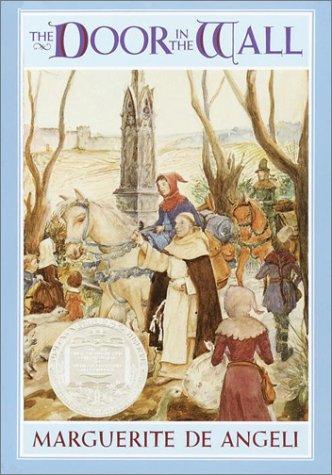
The Door in the Wall cover

The Door in the Wall

by Elizabeth George Speare
1949 160 pages Ages 9-12

Speare’s debut Newbery winner is a quiet masterpiece of historical setting and personal overcoming. Set during the time of the Black Death in 1348 London, it focuses on a boy paralyzed by illness finding strength and purpose through faith and compassion. Its deep emotional core ensures it lingers long after the final page, compelling re-visits.

Read if: your reader appreciates intimate stories of inner strength overcoming physical limitations
17
Ox-Cart Man cover

Ox-Cart Man

by Barbara Cooney
1983 32 pages Ages 4-8

This Caldecott winner captures the entire economic cycle of a 19th-century New England family—from the wool, pumpkins, and geese sold at market to the resulting purchases brought home. It’s a concise, cyclical lesson in history, commerce, and interdependence. Cooney’s illustrations are legendary, making the domestic scenes feel mythic and essential.

Read if: your child loves patterned language and understanding how past economies functioned
18
The Boy Who Harnessed the Wind (Young Readers Edition) cover

The Boy Who Harnessed the Wind (Young Readers Edition)

by William Kamkwamba and Bryan Mealer
2010 208 pages Ages 9-13

This true story is a modern classic demonstrating that ingenuity and history aren't confined to the Western world. William’s self-taught engineering triumph over famine and lack of resources is electrifying. It’s a powerful testament to innovation and the human spirit, making readers feel capable of changing their own local histories.

Read if: your reader is inspired by STEM, perseverance, and global stories of triumph
19
The Port Chicago 50: Disaster, Mutiny, and the Fight for Civil Rights cover

The Port Chicago 50: Disaster, Mutiny, and the Fight for Civil Rights

by Steve Sheinkin
2014 208 pages Ages 11+

Sheinkin delivers a crucial, lesser-known piece of WWII history: the story of fifty Black sailors court-martialed for mutiny after refusing to load unsafe ammunition. It's a brilliant narrative on Jim Crow in the military and the nascent Civil Rights movement, told with the high tension of a courtroom drama. This is vital, necessary history presented as an unputdownable story.

Read if: your reader needs to understand the complex fight for justice *within* a major historical event
20

Team Moon: How 400,000 People Worked Together to Put Two Men on the Moon

by Catherine Thimmesh
2019 176 pages Ages 8-12

This book proves history isn't just about kings and wars; it's about collective human achievement. It masterfully details the massive, collaborative effort behind the moon landing, showing the unsung heroes. Its narrative structure makes the massive undertaking feel like a thrilling, shared mission—a book kids will excitedly recount to anyone who will listen.

Read if: your reader is captivated by space, engineering, and stories of massive group accomplishments
21
Paddle-to-the-Sea cover

Paddle-to-the-Sea

by Holling C. Holling
1941 64 pages Ages 6-10

A perennial favorite celebrated for its detailed watercolors and geographical sweep. The story follows a carved canoe’s journey from Lake Superior to the Atlantic Ocean, subtly teaching North American geography, ecology, and early human interaction with the waterways. It’s a journey book that teaches place and process, making it a steady bedtime favorite.

Read if: your child loves detailed illustrations and learning geography through adventure
22
Sarah, Plain and Tall cover

Sarah, Plain and Tall

by Patricia MacLachlan
1985 64 pages Ages 8-12

The quintessential story of American settlement history, stripped down to its essential emotional core. This slim Newbery winner is deceptively simple; its power lies in the spare prose and the intense longing for connection on the harsh prairie. It’s a book whose quiet emotional resonance makes adults want to protect it and children feel the deep need for belonging.

Read if: your child appreciates quiet, deeply moving prose and stories about family formation
23

Hidden Figures: The True Story of Four Black Women and the Space Race (Picture Book Edition)

by Margot Lee Shetterly
2016 40 pages Ages 5-9

Though a modern book, its massive cultural impact guarantees its classic status. It reveals the hidden history of the Black women mathematicians who were essential to NASA’s success. It’s history presented as an undeniable victory over prejudice, full of brilliant people doing necessary work—a story kids will demand to hear again and again.

Read if: your child loves stories about math, space, and overlooked historical heroes
24
The Matchlock Gun cover

The Matchlock Gun

by Walter D. Edmonds
1938 73 pages Ages 8-11

This Newbery winner is a compact burst of Revolutionary War drama. It focuses on a young boy finding unexpected courage and resourcefulness when his father is away fighting, using a family heirloom weapon to defend his home. Its swift pacing and high-stakes action make it an incredibly re-readable classic about early American self-reliance.

Read if: your reader enjoys short, intense action stories set during the American Revolution
25

The Underground Railroad for Boys

by Eric Devine
2010 288 pages Ages 10-14

This novel personalizes the terrifying journey of the Underground Railroad through a fictional boy’s perspective, making the mechanics and immense danger instantly understandable. It’s historically rich without being academic, focusing on the network of bravery. It’s a narrative of constant peril and life-affirming trust that demands to be revisited for its emotional suspense.

Read if: your reader is ready for an immersive, suspense-driven look at the mechanics of the Underground Railroad
26
They Were Neighbors cover

They Were Neighbors

by Laura Hills
1973 32 pages Ages 5-9

This book quietly explores the tensions between different social viewpoints in early America—the conformity versus the individuality—through the contrasting lives of two neighboring families. It’s a gentle, almost folksy way to introduce the concept of diverse ideologies coexisting (or clashing) in a single historical community. It’s a gentle story adults remember for its subtle social commentary.

Read if: your child is beginning to understand social differences and community dynamics
27
The First Cat in Space Ate Pizza cover

The First Cat in Space Ate Pizza

by Macan Barret and Shawn Harris
2022 224 pages Ages 7-11

While not strictly history, this graphic novel has the *feel* of a classic space-race narrative filtered through absurdist humor. It’s becoming a massive, beloved cultural touchstone that captures the optimistic, slightly chaotic spirit of early, ambitious exploration—a perfect bridge for kids who think history is too serious. Its re-readability is off the charts.

Read if: your reader primarily loves graphic novels and needs a dose of historical *spirit* over fact
28

Eager: The Surprising, Secret Life of Beavers and Why They Matter

by Ben Goldfarb
2018 416 pages Ages 12+

This is environmental history through the lens of one keystone species. Goldfarb connects the historical near-extinction of beavers to current ecological crises, showing how nature's own historical engineers can help us now. It’s a profound, deeply researched book that shifts perspective on the past and future of the American landscape.

Read if: your reader is passionate about nature, ecology, and the hidden impact of historical conservation efforts
29

Drowned Out: The Story of Evacuee Number 492

by Meg McLagan and Herta Brandt
2011 32 pages Ages 6-10

Based on a true story, this captures the personal dislocation of the British WWII evacuation experience. It’s history told on the smallest, most vulnerable scale—that of a single child removed from everything familiar. Its emotional honesty and focus on adaptability make it a story that demands to be remembered and discussed.

Read if: your child is exploring WWII from the British/civilian perspective
30

Edison's Electric Light: The Art of Invention

by Robert Friedel and Paul Israel
1986 272 pages Ages 10+

This is the definitive, deeply researched look at the *process* of invention, using Edison’s own notes. It’s not just that he succeeded; it’s that he *failed* thousands of times publicly. It reframes historical success as relentless iteration, a necessary lesson for any curious mind, making the story of technological history profoundly human and repeatable.

Read if: your reader loves science history, biographies of inventors, and the narrative of persistence

Honorable Mentions

The Story About Ping 1933
by Marjorie Flack

A charming, simple tale of a lost duck in old China, teaching about family structure and the vastness of the world.

Unbroken (The Young Adult Adaptation) 2014
by Laura Hillenbrand

The incredible true story of Louis Zamperini's WWII survival, perfectly streamlined for teens who crave high-stakes, non-fiction adventure.

The Boy Who Harnessed the Wind (Original) 2009
by William Kamkwamba and Bryan Mealer

The full, raw memoir of ingenuity; powerful for adults and older, driven readers.

The Bronze Bow
The Bronze Bow 1958
by Elizabeth George Speare

A powerful story of resistance and the philosophical choice between vengeance and peace in Roman Judea.

The Sign of the Beaver
The Sign of the Beaver 1958
by Elizabeth George Speare

An indispensable dual lesson in frontier survival and mutual respect between settlers and Native Americans.

Ecology of a Cracker Childhood
Ecology of a Cracker Childhood 1999
by Janisse Ray

A deeply personal memoir interwoven with natural history, showcasing the beauty and decline of the American South.

Claudette Colvin: Twice Toward Justice
Claudette Colvin: Twice Toward Justice 2009
by Phillip Hoose

The crucial, true story of the young activist whose refusal to yield her seat predated Rosa Parks.

The Watsons Go to Birmingham - 1963
The Watsons Go to Birmingham - 1963 1995
by Christopher Paul Curtis

Hilarious and heartbreaking road-trip story that embeds a family in the tragedy of the 1963 church bombing.

Frequently Asked Questions

Why are there so few picture books on this list?

History books that meet our 'classic' standard often require narrative depth that suits chapter-book length. Picture books that are truly timeless and historical (not just about history) are rare. We prioritize The Story of Ferdinand and Make Way for Ducklings because they use a specific moment/setting to deliver a massive, universal theme that endures.

How can my young child handle dark topics like WWII or Jim Crow?

We are not afraid of the past, and neither should you be. Books like Number the Stars and Roll of Thunder, Hear My Cry are on this list precisely because they handle these dark times with immense integrity, focusing on the bravery, love, and resilience of the protagonists rather than gratuitous violence. They build empathy and context, not fear.

What defines 'narrative nonfiction' here?

Narrative nonfiction, like Sheinkin's Bomb, is history told with the structure and tension of a novel. It relies on strong characterization, dialogue, and a compelling plot arc. We reject dry fact presentation; these books show the history unfolding, making the complex research accessible and highly re-readable.

What is the ideal reading approach for these books?

For chapter books, we recommend reading aloud for the younger end (8-10) to ensure full comprehension of historical context and vocabulary. For older readers (10+), use these as catalysts for discussion. The magic of these books is their staying power, so a re-read a year later will always reveal new layers of historical understanding.

Audience Debug
Link copied!