Genre Last updated: January 26, 2026

Best Mystery Books for Kids

Only the Undeniable Classics for Young Sleuths.

At Kidopoly, we reject the noise. This is not an exhaustive list; this is THE list. These 25 mystery books are the bedrock of an intelligent childhood library. They are the stories that respected your mind, stood the test of time, and demanded to be reread. If it's not on this list, it simply didn't make the cut. Prepare your young detective for genuine, classic intrigue.

The List

1
The Westing Game cover

The Westing Game

by Ellen Raskin
1978 188 pages Ages 10-14

The gold standard. Sixteen heirs-apparent must solve a complex puzzle based on cryptic clues left in the will of an eccentric millionaire. It’s a masterclass in misdirection, wordplay, and red herrings, rewarding readers who pay meticulous attention to every detail. It respects their intelligence completely and is a staple that both parents and kids adore for its sheer cleverness.

Read if: your child is ready for a full-length novel with many characters and complex, layered plotting.
2
From the Mixed-Up Files of Mrs. Basil E. Frankweiler cover

From the Mixed-Up Files of Mrs. Basil E. Frankweiler

by E.L. Konigsburg
1967 162 pages Ages 9-13

It’s the ultimate secret hideout fantasy merged with a genuine art mystery. When siblings run away to live in the Metropolitan Museum of Art, they find themselves investigating the authenticity of a purchased statue. It captures the magic of hidden spaces and the thrill of independent, resourceful living. Adults remember the longing for this kind of freedom; kids immediately embrace the adventure.

Read if: your child dreams of running away to a museum and loves stories about resourceful, independent siblings.
3
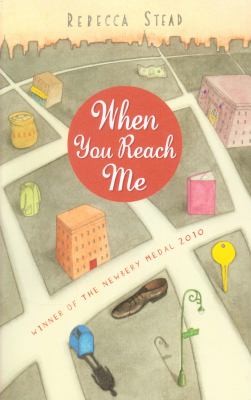
When You Reach Me cover

When You Reach Me

by Rebecca Stead
2009 208 pages Ages 9-12

A Newbery winner that seamlessly weaves time travel, friendship drama, and mystery through cryptic notes. It’s a brilliant, quiet mystery that rewards careful reading of every small detail. The emotional resonance for adults and the mind-bending concept for kids cement its place as a modern, undeniable classic that sparks deep conversation.

Read if: your child enjoys character-driven stories with a layer of sophisticated, subtle science fiction.
4
The Mysterious Benedict Society cover

The Mysterious Benedict Society

by Trenton Lee Stewart
2007 485 pages Ages 9-13

This book is an absolute feast of complex puzzles, secret codes, and genuine teamwork. Four gifted orphans are recruited to go undercover at a secretive institute to stop a mind-controlling plot. The friendship, the intellect displayed by the sleuths, and the sheer length of satisfying challenges make it an instant re-read magnet. It’s the thinking-person's adventure series.

Read if: your child loves intricate puzzles, secret societies, and stories that celebrate intellect.
5
Encyclopedia Brown, Boy Detective cover

Encyclopedia Brown, Boy Detective

by Donald J. Sobol
1963 128 pages Ages 7-10

The original kid-detective powerhouse. Each section presents a self-contained mystery with fair clues, and the solutions are provided—but only at the very end of the book. This format invites immediate rereading to see how the simple clues solved the case. It taught generations how to look for evidence and established the essential fun of the puzzle-mystery format.

Read if: your child needs short, satisfying, solvable mysteries they can complete in one sitting.
6
The Boxcar Children cover

The Boxcar Children

by Gertrude Chandler Warner
1924 157 pages Ages 7-11

The foundational story of orphaned self-reliance and mystery. While ostensibly about survival, the initial premise—four children secretly establishing a home—is a profound mystery to the townspeople, demanding their own clever investigation to stay hidden and safe. It’s the book parents hand down, full of wholesome grit and the mystery of 'what happens next?'

Read if: your child loves stories about siblings sticking together against the odds.
7
Chasing Vermeer cover

Chasing Vermeer

by Blue Balliett
2004 272 pages Ages 9-13

This book’s mystery is deeply integrated with art, patterns, and ciphers, making it feel immediately intellectual. The plot revolves around recovering a stolen Vermeer using clues hidden in advertisements and geometry. It's a more modern classic that captures the spirit of intellectual detection and respect for art history, making kids feel like art world insiders.

Read if: your child is interested in art, puzzles, codes, and contemporary settings.
8
Harriet the Spy cover

Harriet the Spy

by Louise Fitzhugh
1964 295 pages Ages 10-14

Harriet is the patron saint of nosy, smart children. Her job is to observe and record the world in her notebook, which leads her to uncover the secrets and hypocrisies of her neighbors. The mystery is observational and social—watching people and understanding motives. Adults champion it for its sharp social commentary and challenging main character; kids love her bold snooping.

Read if: your child is fiercely independent, opinionated, and loves the idea of keeping secrets.
9

The Hardy Boys: The Tower Treasure

by Franklin W. Dixon (Leslie McFarlane)
1927 208 pages Ages 9-12

The archetype of the American teen detective duo. Frank and Joe Hardy embody wholesome grit, using their brains and budding manhood to solve cases their father can't. This first entry sets the standard for action-packed, clue-driven adventure where clear good guys take down obvious villains. It’s a foundational series that still holds up for its brisk pacing.

Read if: your child enjoys teamwork between two energetic, brave male protagonists.
10

Nancy Drew: The Secret of the Old Clock

by Carolyn Keene (Mildred Wirt Benson)
1930 208 pages Ages 9-12

The female counterpart to the Hardy Boys, establishing the independent girl sleuth. Nancy is entirely self-sufficient, driving her own roadster and navigating high society and shadowy figures to secure a lost inheritance. It's the definitive blueprint for the capable girl detective, making it mandatory reading for its cultural weight and simple, effective plotting.

Read if: your child loves a smart, independent female lead who drives the action.
11
Holes cover

Holes

by Louis Sachar
1998 288 pages Ages 10-14

A true masterpiece that braids three timelines—a modern injustice, a century-old curse, and a legendary outlaw—into one perfectly satisfying resolution. The mystery isn't who did what, but *why* Stanley is digging, leading to an unforgettable reveal. It's a Newbery winner whose complex structure demands and rewards close attention.

Read if: your child is ready for thematic depth alongside their mystery, exploring concepts of fate and friendship.
12
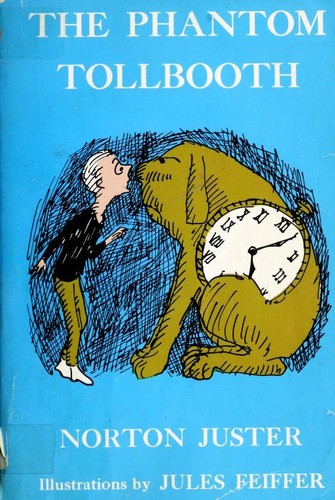
The Phantom Tollbooth cover

The Phantom Tollbooth

by Norton Juster
1961 250 pages Ages 8-12

This book is an elaborate, extended metaphor disguised as an adventure where the protagonist, Milo, must solve the riddle of the divided kingdom of Dictionopolis and Dunsland. It’s a mystery about the value of words, knowledge, and curiosity itself. Adults fondly remember its linguistic wit; kids immediately delight in its surreal landscape and wordplay.

Read if: your child needs a book that makes abstract concepts like 'ignorance' and 'logic' tangible and fun.
13
The London Eye Mystery cover

The London Eye Mystery

by Siobhan Dowd
2007 224 pages Ages 9-12

A perfectly paced, contained modern mystery set in a recognizable location. When their cousin vanishes from a sealed London Eye pod, siblings Ted and Kat must use acute observation and logic to solve the disappearance. It’s praised for its realistic, clever child protagonists and its satisfying, clue-based resolution, making it a great introduction to 'locked-room' puzzles.

Read if: your child enjoys stories grounded in a real-world setting with a tight, compelling timeline.
14
Greenglass House cover

Greenglass House

by Kate Milford
2014 384 pages Ages 10-14

This modern book is an instant classic, evoking the atmosphere of golden age mysteries with its isolated setting and cast of secretive guests. When a series of thefts plague the inn, the young protagonist must unravel the overlapping stories of the strangers. It’s rich in atmosphere, complex character motives, and has a deeply satisfying, intertwined plot that feels timeless.

Read if: your child loves atmospheric, character-rich stories with elements of folklore and deep history.
15

The Secret of the Old Clock (Classic Nancy Drew, original text)

by Carolyn Keene
1930 208 pages Ages 9-12

We select the original text because the authentic voice of early Nancy is essential to understanding the series’ DNA. It’s the perfect entry point: a missing will, feuding relatives, and Nancy’s unwavering belief in uncovering the truth, all wrapped in short, snappy chapters that force the reader to keep turning pages to see the next clue.

Read if: you want your child to read the authentic, original voice of the classic girl detective.
16

The Name of This Book Is a Secret

by Pseudonymous Bosch
2007 304 pages Ages 9-12

This book has the secret-society vibe of *The Mysterious Benedict Society* but with a narrator who is deeply unreliable and wonderfully witty. It’s a meta-mystery that playfully breaks the fourth wall while sending its young heroes on a quest for a secret society. It’s one of the few contemporary books that captures that truly classic, almost conspiratorial tone.

Read if: your child enjoys a strong, slightly unreliable narrator with a wry sense of humor.
17

A Series of Unfortunate Events: The Bad Beginning

by Lemony Snicket (Daniel Handler)
1999 162 pages Ages 9-13

While gothic, the entire premise is a mystery: Who are the Baudelaires really? What is V.F.D.? Why is Count Olaf so relentlessly evil? Snicket masterfully constructs a world where clues are hidden in vocabulary and literary allusion. It’s a dark, funny, and ultimately rewarding journey that forces the reader to constantly question everything they are told.

Read if: your child appreciates dark humor, literary vocabulary, and Gothic atmosphere.
18

The Great Adventures of Sherlock Holmes (Selected Stories)

by Arthur Conan Doyle
1892 Varies (select edition) pages Ages 10+

The foundation of all modern mystery. We select the classic short stories because they are perfectly self-contained logic puzzles. Holmes models pure, objective deduction—the highest form of solving a crime. Any child who masters these cases learns the fundamental rules of fair-clue mysteries that all other books follow.

Read if: your child is ready to transition to adult-level reasoning and values pure, logical deduction above all else.
19
The View from the Cheap Seats cover

The View from the Cheap Seats

by K.L. Armstrong & M.A. Marr
2022 336 pages Ages 9-13

A strong contemporary entry showing signs of future classic status by delivering a meta-mystery about performance, jealousy, and a missing object backstage. It has smart kid protagonists working together within a vibrant community setting (a theatre troupe). It respects the reader by making the solution about character flaws and small observational details.

Read if: your child loves theatre, performance arts, or mysteries involving secrets hidden in plain sight.
20

The Riddle of the Mummy (The Three Investigators)

by Robert Arthur
1965 180 pages Ages 9-13

The Three Investigators—Jupiter, Pete, and Bob—are the epitome of the 'smart kids solve adult problems' genre. This book, or any of the early titles, throws them into an exciting mix of archaeology, museum drama, and genuine peril. They solve crimes through specialized knowledge (Bob's research, Jupiter's deduction), making the process feel truly scientific and earned.

Read if: your child loves specialized knowledge contributing to the solution and a tight-knit boy detective trio.
21

The Penderwicks: A Summer Tale of Four Sisters, Two Rabbits, and a Very Interesting Boy

by Jeanne Birdsall
2007 279 pages Ages 8-12

This isn't a whodunit, but a 'what-is-it' mystery steeped in the spirit of classics like *Little Women*. The mystery is the unfolding summer—the secrets of the estate, the peculiar boy, and the general atmosphere of gentle, elegant suspense. It’s a book adults revisit for the charm and the slow-burn, wholesome intrigue that permeates every interaction.

Read if: your child loves character-driven ensemble stories with a gentle, old-fashioned mystery woven in.
22
Tornado Brain cover

Tornado Brain

by Cat Patrick
2021 320 pages Ages 9-12

A vital modern pick that treats neurodivergence as a strength in detection. When her ex-friend vanishes, the protagonist, who is neurodivergent, believes the scattered, seemingly random objects left behind are clues only she can interpret. It’s a beautiful example of a mystery that respects its sleuth’s unique mind to solve a deeply personal puzzle.

Read if: your child appreciates stories where unique perspectives are the key to solving a mystery.
23

Bunnicula: A Rabbit-Tale of Mystery

by James Howe
1979 128 pages Ages 6-9

The ultimate, low-stakes, high-concept mystery for younger readers. Is the new family rabbit a vampire? The entire book is told from the perspective of the family cat, Chester, who is convinced something sinister is happening to the produce. It’s a brilliant exercise in unreliable narration and a book that kids demand to hear over and over again to track Chester's escalating paranoia.

Read if: your child is a reluctant reader who needs a shorter book with high concept humor.
24
The Secret Garden cover

The Secret Garden

by Frances Hodgson Burnett
1911 375 pages Ages 9-13

The mystery here is atmospheric and internal: the secret of the locked garden, the mystery of the hidden cousin, and the mystery of personal healing. Adults cherish its themes of renewal and nature's restorative power. It is a slow-burn mystery where the solution is emotional transformation, a depth rarely found in pure puzzle books.

Read if: your child appreciates rich, descriptive language and a mystery centered on atmosphere and recovery.
25

The Doll's House (The Carpet-Bag Children)

by Rumer Godden
1940 144 pages Ages 8-12

This book contains a devastating, tiny mystery: the secret life and tragedy within the dollhouse that the real children discover. It’s a poignant exploration of how children impose dramatic, mysterious narratives onto their toys. It’s a book beloved by parents for its exquisite prose and the way it teaches empathy through observation of a miniature drama.

Read if: your child loves intricate details and stories where small, quiet events carry profound emotional weight.

Honorable Mentions

Nate the Great
Nate the Great 1972
by Marjorie Weinman Sharmat

The quintessential early reader mystery series; simple, repeatable fun, though less complex than the top tier.

The Three Investigators: The Mystery of the Green Ghost 1965
by Robert Arthur

Another early entry from the team that excels at technical problem-solving and gadgetry.

The Case of the Missing Carrot Cake 2015
by Robin Newman

A charming, slightly more modern picture book mystery perfect for introducing basic logic to the youngest readers.

Murder Most Unladylike
Murder Most Unladylike 2014
by Robin Stevens

A vibrant, Agatha Christie-inspired boarding school mystery series that feels like a modern classic in the making for older tweens.

The Name of This Book Is a Secret 2007
by Pseudonymous Bosch

A meta-mystery with a strong voice that celebrates cleverness and challenges the reader's trust in the narrator.

The Egypt Game 1967
by Zilpha Keim Powers

More about imaginative play, but the secret rituals and hidden society elements give it a distinct, mysterious allure.

The Wright 3
The Wright 3 2006
by Blue Balliett

The direct sequel to *Chasing Vermeer*, maintaining the high standard for art-based puzzles and urban detection.

Tilly and the Map of Stories 2019
by Anna James

A magical contemporary fantasy where mysteries are solved by literally entering books—a clear sign of future classic status.

Frequently Asked Questions

Why are the original Nancy Drew and Hardy Boys books included instead of modern versions?

Kidopoly prioritizes Time-Tested Classics. The original texts capture a specific era of innocent yet thrilling amateur sleuthing that influenced nearly every mystery writer that followed. While modernizations exist, the core language, pace, and foundational characterization are best preserved in the initial versions for literary respect.

What age range is appropriate for these 'Best Mystery Books'?

Our list intentionally spans from age 6 to 14, categorized for different reading levels. For the younger readers (6-9), we include books like Bunnicula which focus on character-driven paranoia and short, solvable puzzles. The bulk of the list targets the 9-14 sweet spot, where kids crave complex plotting and intellectual challenges like The Westing Game.

Are these books too scary or violent for my child?

Our selection rigorously filters out excessive violence. The stakes are high—stolen treasures, family secrets, personal danger—but the 'crimes' respect the appropriate maturity level for our target audience. These mysteries are solved through deduction and cleverness, not gore or overt horror. They offer suspense, not terror.

What defines a book as having 'Re-Read Magnetism' in this list?

A book earns this status because the initial read-through is so dense with clues and detail that the second reading becomes a completely different, satisfying experience. For The Westing Game or Encyclopedia Brown, rereading allows the child to finally see the clues they missed the first time, solidifying the solution and the author's genius.

Audience Debug
Link copied!