Topic Last updated: January 26, 2026

The Essential 25: Future Innovators' STEM Library

Igniting Genius: STEM Books Built to Last.

At Kidopoly, we reject the clutter. This is not a list of 'nice-to-haves.' This is the *essential* core of a bookshelf destined to raise thinkers, builders, and dreamers. These 25 STEM selections are fiercely curated—they possess cross-generational appeal, unforgettable narrative magic, and the power to turn a casual curiosity into an lifelong, passionate pursuit of science and engineering.

The List

1

The Way Things Work Now

by David Macaulay
2016 399 pages Ages 9+

This is the definitive, generational bible for understanding mechanics. Macaulay's diagrams—complete with his signature, often frantic woolly mammoths—demystify everything from levers to microprocessors. It perfectly bridges the gap between complex engineering principles and accessibility, making a child feel like they’ve unlocked the secrets of the physical world. It's a book they will reference, not just read once.

Read if: your child asks 'how does that work?' about literally everything they encounter.
2
The Most Magnificent Thing cover

The Most Magnificent Thing

by Ashley Spires
2014 32 pages Ages 3-7

This book is a non-negotiable STEM primer on the *process* of innovation: failure, frustration, and persistence. It is a masterclass in teaching resilience disguised as a charming story. The protagonist’s journey from grand ambition to near-defeat, followed by the quiet realization that leads to success, mirrors the real engineering cycle. It’s universally relatable for any child attempting a hard task.

Read if: your child is currently wrestling with a challenging project or getting easily discouraged.
3
Ada Twist, Scientist cover

Ada Twist, Scientist

by Andrea Beaty & David Roberts
2016 32 pages Ages 4-8

It's the modern touchstone for showing girls that scientific inquiry is innate, not learned. Ada’s relentless experimentation, which causes a bit of necessary chaos, champions curiosity over conformity. The rhyming structure makes it a re-read magnet, and its immediate cultural impact signals its status as a new classic for sparking early interest in hypothesis testing.

Read if: you want your child to see a brilliant, messy scientist who never quits asking 'Why?'
4

Iggy Peck, Architect

by Andrea Beaty & David Roberts
2007 32 pages Ages 4-8

This book captures the pure joy of *design* and *structure*. Iggy’s dedication to engineering magnificent structures—even when defying adult expectations—is infectious. The rhythmic text is perfect for bedtime, and the underlying lesson that true builders must follow their own vision makes this a foundational text for any future engineer.

Read if: your child builds towers that defy gravity and treats the living room as a construction zone.
5
Rosie Revere, Engineer cover

Rosie Revere, Engineer

by Andrea Beaty & David Roberts
2013 32 pages Ages 4-8

This is the blueprint for STEM storytelling: introduce a challenge, show the struggle (the 'smell of failure'), and reward persistent iteration. Rosie’s mantra about failure leading to success is the single most important concept for an aspiring innovator. Its popularity is deserved; it's a required rite of passage for our future builders.

Read if: your child needs to hear that 'failure is the best part of the plan' before they start their next big project.
6
What Do You Do With an Idea? cover

What Do You Do With an Idea?

by Kobi Yamada
2014 32 pages Ages 4-8

This book externalizes the intangible—the idea—making it something to be nurtured, feared, and eventually shared. It speaks to the abstract thinking required in pure science and entrepreneurship. It’s a quiet, profound meditation on nurturing potential, making it a beautiful companion piece to the more mechanical engineering stories.

Read if: your child is quiet, thoughtful, and seems to be constantly holding onto big, internal thoughts.
7
The Boy Who Harnessed the Wind (Young Readers Edition) cover

The Boy Who Harnessed the Wind (Young Readers Edition)

by William Kamkwamba & Bryan Mealer
2012 192 pages Ages 8-12

This is essential STEM biography. It shows real-world engineering driven by necessity in the face of extreme adversity—a true test of ingenuity. William’s story, rooted in physics and scavenged materials, proves that innovation isn't about access to labs, but about applied knowledge and sheer will. It's emotionally resonant and deeply inspiring.

Read if: your child needs to see how STEM concepts solve massive, real-world problems.
8

Hidden Figures (Young Readers' Edition)

by Margot Lee Shetterly
2017 208 pages Ages 8-12

This is history brought to life, proving that the most powerful calculating tools were once human minds. It highlights the critical role of mathematics and computation in the space race while centering indispensable contributions from women of color. It’s a story of human calculus that parents and kids equally adore.

Read if: your child is interested in space, history, or breaking barriers.
9
20,000 Leagues Under the Sea cover

20,000 Leagues Under the Sea

by Jules Verne
1870 370 pages Ages 10+

Verne is the granddaddy of speculative engineering. This book is pure, imaginative technological vision—a fully self-contained, advanced submersible decades before its time. It fuels the reader’s imagination about what *could* be built, showing that even fictional machines must obey a kind of internal logic.

Read if: your child loves adventure, mysterious characters, and reading about impossible, yet detailed, inventions.
10
A Wrinkle in Time cover

A Wrinkle in Time

by Madeleine L'Engle
1962 213 pages Ages 9-13

This classic weaves theoretical physics (the tesseract) seamlessly with profound emotional truths about individuality and love. It demands intellectual engagement while telling a gripping story, proving that the most advanced science is often explored best through fiction. It is a mandatory rite of passage for intellectually curious children.

Read if: your child enjoys fantasy but is ready for concepts that bend the rules of reality.
11
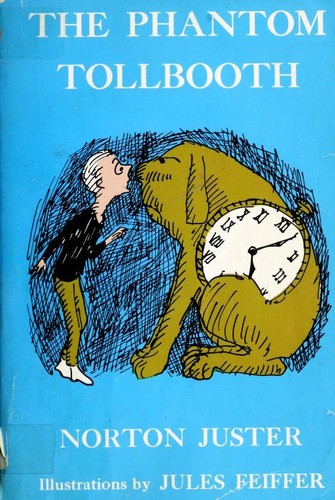
The Phantom Tollbooth cover

The Phantom Tollbooth

by Norton Juster
1961 255 pages Ages 8-12

While not strictly a science book, it’s a brilliant exploration of *logic, semantics, and problem-solving*—the bedrock of all STEM fields. Milo’s journey through the Lands Beyond demands critical thinking about words and concepts, making it a philosophical science text for young readers. It’s brilliantly funny and utterly unforgettable.

Read if: your child is sharp-witted, loves wordplay, and appreciates logical absurdity.
12

The Magic School Bus Lost in the Solar System

by Joanna Cole & Bruce Degen
1990 40 pages Ages 5-9

This series redefined science education for a generation. This volume delivers a tangible tour of the solar system that no simple diagram can match. The chaotic, hands-on learning environment created by Ms. Frizzle is the epitome of fun STEM instruction that kids beg to revisit.

Read if: your child has any interest in space and enjoys wildly imaginative, high-energy adventure.
13
The Magic School Bus Inside the Human Body cover

The Magic School Bus Inside the Human Body

by Joanna Cole & Bruce Degen
1989 40 pages Ages 5-9

It’s the classic introduction to biology that respects a child’s intelligence. Shrinking the bus to travel through the circulatory or digestive systems is brilliant narrative immersion. Adults who read this as kids will immediately recommend it; it’s a core memory for a generation of future doctors and biologists.

Read if: your child has ever wondered what happens to the food they eat or the air they breathe.
14

The Little Prince

by Antoine de Saint-Exupéry
1943 96 pages Ages 8+

Written by an aviator, this book explores the essential, invisible truths often overlooked by 'matters of consequence' (i.e., adult engineering and business). It’s a perfect, gentle philosophical anchor for any aspiring mind, teaching that heart and observation are as vital as calculation. Its re-read value across decades is unmatched.

Read if: your child is ready for a story that feels like a dream and asks the biggest questions.
15
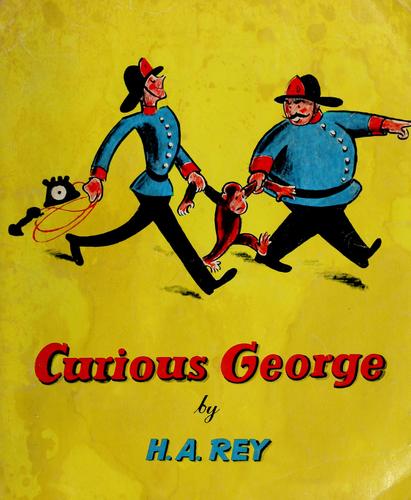
Curious George cover

Curious George

by H. A. Rey
1941 72 pages Ages 2-6

George is the patron saint of exploratory play. His every adventure is a trial-and-error experiment with physics, chemistry, or machinery. He embodies the spirit of 'what happens if I touch this?' which is the very first, most honest step in scientific discovery. Parents remember him fondly, making it a true heirloom book.

Read if: your toddler is an agent of cheerful chaos who learns by touching everything.
16

The Evolution of Calpurnia Scott

by Jacqueline Kelly
2009 352 pages Ages 9-14

This book beautifully marries the rigorous, observational nature of early 20th-century biology and natural science with a deeply moving story of family and mentorship. It shows how science happens in the field, not just the lab, and is richly layered with historical context that adults appreciate, while Calpurnia is instantly relatable.

Read if: your child loves nature, old diaries, and stories about forging your own path.
17
The Wild Robot cover

The Wild Robot

by Peter Brown
2016 288 pages Ages 7-11

This is a masterpiece of character-driven hard science fiction for middle grade. It profoundly explores artificial intelligence, adaptation, camouflage, and robotics through the lens of a deeply caring narrative. Roz's learning curve is a manual for real-time system iteration, making it essential reading that is emotionally powerful.

Read if: your child is fascinated by robots, AI, and stories about finding where you belong.
18

Bomb: The Race to Build—and Steal—the World's Most Dangerous Weapon

by Steve Sheinkin
2012 352 pages Ages 11+

Sheinkin writes narrative nonfiction that reads like a thriller, making the high-stakes physics, chemistry, and espionage of the Manhattan Project utterly compelling. It doesn't shy away from the moral complexity, forcing older readers to engage with the ethics of scientific discovery. A modern nonfiction classic.

Read if: your child devours history and is ready for complex, high-stakes real-world science.
19

Women in Science: 50 Fearless Pioneers Who Changed the World

by Rachel Ignotofsky
2016 128 pages Ages 8-12

This book demolishes the stereotype of the lone, male scientist. It showcases diverse figures across various STEM fields with accessible text and charming illustrations. It’s the current standard for inspiring young girls and boys by demonstrating the breadth of scientific contribution through history.

Read if: you want to deliberately introduce your child to the vast, diverse history of scientific achievement.
20

What Is the World Made Of? All About Solids, Liquids, and Gases

by Kathleen Weidner Zoehfeld
1998 32 pages Ages 4-7

This is the perfect, timeless introduction to the states of matter—a fundamental concept in chemistry and physics. Its simplicity and visual clarity make it a concept that sticks, providing the foundational vocabulary for all future science exploration. It’s the 'first step' in chemical understanding that parents consistently rely on.

Read if: your preschooler is starting to ask why ice melts or why steam rises.
21

The Great Kapok Tree: A Tale of the Amazon Rain Forest

by Lynne Cherry
1990 32 pages Ages 4-8

This book champions ecology and biodiversity—applied biology at its finest. It’s a stunning argument for conservation, showing the interdependence of an entire ecosystem. The lush illustrations compel repeated viewing, and the environmental message is timeless and crucial for future planetary scientists.

Read if: your child has a deep connection to animals and an emerging sense of justice for the natural world.
22
My Side of the Mountain cover

My Side of the Mountain

by Jean Craighead George
1959 180 pages Ages 10-14

This is primitive engineering and survival biology combined into one enduring classic. Sam must understand local flora, fauna, weather patterns, and basic construction to survive. It’s a romantic yet realistic look at self-sufficiency that deeply appeals to the innate desire to build and master one's environment.

Read if: your child dreams of living off the grid or building their own secret hideout.
23
A Drop Around the World cover

A Drop Around the World

by Barbara Shaw McKinney
1998 32 pages Ages 4-8

This book flawlessly illustrates the water cycle—a core Earth Science concept—through a simple, cyclical narrative. Its elegance ensures high re-read value, as each reading reveals a new part of the journey. It’s a quiet, perfect demonstration of physical law in action.

Read if: your child is drawn to weather, water, and the interconnectedness of nature.
24

Who Was Albert Einstein?

by Jess Brallier
2003 80 pages Ages 7-11

It takes the most iconic mind in physics and makes him accessible. Crucially, it portrays him first as a curious, sometimes slow, child who challenged convention, validating the struggles of many young readers. It plants the seed of genius rooted in genuine, lifelong questioning.

Read if: your child is starting to learn about famous historical figures and complex ideas.
25
The Giving Tree cover

The Giving Tree

by Shel Silverstein
1964 64 pages Ages 4+

This is included not for direct science, but for the timeless, cross-generational lesson on *systems* and *sustainability*—the core of ecological engineering. The relationship between the boy and the tree is a parable on resource management and selflessness that adults revisit years later. It teaches systemic thinking through allegory.

Read if: you are prepared for a book that will spark deep, unanswerable discussions about sacrifice and resources.

Honorable Mentions

Black Beauty
Black Beauty 1877
by Anna Sewell

A foundational text on animal welfare, showcasing biology, husbandry, and engineering of Victorian transport.

The Secret Garden
The Secret Garden 1911
by Frances Hodgson Burnett

A slow-burn classic illustrating the power of ecology, botany, and the human impact on the natural world.

The Wild Robot Escapes (Sequel) 2020
by Peter Brown

Continues Roz's journey, diving deeper into robotics, programming, and ethical artificial intelligence.

How Things Work: Look Inside the World's Greatest Machines 2016
by David Macaulay

A highly visual companion to *The Way Things Work*, focusing on modern tech with equally brilliant diagrams.

DK Smithsonian Science!: Why Is the Sky Blue? 2017
by DK / Various

A visually rich, modern reference book that directly answers core physical science questions with authority.

The Penderwicks: A Summer Tale... 2005
by Jeanne Birdsall

A pure story classic that models clever problem-solving, organization, and collaborative logic among sisters.

From the Mixed-Up Files of Mrs. Basil E. Frankweiler 1967
by E.L. Konigsburg

A masterpiece of deductive reasoning, museum science (art history/conservation), and meticulous planning.

The Tree That Owns the City 2022
by Mikaela Wilson

A necessary modern inclusion spotlighting environmental stewardship and the science of urban ecology.

Frequently Asked Questions

Why are there so many picture books on a list for 'future scientists'?

The foundation of all STEM excellence is curiosity and conceptual understanding, not rote memorization. Picture books like those by Beaty/Roberts or Spires deliver complex ideas—like resilience, design failure, or states of matter—through powerful narrative and imagery that sticks far longer than a textbook explanation. They are the essential narrative hooks.

What about books focused purely on coding or computers?

Our philosophy demands timelessness and cross-generational magic. While coding is vital, the best books on it often age poorly as technology evolves. We favor classics like 'The Way Things Work' which focus on foundational mechanical and digital principles—the 'why' behind the code—which remain constant regardless of the current hardware.

How did you select between classic fiction and direct nonfiction?

We prioritize stories where the science is baked into the plot. A book like 'A Wrinkle in Time' or 'My Side of the Mountain' forces the child to think scientifically to follow the adventure, making the learning feel organic and urgent. Nonfiction must be as engaging as fiction to make our list; if it reads like a dry report, it is rejected.

Are these books truly 're-read magnets' for older kids?

Absolutely. For older readers (10+), the re-read magnetism comes from a deeper understanding. Rereading 'The Phantom Tollbooth' at age 12 reveals layers of logic missed at age 8. Rereading 'Bomb' reveals new moral weight. Classics gain texture with intellectual maturity, ensuring they stay on the shelf for years of discovery.

Audience Debug
Email Debug
Link copied!