10 Fun Facts

Ancient Egypt Facts for Kids

Get ready, history adventurers! We're cracking open the tomb of time to explore Ancient Egypt, a land of golden pharaohs, towering pyramids, and secret spells! Forget dusty textbooks—we're diving into the Nile River to uncover 10 mind-blowing facts that will make you feel like you’re right there, thousands of years ago. Are you ready to uncover the secrets of the pharaohs?

1

The Great Pyramid Was a 4,000-Year Record Holder!

TL;DR

The Great Pyramid was the tallest structure on Earth for over 4,000 years.
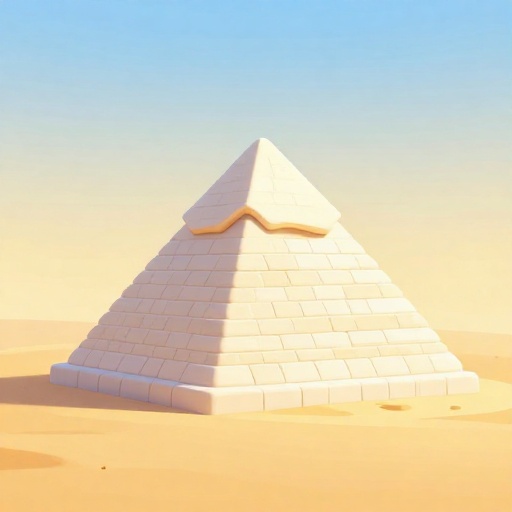
The Great Pyramid of Giza shining brightly in the sun.

Can you imagine holding a world record for that long? The Great Pyramid of Giza, built for Pharaoh Khufu, stood at an original height of 481 feet (146.7 meters)!

That’s taller than almost any building for over four millennia—until people in the modern world finally built something higher!

It was originally covered in smooth, white limestone casing stones that would have made it shine incredibly brightly in the desert sun.
2

They Had Over 2,000 Gods and Goddesses!

TL;DR

Ancient Egyptians worshipped over 2,000 different deities for everything imaginable.

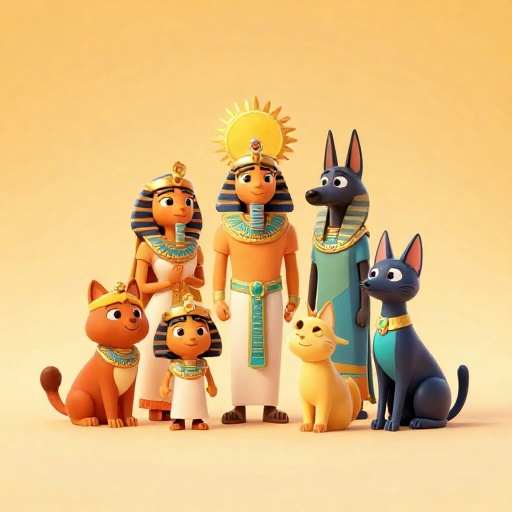
A group of friendly cartoon Egyptian gods smiling.

When you think of gods, maybe you think of a few—but Ancient Egypt had a whole stadium full of them! Scholars know the names of more than 1,500 deities in their pantheon.

That’s more gods than there are kids in a giant school district! They had gods for the sun (Ra), the dead (Osiris), and even goddesses for magic (Isis).

Each god had a specific job, from making the Nile flood perfectly to helping scribes write straight.

3

King Tut’s Mask Weighed as Much as a Giant Dog!

TL;DR

Tutankhamun's solid gold death mask weighs over 22 pounds (10 kilograms).

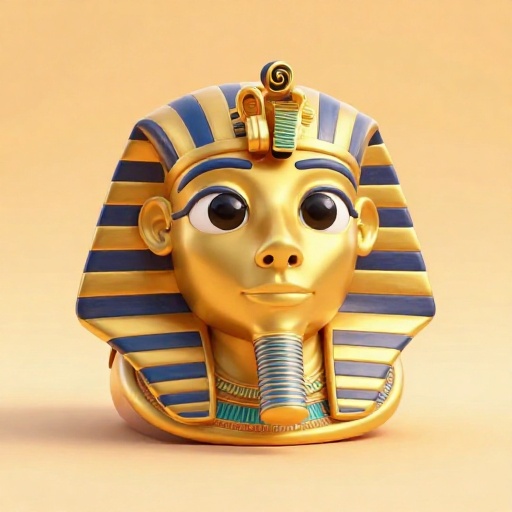
The heavy, golden death mask of Tutankhamun.

When they found King Tut's treasure, the most famous thing was his death mask—it’s made of two layers of solid gold!

This amazing mask weighs over 10 kilograms (22 pounds). That's heavier than most Great Danes or Saint Bernard dogs!

They made it so heavy and precious because they believed the gold represented eternal, never-decaying life for the young pharaoh in the afterlife.

4

The Empire Lasted Longer Than You Can Imagine!

TL;DR

Ancient Egyptian civilization lasted for over 3,000 years.

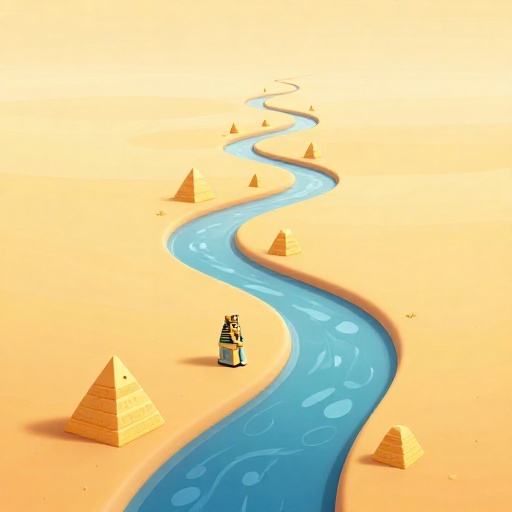
A very long timeline following the Nile River showing ancient Egyptian history.

The history of Ancient Egypt, from unification until it became part of the Roman Empire, lasted for over 3,000 years!

To put that in perspective, Ancient Rome—which we think of as super old—only lasted about 1,000 years. You could have watched over 300 generations of Egyptians come and go!

This long time period includes the Old, Middle, and New Kingdoms, all separated by times of chaos called 'Intermediate Periods'.

5

The Great Pyramid Took 20 Years to Build!

TL;DR

It took an estimated 20 years to complete the Great Pyramid of Giza.

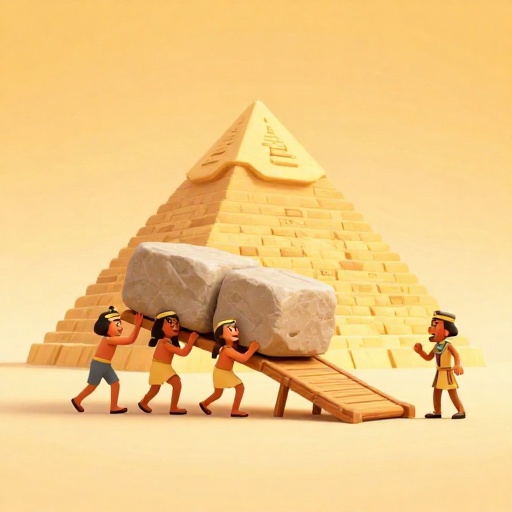
Egyptian workers constructing the Great Pyramid by hauling a large stone block.

Building the Great Pyramid wasn't a weekend project; historians estimate it took about 20 years for Pharaoh Khufu’s workers to finish it!

They used an estimated 2.3 million stone blocks for the core structure alone. That means the builders had to set up almost 320 massive blocks every single day!

That’s the ultimate construction challenge for any kid who’s ever tried to stack too many blocks!

6

Hieroglyphs Had About 700 Symbols to Choose From!

TL;DR

The Egyptian writing system had about 700 common symbols, compared to our 26 letters.

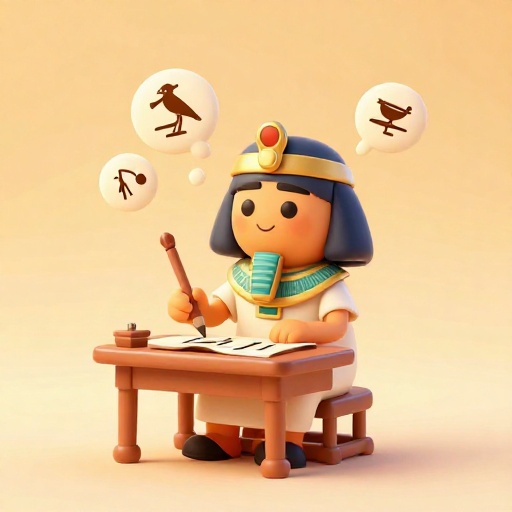
An Egyptian scribe drawing a bird symbol (hieroglyph).

Our alphabet has about 26 letters, but the ancient Egyptian hieroglyphic script used over 700 different picture-symbols for writing!

They weren't just an alphabet, though. Some symbols stood for whole words, and others stood for sounds—like our letters—but they often skipped vowels like 'a' or 'e'!

This made writing a really tricky, specialized skill, usually done by highly trained scribes.

7

Cleopatra Wasn't Really Egyptian!

TL;DR

Cleopatra VII was the last ruler, but she was actually of Greek descent.

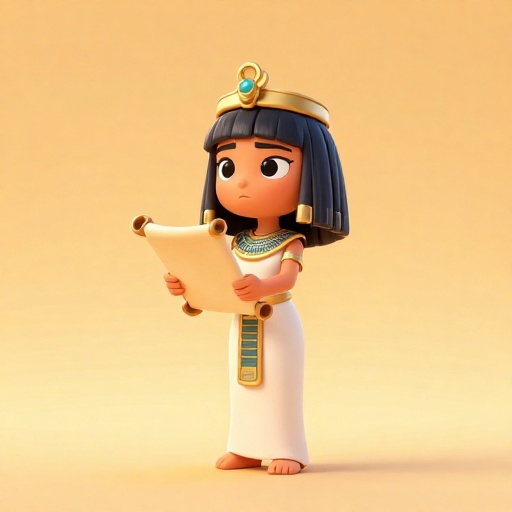
Queen Cleopatra VII looking determined with an Egyptian and Greek style.

Cleopatra VII, the super famous queen, was actually part of the Ptolemaic dynasty, which was started by one of Alexander the Great’s generals. She was Greek (Macedonian)!

She was the first ruler in her family line to actually learn the Egyptian language, which is pretty amazing when you think about it.

She reigned until about 30 BC, making her the very last pharaoh before Rome took over Egypt forever!

8

Egypt Has at Least 118 Pyramids!

TL;DR

Archaeologists have confirmed at least 118 pyramids across Egypt.

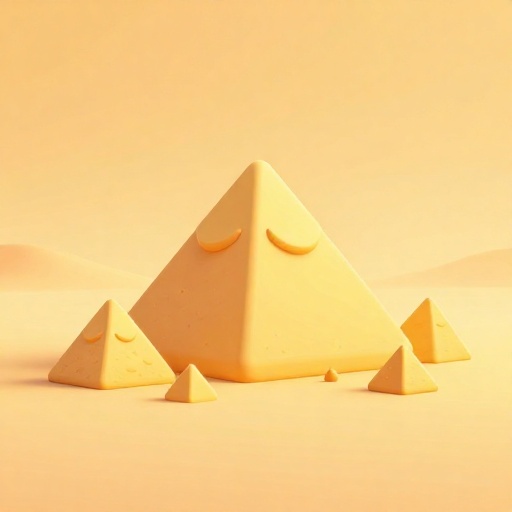
A collection of differently sized ancient Egyptian pyramids.

Everyone knows the three big ones at Giza, but guess what? Archaeologists have found at least 118 confirmed pyramids across Egypt!

They were built over a huge time span, starting as early as around 2700 BC.

They weren't all giant like Khufu's—some were smaller and built for queens or nobles!

9

They Built Boats to Sail to the Afterlife!

TL;DR

Egyptians buried full-sized boats with their pharaohs for their journey to the next world.

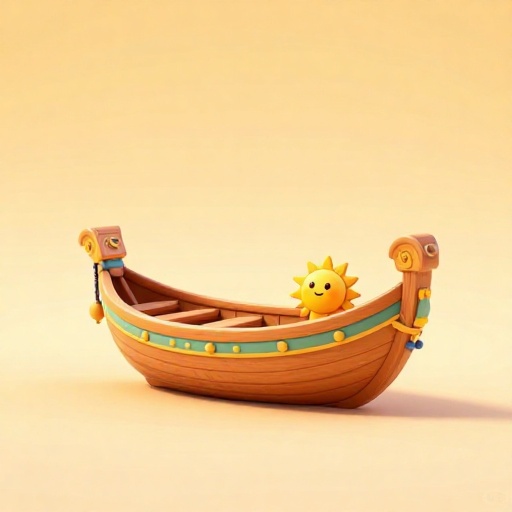
A beautifully crafted ancient Egyptian burial boat floating peacefully.

The Egyptians believed the pharaoh needed a boat to travel the sky with the sun god Ra in the afterlife, so they buried real boats with them!

Near the Great Pyramid, they found an entire, disassembled 144-foot long ship from King Khufu's time, carefully hidden in a pit.

Imagine needing your whole sailboat to sail on to your next adventure—that's Egyptian belief for you!

10

Mummies Weren't Always Wrapped in Linen!

TL;DR

Early mummies were naturally preserved by dry desert sand before complex wrapping began.

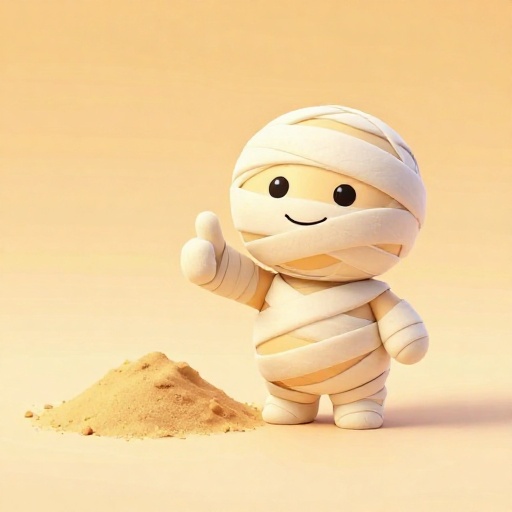
A happy cartoon mummy giving a thumbs-up next to dry sand.

Artificial mummification, with all the oils and wrappings, became super popular later, around 2700 BC during the Old Kingdom.

Before that, people were sometimes naturally mummified just by being buried in the hot, super-dry sand, which sucked the moisture right out of the body!

It took thousands of years for them to perfect the process of removing organs and using special salts like natron!

Frequently Asked Questions

When did Ancient Egypt begin?

Ancient Egypt as a unified civilization is generally considered to have started around **3150 BC** with the first king, Menes (or Narmer). This makes it one of the very first great civilizations!

What river was most important to them?

The **Nile River** was the lifeline of Ancient Egypt! Its annual flood deposited rich, fertile soil that allowed them to grow food and support their huge civilization in the middle of the desert.

Did pharaohs really look like Tutankhamun’s mask?

The death mask was an idealized, god-like image of the young king, not a perfect portrait. It was made to represent his eternal, divine self.

What happened to the casing stones on the Great Pyramid?

Most of the smooth, white outer casing stones were gradually stripped away over thousands of years—many were later used to build other structures in nearby cities like Cairo.

Uncover More of the Golden Sands!

Wow! You just uncovered some seriously epic history! From building projects that took decades to a giant cast of gods, Ancient Egypt is full of unbelievable stories. Keep that curiosity shining as bright as the gold on King Tut’s mask, and keep exploring our adventures!

Explore More Facts
Audience Debug