10 Fun Facts

Bug Facts for Kids

Get ready to shrink down and see the world like never before! We're diving headfirst into the buzzing, crawling, and flying kingdoms to uncover the absolute wildest, most incredible truths about bugs. Forget boring textbook stuff—these are mind-blowing, certified incredible facts about insects that prove they are the true superheroes of our planet!

1

The Heaviest Insect Weighed as Much as a Brick!

TL;DR

The verified heaviest insect was a female Giant Wētā weighing 71 grams!

A pregnant female Giant Wētā insect looking surprised.

Meet the Little Barrier Giant Wētā, a cricket-like champion from New Zealand forests.

In 2011, one pregnant female was officially weighed at 71 grams, which is about the weight of a large candy bar or a standard brick!

That’s much heavier than most insects, proving size isn't always about being a scary giant beetle.


2

Ants Can Lift a Full-Grown Cow (Relatively Speaking)!

TL;DR

Some ants can carry 50 times their own body weight—that’s like a human lifting a car!

A tiny ant lifting a much larger, shadowy outline of a cow.

Worker ants are tiny but mighty! Leaf-cutter ants are known to carry leaf pieces that weigh over 50 times their body weight.

If a 180-pound human had that same strength ratio, they could lift a massive 9,000 pounds—that’s heavier than a full-grown cow!

This insane power comes from how their muscles are built relative to their super light bodies.

3

The Earth Has Over 400,000 Described Beetle Species!

TL;DR

There are about 400,000 described beetle species, making them the biggest insect group!

A collection of 10 uniquely shaped and colored cartoon beetles.

Seriously, beetles are the reigning champions of diversity! Scientists have formally described nearly 400,000 different types.

This means that about 40% of ALL known insect species are beetles!

If you think you've seen a lot of bugs, the real total might be closer to 2.1 million species waiting to be discovered!

4

The Loudest Insect Screams at 107 Decibels!

TL;DR

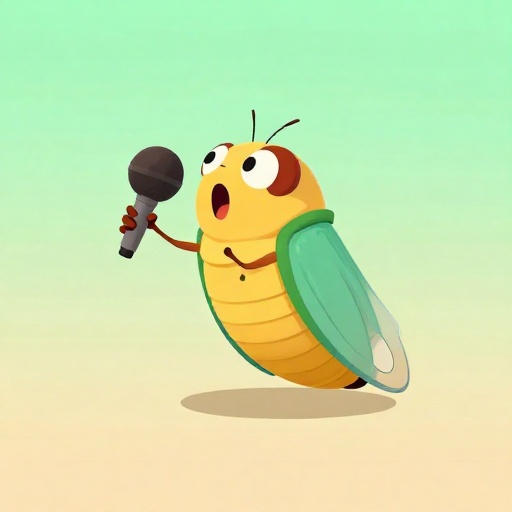
The African Cicada, Brevisana brevis, hits 107 dB—almost as loud as a chainsaw!

A very loud cartoon cicada making a huge sound wave.

Get ready for the ultimate summer sound system: the cicada chorus!

The reigning champion is the African cicada, recorded at a shocking 107 decibels from just 20 inches away.

To put that in perspective, that’s nearly as loud as a chainsaw at 110 dB! That's not just buzzing, that’s an announcement!

5

Ancient Dragonflies Flew with Wings Spanning 28 Inches!

TL;DR

Prehistoric 'griffinflies' had wingspans up to 71 cm (28 in)!

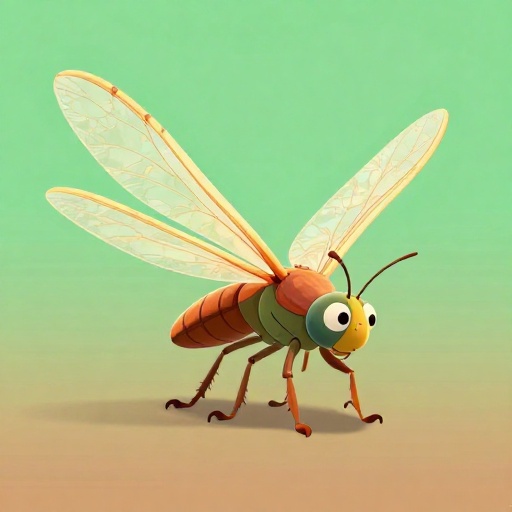
A giant cartoon griffin-like dragonfly with enormous wings.

Long before birds or airplanes, giant insects ruled the skies millions of years ago!

Insects like Meganeuropsis permiana, a relative of the dragonfly, had wings that stretched up to 71 centimeters across.

That’s almost 2 feet wide—imagine a dragonfly bigger than a hawk!

6

The Fastest Bug Zips Past at 35 Miles Per Hour!

TL;DR

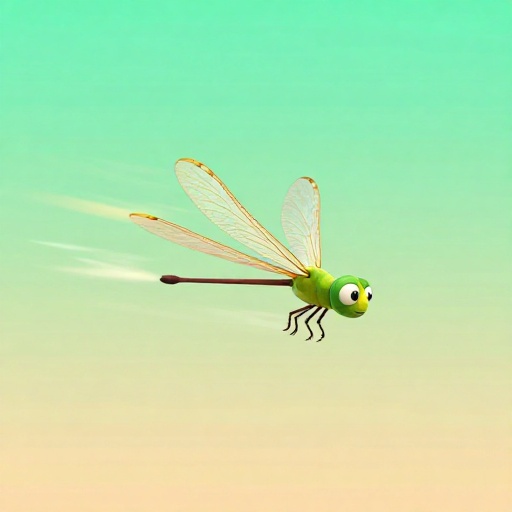
The Dragonfly is the speed demon, clocking in at a record 35 mph!

A speedy cartoon dragonfly flying very fast.

Forget race cars, check out the dragonfly! This agile hunter is the fastest known flying insect.

It can dart and dive at an amazing top speed of 35 miles per hour.

That’s faster than most speed limits in neighborhoods, letting it snatch up mosquitoes mid-air!

7

Worker Honey Bees Work Themselves to Death in Just 5 Weeks!

TL;DR

A summer worker bee only lives for 5 to 7 weeks because she works so hard!

A slightly worn out cartoon worker bee carrying pollen.

The majority of bees in a hive are worker females, and they have the toughest schedule.

During the busy spring and summer, a worker bee’s life lasts only about 5 to 7 weeks.

It’s estimated a worker bee dies after flying about 500 miles total—that’s like walking across the entire state of New York!

8

The Oldest Bug Fossil is **425 Million Years** Old!

TL;DR

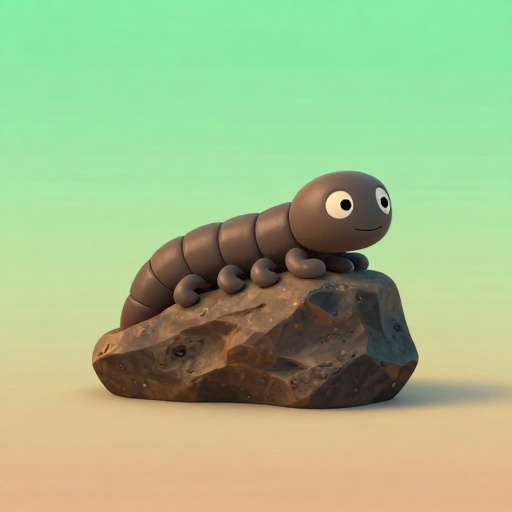
The oldest 'bug' fossil found is a millipede from 425 million years ago.

A cartoon fossil of an ancient millipede in a rock.

Insects and their ancient relatives were around way before the dinosaurs!

A fossil of a millipede called Kampecaris obanensis found in Scotland dates back an astonishing 425 million years.

This means bugs were crawling on Earth roughly 75 million years before scientists previously thought!

9

The World's Biggest Ant Supercolony Spans **6,000 Kilometers**!

TL;DR

The Argentine Ant supercolony in Europe covers 6,000 km!

A map showing a massive, interconnected line of ants across Europe.

Most ant colonies are small, but 'supercolonies' are gigantic.

One Argentine Ant supercolony across the coasts of Portugal, Spain, France, and Italy stretches for 6,000 kilometers!

That's like having one massive, happy family of ants stretching from London, England, all the way to Moscow, Russia!

10

A Locust Can Jump Six Times Its Body Length in a Single Leap!

TL;DR

A larval locust can leap a long jump distance of 0.6 meters!

A cartoon locust making a giant leap over a school bus.

While the froghopper jumps the highest, the locust is an amazing long-jumper!

A 5th-instar larval locust has been recorded making a long jump of 0.6 meters.

For a human kid, that would be like jumping over 30 feet! That's the length of a school bus!

Frequently Asked Questions

What is the difference between a bug and an insect?

That's a tricky one! 'Insect' is a scientific group with three body parts and six legs. 'Bug' is a general, common word we use for all sorts of creepy-crawlies, even spiders which aren't insects!

Do all insects go through metamorphosis?

Most do, but they follow two main paths: incomplete (like grasshoppers, where they just get bigger) or complete (like beetles and butterflies, with distinct egg, larva, pupa, and adult stages). We covered complete metamorphosis for beetles!

Why are beetles so successful?

Their success is huge! Their hard outer wings, called 'elytra,' protect their delicate second pair of wings and their bodies, letting them live in tons of different places.

Are cicadas deafening?

They are super loud, hitting up to 100 decibels up close, which is hazardous exposure. But unless you sit under the noisy tree for many hours, short exposure usually just bothers you more than permanently harms your hearing.

Your Adventure Just Started!

See? Bugs aren't just 'little things on the ground'—they are masters of engineering, speed, and sheer power! Now that you know these amazing secrets, grab a magnifying glass and head outside. You never know what next-level insect adventure is waiting just outside your door for kids like you to discover!

Explore More Facts
Audience Debug