10 Fun Facts

Computer Facts for Kids

Get ready to unlock the secrets of the machine that runs your world! You see them everywhere—in your home, school, and pockets—but computers have a wild, surprising history that’s way cooler than you think. We aren't just talking about quick loading screens; we're talking about giant, room-sized metal monsters! Let's dive into 10 mind-blowing facts that prove computers are the ultimate adventure.

1

The First Computer Was Heavier Than 50 Elephants!

TL;DR

The ENIAC computer weighed over 27 tons and filled an entire room.
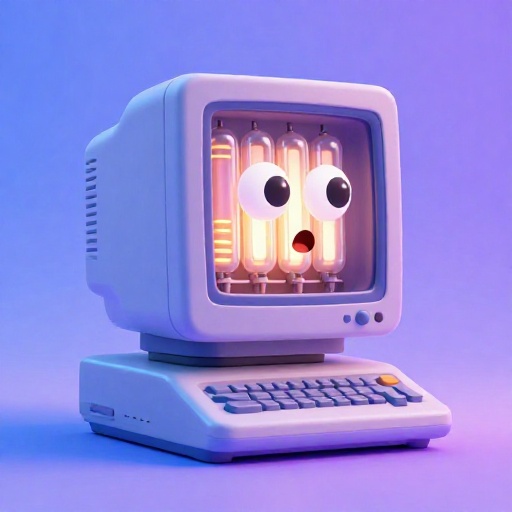
A giant, friendly, old-fashioned computer made of many glowing vacuum tubes filling a large room.

Meet ENIAC, the Electronic Numerical Integrator and Computer, finished in 1945. This machine was the first general-purpose electronic digital computer, and wow, was it massive!

It weighed more than 30 short tons (about 27 metric tons). That’s like stacking up about 50 full-grown elephants! It also took up 1,800 square feet of space.

Imagine trying to move that thing—it needed its own air conditioning system because it got so hot using 17,468 vacuum tubes!
2

The First Programmer Wrote a Recipe for Numbers a Century Ago!

TL;DR

Ada Lovelace wrote the first computer program for a theoretical machine in the 1840s.

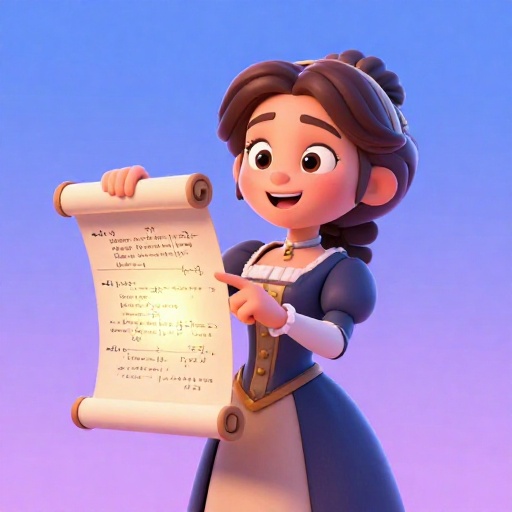
Ada Lovelace happily pointing at an old scroll filled with glowing code symbols.

Before there were even electric computers, mathematician Ada Lovelace saw the future! She worked on Charles Babbage's theoretical machine, the Analytical Engine.

In 1843, she wrote down a set of instructions, or an algorithm, to calculate a special sequence of numbers called Bernoulli numbers.

This detailed set of steps is what makes her the world's first computer programmer, proving that computers could do way more than just simple math—they could follow complex recipes!

3

The Internet Started as a Tiny Network of Only 4 Computers!

TL;DR

The ARPANET, the Internet's ancestor, began in 1969 connecting just four university sites.

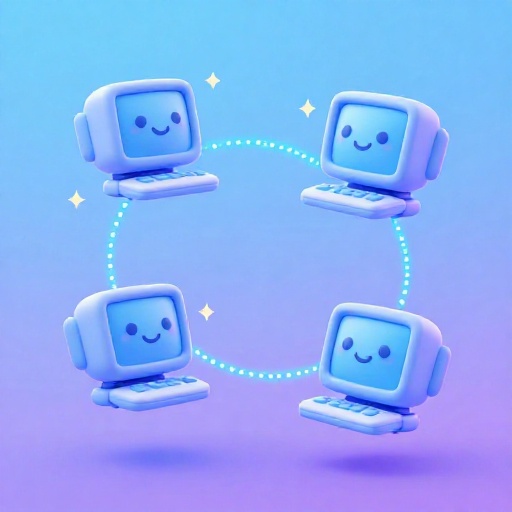
Four simple cartoon computers connected by glowing lines representing the first network.

The Internet you use today has roots in something called ARPANET, which started in 1969 with just four computers connected together in the USA.

It was a way for university scientists to share awesome research and computer power across phone lines—imagine sharing one giant calculator with friends miles away!

By 1973, it had only grown to include over 30 institutions spanning the Atlantic Ocean, connecting a few places in the US and Norway!

4

Video Games Were Once a 'Warm-Up' Task for an Engineer!

TL;DR

Pong, the first successful video game, was created in 1972 as a simple training exercise by Atari.

A cute, simple cartoon version of the classic video game Pong being played.

The game that launched an entire industry, Pong (1972), wasn't a super-secret project. Atari co-founder Nolan Bushnell just asked engineer Allan Alcorn to make a simple ping-pong game for practice!

When Alcorn finished, Bushnell and Dabney were so impressed they decided to manufacture it. They tested the prototype at a local store where it made $40 a day, compared to only $10 for other games!

It was so successful that Atari even released a Home Pong console in 1975 for Christmas, bringing digital sports right into people's living rooms.

5

Early Computers Used How Many Light Bulbs to Think?

TL;DR

The ENIAC computer used 17,468 vacuum tubes, which acted like on/off switches.

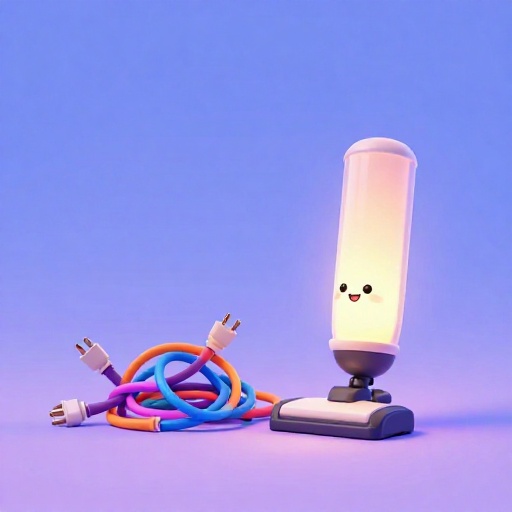
A friendly cartoon vacuum tube next to a mess of colorful wires.

Instead of modern, tiny transistors, the massive ENIAC computer used 17,468 vacuum tubes—these were like tiny glass light bulbs that could heat up and switch electrical signals on or off.

Each tube was like a tiny digital switch. To program the machine, engineers didn't type—they literally had to rewire the panels by plugging and unplugging cables!

It was so much like old-fashioned telephone switchboards that it took days to set up a new program, making it much slower to switch tasks than it was to calculate!

6

Coding 'Hello World' Used to Be a Multi-Day Chore!

TL;DR

Reprogramming early computers like ENIAC required manually rewiring panels, taking days.

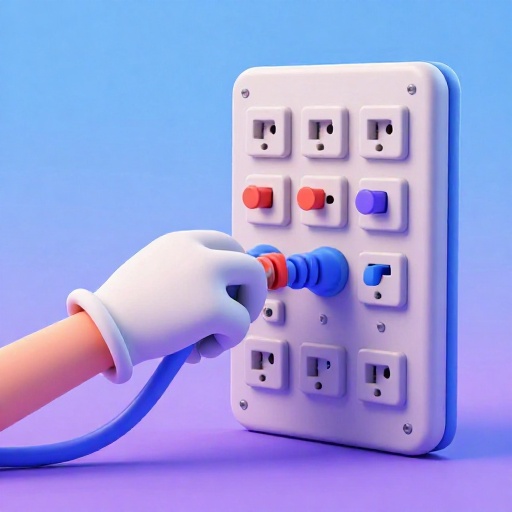
A cartoon hand struggling to rewire a massive, complex computer panel.

When we say 'coding basics,' we mean giving the computer instructions! Early on, these instructions were physically wired into the machine.

To change a program on ENIAC, engineers had to rewire panels and set thousands of switches. This manual setup could take days just to tell the computer what to do next!

Today, you can type 'Hello World' in seconds with a few lines of code, showing how much programming has sped up since the first computers for kids!

7

Your Smartphone Has Billions More Thinking Parts Than Early Giants!

TL;DR

Modern phone CPUs have billions of transistors; ENIAC had 17,468 vacuum tubes.

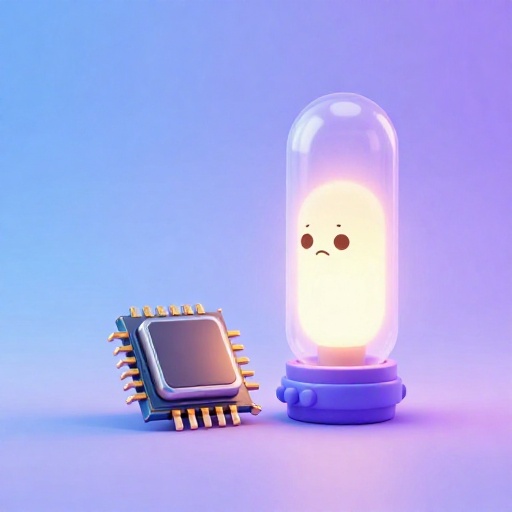
A tiny modern computer chip dwarfing a large, old vacuum tube.

A modern smartphone chip often has billions of transistors. For example, some powerful chips have over 11 billion transistors just in the CPU part!

Compare that to the ENIAC, which had only 17,468 vacuum tubes acting as its switches. That means your phone is millions of times more powerful than the world's first big computer!

This change happened because we replaced bulky tubes with tiny transistors that are smaller than a speck of dust!

8

The First Text Message Was Only 160 Characters Long!

TL;DR

SMS was originally limited to 160 characters to save limited network capacity.

A small text message bubble trying to fit through a narrow digital tunnel.

When Short Message Service (SMS) texting was invented in the 1990s, engineers had to be super careful with the network space.

To make sure messages sent quickly and reliably, they set a limit of just 160 characters for a standard text—that’s why early texts felt so short!

If you write a longer message today, your phone just breaks it into several 160-character chunks behind the scenes—sneaky!

9

ARPANET Spanned the Ocean by 1973, Connecting 30 Sites!

TL;DR

The early Internet precursor grew fast, connecting over 30 locations across the Atlantic by 1973.

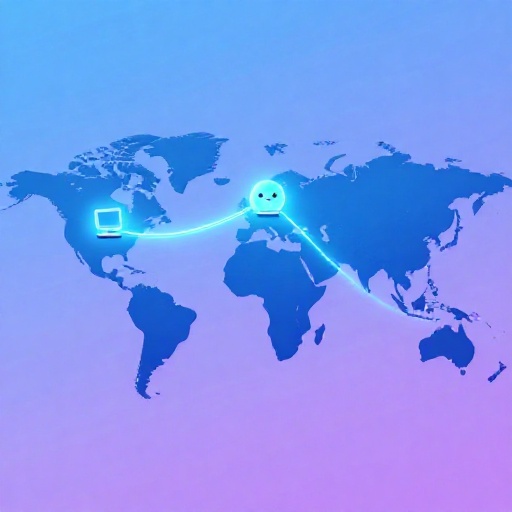
A cartoon world map showing glowing lines connecting computers across the Atlantic Ocean.

Even though it started small in 1969 with four computers, the ARPANET grew incredibly fast for its time.

By 1973, the network had expanded to connect over 30 institutions and even spanned the Atlantic Ocean, reaching Norway!

This growth showed that connecting computers globally was possible, laying the real groundwork for the worldwide Internet we use today.

10

The First High-Level Code Translator Was Created by a Woman!

TL;DR

Grace Hopper invented the first compiler, which turns human-readable code into machine code.

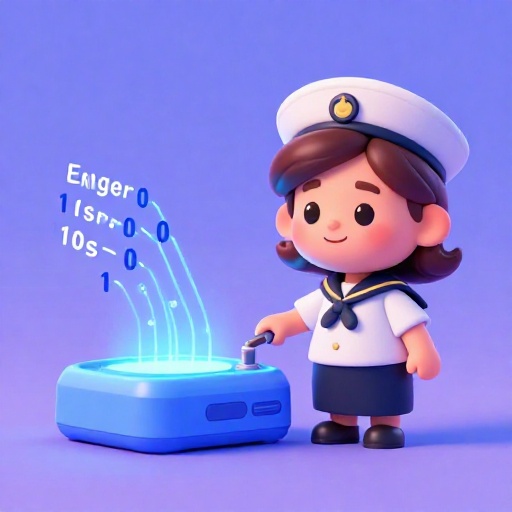
Grace Hopper standing next to a glowing machine translating English words into binary code.

Computer programming got way easier thanks to pioneer Grace Hopper! She invented the compiler in the 1950s.

A compiler is a program that translates human-readable code (like English words) into the ones and zeros the computer actually understands.

Before this, programming was super hard! Hopper also helped create COBOL, one of the very first high-level programming languages, making coding accessible for more people.

Frequently Asked Questions

What is coding?

Coding is giving a computer a list of instructions, like a recipe, using a special language it understands. These instructions tell the computer exactly what to do, from drawing a picture to solving a math problem.

What came before the Internet?

Before the Internet was the ARPANET, a network built by the US Department of Defense to connect research computers. It started with just four sites in 1969.

Why was the first computer so big?

The ENIAC was huge because it used bulky, hot vacuum tubes instead of tiny, modern transistors. These tubes acted as switches but took up a massive amount of room and power!

What is the most important part of a computer?

The **CPU** (Central Processing Unit) is often called the computer's 'brain' because it follows the code instructions and performs all the calculations super fast. Modern CPUs are packed with billions of transistors!

From Giant Brains to Pocket Power!

See? Computers aren't just boring boxes! They have heroes, massive beginnings, and a history full of crazy inventions. Every app you use, every video game you play, stands on the shoulders of those giant machines and visionary pioneers. Keep asking questions—the next great computer discovery might just start with you!

Explore More Facts
Audience Debug