10 Fun Facts

Earth Facts for Kids

Hold onto your explorer hats, because we're diving deep into the most amazing place in the universe: Planet Earth! You think you know our home, but did you know it's spinning faster than a race car and is over 4.5 BILLION years old? Get ready to discover the wild, weird, and wonderful secrets hidden inside and around our beautiful blue marble!

1

The Spinning Speed is Over 1,000 MPH!

TL;DR

We are moving at about 1,040 mph on the equator, every single second!
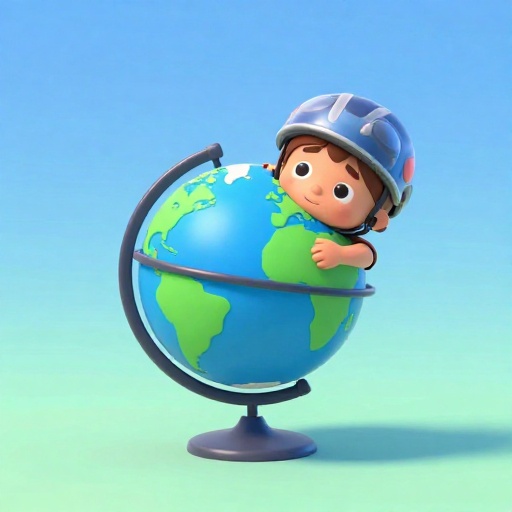
Cartoon child spinning rapidly on a globe at high speed

That’s right- you are currently zooming through space at a whopping 1,040 miles per hour (1,670 km/h) if you're standing right on the equator! Imagine a super-fast bullet train- you’re going way faster than that just by standing still!

The Earth spins around its axis once every 24 hours, which is how we get day and night. This speed is fastest at the equator because that’s the widest part you have to travel around in one day.

If you move toward the North or South Poles, the speed slows down. At the very poles, you’d be spinning so slowly it’s almost zero! It’s an amazing feat that gravity keeps us from flying off into space!

For kids this is a huge number to think about- it’s faster than any rollercoaster you’ve ever been on!
2

Earth’s Age Makes Dinosaurs Look Like Babies

TL;DR

Our planet is an ancient 4.54 billion years old, give or take 50 million years!

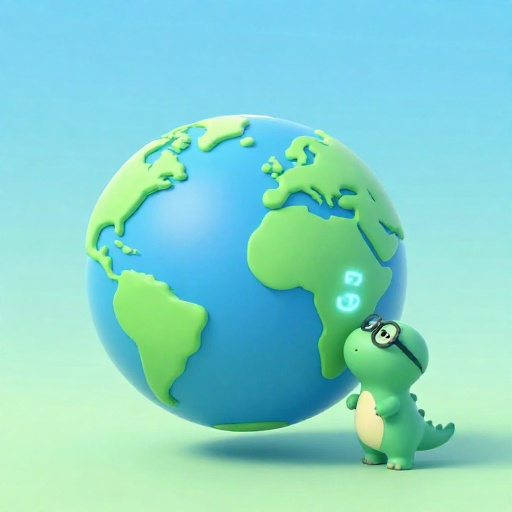
Cartoon Earth next to an ancient, glowing rock with a small dinosaur looking at it

Scientists figured out Earth’s age by studying old space rocks called meteorites, finding our planet solidified about 4.54 billion years ago! That number is so huge it’s hard to even picture.

To put that into perspective, the oldest rocks on Earth are only about 4.4 billion years old, but the meteorites give us the best clue to the entire planet's formation time.

If Earth’s history was one calendar year, humans wouldn't even show up until the last few seconds of December 31st! It’s an incredibly old world for us to explore.

3

Our Inner Core is as Hot as the Sun's Surface

TL;DR

The very center of Earth is nearly 5,400°C, matching the temperature of the Sun’s surface!

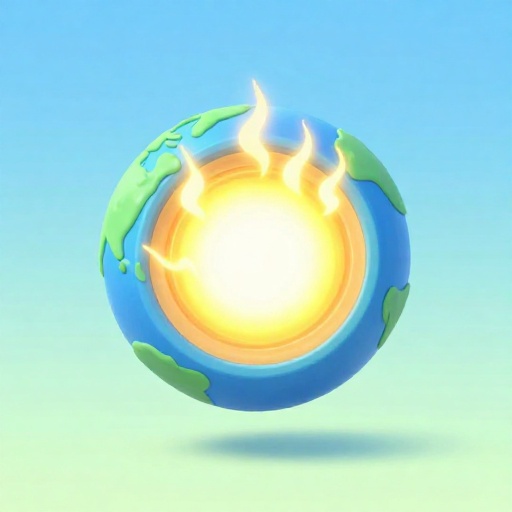
Cartoon cross-section of Earth showing a bright, hot inner core

Way down in the middle of Earth, the inner core is a solid ball of iron and nickel, and it gets shockingly hot—estimates put it around 5,400° Celsius (9,800° F)!

This intense heat comes from the pressure of all the layers above it and leftover heat from when Earth first formed. It’s hot enough to melt rock into magma in the mantle!

That heat is what drives the whole system, creating the magnetic field that protects us. Crazy to think we live on a giant, hot oven!

4

Our Crust is a Tiny, Cracked Shell

TL;DR

The entire rocky surface we live on is only about 6 to 70 km thick!

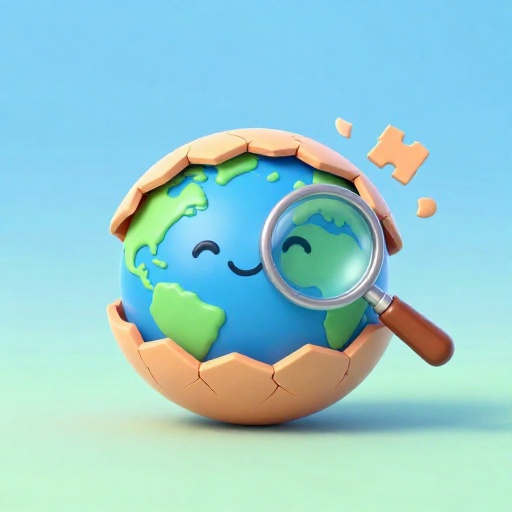
Cartoon Earth with a thin, cracked outer shell layer being examined by a magnifying glass

The crust, the only layer we ever see, is SUPER thin compared to the rest of the planet. It ranges from just 5 to 10 km thick under the oceans (oceanic crust) to 25 to 70 km under the continents (continental crust).

If Earth were the size of a giant beach ball, the crust would be thinner than the paint on the ball! It's this thinness that allows the tectonic plates to move and change our world.

Think about it- the thickest part under a mountain range is still only about 70 km deep. We are standing on a very delicate, brittle shell!

5

Tectonic Plates Move Slower Than Your Fingernails Grow

TL;DR

The continents drift at a maximum speed of 10 cm per year, which is slow!

Cartoon tectonic plates moving slowly next to a hand comparing the speed to fingernail growth

The giant tectonic plates that make up Earth’s surface are constantly shifting because of the heat inside, but they move very slowly. The fastest ones only travel up to 10 centimeters (about 4 inches) annually!

That’s about the same speed that your fingernails or hair grow! You can’t feel it happening, but over millions of years, this tiny movement created all the continents we know today.

This slow crawl is what causes earthquakes when the plates get stuck and then suddenly slip past each other, or when they crash to build mountains.

6

Our Atmosphere is Shockingly Thin and Heavy

TL;DR

Three-quarters of all air mass is within just 11 km of the surface!

Cartoon Earth with a very low, dense layer of clouds representing the bulk of the atmosphere

Even though space looks far away, most of the air we breathe—about three-quarters of its total mass—is packed into the lowest layer, the troposphere, which is only about 11 km (6.8 miles) high!

The entire atmosphere, all the way to the edge of space, only has a mass of about $5.15 imes 10^{18}$ kg—which is heavy, but tiny compared to the whole Earth.

If Earth were a basketball, the atmosphere would be a thin film of plastic wrap around it. It's thin, but it’s what makes our planet breathable and protects us!

7

The North Pole is NOT Where Compasses Point!

TL;DR

Earth's Magnetic North Pole is actually a magnetic South Pole!

Cartoon compass pointing towards a North Pole landmark that is magnetically the opposite pole

This is a switcheroo! The North end of your compass needle points to what we call the North Geomagnetic Pole, but magnetically speaking, that spot is actually the Earth’s magnetic South Pole!

Why? Because in magnetism, opposites attract! The little arrow in your compass is a magnet whose 'north-seeking' end is attracted to the magnetic field that is pointing south at the top of the Earth.

This whole magnetic shield is created by the churning, liquid iron in the outer core—it’s like a giant, invisible motor keeping solar energy away from us!

8

We Are Traveling 93 Million Miles From the Sun, But It Stays Stable

TL;DR

Our average distance to the Sun is 149.6 million km (1 AU), which keeps our climate just right!

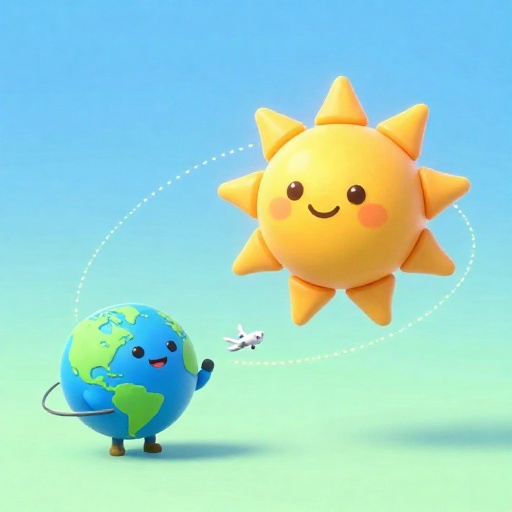
Cartoon Earth orbiting a giant Sun with a tiny airplane for distance comparison

Earth orbits the Sun at an average distance of 149.6 million kilometers (about 93 million miles). This perfect spot is called the 'Goldilocks Zone'—not too hot, not too cold!

It would take an airliner traveling at 400 mph over 20 years just to fly that distance one way! Thankfully, we are moving through space at about 67,100 miles per hour in orbit to keep us there!

This consistent distance means our climate stays stable enough for water to stay liquid and for life to thrive for billions of years.

9

The Tallest Mountain Starts Deep Underwater

TL;DR

Mauna Kea in Hawaii is taller than Everest when measured from its sea floor base!

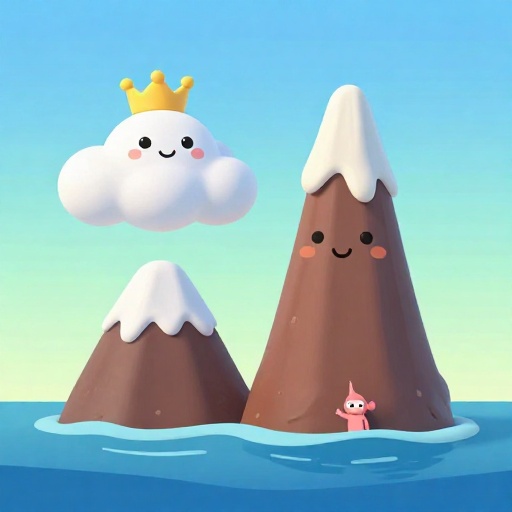
Cartoon comparison of Mount Everest and Mauna Kea, showing Mauna Kea's base underwater to illustrate its total height

Everyone thinks Mount Everest is the tallest, but if you measure from the actual base on the ocean floor to the peak, Mauna Kea wins! It soars about 33,500 feet (over 10,210 meters) from base to peak.

Even though Everest has the highest elevation above sea level (29,029 feet), most of Mauna Kea is hiding under the Pacific Ocean.

It’s a great lesson: how we measure things completely changes the answer! That’s why scientists love specific numbers in our amazing planet for kids learning!

10

Water Covers 71% of Earth, But Most is Salt!

TL;DR

Oceans cover 71% of the surface, but 97.5% of all water is salty, not drinkable!

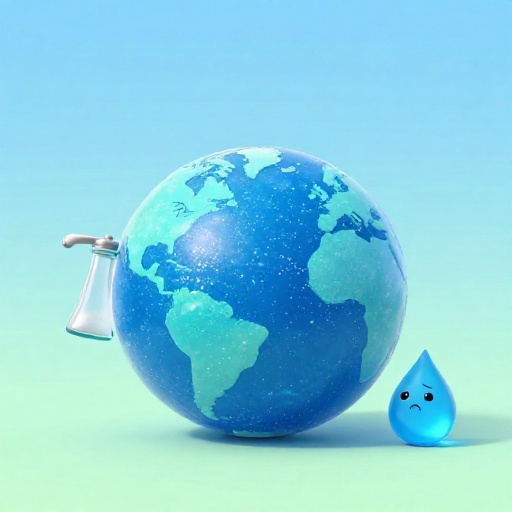
Cartoon Earth showing vast oceans with a tiny drop of fresh water next to a giant salt shaker

Our home is called the 'Blue Planet' because 71% of its surface is covered by water, mainly the salty oceans. That’s almost three-quarters of the whole world!

But here’s the tricky part for survival: 97.5% of all that water is saltwater. That leaves only 2.5% as freshwater.

Even of that tiny freshwater amount, most is locked up in ice caps and glaciers. Only about 1% of the total water on Earth is easily accessible liquid freshwater in lakes and rivers for us to use!

Frequently Asked Questions

What are the layers of the Earth?

Earth has four main layers, starting from the outside: the Crust (the rocky surface), the Mantle (a thick, hot, viscous layer), the Outer Core (liquid iron and nickel), and the Inner Core (solid iron and nickel at the very center).

What causes Earth's seasons?

Seasons happen because Earth is tilted on its axis by about 23.5 degrees, not because of the distance to the Sun. When your part of the Earth is tilted *toward* the Sun, you get summer; when it tilts *away*, you get winter!

What is plate tectonics for kids?

Plate tectonics is the idea that Earth's hard outer shell is broken into giant puzzle pieces called plates. These pieces float on the hotter layer beneath and are always slowly crashing into, pulling away from, or sliding past each other.

How is Earth protected from space?

Earth's amazing magnetic field acts like an invisible force field, pushing away dangerous charged particles from the Sun called the solar wind. Without it, our atmosphere would be stripped away!

Keep Exploring, Future Earth Expert!

See? Earth isn't just dirt and water- it’s a dynamic, spinning, scorching-hot, and ancient adventure! Every time you walk outside, you are standing on a giant, slow-moving jigsaw puzzle. Keep asking 'Why?' and 'How fast?'—that’s the spirit of a true scientist!

Explore More Facts
Audience Debug