10 Fun Facts

Elephant Facts for Kids

Get ready to meet the true giants of the land-—elephants! These aren't just big gray animals; they are walking libraries with incredible super-tools and giant hearts. Forget what you think you know, because we are diving deep into the world of these magnificent creatures to uncover 10 absolutely mind-blowing facts that will make you an instant elephant expert!

1

The Trunk Has 40,000 Muscles—It's a Boneless Power Tool!

TL;DR

An elephant's trunk contains a staggering 40,000 muscles, making it incredibly strong and precise.
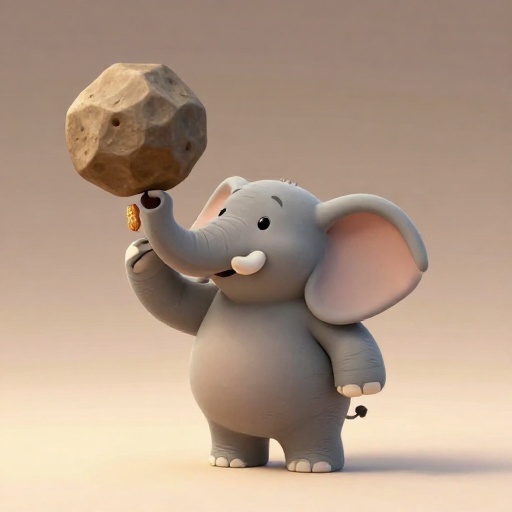
A cartoon elephant trunk showing its muscles while holding both a tiny peanut and a large rock.

You have about 600 muscles in your whole body, but an elephant's trunk alone has around 40,000 muscles! That’s more muscles than you have in your entire body combined.

This makes the trunk a "muscular hydrostat," like your tongue, meaning it moves without any bones. It's so strong it can lift up to 3,000 kg of weight, but also delicate enough to pick up a single peanut!

Imagine picking up a giant boulder one second and drawing a tiny picture the next—that’s the power you have in your nose, for an elephant!
2

African Elephants Have Two 'Fingers' on Their Trunks!

TL;DR

African elephants use two finger-like tips on their trunk, while Asian elephants only have one.

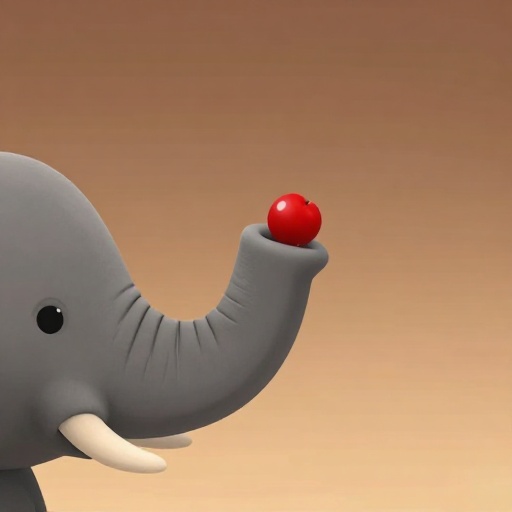
Close-up cartoon illustration of an African elephant trunk tip with two finger-like ends pinching a berry.

When you compare African and Asian elephants, their trunks are a dead giveaway! African elephants have two distinct, triangular protrusions at the end, like two opposable fingers.

These 'fingers' let them pinch and pick up small things really well. Asian elephants only have one 'finger' on the top, so they make up for it by wrapping their whole trunk around objects.

It’s like the difference between using tweezers and using a giant, flexible, prehensile hand!

3

They Can Talk in Secret With Sounds Humans Can't Hear!

TL;DR

Elephants use 'infrasound'—sounds below human hearing—to talk over long distances.

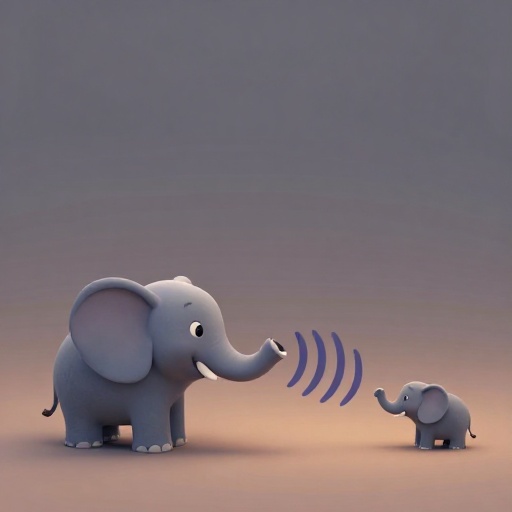
Cartoon elephants communicating using invisible, low-frequency sound waves traveling through the ground.

Elephants make special, super-low sounds called infrasound—frequencies below 20 Hz, which is lower than what human ears can pick up! We can't hear it, but they definitely can.

These secret rumbles travel incredibly far. An African elephant rumble can be heard by another elephant up to 32 kilometers away through the air and ground vibrations!

It’s like having a walkie-talkie system that only elephants know how to use for huge herd coordination.

4

The Longest Pregnancy in the Mammal World!

TL;DR

African elephants are pregnant for an average of 22 months—that's almost two years!

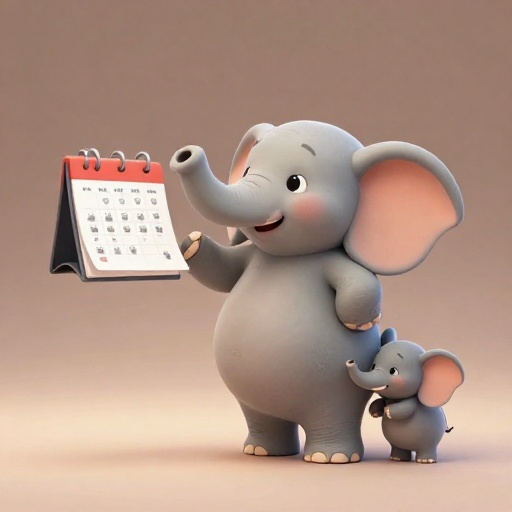
A cartoon pregnant elephant looking at a calendar marked with 22 months.

If you think waiting for your birthday is long, try waiting for an elephant baby! African elephants have the longest pregnancy of any mammal—an average of 22 months.

Asian elephants are close behind, with pregnancies lasting 18 to 22 months. That's nearly 700 days of waiting!

Scientists think this long time is needed so their giant, super-smart brains can fully develop before birth.

5

Baby Elephants Weigh More Than Two Grown Humans!

TL;DR

Newborn calves typically weigh between 200 to 264 pounds (90-120 kg)!

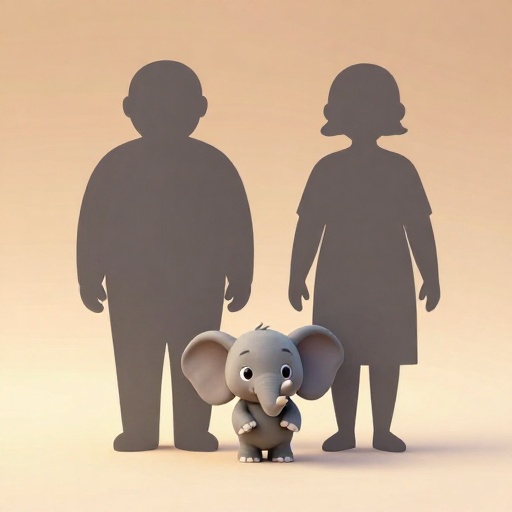
A cartoon baby elephant calf standing next to two human silhouettes to show its large weight.

Forget a 'small' baby; an average newborn elephant calf already weighs about 120 kg (or 264 pounds)! That’s heavier than most grown-up people!

Even the smaller Asian elephant babies start around 91 kg (200 pounds). They are ready to stand up within minutes of being born, though!

If you were the mom, you'd need the whole herd to help welcome your 3-foot-tall toddler!

6

African Ears are Map-Sized for Air Conditioning!

TL;DR

African elephant ears are huge and fan-shaped, looking like the map of Africa, to cool them down.

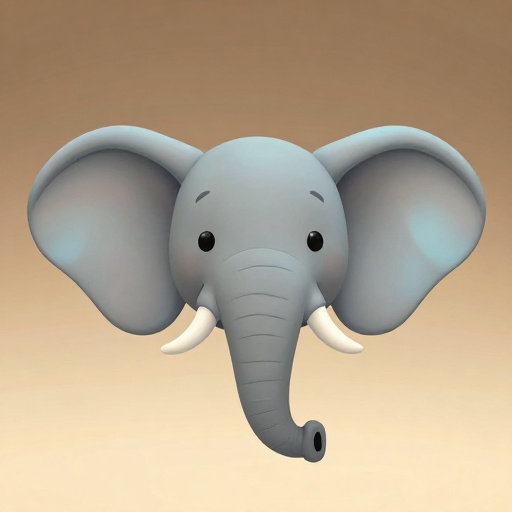
Cartoon African elephant with large ears fanned out like a map.

You can spot the difference instantly by looking at their ears! African elephants have massive, fan-shaped ears that look like the continent of Africa itself.

These giant ears are crucial because they have lots of blood vessels close to the surface. By flapping them, they cool the blood down—it's like carrying a built-in air conditioning fan!

Asian elephants have much smaller, more rounded ears, because they often live in shadier forests, needing less intense cooling.

7

They Can 'Run' Up To 25 km/h But Never Actually Leave The Ground!

TL;DR

Elephants can move surprisingly fast, reaching 25 km/h, but they don't have a true running gait.

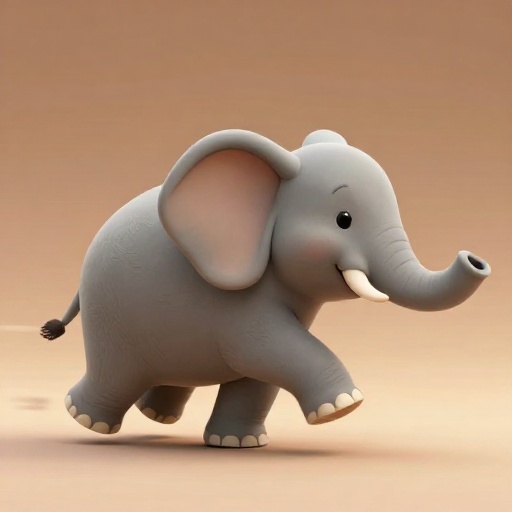
A fast-moving cartoon elephant that still has all four feet touching the ground.

Even though they are the largest land animals, elephants can move fast! They can hit speeds of up to 25 km/h (about 16 mph).

That's faster than the fastest human runner! But here’s the weird part: they never lift all four feet off the ground at the same time—a key part of running for most animals.

Instead, they use a bouncy walk that looks like running to us, but for scientists, it’s a special, super-speedy intermediate gait.

8

Their Brain is the Heaviest of ANY Land Animal!

TL;DR

An elephant’s brain weighs about 5 kilograms (11 pounds), which is four times the size of a human brain.

A cartoon comparison of a giant elephant brain next to a small human brain.

This massive size helps explain their incredible memory and smarts. The elephant brain weighs about 5 kilograms (11 pounds), making it the largest of any animal on land!

It has around 257 billion neurons—that’s about three times the number of neurons found in a human brain! Amazing!

This huge brain is why they can use tools, show compassion, and remember friends and enemies for decades.

9

Tusks are Just Super-Long, Growing Teeth!

TL;DR

Tusks are actually the elephant’s upper incisor teeth, and they grow continuously!

Cartoon diagram showing an elephant tusk as a very long tooth growing from the skull.

Elephant tusks aren't horns—they are two enormously long teeth, made of ivory (dentine, which is similar to human tooth material). They continue to grow their entire lives!

African elephants are the only ones where both males AND females grow big tusks. For Asian elephants, it's usually only the males that grow the long, visible ones.

They use these ivory tools for defense, digging for water in dry riverbeds, and stripping tasty bark off trees!

10

The Herd Leader's Memory Keeps Everyone Alive!

TL;DR

The oldest female, the matriarch, remembers migration routes and water sources for decades.

A wise cartoon matriarch elephant leading her herd by remembering a secret water source location.

Elephant society is run by the oldest female, the matriarch. Her memory is the herd’s survival guide for droughts and long trips.

She can recall the location of water holes from many years ago, even decades later! In one case, a herd returned to a water source they used 12 years earlier.

This massive, shared family memory is passed down, showing just how important knowing your family history is for an elephant!

Frequently Asked Questions

Are African and Asian elephants the same thing?

Nope! They are in different scientific groups (genera)! Besides ear size, only male Asian elephants usually have large tusks, while both male and female African elephants grow them.

What is an elephant's main job in nature?

Elephants are 'keystone species.' This means they have a huge impact on their environment by knocking down trees and digging for water, which helps create habitats for other animals!

How long do elephants live?

With their long pregnancies and smart brains, they take their time growing up. Most elephants live for about 60 to 70 years in the wild, just like humans!

Do elephants ever cry?

While we can't know exactly what they feel, elephants definitely show signs of [grief](/big-ideas/psychology/grief-for-kids/) when a family member dies. They will often touch the bones and stay near the body, showing deep social bonds.

Keep Exploring the Wild!

Aren't elephants the absolute BEST? From their secret long-distance calls to their two-fingered trunks, they prove that being big doesn't mean you can't be brilliant! Now you have 10 powerful facts—go share your new knowledge and keep learning, because the world is one giant, amazing adventure!

Explore More Facts
Audience Debug