10 Fun Facts

Invention Facts for Kids

Hold onto your thinking caps, adventurers! Inventions are the secret ingredients that made your video games, homework, and even your super comfy chair possible. But did you know some of the coolest gadgets were invented by total accidents? We’re diving deep into the facts—no fluff, just mind-blowing numbers and shocking moments that brought us the world as we know it. Get ready to discover the real stories behind the lightbulb, the phone, and so much more!

1

The First Phone Call Was Just Two Letters Long

TL;DR

Alexander Graham Bell’s first phone call was supposed to be “LOGIN,” but it only sent “LO” before the system crashed!

A cartoon drawing of an old telephone receiver with the letters L and O floating above it.

The famous first phone call happened on March 10, 1876, between Alexander Graham Bell and his assistant, Thomas Watson.

Bell was in one room and Watson was just a few rooms away in Boston, proving the device worked.

He intended to say the word “LOGIN,” but the machine quit after the first two letters. So, the actual first words spoken over the telephone were simply “LO”!

Luckily, they fixed the system about an hour later so he could say the full, intended sentence: “Mr. Watson–come here–I want to see you.”

2

The Wheel is Way Older Than the Pyramids

TL;DR

The first wheels weren't for carts—they were potter's wheels invented around 3500 BCE, before the Great Pyramids!

A cartoon drawing of an ancient potter using a spinning wheel to shape a clay pot.

You might think of cavemen rolling logs, but the wheel showed up way later, around 3500 BCE in Mesopotamia.

The very first wheels weren't for transportation at all! They were used as potter’s wheels for shaping clay.

It took another 300 years before people figured out how to put wheels and axles together for carts and wagons.

That means the wheel was around for about 800 years before the first Great Pyramids of Giza were even started around 2700 BCE!

3

The Internet Started With 'LO' and a Crash

TL;DR

The first message sent over the ARPANET on October 29, 1969, was the letters 'LO' before the system crashed.

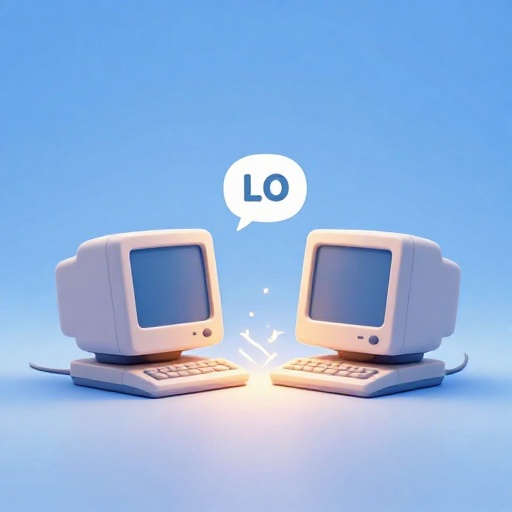
Two old cartoon computers with a broken connection line between them, showing the letters 'LO'.

The very first message on the network that would become the Internet—called ARPANET—was sent on October 29, 1969.

A programmer at UCLA tried to type the word “LOGIN” to a computer at Stanford Research Institute (SRI), which was 350 miles away!

He typed the 'L', got a confirmation, typed the 'O', got a confirmation, but when he typed the 'G', the whole system crashed.

So, the literal first message sent across the early Internet was just 'LO'!

4

Penicillin Saved One Man for Four Days, Then Ran Out

TL;DR

The first human patient treated with penicillin recovered amazingly fast, but the drug supply ran out, and he died.

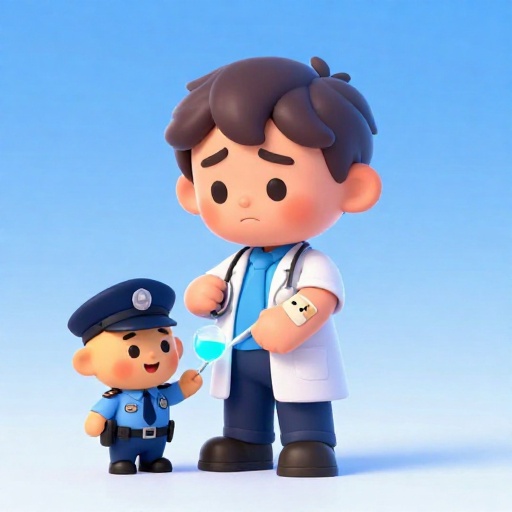
A cartoon doctor giving an injection of glowing blue liquid to a policeman's bandaged arm.

In February 1941, a 43-year-old policeman named Albert Alexander was the first person to receive the powerful drug penicillin.

He had a deadly infection from a simple scratch, but after the injection, his health improved remarkably within 24 hours!

Sadly, the world only had a tiny amount of the drug. Doctors had to extract the penicillin from his urine to re-inject him.

But the precious supply ran out, and he passed away a month later, showing how badly they needed to learn how to mass-produce it.

5

Edison's 'Practical' Lightbulb Needed a Bamboo Filament

TL;DR

Thomas Edison’s lightbulb that lasted for hours used a filament made from carbonized bamboo that could burn for up to 1,200 hours.

A cartoon drawing of a classic lightbulb with a glowing bamboo filament inside.

Thomas Edison's team tested over 3,000 different designs for a lightbulb that wouldn't burn out instantly!

In October 1879, they finally got one to burn for 14.5 hours using a filament made from cotton thread.

The best material they found was carbonized bamboo, which could keep the light on for up to 1,200 hours!

This was the breakthrough that made electric light systems practical for homes for kids everywhere.

6

The Compass Was First Used for Fortune Telling, Not Sailing

TL;DR

Chinese compasses, made of lodestone spoons, first appeared around the 4th century BC to harmonize living spaces (Feng Shui), not to navigate ships.

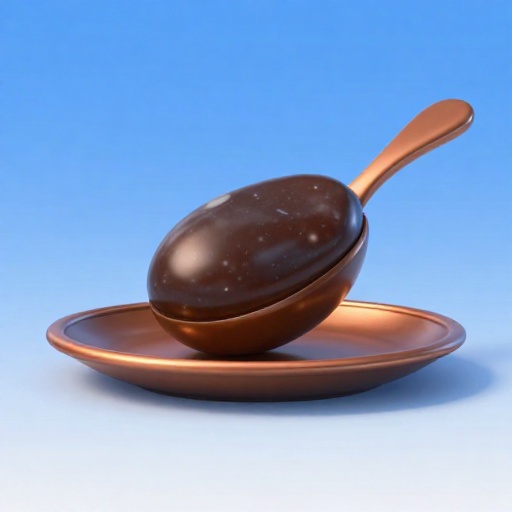
A cartoon drawing of an ancient lodestone spoon compass on a bronze plate pointing in one direction.

The first magnetic compasses appeared in China around the 4th century BC and were made from a naturally magnetic rock called lodestone.

They weren't used for finding North on the ocean; instead, they looked like a spoon that would settle pointing South to help people order and harmonize their environments—a practice called Feng Shui.

It wasn't until the 11th century AD that Chinese sailors began using a magnetized needle version for maritime navigation.

That's a difference of over 1,400 years between using it for magic layout and using it for finding your way!

7

The Printing Press Could Print 3,600 Pages Per Day

TL;DR

Johannes Gutenberg's press could print up to 3,600 pages per workday, which was 90 times more than copying by hand!

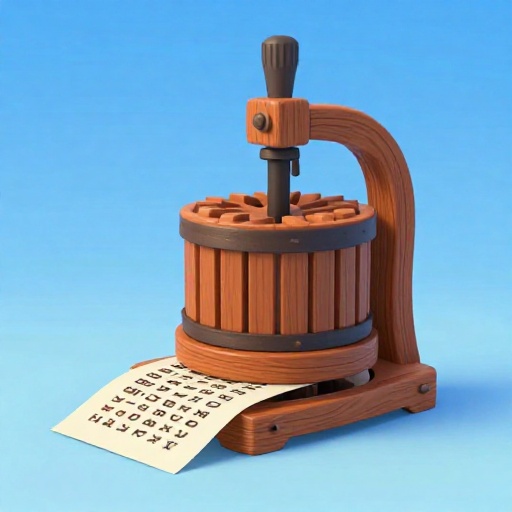
A cartoon drawing of a large wooden printing press pushing down on paper with metal letters.

Johannes Gutenberg invented his movable-type printing press around 1440 in Germany, launching the Printing Revolution.

Before this, a scribe copying a book by hand might only manage a few pages a day. Gutenberg’s press could crank out up to 3,600 pages in a single workday!

By 1500, just a few decades later, printing presses across Western Europe had already produced over 20 million volumes.

That's like having 90 times the speed of hand-printing—imagine how fast knowledge traveled!

8

Super Glue Was Invented While Trying to Make Clear Gun Sights

TL;DR

The super-strong adhesive, cyanoacrylate, was discovered in 1942 while a chemist was trying to make clear plastic for WWII gun sights.

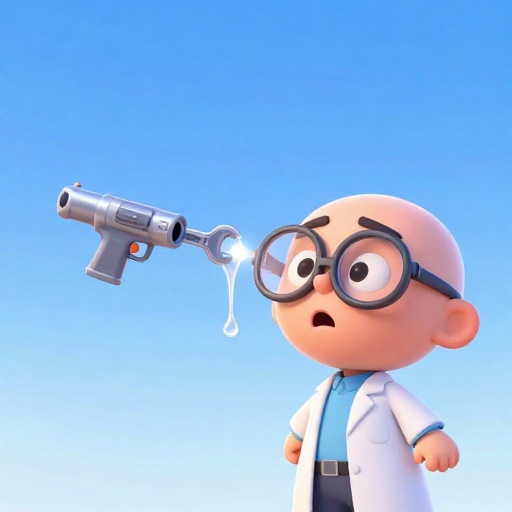
A cartoon scientist looking amazed as two objects are stuck together by a drop of super glue.

Chemist Dr. Harry Coover and his team were trying to invent a clear plastic for precision gun sights during World War II in 1942.

Instead, they accidentally created cyanoacrylates, a substance so sticky it bonded instantly to everything they touched!

The team thought it was a failure because they couldn't separate anything they stuck together.

It took over a decade before someone realized this 'failed' mess could be the best glue ever for quick repairs!

9

The Steam Engine Was First Used to Pump Water, Not Move Trains

TL;DR

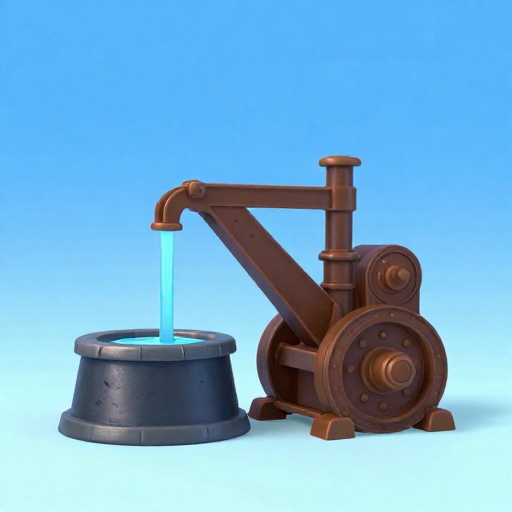
The first commercially successful steam engine by Thomas Newcomen in 1712 was designed to pump water out of deep coal mines.

A cartoon drawing of an old steam engine pumping water out of a mine shaft.

Before the Industrial Revolution had cool trains, the steam engine’s first big job was getting rid of water.

Thomas Newcomen’s engine in 1712 was the first one that worked well enough to be used in coal mines to pump out flood water.

It was a piston and cylinder engine that used the power of a vacuum created by steam condensing to lift the water.

It took James Watt’s later improvements in 1781 to make an engine that could turn a shaft and power factory machinery!

10

The Microwave Was Born From a Melted Candy Bar

TL;DR

Percy Spencer, testing radar equipment in 1945, noticed a chocolate bar in his pocket melted, leading to the microwave oven.

A cartoon scientist looking surprised at a melted chocolate bar sticking out of his pocket near a glowing tube.

In 1945, Percy Spencer was working on a new magnetron tube for military radar technology—not for cooking!

He noticed the chocolate bar in his pocket had completely melted while he was near the device—whoops!

He immediately tried popcorn kernels next, which popped everywhere, and then an egg, which exploded!

This series of 'oops' moments led him to create the first box to control the energy and cook food super fast.

Frequently Asked Questions

Who invented the Internet?

The Internet grew from the ARPANET, a network funded by the U.S. Defense Department in 1969 to share research computers. No single person invented it; it was a huge team effort involving many pioneers.

What was the printing press based on?

Johannes Gutenberg adapted his printing press design from existing **screw presses**, which were used for making wine, oil, or paper. He just made it perfect for printing!

Did Alexander Fleming mean to discover Penicillin?

Nope! He returned from vacation on September 28, 1928, to find mold (*Penicillium notatum*) growing on a dish of bacteria and noticed the bacteria near the mold were dying. It was totally by chance!

What was the first commercially successful steam engine used for?

Thomas Newcomen’s engine in 1712 was first used to **pump water out of deep coal mines** so miners could work more safely and efficiently.

Your Turn to Innovate!

Isn't that wild? Every amazing invention you see today started as an idea, a need, or even a complete accident! Remember that the next 'world-changing' discovery might be hiding in your own messy drawer or in a test that seems to fail. Keep asking 'what if' and stay curious, because you are the next generation of inventors!

Explore More Facts
Audience Debug