10 Fun Facts

Olympics Facts for Kids

Welcome, future champions, to the ultimate adventure through time and sport: The Olympic Games! Forget boring history lessons. We’re diving into the shocking, sweaty, and spectacular world where heroes are made every four years. You think your soccer practice is tough? Wait until you hear what the first winners got for their efforts! Get ready to discover incredible details about the games that unite the entire planet!

1

Ancient Winners Got a Salad, Not Gold!

TL;DR

Ancient Olympic winners were crowned with a wreath made of 17 or 18 wild olive branches.
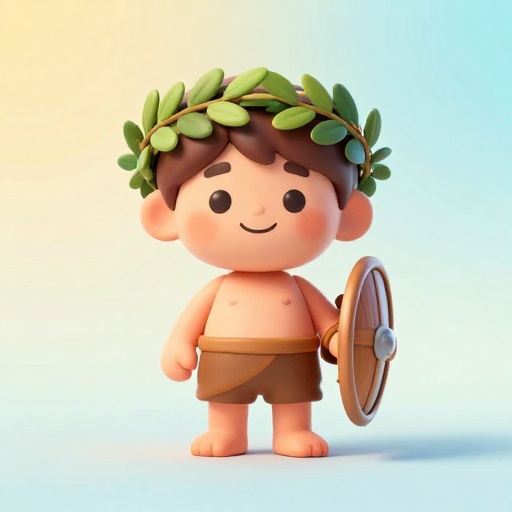
Pixar-style cartoon of an ancient Greek athlete with a laurel wreath on his head, looking happy.

Imagine training for years only to win a tree branch! In the ancient Olympics, the top prize wasn't a shiny medal but a crown called a kotinos.

This wreath was cut from a special wild olive tree, and a young boy whose parents were both alive had to cut exactly 17 branches (later changed to 18) using gold scissors!

That wreath was said to give the winner divine qualities, almost like a Greek god. Now that’s a humble prize for being the world’s best!

2

The Modern Games Started with Only 241 Athletes!

TL;DR

The first modern Olympics in 1896 in Athens had just 241 athletes, and they were all men.

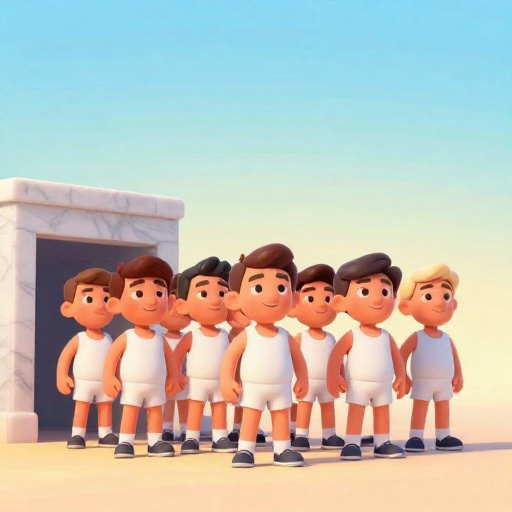
Cartoon of a small group of male athletes from 1896 looking excited and nervous.

When the modern Olympics were reborn in 1896 in Athens, Greece, it wasn't the massive global party it is today. Only 241 athletes showed up!

Even crazier- they were all men! Women didn't start competing until the 1900 Paris Games. Talk about a boys' club!

Host nation Greece had the biggest team, but the US won the most gold medals that year.

3

The Newest Gold Medal Has a Piece of the Eiffel Tower!

TL;DR

The Paris 2024 gold medals weigh 529 grams and include a piece of iron from the Eiffel Tower.

Pixar-style cartoon of a heavy gold medal with a piece of dark metal inside.

Forget pure gold, the newest medals have a secret ingredient that makes them super unique: a tiny piece of the Eiffel Tower!

The 2024 Paris gold medal weighs 529 grams—that’s heavier than a large bag of sugar! Only 6 grams of that is real gold plating.

The real treasure is the piece of puddle iron from the Tower, cut into a hexagon shape and placed right in the center. How cool is that for a souvenir?

4

The Games Once Paused for Over 1,500 Years!

TL;DR

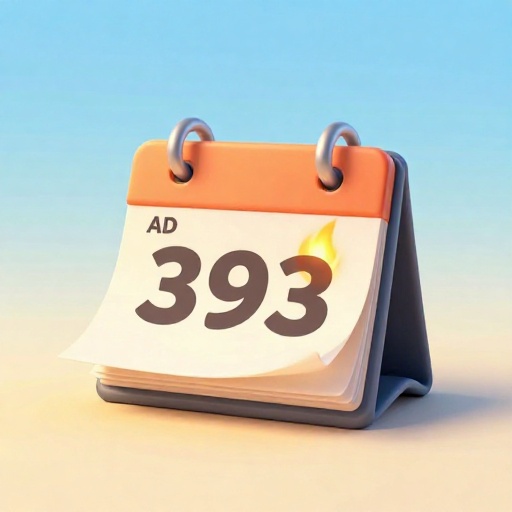
The ancient Olympics stopped in AD 393 and didn't restart until 1896.

Cartoon showing a long gap between two years on a calendar, marking the ancient Olympics' end and modern return.

That’s a thirteen-century break! The ancient games were banned by an Emperor in AD 393 because they were seen as a pagan festival.

For more than 1,500 years, the torch was officially out. It took the vision of Baron Pierre de Coubertin to bring them back in 1896.

Think of all the history that happened during that break—castles built, empires rising and falling—and no Olympics at all!

5

One Olympian Competed Across 72 Years!

TL;DR

Swedish shooter Oscar Swahn was the oldest Olympian ever, competing until he was 72 years old.

Pixar-style cartoon of an elderly shooter competing in the Olympics.

Most people retire from sports when they are in their 30s or 40s, but not Oscar Swahn! This Swedish shooter was a total legend.

He won his first gold medal in 1908 at the age of 60! That’s older than most teachers or parents!

He then competed in two more Games, making him the oldest Olympian ever when he finished his final competition at age 72.

6

The 100m Race Record Dropped by Nearly 3 Seconds!

TL;DR

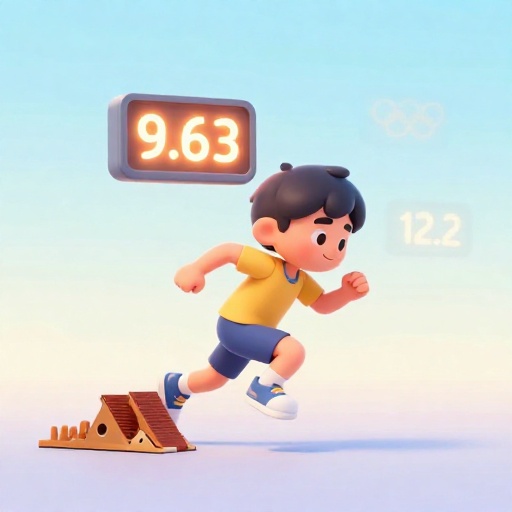
The men's first Olympic 100m time was 12.2 seconds in 1896; now the record is 9.63 seconds.

Cartoon comparing a very fast modern 100m runner with an older, slower time displayed.

The very first modern Olympic 100m race in 1896 was won with a time of 12.2 seconds. That’s way slower than your stopwatch might show today!

Today’s men’s Olympic record, set by Usain Bolt, is an unbelievable 9.63 seconds. That means modern runners are blowing past the old record by almost 3 full seconds!

The women’s race wasn't even added until 1928!

7

Winter and Summer Games Didn't Always Alternate!

TL;DR

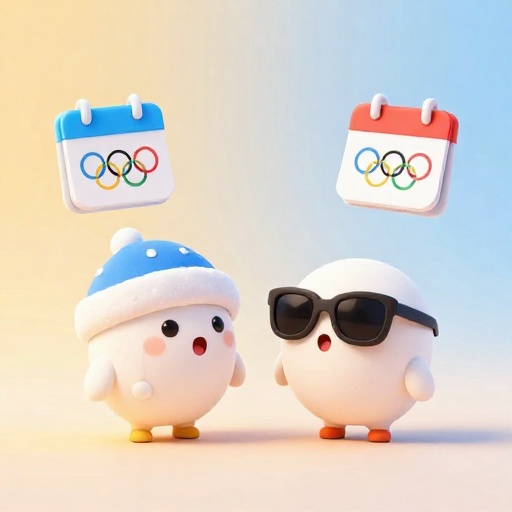
For decades, Summer and Winter Games happened in the same year until 1992.

Pixar-style cartoon of two different Olympic mascots from Summer and Winter games looking surprised.

You might think the Summer and Winter Olympics are always two years apart, but they used to be roommates! They were held in the very same year.

This happened every four years until 1992. Then the IOC decided to separate them to give each event its own spotlight.

The change meant the Winter Games skipped a cycle and came back two years early in 1994 to start the new, alternating pattern.

8

The Olympic Rings Symbolize Six Colors, Not Five!

TL;DR

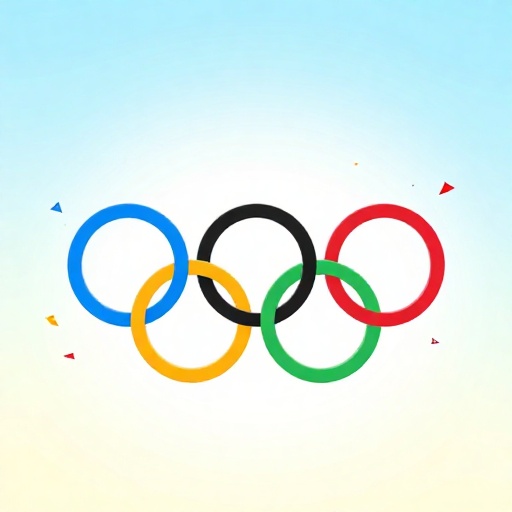
The five rings plus the white background use all six colors found on every nation's flag.

Pixar-style cartoon of the five Olympic rings against a white background with tiny flags.

We all know the five rings, but the designer, Pierre de Coubertin, chose the colors—blue, yellow, black, green, and red—for a secret reason!

When you add the white background of the flag, those six colors are the ones used on the flags of every single nation in the world at the time!

It’s a powerful symbol of total unity, even though the rings themselves only represent the five inhabited continents.

9

A Javelin Throw Record from 1996 is Still Unbroken!

TL;DR

The men's Javelin Olympic record is 92.97 meters (set in 2024), but the World Record is from 1996.

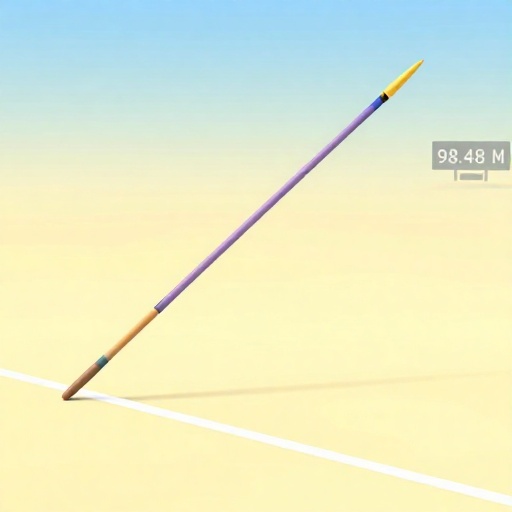
Pixar-style cartoon of a javelin flying an extremely long distance past a measurement marker.

The men's World Record for the Javelin throw is 98.48 meters, set by Jan Železný way back in 1996! That spear flew over 323 feet!

That throw was so far, they actually changed the rules for the javelin design because it was getting dangerous! Talk about too good!

The current Olympic Record is 92.97 meters, set by Arshad Nadeem in 2024, which is still a massive distance.

10

The Ancient Stadiums Were Full of Wheat!

TL;DR

The main stadium in Olympia for the ancient games was sometimes planted with wheat when not in use.

Cartoon of an ancient stadium field partially covered in growing wheat.

The Panathenaic Stadium in ancient Olympia wasn't always a fancy sports venue. When the Games weren't happening, it was basically a field!

Experts believe that between Olympiads, the huge area that held over 40,000 people was sometimes planted with wheat.

So, athletes were running races across an ancient farmer's field! It was less a stadium and more a temporary gathering spot.

Frequently Asked Questions

How far apart are the Summer and Winter Olympics now?

They are now staggered, meaning they happen every **two years**, alternating between Summer and Winter Games during the four-year Olympic cycle.

What are the Olympic rings made of today?

The Paris **2024** gold medal weighs **529 grams** total, but it’s made of **92.5% silver** with only **6 grams** of gold plating, plus iron from the Eiffel Tower!

When did women first compete in the Olympics?

Women first competed in the modern Olympics in **1900** in Paris. The first official women's 100m sprint event wasn't added until **1928**.

What was the first event in the ancient Olympics?

The very first event recorded in the ancient Olympics in **776 BC** was a single footrace called the *stadion*.

Your Turn to Go for Gold!

See? The Olympics are more than just sports- they’re history, science, and human spirit all rolled into one giant, amazing event! Now you know the secrets behind the medals and the myths. Keep exploring the records, cheer for the next generation of heroes, and remember: even the smallest start, like a single olive branch, can lead to world-changing glory!

Explore More Facts
Audience Debug