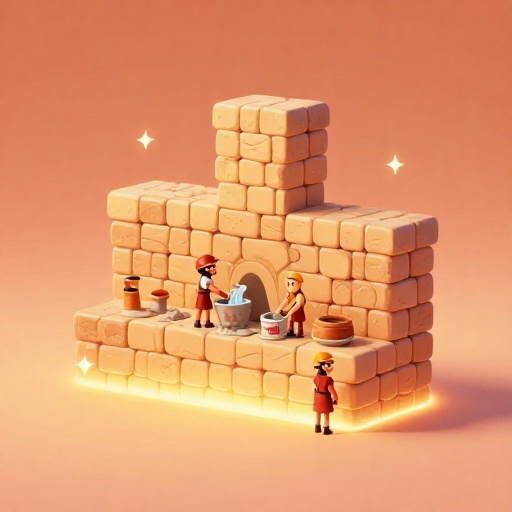
10 Fun Facts

Roman Facts for Kids

Welcome, history adventurers! Forget boring timelines and dusty textbooks—we’re diving headfirst into the world of Ancient Rome, where emperors ruled, gladiators battled, and buildings were built to last forever! The Romans were master builders, brilliant fighters, and lived in a world that sounds totally wild to us today. Get ready, because these 10 facts will show you why this massive empire still blows our minds in 2026!

1

The Roman Empire Lasted Longer Than You Can Count!

TL;DR

The unified Roman Empire lasted nearly 1,500 years!

Cartoon illustration of an extremely long Roman calendar scroll to show the empire's long duration.

Think about how old your grandparents are. Now imagine something lasting way longer than that! The Roman Empire, from its start with the first emperor in 27 BCE until the Western half fell in 476 CE, lasted for about 480 years of pure imperial rule.

But wait, the Eastern half (later called the Byzantine Empire) kept going! If you count the entire civilization from its traditional start in 753 BCE until the very last bit fell in 1453 AD, that’s an unbelievable 2,206 years! That's long enough for you to be born, grow up, have kids, and for them to grow up—about 80 times over!

That is over 2,000 years of Roman civilization—that's not just history, that’s a HUGE chunk of our whole world's story!

2

The Colosseum Could Seat 80,000 People

TL;DR

The Colosseum held up to 87,000 spectators—more than most huge modern stadiums!

Cartoon illustration of the massive Colosseum filled with thousands of tiny, cheering spectators.

The famous Colosseum, where gladiators fought, wasn't just big, it was a mega-venue! While modern estimates often say it held about 50,000 to 65,000 people for big games, one ancient calendar claims it could fit an astounding 87,000 spectators!

To put that in perspective, that’s like fitting almost every single kid in a giant stadium just to watch the action! They had 80 entrances to get everyone in and out, which shows they were experts at moving huge crowds.

Imagine the noise! They had to build it to handle that massive crowd, showing off Roman architectural power for all the citizens to see.

3

Roman Roads Stretched Further Than You Can Drive in a Week

TL;DR

Romans built over 250,000 miles of roads, 50,000 of them stone-paved!

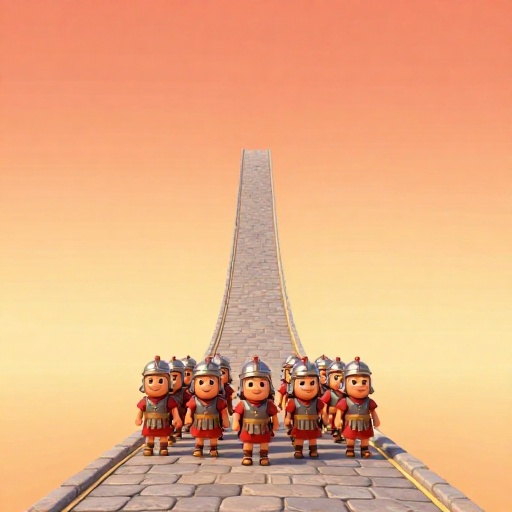
Cartoon illustration of a long, straight, layered Roman road with marching soldiers.

When we talk about Roman roads, we aren't talking about little dirt paths! At their peak, the Empire boasted a network of over 400,000 kilometers (250,000 miles) of roads connecting everything from Britain to Egypt.

Even more impressive, more than 80,500 kilometers (50,000 miles) of these were stone-paved highways! If you drove non-stop on a modern highway for 10 hours a day, it would take you days just to cover the length of the stone-paved sections alone!

These weren't just for chariots either. They were built with layers—foundation, crushed rock, and pavement—so solid that some are still in use today, buried underneath modern streets. That's some next-level construction for kids learning about engineering!

4

They Used Enough Water to Fill 100,000 Swimming Pools Daily!

TL;DR

Rome's 11 aqueducts brought in up to 260 million US gallons of water every day!

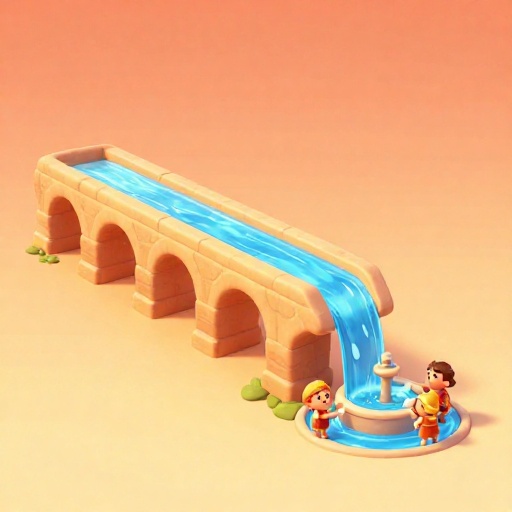
Cartoon illustration of a Roman aqueduct arch carrying water to a public fountain in a city.

The Romans loved being clean, and they solved their water problem with amazing structures called aqueducts! At their height, the eleven main aqueducts flowing into the city of Rome supplied an estimated 520,000 to 635,000 cubic meters of water per day.

That works out to around 137 million to 168 million US gallons of fresh water flowing into the city every single day! That’s enough water to fill over 150 Olympic-sized swimming pools daily!

This incredible supply watered 1,200 public fountains, fed the huge public baths, and gave the average Roman citizen about 200 gallons of water per day—way more than many people use now! Talk about water power!

5

Gladiators Wore Shields That Weighed as Much as a Toddler

TL;DR

The curved Roman shield, the scutum, weighed about 22 pounds (10 kg)!

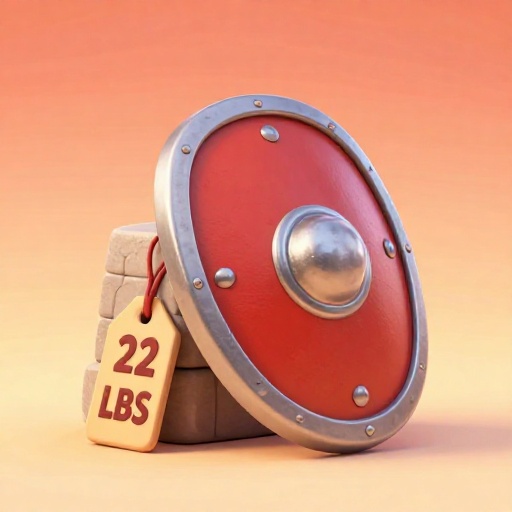
Cartoon illustration of a heavy Roman scutum shield with a weight tag showing 22 pounds.

When you picture a gladiator, you probably see that big, curved shield—the scutum. This wasn't made of plastic, kids! It was made of layers of wood, covered in leather, and had a metal boss in the middle.

An average excavated scutum weighed about 10 kilograms (22 pounds). That’s like carrying a big bag of dog food or a 4-year-old child on one arm while you fight!

They used this heavy shield to form the famous testudo or 'tortoise' formation, locking shields together for near-perfect overhead protection. It was heavy, but it made the Roman legionary the toughest soldier on the battlefield!

6

A Roman Legion Was a Tiny Army All Its Own

TL;DR

An Imperial Roman legion had about 5,280 soldiers, plus 120 support troops!

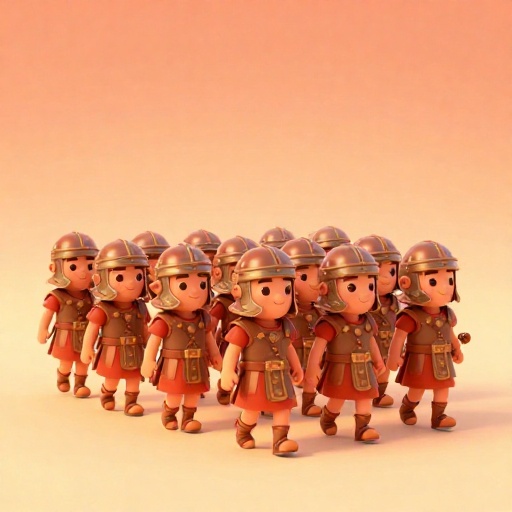
Cartoon illustration of many Roman legionaries marching in a long, organized line.

The backbone of Roman power was the legion. It wasn't just a group of soldiers, it was a highly organized fighting machine, split into 10 cohorts.

During the Imperial period, a full legion usually had about 5,280 legionaries plus 120 auxiliaries (support troops). That’s over 5,400 men working together!

To compare, a modern US Army infantry battalion has around 800 soldiers. So, one Roman legion was almost seven times bigger than a modern battalion! Imagine that many people marching—it would stretch for miles!

7

Julius Caesar Was Murdered Right Before He Could Conquer the Whole World

TL;DR

Julius Caesar was assassinated in 44 BCE, stopping his plans to invade Parthia.

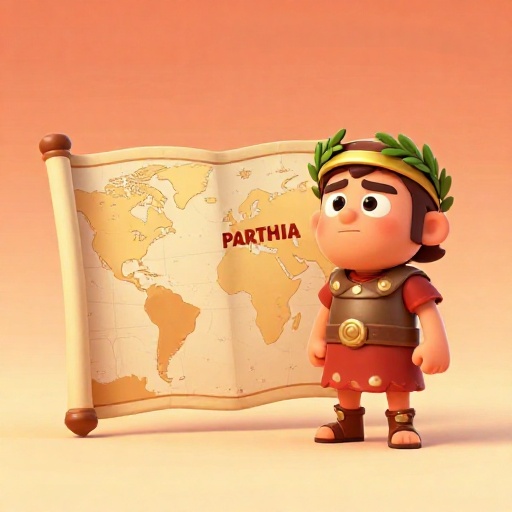
Cartoon illustration of Julius Caesar pointing at a map showing the unexplored region of Parthia.

Julius Caesar was one of history's biggest celebrities—a general and statesman whose name still means 'ruler' today (like in Kaiser or Tsar)! He conquered massive areas like Gaul (modern France) and was about to achieve even more.

He was planning a huge invasion of the powerful Parthian Empire in the East, which would have pushed the Roman borders even further than they ever went before. This would have made the Empire gigantic!

Sadly, a group of senators, scared of his power, stabbed him 23 times on the Ides of March (March 15th), 44 BCE! He never got to launch that final, world-changing war.

8

Romans Invented Super-Strong Concrete That Still Works Today

TL;DR

Roman concrete used volcanic ash (pozzolana) making it stronger than modern concrete in some ways!

Cartoon illustration showing a cross-section of a Roman concrete wall with volcanic ash being mixed in.

You probably think concrete is just for sidewalks, but the Romans were master builders who made an incredible version! They mixed lime, water, and a special ingredient called pozzolana—a fine volcanic ash found near Mount Vesuvius.

This mix made their concrete better than ours in one way: modern concrete often has steel bars inside, which can rust and make the building crack. Roman concrete, with no steel to corrode, has lasted for two thousand years!

The famous Pantheon dome, which is still standing, uses this concrete. In the dome, they cleverly used lighter rocks like pumice near the top to make it less heavy, showing off amazing balance for such an old structure!

9

Nero's Palace Covered 250 Acres and Had a Rotating Room

TL;DR

Emperor Nero built the Domus Aurea, a huge palace complex that covered 100 hectares (250 acres)!

Cartoon illustration of a rotating golden dining room from Nero's palace.

After the Great Fire of Rome in 64 AD, Emperor Nero built the most ridiculously lavish house ever: the Domus Aurea, or 'Golden House'. This wasn't a house, it was a mini-city!

It covered about 100 hectares (250 acres), spanning three hills. That's like taking over 190 football fields and turning it into one giant backyard with forests, fields, a man-made lake, and statues everywhere!

The craziest part? His main dining hall was rumored to rotate slowly, mimicking the heavens! Imagine eating pizza while your whole room slowly spins—talk about a wild party.

10

The Colosseum Was Used for Mock Sea Battles!

TL;DR

The arena floor could be flooded with water for staged naval battles called Naumachiae.

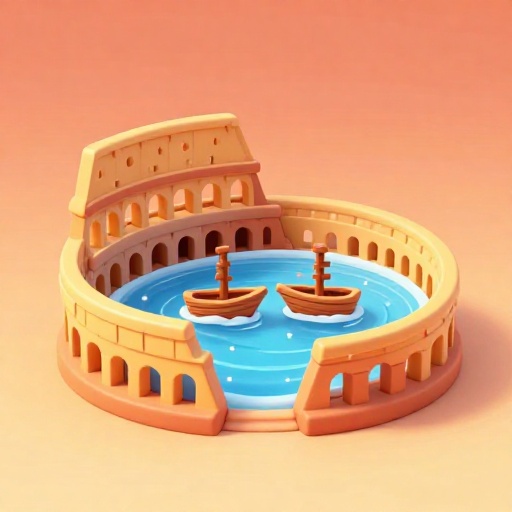
Cartoon illustration of the Colosseum arena flooded with water with two small ships inside.

Before the underground tunnels (hypogeum) were built, the Colosseum’s arena floor—which measured 83 meters long by 48 meters wide—was made of wood and could be filled with water!

That’s right, they held mock sea battles, called Naumachiae, right in the middle of the arena! They somehow rigged up the water system to flood the area so that small warships could 'fight' for the entertainment of the crowd.

It’s amazing to think that the same place where fierce gladiators fought could be turned into a giant, shallow swimming pool for an afternoon show. It shows how creative—and maybe a little crazy—Roman entertainment could be for kids to learn about!

Frequently Asked Questions

What was the most famous Roman leader?

That has to be **Julius Caesar**! He was a brilliant general and politician. He expanded Rome's territory a ton before he was assassinated in **44 BCE**.

Did Romans really wear togas all the time?

Not really! The toga was formal wear, kind of like a fancy suit today. Most Romans wore a simple **tunic** for daily life, which was much easier to move around in, especially for work or sports!

Why did the Roman Empire fall?

It’s super complicated, but the Western Empire finally collapsed in **476 AD**. Reasons include too much fighting, money problems, and invasions from other groups, making the whole system too big and weak to manage.

What was the Colosseum's real name?

Its original name was the **Flavian Amphitheatre**, named after the family of emperors (Vespasian, Titus, Domitian) who built it! 'Colosseum' was a nickname that came later, maybe because of a giant statue near it.

How wide were regular Roman roads?

The main, stone-paved highways were usually between **5.5 to 6.0 meters (18 to 20 feet)** wide. That’s just wide enough for **two large carts** to pass each other slowly!

Time to March On!

Wow! You just mastered 10 unbelievable secrets of the Roman Empire, from 2,000-year-old concrete to boat fights in the Colosseum! You are officially a Kidopoly History Expert. The world of Ancient Rome is deeper than you can imagine—keep exploring, keep questioning, and let's see what amazing adventure we discover next!

Explore More Facts
Audience Debug