10 Fun Facts

Sun Facts for Kids

Strap in, adventurers, because today we are zooming to the center of our entire cosmic neighborhood: the Sun! You might think it’s just a big, warm lightbulb in the sky, but trust us-that is the understatement of the century. This fiery ball is a powerful, churning giant that controls everything around it. Get ready to learn ten spectacular, shocking truths about our star for kids!

1

You Could Fit 1.3 Million Earths Inside!

TL;DR

The Sun's volume is over a million times bigger than Earth's!

A giant, friendly Sun with 1.3 million tiny Earths packed inside its massive volume.

Imagine trying to cram every single person and toy you know into one massive classroom-then multiply that by over a million! That's how much bigger the Sun is than our home planet.

The Sun’s volume is about 1,300,000 times the volume of Earth. If you lined up 109 Earths across the Sun's middle, they would just fit!

It holds 99.86% of all the stuff in our entire Solar System. Seriously, we are just tiny passengers floating around its massive gravity!
2

Its Core is 27 Million Degrees Fahrenheit Hot!

TL;DR

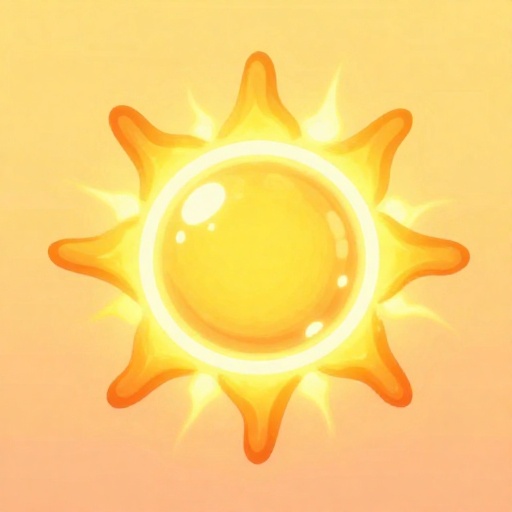
The Sun's center is 27,000,000 °F, hot enough to turn anything into plasma.

The Sun's core depicted as a very hot, glowing center with extreme heat radiating outwards.

The Sun is not just hot-it’s outrageously, unbelievably hot! The temperature on the surface (the part we see) is a 'cool' 10,000 °F.

But you need to go deep inside to the core where the magic happens. Down there, it hits a mind-blowing 27 million degrees Fahrenheit (15 million degrees Celsius)!

That heat is so intense it turns the gas into a super-charged state called plasma-it’s way hotter than any fire you can imagine.

3

Its Light Takes 8 Minutes and 20 Seconds to Reach You

TL;DR

The sunshine you feel right now left the Sun 8 minutes and 20 seconds ago.

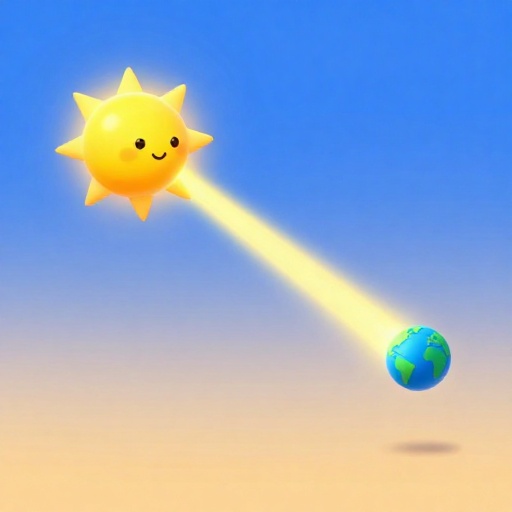
A beam of light traveling from the Sun to Earth, illustrating the 8-minute travel time.

Think about how fast light is-it's the fastest thing in the universe! Even at that speed, it still takes a journey to get here.

Light leaves the Sun and zooms across the 93 million miles (150 million kilometers) to your eyes in about 8 minutes and 20 seconds.

This means you are always seeing the Sun as it was over 8 minutes ago-if it suddenly switched off, we wouldn't know for over 8 minutes!

4

It Turns 600 Million Tons of Hydrogen to Energy Every Second

TL;DR

The Sun burns 600 million tons of hydrogen into energy every single second.

Cartoon depiction of nuclear fusion in the Sun's core, with hydrogen atoms turning into helium and releasing energy.

This is called nuclear fusion, and it’s how the Sun powers everything! It smashes hydrogen atoms together in the core to make helium.

The Sun is a fantastic fuel-converter, turning about 600 million tons of hydrogen into helium every second.

Even crazier, it converts about 4 million tons of that matter directly into pure energy-that's the light and heat we feel!

5

Solar Flares Can Reach 2,000 Kilometers Per Second

TL;DR

Solar flares shoot out particles up to 2,000 km/s—that's incredibly fast!

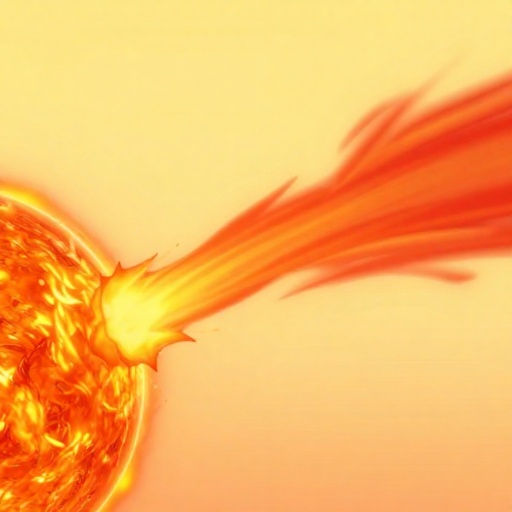
An illustration of a bright solar flare erupting from the Sun with high-speed energy streaks.

Sometimes the Sun gets a bit stormy and spits out huge bursts of energy called solar flares!

These flares can send plasma shooting away from the Sun at speeds reaching up to 2,000 kilometers per second.

That speed is so high it would take that energy less than 15 minutes to travel the entire 93 million miles to Earth!

6

The Sun's Atmosphere (Corona) is Hotter Than its Surface!

TL;DR

The Sun's outer atmosphere, the corona, gets hotter the farther out it goes.

The Sun's atmosphere, the corona, illustrated as a hotter, whiter halo surrounding the main yellow body.

This is one of space’s biggest puzzles! The 'surface' (photosphere) is about 10,000 °F, but the layer above it, the corona, can hit 1.8 million °F!

It’s like throwing a snowball at a bonfire and watching it get hotter the farther away it gets from the fire!

Scientists are still working hard to figure out exactly why this outer layer is so unbelievably scorching.

7

The Sunspots are HUGE-Earth could fit inside one!

TL;DR

Some sunspots are so large that the entire planet Earth could fit inside them.

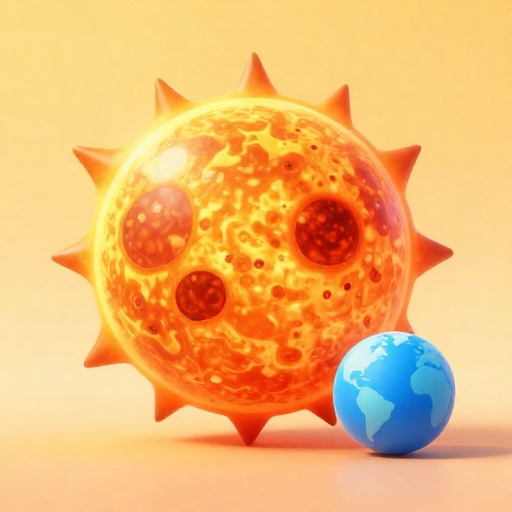
A massive dark sunspot on the Sun with a small Earth for size comparison, showing the sunspot is much larger.

Sunspots look like little freckles, but they are actually super cool (not really cool, just cooler than the rest of the Sun!) and dark magnetic storms.

The largest sunspots can be almost 12,000 times the area of Earth, meaning you could easily fit our entire world inside one!

They happen because the magnetic field lines get twisted up, like pulling a rubber band too tight.

8

It Has an 11-Year Cycle of 'Mood Swings'

TL;DR

The Sun goes through an 11-year cycle, going from 'solar minimum' to 'solar maximum' activity.

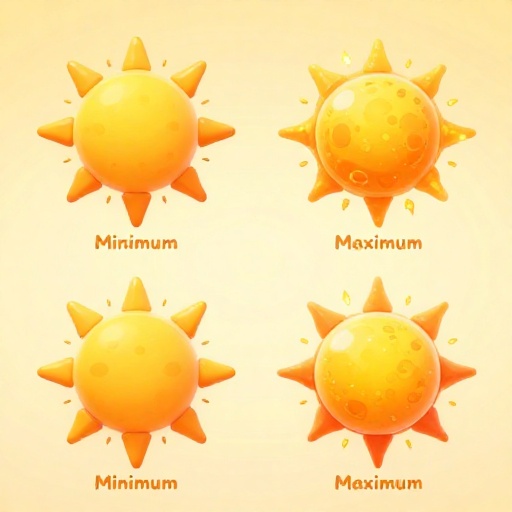
A split image showing the Sun during quiet solar minimum and active solar maximum phases of its 11-year cycle.

The Sun isn't always the same! Its magnetic field flips over every 11 years, causing its behavior to change dramatically.

At solar minimum, there are hardly any sunspots, and it's quiet. But at solar maximum, it gets grumpy, blasting out lots of flares and CMEs!

This predictable change is how scientists track space weather, helping us know when to watch for solar storms.

9

You Live Inside the Sun's Atmosphere!

TL;DR

The Sun’s atmosphere, the heliosphere, extends past all the planets!

The Sun surrounded by a vast, gentle bubble (heliosphere) containing all the planets.

The Sun’s breath, called the solar wind, is a stream of particles that flies out in all directions.

This wind creates a giant magnetic bubble around everything called the heliosphere, which stretches way past Pluto!

That means Earth is actually floating inside the Sun's gigantic atmosphere, which is wild for kids to think about!

10

It Will Become a Red Giant in About 5 Billion Years

TL;DR

The Sun has another 5 billion years before it swells up into a massive red giant star.

The Sun transforming into a huge, fiery red giant star for its future state.

The Sun is currently about 4.6 billion years old and is roughly halfway through its stable life.

In about 5 billion years, it will run out of its main fuel and puff up into a red giant star.

When that happens, it will get so big it will likely swallow Mercury and Venus, and maybe even our Earth!

Frequently Asked Questions

What is a solar eclipse?

A solar eclipse happens when the Moon passes directly between the Sun and Earth, blocking the Sun's light! It’s like the Moon perfectly photobombs the Sun for a few amazing minutes.

What is the Sun made of?

The Sun is a giant ball of super-hot gas called plasma. It's mostly made up of Hydrogen (about 71% of its mass) and Helium (about 25% of its mass).

Why is the Sun so important to us?

The Sun is the center of our solar system, and its light and heat are what allow life to exist on Earth! Without it, our planet would be a frozen, dark rock.

What are solar flares and CMEs?

Solar flares are huge bursts of light and energy. Coronal Mass Ejections (CMEs) are massive clouds of plasma shot out behind them. Both can affect Earth's electronics if they hit us!

Keep Looking Up (Safely!)

Wow, what an adventure through the heart of our solar system! You now know secrets about our star that most grown-ups don't even know. The Sun is more than just light and warmth-it’s a dynamic, powerful nuclear furnace. Keep that curiosity burning bright, explorers, because the universe is waiting for your next discovery!

Explore More Facts
Audience Debug