10 Fun Facts

Train Facts for Kids

All aboard, future engineers and adventurers! Forget slow, boring trips—trains are some of the most incredible machines humans have ever built. We're not just talking about chugging steam engines; we're diving into magnetic levitation marvels, iron ore behemoths, and historic iron roads that literally changed continents! Get ready to discover 10 substantial, mind-blowing facts about the world of trains that will make you see every track and tunnel in a whole new light!

1

The World's Fastest Train *Floats* Above the Track!

TL;DR

The Shanghai Maglev can reach 460 km/h by using magnets instead of wheels.
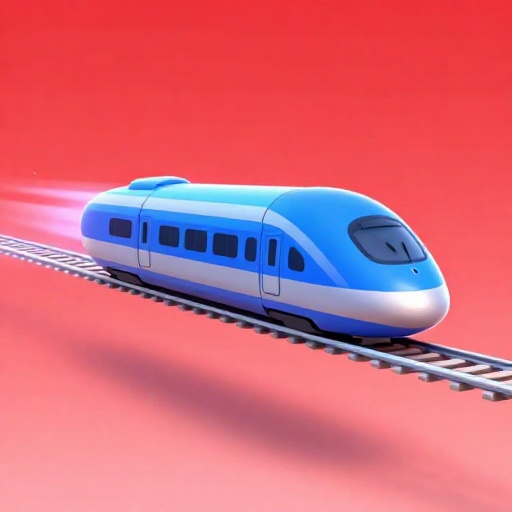
A futuristic, blue and silver Maglev train floating above its track.

Imagine zooming along at 460 kilometers per hour (about 286 mph)! That’s faster than most airplanes take off!

This isn't magic; it’s magnetic levitation, or 'Maglev.' Powerful magnets lift the train up about 4 inches off the special track, meaning zero friction slowing it down.

It’s so fast that on its short route in China, it covers about 30 km in only seven and a half minutes—a true speed champion for kids to learn about!
2

The Longest Train Ever Was Over **7 Kilometers** Long!

TL;DR

The record freight train in Australia had 682 cars and weighed over 99,000 metric tons!

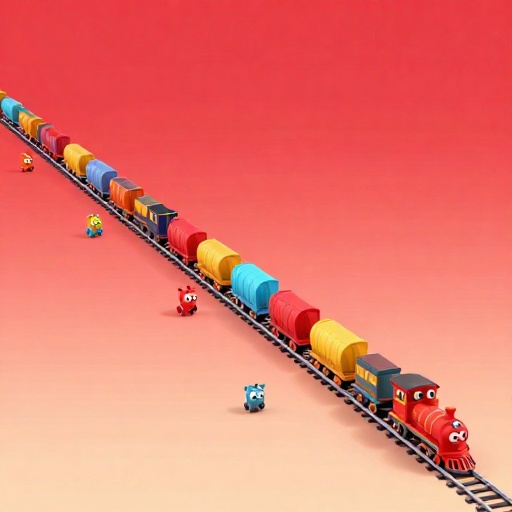
A record-breaking 7-kilometer long freight train composed of 682 ore cars.

Forget a normal long freight train—the actual world record holder was a monster! In 2001, a BHP Iron Ore train in Western Australia stretched an unbelievable 7.352 kilometers (4.57 miles) long.

To pull this massive load, they needed eight powerful diesel-electric locomotives, all controlled by one driver!

This train was so heavy—a total gross weight of 99,734 metric tons—it was like moving 402 Statues of Liberty all at once! That’s heavy-duty hauling for kids to picture!

3

Steam Locomotives Weighed as Much as **30 Blue Whales**!

TL;DR

The giant 'Big Boy' steam engine weighed over 386 tons before adding its coal and water.

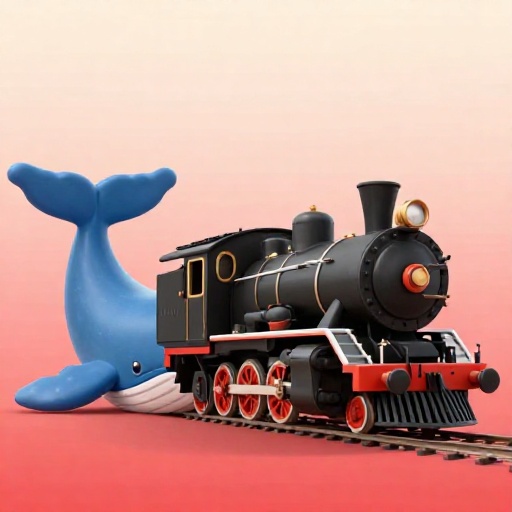
A huge steam locomotive next to a blue whale to show its massive weight.

The mighty Union Pacific 'Big Boy' steam locomotive, built in the 1940s, weighed 386.125 tons without its tender (the car carrying fuel and water).

That's heavier than 25 fully grown Tyrannosaurus Rex dinosaurs if they were real and stood side-by-side!

To make a comparison for kids: that's more than 175 large family cars all sitting on the engine alone! It took 25 of these giants to be built.

4

The US Coast-to-Coast Trip Went From Months to **7 Days**!

TL;DR

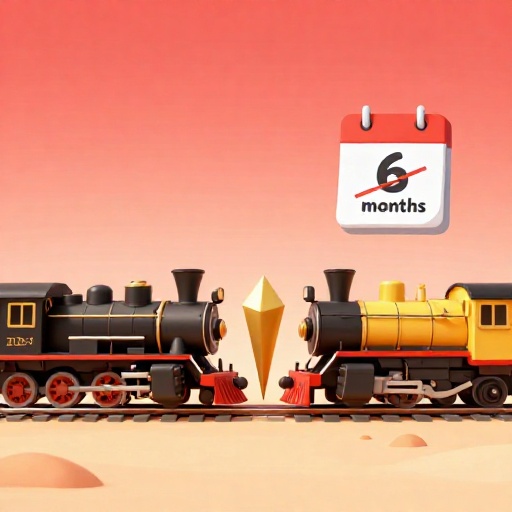
The Transcontinental Railroad of 1869 slashed coast-to-coast travel time from 6 months to 7 days.

Two historical trains meeting at the Golden Spike ceremony site in Utah.

Before the great Transcontinental Railroad, crossing the United States from the East Coast to the West Coast took about six months by wagon or ship—phew!

When the tracks finally connected at Promontory Summit, Utah, on May 10, 1869, that journey instantly shrank to just 7 days!

The entire hand-built track spanned an amazing 1,912 miles (about 3,075 km), linking the nation like never before for kids and families heading west.

5

The Highest Rail Bridge Ever is Taller Than the **Eiffel Tower**!

TL;DR

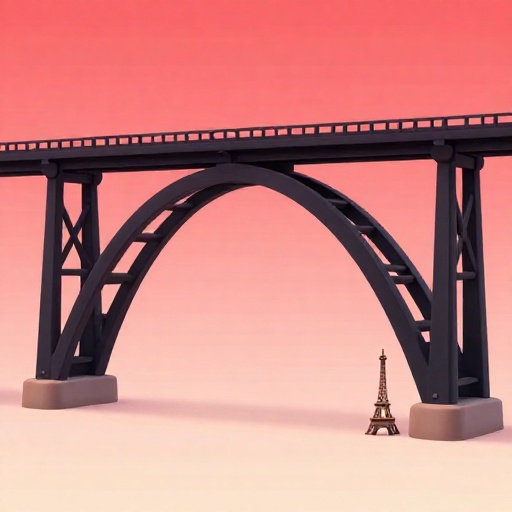
The Chenab Rail Bridge stands 359 meters high, beating the Eiffel Tower’s height!

The Chenab Rail Bridge soaring high above a river gorge, compared to the Eiffel Tower.

Check this out: the Chenab Rail Bridge in India is the highest rail bridge in the world, soaring 359 meters (1,178 feet) above the riverbed!

The Eiffel Tower in Paris is only about 330 meters tall, so this train bridge towers over the famous landmark!

It was completed in 2025 and uses a huge steel arch design to safely carry trains across the gorge.

6

Subway Trains Can Be So Short They Have Only **One Car**!

TL;DR

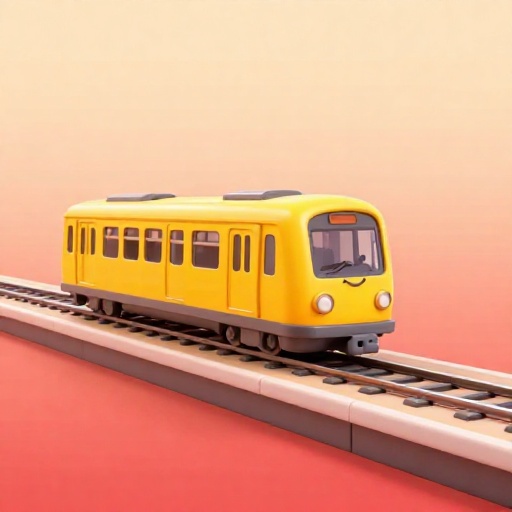
While long trains exist, some urban subway or light rail lines use trains as short as one car for low traffic.

A small, single-car subway train sitting on a long platform.

You probably picture massive passenger trains, but for some routes with fewer people, trains can be super short—sometimes just a single car!

This helps systems save energy when running during off-peak hours or on smaller branch lines.

Platform lengths at stations are a major reason for limiting train size, even if the engine could pull more cars.

7

The Oldest Working Railway is Still Moving Coal After **268 Years**!

TL;DR

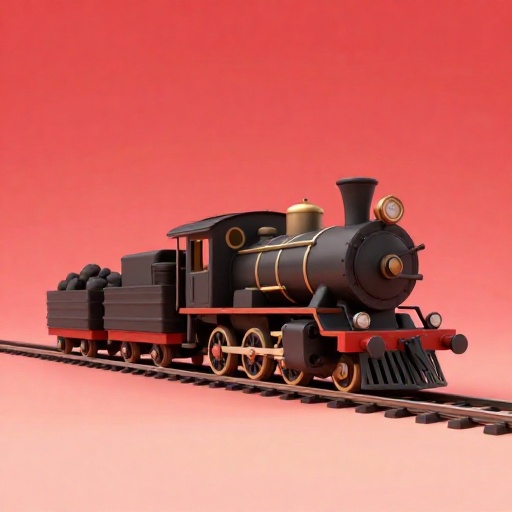
The Middleton Railway in England, established in 1758, is the world’s oldest continuously working railway.

A historic steam train hauling coal wagons on the Middleton Railway.

Get ready to feel old! The Middleton Railway in Leeds, England, was established way back in 1758 to haul coal from the colliery.

That means it’s been operating for 268 years—that's nearly three centuries of service!

It started as a 'wagonway' using horse-drawn carts, but in 1812, it became the first railway to commercially use steam locomotives!

8

The TGV Record Run Was Faster Than **100 Elephants** Running!

TL;DR

The French TGV set the steel-wheel speed record at 574.8 km/h in 2007.

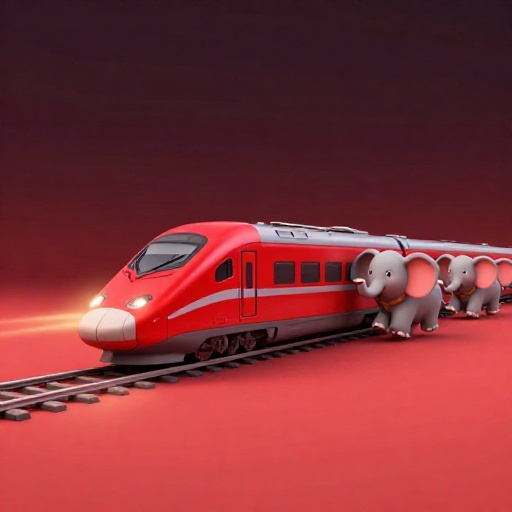
A very fast red TGV train passing a slow line of cartoon elephants.

The world record for a conventional wheeled train, set by the French TGV in 2007, was a blazing 574.8 km/h (357.2 mph)!

This jaw-dropping speed was achieved on a special test run on the LGV Est line, showing how powerful modern electric trains can be.

If a running elephant runs about 25 mph, this TGV was moving about 14 times faster than that!

9

The 'Golden Spike' Ceremony Used a **17.6-Karat Gold** Spike!

TL;DR

The ceremonial spike that finished the US Transcontinental Railroad in 1869 was 17.6-karat gold.

A large, shining golden railroad spike being symbolically hammered.

When the Union Pacific and Central Pacific railroads met on May 10, 1869, they celebrated by driving a ceremonial spike.

This famous 'Golden Spike' was made of 17.6-karat gold alloyed with copper and was tapped symbolically by Stanford.

The real spike was immediately swapped out for a regular iron one, and this treasure is now safely kept at Stanford University!

10

Modern Freight Trains Carry **12,500 Tons**—Double the Old Ones!

TL;DR

Modern railcars carry more, letting trains haul 12,500 tons, more than double the 4,440 tons of trains from the 1940s.

A visual comparison between a shorter, older freight train and a longer, modern freight train.

If you look at a freight car from the 1940s/50s, it could carry about 74 tons. A typical train had about 60 cars—totaling 4,440 tons!

Today's modern cars can carry about 125.5 tons each, and engineers run trains with 100 cars or more!

This means a modern giant can haul an incredible 12,500 tons of goods—that's over 181% more carrying power than the older trains for kids to track!

Frequently Asked Questions

What is a 'bullet train' exactly?

A bullet train is a super-fast passenger train, like Japan's Shinkansen or China's Fuxing Hao. They are designed to run on special, very smooth tracks to keep their high speeds, often reaching **320 km/h (200 mph)** or more!

What is the difference between a steam locomotive and a diesel one?

A steam locomotive burns fuel like coal or oil to boil water into high-pressure steam, which then pushes pistons to turn the wheels. Diesel locomotives use a powerful diesel engine to either turn the wheels directly or generate electricity to power the motors that turn the wheels—it's a much more modern system!

What did the term 'Transcontinental Railroad' mean?

It meant the *first* continuous railroad line connecting the East Coast and West Coast of the United States. Before it, travel between coasts took months; after **May 10, 1869**, it took only about a week!

How do massive freight trains stop safely?

Stopping a train that weighs nearly **100,000 tons** takes a long way! Engineers use special braking systems where the power is spread out, sometimes using locomotives in the middle or back of the train to help slow it down evenly, which takes a mile or more at speed.

Ready to Ride the Rails to Knowledge?

Wow, you just powered through some serious train history and science! From the incredible speed of Maglevs to the sheer brute force of the steam giants, trains are an amazing way to see how people use engineering to move mountains—or at least, a whole lot of iron ore! Keep that curious spirit on the tracks, and we'll see you on the next adventure!

Explore More Facts
Audience Debug