10 Fun Facts

Weather Facts for Kids

Hey Weather Explorers! Ready to go on an adventure where the sky is the limit—literally? Forget boring weather reports; we're diving into the most extreme, massive, and mind-bending facts about the weather that shapes our world. You think rain is just wet? Think again! Let’s check out the Earth’s wildest hits!

1

The Lightning Bolt That Stretched Across 3 States!

TL;DR

A single lightning flash once traveled 515 miles across three states!

A cartoon drawing of a massive, bright blue lightning megaflash stretching horizontally across the sky.

Forget the little zig-zags you see; the longest recorded lightning flash, called a "megaflash," was a single, continuous bolt!

This incredible 'megaflash' happened back on October 22, 2017, and stretched an unbelievable 515 miles from eastern Texas all the way to near Kansas City, Missouri.

That's like connecting the cities of New York and Chicago with one giant, glowing electrical wire! It shows just how far lightning can travel inside the clouds.

2

The Heaviest Hailstone Weighed Nearly 2 Pounds!

TL;DR

The heaviest hailstone on record weighed 1.9375 pounds, about the weight of a large grapefruit.

A cartoon scientist holding a giant, heavy, ringed piece of hail.

When you think of hail, maybe you picture ice cubes, but the US record holder was the size of a softball or volleyball!

This monster hailstone fell near Vivian, South Dakota, on July 23, 2010, and weighed in at an official 1.9375 pounds.

To keep it from melting, the person who found it, Lee Scott, rushed it to a freezer! That much ice falling needed a super strong storm updraft to keep it floating for so long.

3

Tornado Winds Can Blow Faster Than 321 MPH!

TL;DR

The fastest winds ever measured on Earth were inside a tornado- clocked at 321 mph!

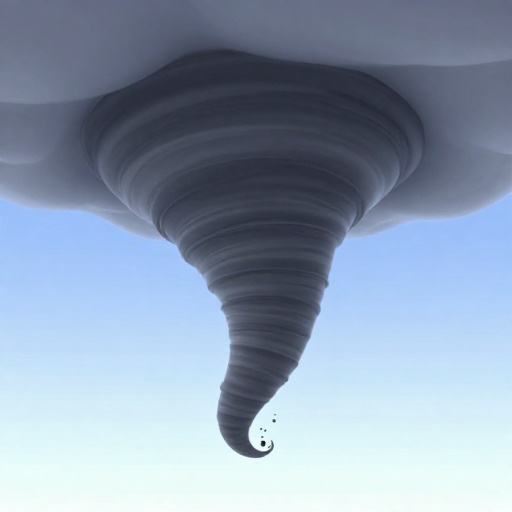
A cartoon drawing of a massive tornado spinning with incredible wind speed.

Tornadoes are spinning air funnels, and they are the fastest winds we see on our planet. You can’t get much more powerful than this!

On May 3, 1999, an F5 tornado near Oklahoma City recorded winds of 321 miles per hour (517 km/h) using special radar technology.

That speed is faster than a race car and a jet airplane combined! Imagine what kind of damage winds that fast can cause to everything in their path.

4

Thunder Can Be LOUDER Than a Jet Engine!

TL;DR

Close to the lightning strike, thunder can reach 165 to 180 decibels, louder than a rock concert.

A cartoon drawing of a loud clap of thunder shown as big sound waves coming from a lightning strike.

Thunder is the sound made by the air being instantly heated by lightning to temperatures as hot as 50,000 degrees Fahrenheit—that’s five times hotter than the sun’s surface!

This rapid heating creates a sonic shockwave. Close up, this shockwave is measured at 165 to 180 decibels (dB).

For comparison, a noisy jet engine taking off is about 140 dB. That means if you were right next to the bolt, the thunder would be louder than anything you’ve ever heard!

5

Water Spouts Can Be as Wide as 2 Miles!

TL;DR

A historical water spout reportedly crossed all of Italy, making it two miles wide.

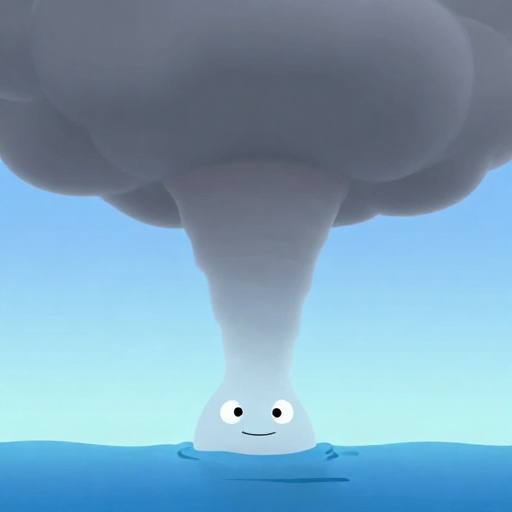
A cartoon drawing of a very wide waterspout connecting the clouds and the ocean.

Waterspouts are like tornadoes over water, and some have been absolutely gigantic! They suck up water into their spinning column.

One amazing, though historical, event in 1456 described a waterspout that came ashore and crossed the entirety of Italy—that’s a width of two miles!

If you can imagine a spinning column of air that wide, it’s taller than most skyscrapers and would look totally unbelievable over the ocean!

6

The Coldest Spot on Earth is -128.6°F!

TL;DR

The coldest air temperature recorded on Earth was -89.2°C (-128.6°F) in Antarctica.

A cartoon penguin shivering next to a thermometer showing a very cold temperature.

While it’s hot in summer, Antarctica gets unbelievably cold! This record was set at the Soviet Vostok Station on July 21, 1983.

That is -89.2 degrees Celsius or -128.6 degrees Fahrenheit!

Imagine trying to play outside when the air is so cold that your breath would freeze instantly—that’s how cold it was at that spot!

7

A Hurricane Can Get 120 MPH Stronger in Just 24 Hours!

TL;DR

Hurricane Patricia intensified by 120 mph in one day in 2015, setting a global record.

A cartoon drawing of a hurricane spinning faster and getting brighter on one side to show rapid intensification.

Hurricanes can sometimes 'rapidly intensify,' meaning they go from strong to SUPER strong almost overnight—it’s one of the trickiest things for scientists to predict!

Hurricane Patricia in 2015 increased its maximum sustained winds by an insane 120 mph (190 km/h) in just 24 hours.

That's like going from a regular car speed to highway speed in one day! That massive boost in power is what made it the strongest hurricane ever recorded by wind speed.

8

You Can Figure Out How Far Lightning Is By Counting!

TL;DR

Count the seconds between lightning and thunder, then divide by 5 to get the distance in miles.

A cartoon child counting on their fingers to measure the distance to a thunderstorm.

Light moves super fast—so fast you see the flash almost instantly! Sound, however, is much slower.

It takes sound about 5 seconds to travel 1 mile.

So, if you count 15 seconds between the flash and the boom, you just divide 15 by 5 and know the lightning was 3 miles away! That’s the 'flash-to-bang' method for kids!

9

The Longest-Lasting Thunderstorm Went On For 12 Hours!

TL;DR

The most persistent, severe thunderstorms, called supercells, can last for 8 to 12 hours.

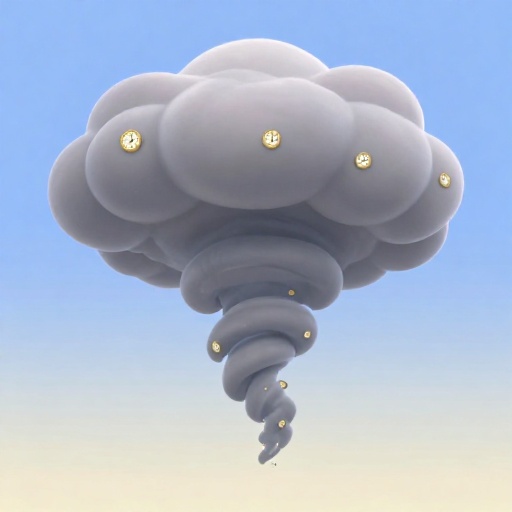
A cartoon drawing of one huge thunderstorm cloud that looks like it has been there for many hours.

Most normal thunderstorms are short-lived, often fading away in 20 to 30 minutes when the rain starts to cool the air.

But the biggest, meanest storms, called supercells, can keep going for 8 to 12 hours if they have the right ingredients.

These storms separate their incoming warm air (the updraft) from their outgoing cold air (the downdraft), allowing them to stay alive and dangerous for half a day!

10

A Single Storm Dropped Over 71 Inches of Rain in One Day!

TL;DR

The world record for 24-hour rainfall is 1,825 mm (71.8 inches) from Tropical Cyclone Denise in 1966.

A cartoon drawing of a rain gauge overflowing with so much water it's piled up over six feet high.

Rainfall records are wild, and the world record for just 24 hours happened on the island of Réunion in 1966.

The storm, Tropical Cyclone Denise, dropped an unbelievable 1,825 millimeters of rain—that’s over 71 inches!

If that fell on your yard, you would have over 6 feet of water! That's taller than most kids ages 4-12!

Frequently Asked Questions

How is weather forecasting done for kids?

Forecasters use super-fast computers to run complex models that use current conditions like temperature and wind. They look for patterns, like where warm, moist air is meeting cool air, to predict what happens next!

Can lightning strike the same place twice?

Yes, it can! Tall things like skyscrapers get struck all the time because they give the electricity a direct path to the ground. The Empire State Building gets hit about **23 times a year**!

Why do hurricanes spin?

Hurricanes spin because of the Earth's rotation, an effect called the Coriolis Effect! It makes them spin counter-clockwise in the Northern Hemisphere and clockwise in the Southern Hemisphere.

What is the difference between a tornado and a waterspout?

A tornado is over land, and a waterspout is over water. A waterspout is often a weaker, non-tornadic funnel, but some strong tornadoes move over water and become powerful tornadic waterspouts!

The Atmosphere is an Awesome Arena!

See? Weather is way more than just 'sunny' or 'cloudy.' It’s a massive, powerful, and sometimes record-breaking adventure happening above our heads every single day! Now you know the science behind the wildest storms. Keep watching the skies, junior meteorologists—you never know what new record is forming right now!

Explore More Facts
Audience Debug