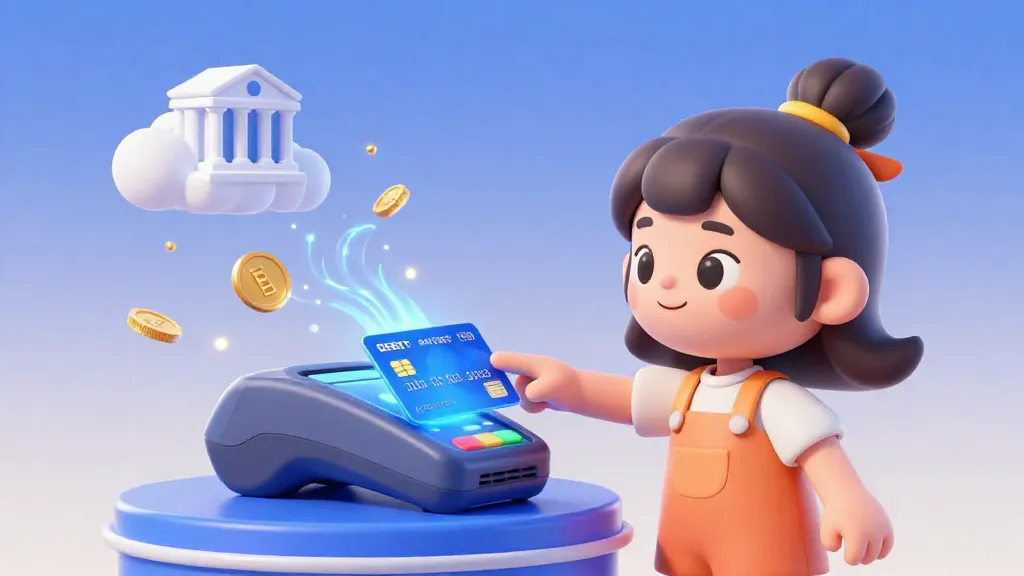
Next time you tap your card at a shop, count: one-Mississippi, two-Mississippi.
In those two seconds, your card sent an encrypted message to a computer network, that network asked your bank if you had enough money, your bank said yes, and the shop received a promise of payment. Understanding your Debit Card is like learning to use a superpower that connects your Bank Account to the entire world instantly.
Most of us use plastic cards every day to buy everything from comics to ice cream. But a card isn't actually money itself.
It is more like a very secure, high-tech key. When you use it, you are telling your bank to take money out of your account and give it to the shop.
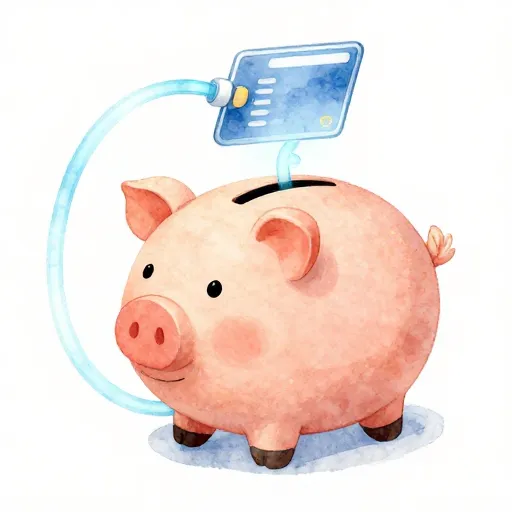
A debit card is different from a credit card. With a debit card, the money comes out of your bank account right now. You can only spend what you actually have!
The Magic of the Tap
When you hold your card near a reader, it uses something called Near Field Communication (NFC). This technology uses invisible radio waves to talk to the card reader without even touching it.
Inside your card is a tiny antenna made of very thin wire. When it gets close to the reader, the reader sends out a tiny bit of energy that wakes up the card and asks for a secure code.

Mira says:
"It is like the card and the reader are whispering a secret code that only they can understand. It is basically digital telepathy!"
This code isn't your name or your address. Instead, it is a one-time-use digital token. Even if a hacker caught the signal in the air, the token would be useless to them because it only works for that one specific purchase.
The 2-Second Relay Race
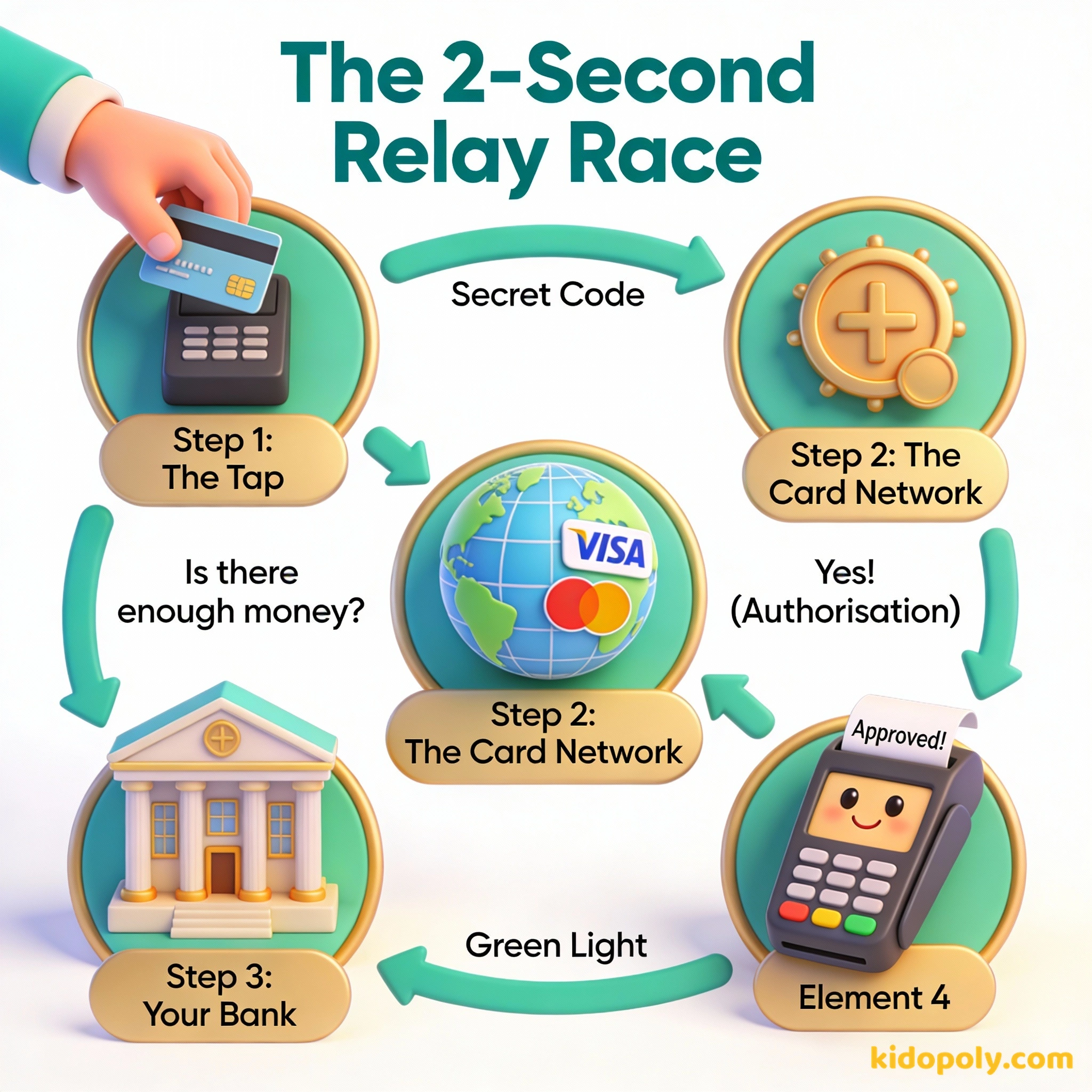
Once the card reader gets that digital token, it starts a high-speed relay race around the planet. This is the part that happens in the time it takes you to say "receipt, please."
- The Reader sends the token and the price to the shop's computer system.
- The Card Network (like Visa or Mastercard) acts as the traffic cop. It sees the token and knows exactly which bank it belongs to.
- Your Bank receives a lightning-fast message asking, "Does this person have enough money for this ice cream?"
- The Authorisation happens when your bank checks your balance, says "Yes," and puts a temporary hold on that money.
- The Green Light is sent all the way back through the network to the card reader, which beeps and shows "Approved."

Price is what you pay. Value is what you get.
Stripe, Chip, or Tap?
If you look at a card, you will see three different ways it can work. These represent how card technology has evolved over the last fifty years.
First, there is the Magnetic Stripe. This is the black bar on the back. It works like an old cassette tape, storing your information in magnets. It is the oldest and least secure way to pay because it is easy for bad guys to copy.
Take a look at a debit card with a grown-up. Can you find the chip? Look for the 'Contactless' symbol, which looks like four curved lines that get bigger, just like a Wi-Fi symbol turned on its side!
Next is the Chip. That little gold square on the front is actually a tiny computer. When you insert your card, the chip creates a unique code for that transaction. It is much harder to fake than a magnetic stripe.
Finally, there is the Contactless tap. This is the fastest and most modern version. It uses the same secure technology as the chip but sends it through the air using radio waves.

Finn says:
"Wait, so if I just tap my card, I don't need a password? What if I lose it and someone else finds it and goes on a toy-buying spree?"
Keeping Your Money Safe
Because a debit card is a key to your real money, it has several layers of protection. The most famous one is your Personal Identification Number (PIN).
When you buy something expensive, the machine will ask for your PIN. This is a secret 4-digit code that only you should know. It is like the final password that proves you are the one holding the card.
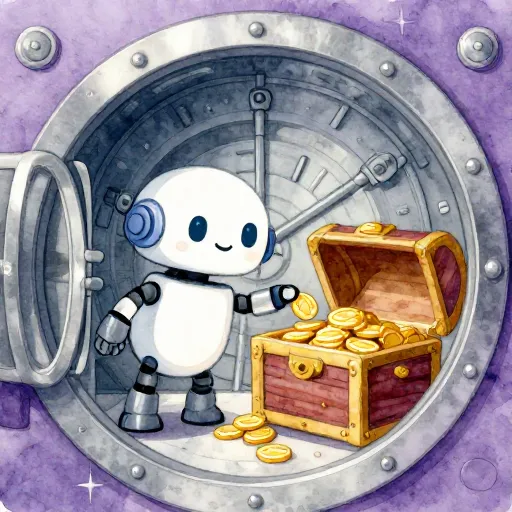
Imagine your bank account is a locked treasure chest in a giant vault. Your debit card isn't the treasure, it's a high-tech remote control. Every time you press a button at a shop, a tiny robot in the vault moves some of your gold into the shop's chest!
If you buy something online, you use the CVV. This is the three-digit number on the back of the card. Since people can't see your card through the internet, this number proves that you actually have the physical card in your hand.

Money is such an amazing teacher: What you choose to do with your money shows what you value.
Who Pays for the System?
Building all these computer networks and keeping them safe costs a lot of money. You might notice that using your card is free for you, but it isn't free for the shop.
Every time you buy something, the shop pays a small Merchant Fee. This is usually a tiny percentage of the price, like 1% or 2%. The shop gives this small slice to the card networks and banks as a "thank you" for making the payment fast and safe.
Let's look at a Merchant Fee: If you buy a toy for $20.00... The shop might pay a 2% fee. $20.00 x 0.02 = $0.40. The bank and card network keep 40 cents. The shop keeps $19.60. It sounds small, but when millions of people pay with cards, those cents add up!
When Things Go Wrong
Sometimes a card might say "Declined." This doesn't always mean you are out of money! It could mean the bank’s computers are having a glitch, or the bank thinks someone is trying to steal your money and has frozen the card for safety.
Banks use super-smart computers to watch for weird spending. If your card is suddenly used to buy a thousand pizzas in a country you've never visited, the bank will spot it and stop the payment before the money is gone.
Mira says:
"Think of the card network like a giant spiderweb that covers the whole world. It feels every tiny vibration whenever anyone, anywhere, buys a snack!"

An investment in knowledge pays the best interest.
Something to Think About
If you could design a debit card for the future, what extra security features would it have?
Think about things like thumbprints, face-scanners, or maybe even voice recognition! There is no right answer, but it's fun to imagine how technology might keep our money even safer.
Questions About Banking
Does the money leave my account the exact second I tap?
What happens if I lose my debit card?
Can I use my debit card in other countries?
You're the Boss of the Beep
Now that you know the secrets behind the beep, you can see that paying for things isn't just about spending money: it's about being part of a giant, high-speed global network. Next time you're at the shop, you'll know exactly where that signal is headed. Ready to learn more about where that money lives when you aren't spending it? Check out our guide on how banks work!